Whether you were there in person running, crewing, pacing or volunteering or whether you were glued to the livestream, you’ll no doubt remember the 2026 Western States 100 for years to come.
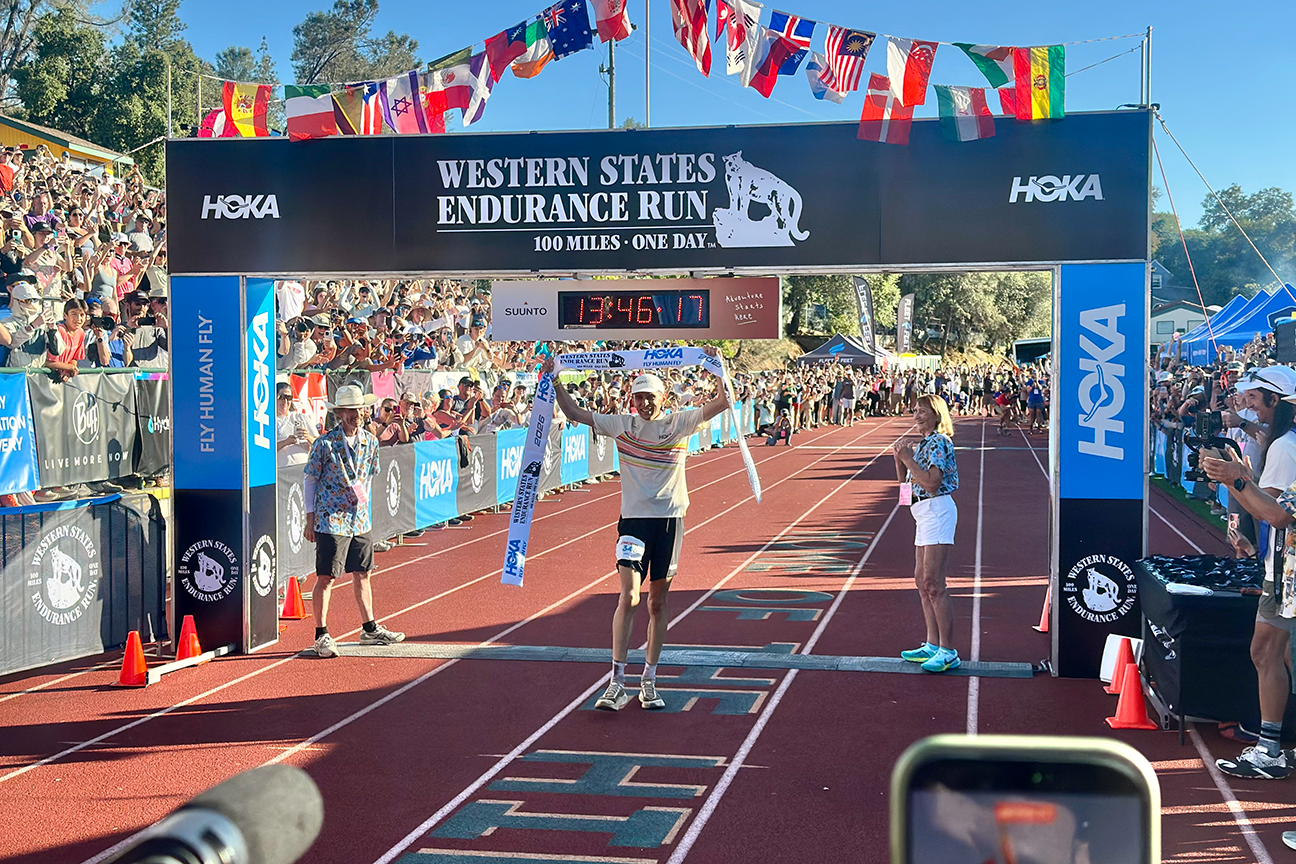
Not only did Vincent Bouillard (13:46:15) and Jenn Lichter (15:28:05) rewrite the Western States course records, but age-group runners also shined as this year’s race produced the highest finishing rate in the event’s history. Of the 370 starters, 322 completed the 100.2-mile journey from Olympic Valley to the Placer High School track in Auburn—an astonishing 87 percent.
The Western States 100 has had its share of legendary editions—1991, when Tom Johnson became the first runner to break 16 hours; 1994, when Ann Trason lowered her own course-record time to 17:37:51 and finished second overall; 2012, when, in cool weather conditions, Timothy Olson shattered the 15-hour barrier with a 14:46:44 effort and Ellie Greenwood took down Anne Trason’s seemingly untouchable 1994 record with a 16:47:19 performance; 2019, when Jim Walmsley put it all together and ran 14:09:28; and 2023, when Courtney Dauwalter’s astonishing 15:29:34 effort broke Greenwood’s record by 77 minutes.
Each of those years felt like the limits of possibility had been pushed a little farther. However, the 2026 edition was arguably the the most remarkable Western States 100 ever, but not just because of what happened at the front of the pack. It goes without saying that the special sauce of Western States is always about the age-group runners diligently chasing their own goals and the community (staff, volunteers, fans, crew, coaches, pacers) that tirelessly embraces and supports the runners and the race in myriad ways.
Sub-14 Hours Or Bust
The 2026 Western States 100 men’s field was billed as one of the deepest in the race’s 53-year history, with four-time champion Jim Walmsley, legendary Spaniard Kilian Jornet, and a constellation of elite talent including Adam Peterman, Hayden Hawks, and Zach Miller all on the start list. Pre-race talk focused on those runners and the likelihood of the first sub-14-hour finish.
But the race unraveled dramatically for the favorites when 26-year-old Hans Troyer seized the lead early and set a blistering pace that eventually swallowed Jornet at mile 40 and Walmsley at mile 62 before claiming Troyer himself at the Rucky Chucky crossing at mile 78.
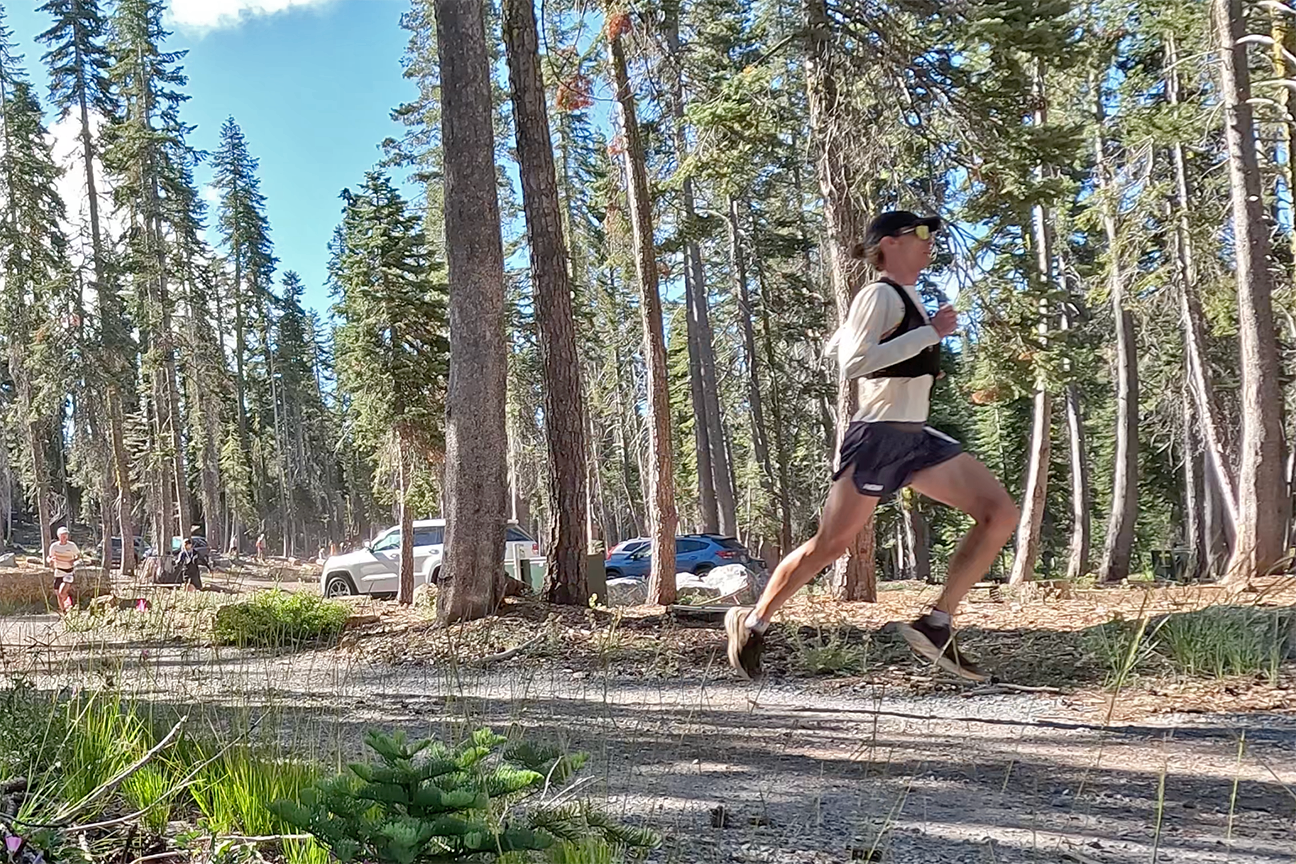
From the carnage emerged Vincent Bouillard, Francesco Puppi, and Ryan Montgomery—three runners who ran the smartest, most patient races of the day and proceeded to rewrite the record books together. Bouillard, who had suffered a gut-wrenching DNF at mile 80 at this same race a year earlier, took the lead near mile 90 and reach the finish line in 13:46:15—that’s 8:14 average mile pace—to become just the seventh runner in history to hold both a Western States and Ultra-Trail du Mont-Blanc title.
Puppi emptied the tank and held on for second place (13:51:08), then could barely walk after the finish. Montgomery’s transformation from seventh place finisher—a position he’d occupied twice before—to third-place finisher was probably the day’s most staggering individual leap as his 13:53:55 finish was nearly two hours faster than his previous best at this race. Whether it was a changing of the guard or not, the top 10 included a mix of established and rising stars.
Everyone is Here for the Women’s Race
It was perhaps an sign that, just two days before this year’s race, the “Raise the Bar” feature-length film about the rise of women’s ultraunning was shown in the Palisades Tahoe village. The women’s field at the 2026 Western States 100 was stacked from top to bottom—defending champion Abby Hall, a deep roster of returning top-10 finishers, and a wave of intriguing newcomers. Yet somehow the day still managed to produce a result that no one saw coming.
Everyone knew that Jenn Lichter was a rising ultra star after her win at the Black Canyon Ultra 100K in February, but she had never run a 100-miler and the Western States course has been one that’s historically difficult to get right in a debut at that distance. But the 30-year-old runner from Missoula, Montana, has gone against the odds all of her life, so counting her out is never smart. Turns out, she didn’t just win, she dismantled Courtney Dauwalter’s course record in one of the most audacious debut performances—and one of the most exciting finishes—in the history of the sport.
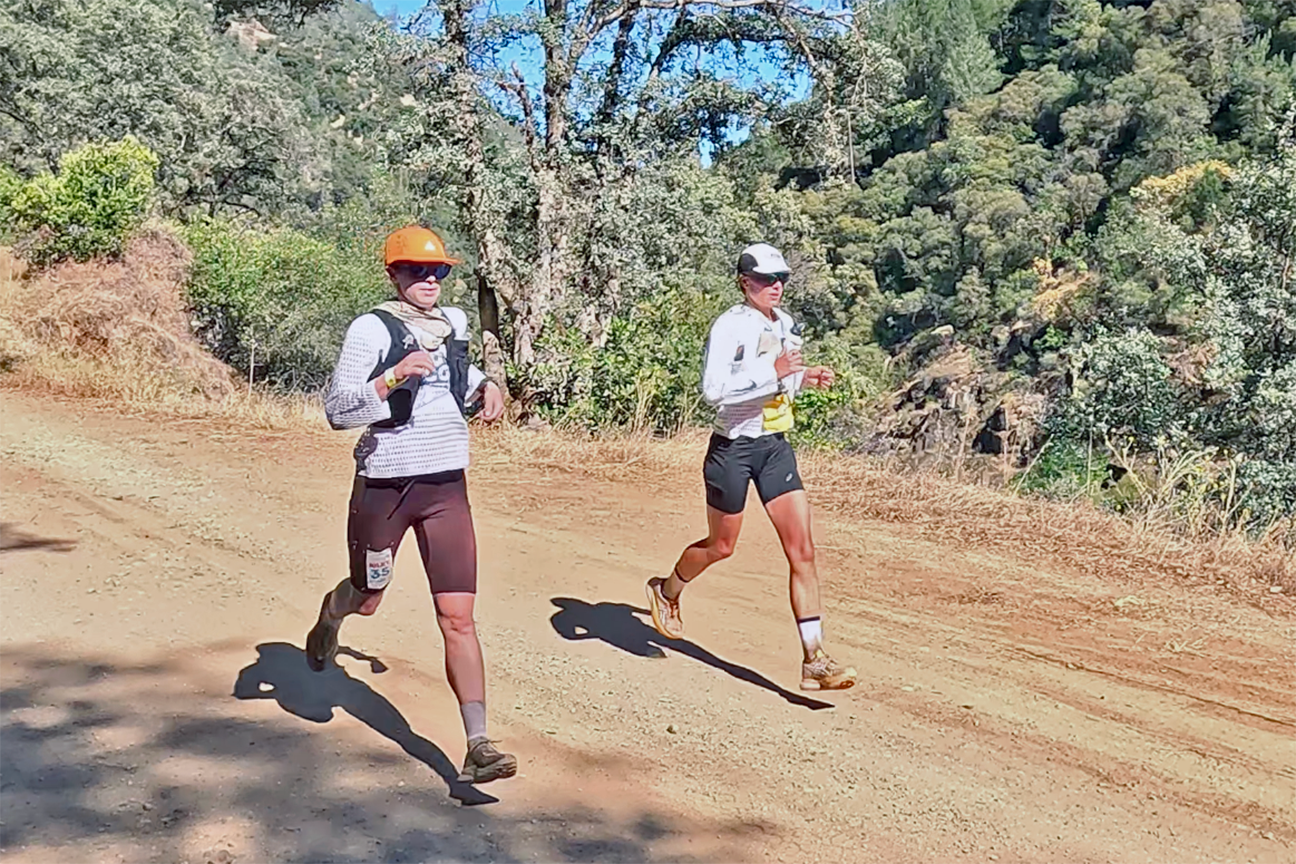
Runner-up Riley Brady pushed the pace from early in the race and was within 90 seconds of Lichter at the Rucky Chucky river crossing. They held on to run the third-fastest women’s time in race history, which was sweet redemption after previous near-misses at this race.
Marianne Hogan was her reliable, relentless self, claiming third place for the third time since 2022, while Caitlin Fielder (New Zealand/Spain) turned in a breakthrough performance and Lotti Brinks (Germany/Idaho) and Tara Dower (Colorado) both delivered strong, composed finishes to round out a women’s field that ran as collectively fast as any in Western States history.
China’s Fuzhao Xiang put together one of the day’s most impressive second-half surges to score her third consecutive top-10 finish, while Hậu Hà (Vietnam) and Hannah Allgood (Colorado Springs) both cracked the top 10 for the second straight year, underscoring just how much the women’s field at Western States has evolved into one of the most competitive lineups in all of ultrarunning.
Cool Weather Meant Faster Times
Weather has always been the invisible competitor at Western States—the one that doesn’t show up on the start list but has decided more outcomes than any human rival ever has. In a typical year, temperatures climb into the 90s and sometimes push past 110 degrees in the exposed canyons between Michigan Bluff and the river crossing at Rucky Chucky. That kind of heat doesn’t just slow runners down at Western States—it breaks them, forces them to make conservative decisions early, and turns the back half of the race into a survival exercise for many runners.
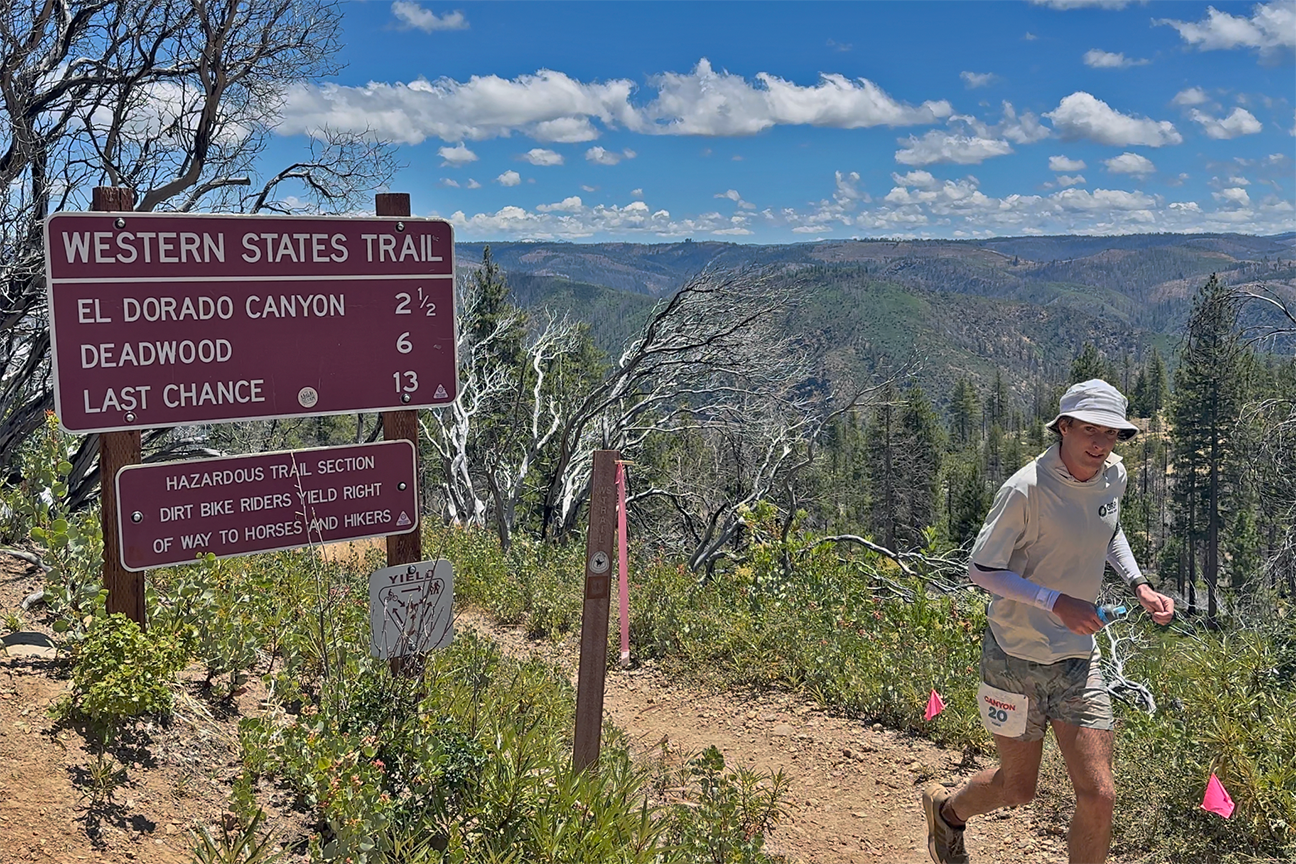
This year’s conditions were the stuff of dreams. It was 44 degrees at the 5 a.m. start in Olympic Valley—cold enough that most runners zipped their jackets up for the climb out of the valley—and temperatures peaked at just 74 degrees in Auburn by mid-afternoon, well below the race’s historical average and nearly 20 degrees cooler than a typical year.
Even as Golden Hour stretched into Sunday morning and temperatures nudged slightly warmer, the damage—or rather, the gift—had already been done. Runners who would normally be reduced to a walk through the canyons were running. Runners who would normally be fighting dehydration and heat exhaustion were racing hard or at least chasing their goals.
The results were obvious. Not only was there a higher finisher rate, but the median finish time (25:42:15) and the percentage of runners who finished under 24 hours (42 percent) were the fifth-highest total in history. Plus, there were more runners than ever before (48) who finished between 23 and 24 hours.
Fast Shoes Did the Trick
What shoes did the top runners wear at the Western States 100? Bouillard ran his course-record performance in a pair of custom Hoka Tecton X prototype shoes built specifically around his biomechanics—a collaboration that makes sense given his background as a shoe engineer at Hoka before he turned pro. This wasn’t a one-race prototype handed to a sponsored athlete; it was a shoe he helped shape.
Puppi went with the off-the-shelf edition of the Hoka Tecton X 3, a carbon-plated super shoe maximal cushioning and good grip.. Montgomery laced up the La Sportiva Prodigio Pro, one of the lightest carbon-plated trail super shoes in the category, while Jeff Mogavero, who surged through the field by passing 11 runners over the second half of the race, wore On’s CloudUltra Pro.
Lichter broke the women’s course record in a white Nike ACG prototype that has yet to hit shelves. Nike hasn’t released specs or official images of the shoe, but it’s built on the same platform as the ACG Ultrafly, the brand’s new trail super shoe that pairs a ZoomX midsole with a split carbon FlyPlate designed to flex independently across uneven ground. (Brady also wore that same prototype.)
Hogan, a longtime Salomon-sponsored athlete, raced in an unreleased prototype that appeared to be a next-generation S/Lab Glide 1.5 with a knit upper in a distinctive red colorway, while Tara Dower was the only podium finisher racing in a zero-drop shoe, relying on the Altra Mont Blanc Carbon to help her finish sixth overall.
Full Results: UltraSignup
Foresthill Frenzy
If there’s a heartbeat moment at Western States, it’s Foresthill. The small Sierra Nevada foothill town sits at mile 62 of the course and is one of the easiest spectator access points on the entire route, which means thousands of fans, crew members, and trail running faithful descend on it every year to create something that feels less like an aid station stop and more like a festival where trail running community is writ large.
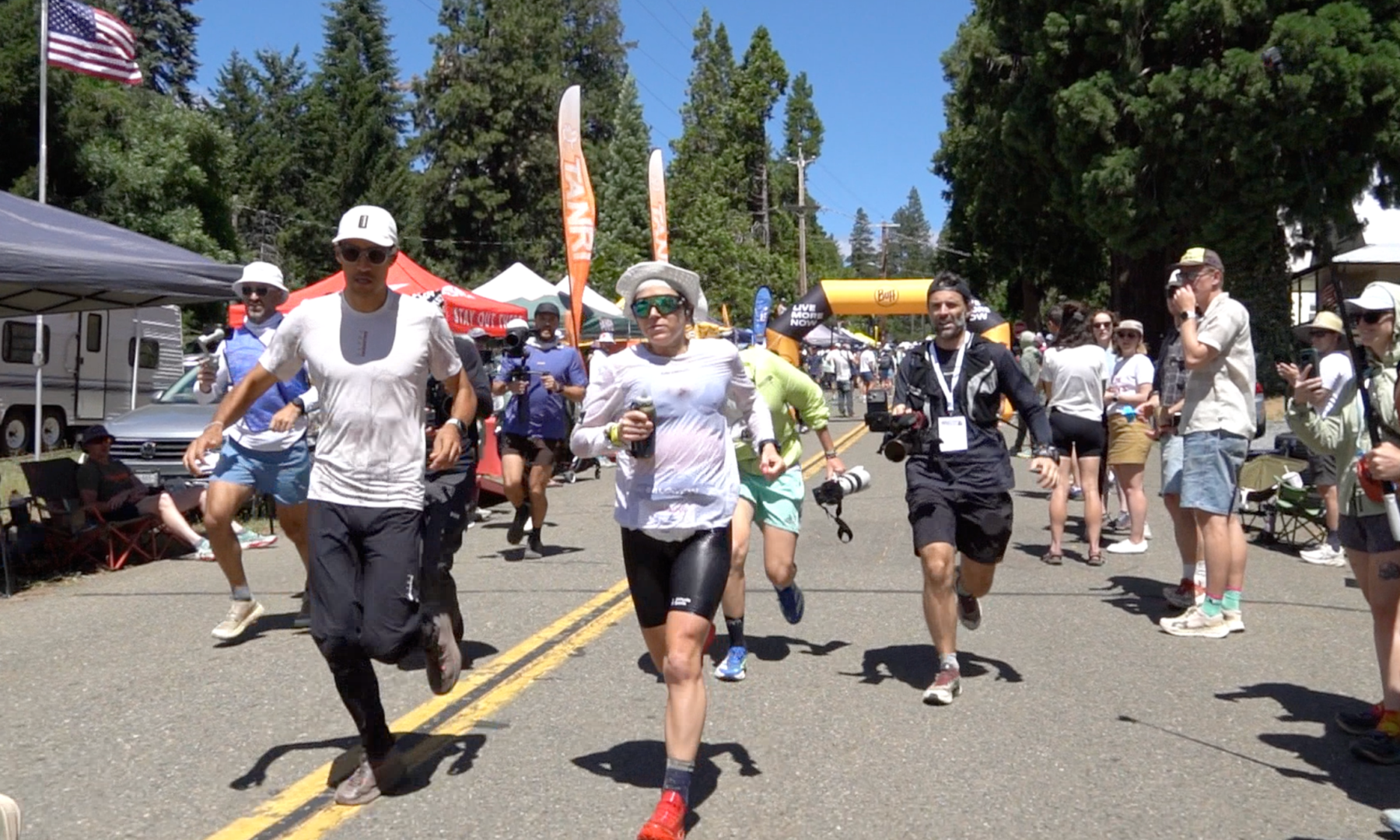
Brands set up activations lining the street with giveaways, refreshments, and cheering squads that give the whole scene an electric, carnival-like energy—a stark contrast to the lonely miles of ridge and canyon the runners have already chewed through to get there. Hoka, the title sponsor of the race, was there in force, but so were Nike ACG, GU, Run the Alps, and UltraSignup, among others.
Plus, there’s an old saying in Western States lore that the race doesn’t really start until Foresthill, and while that might be cold comfort to anyone who just ran 62 miles to get there, it’s not wrong—with the brutal canyons of the American River still ahead and 38 miles left to the finish line in Auburn, Foresthill is less a checkpoint than a reckoning, both for elite-level pros, middle-of-the-packers trying to reach a new personal best, and especially those just trying to reach the finish line.
Older Runners Rule
Let’s face it, the grizzled veterans still chasing their Western States dreams are a big part of the soul of ultrarunning. It gets harder and harder to run long distances as you age, but, even as the body weakens and begins to fail, the internal desire can remain strong. And that’s why Golden Hour shines the brightest for those runners in their 50s and 60s, knowing that there won’t be many more opportunities to reach the finish line on the Placer High School track.
Of the 322 official finishers, an impressive 95—nearly 30 percent of the field—were aged 50 or older, a testament to just how deeply this race has embedded itself across generations of runners. That includes 16 finishers who were over the age of 60, led by 68-year-olds Tom Krajna of Huntsville, Alabama, who finished 259th overall in 28:52:11, and Mike Smith of Santa Fe, New Mexico, who crossed the line as the final official finisher during Golden Hour in 29:58:51—recording his 254th career 100-mile finish in the process, the second-highest total in ultrarunning history.
RELATED: The Wit and Wisdom of Mike Smith, One of the World’s Most Prolific 100-Mile Runners
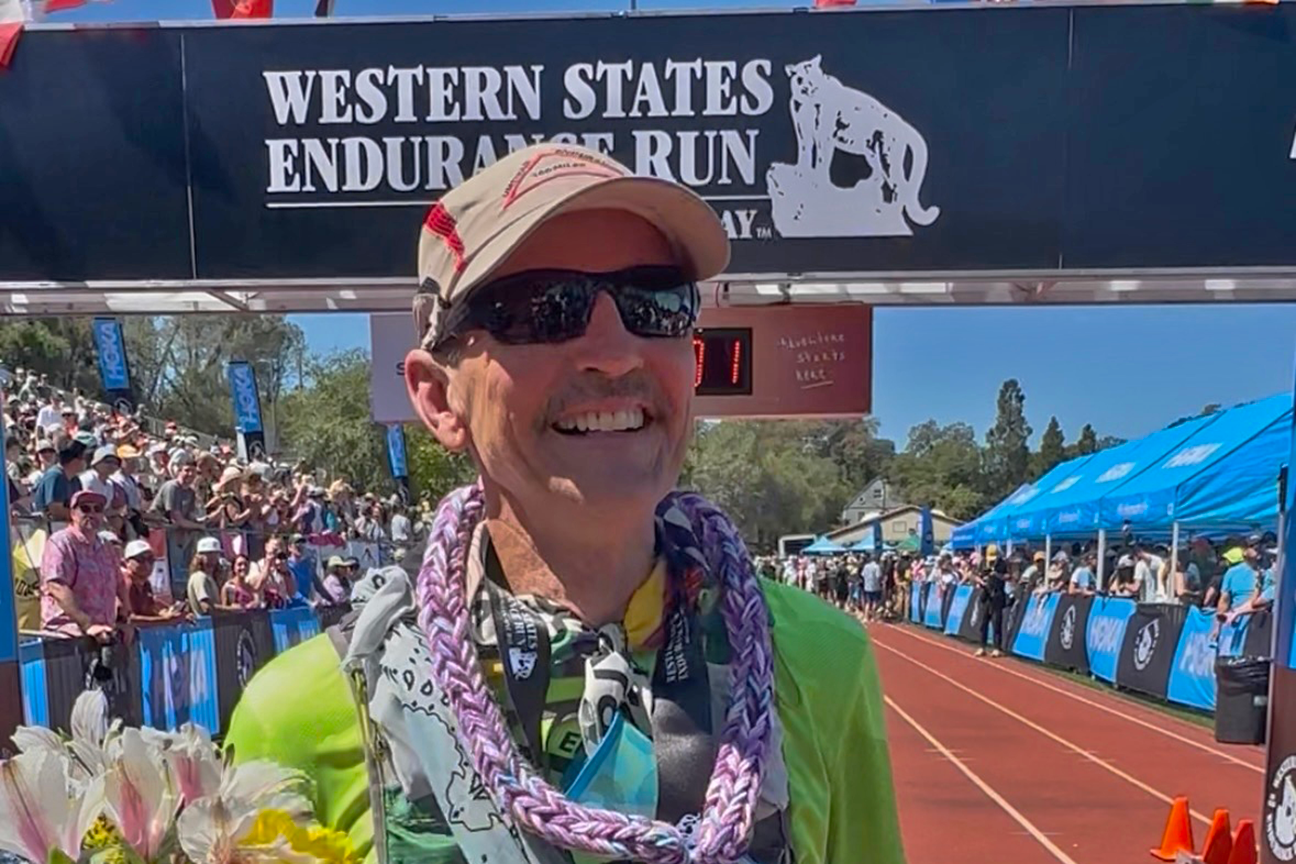
Stephanie Irving, a 64-year-old runner from Trout Lake, Washington, was the oldest female finisher, placing 296th overall and 65th among women in 29:27:27, while Dan Barger of Steamboat Springs, Colorado—no stranger to this finish line on the Placer High School track—notched his 16th Western States buckle in 27:40:44, a milestone that puts him in extraordinarily rare company.
On the other end of the age spectrum, Ellaney Matarese of La Cañada, California, became the fastest woman under 25 in Western States history, running 17:54:04 to place 16th in the women’s field — a performance that signals she’ll be a name to watch at this race for years to come.
And somewhere in the middle, Jeff Browning proved that 54 is just a number: the Flagstaff-based runner shattered the over-50 course record, finishing 38th overall and 22nd among men in 18:03:38—a full 69 minutes faster than his own 2025 performance at the same race.
From Golden Hour heroes to generational talents, this year’s race delivered stories at every corner of the field, which is exactly what makes this race like no other, and why it was the most remarkable Western States 100 ever.
RELATED: Win a 2027 Western States Entry
- How to Keep Running Ultras as You Age
- Why Volume is King When Training for Ultras
- Hit Me Where It Hurts: How Ultrarunners Navigate Physical and Mental Pain
- What Causes a UTMB DNF? Here’s What The Data Says
- You should run a dress rehearsal at a small race before your big goal race
- What Should I Eat? Solving Real-Life Fueling Dilemmas