Training for ultramarathons is one of my favorite things to do. I love spending all day on the trail, coming home covered in mud and salty sweat and feeling sufficiently forest bathed after a long day in the mountains. But running through motherhood can be challenging in a variety of ways.
Truth be told, I rarely experience those days anymore. And not because I don’t love them, but because I’m in a different season right now: the season of mothering little children (my kids are 11 months and 3.5 years old). And, as a working mom, I struggle to leave my family for long mountain days with the same frequency as yesteryear.
And that’s one part mom guilt and one part practicality: sleep is fragmented, tiny humans need me (I also want to be with my tiny humans, so it’s hard to be away) and my husband needs time to scratch his mountain adventure itch, too. So training just looks different. Big mountain days are fewer and far between. And that’s OK.
Strangely enough, I think I’m actually starting to run faster than I ever did before kids.
Why? I’m glad you asked. It’s not because I’ve developed any increased pain tolerance … I’ve had two C-sections, so I can’t even claim I know what labor feels like.I think it’s just that I now have clearly defined guardrails for my day on top of a tricky energy expenditure balancing act. So I’ve gotten really good at making the best choices to optimize training and recovery. And you can, too.
Here are 10 helpful—and very practical—tips from me and elite ultrarunners and moms, Amanda Basaham (kids 3 and 4) and Lauren Puretz (kids 10 and 13) about running through motherhood.
Tips for Running Through Motherhood
1. Accept you need help earlier and more often than you think you do.
Whether you run or not, raising kids requires a village. And that makes running through motherhood inherently more complicated. Easy to say, hard to do. “I didn’t want to be a burden to other people so I didn’t let them help me,” Basham says. “Now I realize if people offer help, they actually want to help.”
Running might start as a solo pursuit, but once you have kids, training becomes a team effort that grows increasingly complicated the more kids you have. And the balancing act changes as they age.
“When kids are little you’re hands-on every second,” says Puretz, who earned a Golden Ticket into the 2026 Western States 100 by finishing fifth at the recent Ultra Trail Chianti Castles 120K race in Italy. “When they’re older you’re basically a taxi driver.” She laughs talking about how she finds herself regularly trying to cram in runs and strength workouts in between shuttling kids to and from soccer, gymnastics, etc.
How do you solve the chaos? Well, it’s not really about solving it, but more about finding a schedule and a groove that helps you to get some real run time. So accept help and get in some run time while your partner, friend, or family member steps in to help. For some runners, that could mean accepting help from friends or even babysitters here and there. Even an hour of childcare from a friend, partner or family member can be the difference between getting in a run and skipping it entirely.
2. Fuel like your life depends on it because you can’t rest.
Training for ultramarathons without kids usually calls for post-run ice baths, sitting with your legs propped up and digging into a hearty meal followed by an afternoon of rest. With young kids, it’s the opposite.
Back in the fall, I ran a local mountain 25K as a training run through pretty inclement weather, which meant that at the finish I was soaking wet, hungry and cold. My toddler immediately wanted to run around the finish line area after I crossed the line (how do you say no to that?). So, I opted into frolicking around in puddles and forgot to grab finish-line pizza. When I got home, my baby (who was 6 months at the time), started screaming for milk.
I hardly had time to take off my wet clothes before I was nursing while also helping my toddler calm down from a meltdown after one of his magnatile houses fell over. Roughly 45 minutes later, feeling nauseous and shaky, I realized I’d not taken one bite of food.
And that impacted my afternoon and my training the next week.
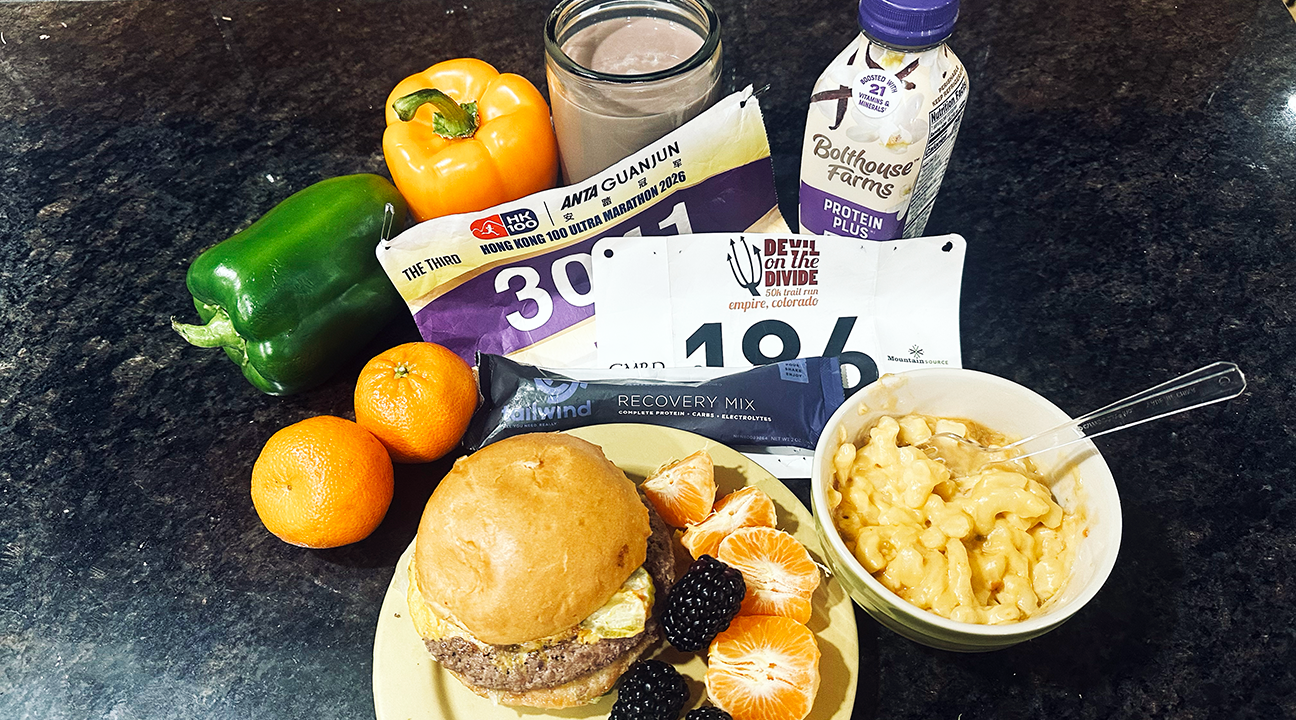
Your kids’ needs won’t change just because you did a hard run. But you can set yourself up for success going into a not-so-restful post run situation by preparing ahead of time: Fuel well before your run and prep a post-run protein smoothie that you can easily chug as soon as you take your last step (ideally before you’re even home). Combine this with a full bottle of water and some electrolytes like LMNT’s Sparkling electrolyte drink, and turn your drive home into a refueling marathon.
The times I’ve done this, the difference is immediate. It takes you from survival to thriving on some of the hardest days of parenting post long run or race.
“It’s low hanging fruit,” Basham says. “But it’s still hard.”
In short: when rest isn’t an option, nutrition becomes your survival recovery strategy. And it works.
3. Turn stroller running into an essential training tool.
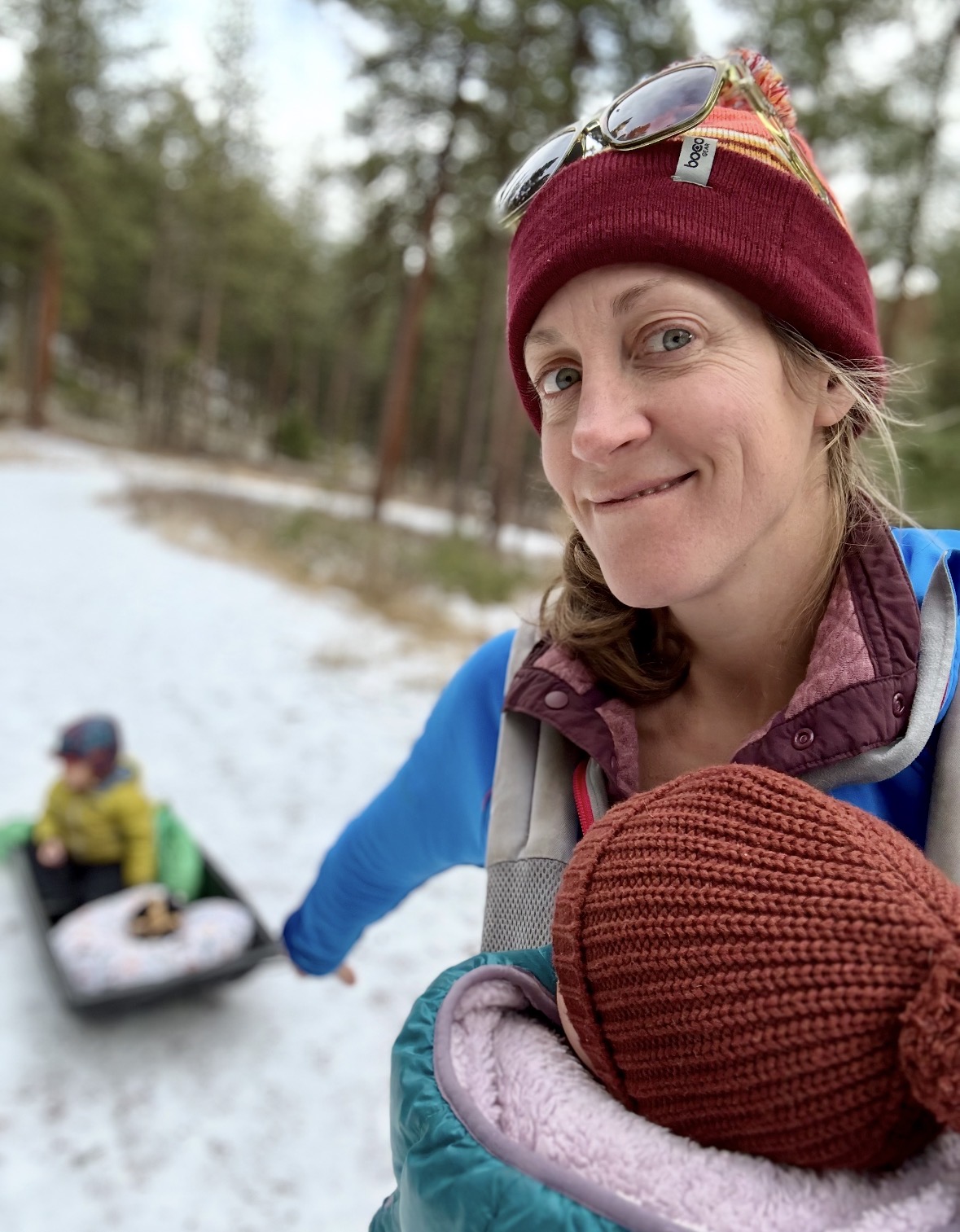
As a mom who relies heavily on stroller running for two to three runs per week, I now think of it as an essential training tool for anyone on a journey of running through motherhood.
It builds aerobic fitness, it strengthens pushing muscles and increases core stability, and allows me to log more miles without childcare or trading off with my husband.
The key for me is to time the stroller running with naps. And I take care to schedule these runs in such a way that both my kids have naps that start about the same time.
“I did quite a bit of stroller running after our first daughter was born,” Basham says. “But Maeve [our second] would last about 10 minutes before she wanted a snack or to get out.”
So, while stroller running isn’t for everyone, give it a whirl. And if it doesn’t work for you, that’s OK. The treadmill is an excellent at-home tool if you have access to one (used treadmills are often listed on Facebook marketplace).
Note: If you do opt for stroller running, find a stroller with running-level suspension (the Bob or Thule Chariot are my top recommendations). And, if you plan to run through all kinds of weather (I recommend it), the Thule Chariot can’t be beat.
4. Maximize your training time—because time is limited.
Without kids, you can easily structure your week around training. After kids? Training through motherhood—especially the early years—often has to fit around everything else. And this means maximizing the time you have.
According to Puretz this means learning to train when you can. “You just learn to train whenever the window opens,” she says. “Sometimes that’s early in the morning, sometimes it’s between activities.”
Instead of separating workouts and long runs, sometimes it might make sense to combine them. Or you might find yourself focusing on shorter, higher quality sessions when schedules are tight.
Honestly, I think learning to make the most of limited training windows is one of the most valuable skills a running parent can develop. And it’s made me a better runner, too. That’s because I don’t dilly around like I used to. I know I have to go as soon as I get the chance … or I won’t get it in.
“Sometimes I’m doing strength work on the side of the soccer field while my kids are at practice,” Puretz says, laughing. “You just fit training in where you can.”
This type of time management also forces discipline and better habits. And that’s helpful for everyone in the family.
5. Strength training is a non-negotiable.
But it’s still so hard to do! I’m terrible at this one. I’ll do squats holding the baby and pretend it counts (and maybe it does to some degree), but when I asked Basham and Puretz about this, they both agreed strength training is non-negotiable.
Basham experienced severe sacrum pain after her second pregnancy. Despite an MRI showing nothing structurally wrong, and unsuccessful physical therapy support, targeted strength training saved her.
She now does core, adductor and glute exercises regularly. “Once we started strengthening those things, the pain finally went away,” Basham says.
And as we age and layer on the miles needed to successfully train for an ultramarathon, strength helps to keep things in check. “Strength work becomes even more important when you’re balancing running with everything else,” Puretz says. “It keeps everything working the way it should.”
6. Expect the postpartum rebuild to take longer than you want.
When you’re used to performing at a high level, returning to training after having kids can require a major expectation adjustment. Fitness often takes longer to rebuild than you expect, especially when sleep and recovery are all impacted by parenting.
Basham says her return to racing hasn’t followed a straight line at all. “It’s been two steps forward and three steps back.”
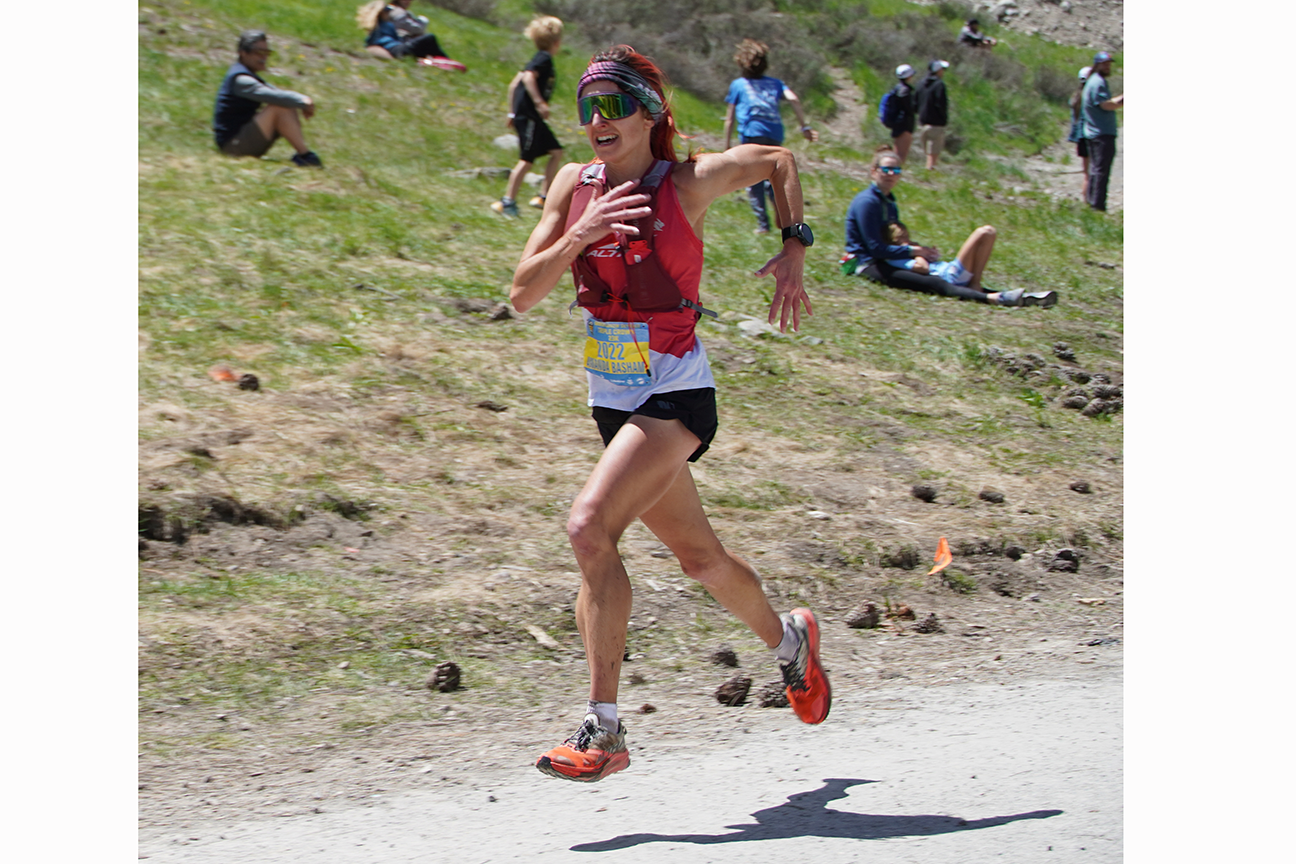
Even when progress feels slow or inconsistent, don’t give up. Trust that gradual improvements will happen over time. And patience is a key part of training. Plus, these are great lessons to teach your kids!
7. Learn to train imperfectly.
If you didn’t learn this before kids, now’s your chance. There is literally no runner out there who hasn’t had to adjust their training plan several times throughout a training cycle. And with kids there is just no way to avoid it, especially during cold and flu season!
“So many training days I was so exhausted I don’t even remember them,” says Basham, reflecting on training when her kids were even smaller. “It’s kind of like parts of an ultra where you don’t even know the ten miles you just did.”
So, learn to adapt, and accept that some runs will be shorter than you want, some runs will be skipped altogether and others will be on terrain you may not want (even the treadmill or behind the stroller). But remember it’s consistency that matters more than perfect execution. And consistency over time builds fitness.
Despite a wholly imperfect build back since my second son was born, I’m really starting to see fitness gains because I’m doing workouts when I can, putting in long runs when there’s a window and reminding myself to be patient and not worry when I can’t run at all.
8. Harness your mother bear instincts.
I do believe that motherhood demands physical and mental endurance not unlike ultrarunning, though honestly more so than ultrarunning. Maybe that’s why it feels easier to run now?
And the way in which we choose to compete and challenge ourselves often changes with motherhood. It has to do with having an enlightened perspective about what’s most important, and also knowing that running is a gift and should be cherished no matter how it looks for feels.
Those are things Basham can attest to.
“I know I can do it, and I have no ego,” she says. “I can get 40th place even though I came here to win and it’s not going to embarrass me.”
Similarly, pre-kids, I struggled in races where I knew I wasn’t performing my best. As hard as it is for me to admit this, I dropped out of more races than I should have simply because it wasn’t going well. Now? I wouldn’t dream of such a thing. The opportunity to just be out there, working hard, even when things aren’t going well, is reward enough.
Puretz adds that motherhood changed her mindset around training. “Some days just getting out the door is the win.”
9. Keep Showing up even when you’re unsure.
I remember a particularly challenging training run this summer. I was still within a few months postpartum, my boobs were hurting because I needed to get home to pump, I tripped and rolled my ankle because my joints were still feeling loose and unstable. And I just felt tired. So, so tired. I was also missing my kids. And I’d only been gone an hour.
At that moment, I was ready to quit. It was mom guilt and a lack of familiarity with my body — I felt like I was running in someone else’s skin. All of it added up to just feeling like this wasn’t for me anymore. On the run home, I was ready to give up.
I felt selfish. I felt tired. I felt like I wasn’t me.
But that’s just normal. It’s a stage. And I’m glad I didn’t listen to the voice in my head. Because now, eight months later, I’m feeling more myself each week.
Basham admits she’s had similar thoughts about stepping away from racing altogether, but she always comes back to the fact that she loves to run and that things are changing and improving as the months go on. “I’ve always been more competitive with myself versus other people,” she says. “I can look at it like, well, 2026 is already going better than 2025.”
10. Pre-meditated meal prep is a must every week.
I’m maybe adding this one because I’m not good at it. But I’m trying.
Eating can feel reactive instead of intentional most days. And Puretz and basham can relate.
Puretz, who finds herself cramming in calories wherever she can, says other parents have told her they never see her not eating. “I’m always hungry,” she says. “Sometimes I’m eating mac and cheese straight out of the pan in the car before one of my kids’ games.”
Basham laughs, too, when we talk about fueling. “There are times where I’ve realized I’ve basically eaten an entire loaf of bread throughout the day,” says, “because it’s quick and easy.”
But the days and weeks I have actually planned ahead for all meals instead of just post-run nutrition? It makes a big difference, particularly when it comes to protein. Because, like Basham, I’ve also fallen victim to the “I’ll just have another piece of buttered toast” routine. And I always end the day hungry.
Make it a family effort and prep simple snack and recovery foods for the week, and make double or even triple batches of family favorite meals or lean on your partner to do this if they’re the cook.
“My husband does most of the cooking,” Puretz says. “That makes a huge difference.”
When life is busy and unpredictable and you’re training for an ultra while mothering, even a tiny bit of preparation can go a long way to keeping training on track.
About the Author
Contributing writer Ashley Arnold is an ultrarunner and the former director of brand at Fleet Feet who lives in Missoula, Montana, with her husband and two young children. Aside from writing about running and motherhood, she tells stories through video, words and photos, and is most at home running trails, adventuring in wild places with her family and sipping coffee while eating cake.
RELATED: Life is an Ultra: Amanda Basham has Learned How to Juggle a Busy Life
RELATED: Lauren Puretz: The World’s Fastest Gynecologist
RELATED: 8 Mistakes New Trail Runners Make (and How to Avoid Them)
RELATED: 13 Great Women’s Trail Running Events to Put on Your Calendar
RELATED: How to Transition from Running Marathons to Trail Races
RELATED: Catching up with ultra legend Krissy Moehl
RELATED: Fueling for Ultras Can Be Complicated: Here’s How I Finally Made it Work for Me
RELATED: How to Train for Trail Races Without Access to Trails
RELATED: How to Transition from Running Marathons to Trail Races