I’ve been running on roads and trails for years, but I still remember those early trail races when I had no clue what I was doing. I went too hard from the start line and hit the wall early, I under-fueled and underhydrated, I cooked my legs on the descents and sometimes stumbled, and I spent way too much energy trying to maintain an unrealistic pace for the undulating terrain.
Trail running isn’t just road running on dirt. It’s an entirely different skill set and range of experiences. It requires staying present, monitoring your fueling and hydration, adjusting constantly, and getting comfortable with effort changing mile-to-mile—or even minute-to-minute—as terrain shifts.
If you’re a road runner who’s curious about trails, let this guide be a shortcut to the learning curve. Here are some insights to what transfers from running half marathons and marathons pavement to running the same distances and potentially much longer on dirt, and how to build trail-specific skills and durability without getting sidelined. And if you’re already a seasoned trail runner, consider sharing this article to a friend who’s focused on running road races and encourage them to hit the trails!
RELATED: Find Your Next Race
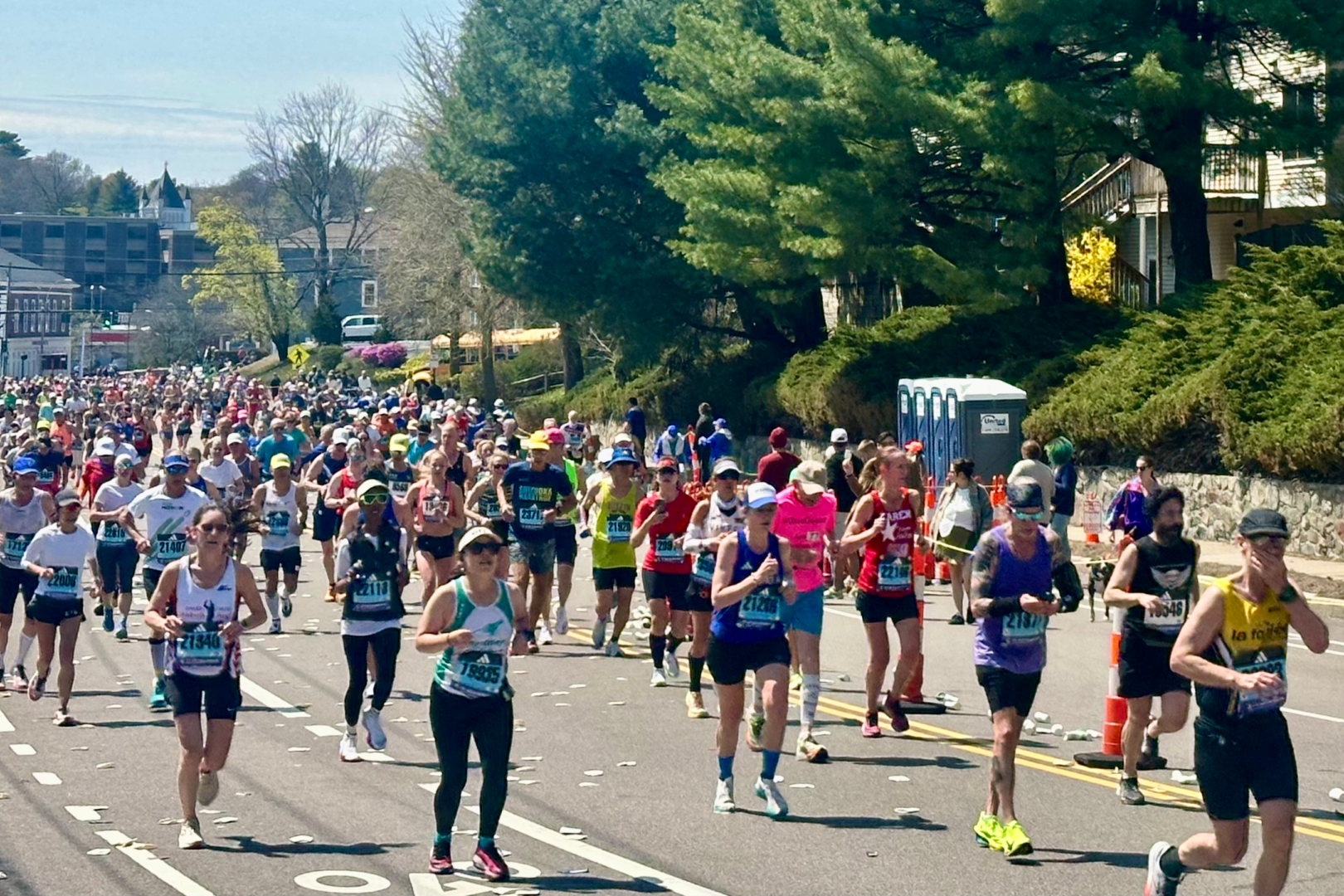
Leaving the Roads Behind
What changes when you leave the roads behind? A lot. And nothing at all. It’s still running. How’s that for a paradox?
For the stat-obsessed road runner, this can be hard. (Hi, I’m one of those people, too!) When you’re training for road races, everything seems to focus on precise splits and exact distances. Especially when you’re used to tracking pace and distance to the point of running laps around a parking lot until your smartwatch dings to indicate you’ve hit a clean, even mile split.
But as hard as it can be at times, letting go of some of this obsession will actually help you run trails better. Plus, there is plenty of data you can monitor as a trail runner, but most of it is different (and sometimes contrary) to what you have relied on training for half-marathons and marathons.
Time Over Distance
First, shift your mindset from distance to time on your feet.
This is a hard one for road runners hitting the trail. And, if I’m honest, it’s still hard for me, too. Because I like numbers and distance goals. But an hour run on hilly or technical terrain always means running less distance.
Grayson Murphy, a Utah-based professional runner who’s excelled on the road, track and trail, knows this well.
“The biggest mistake I see people make, and that I made to some extent as well, is comparing road miles to trail miles,” says Murphy, a two-time world champion trail runner. “To put it simply, 10 easy miles on the road might take 70 minutes, but on the trail it could take up to two and a half hours depending on the terrain, the elevation gain, snow cover, and other variables.”
So how do you figure out how much to run? It takes a bit of trial and error, but a good rule of thumb is to run the equivalent overall time of the distance you would have run on the road. If a 10-mile road run would take you 70 to 90 minutes, and you’re aiming for a similar effort, run 70 to 90 minutes on the trails and let the distance be whatever it is.
Effort Over Pace
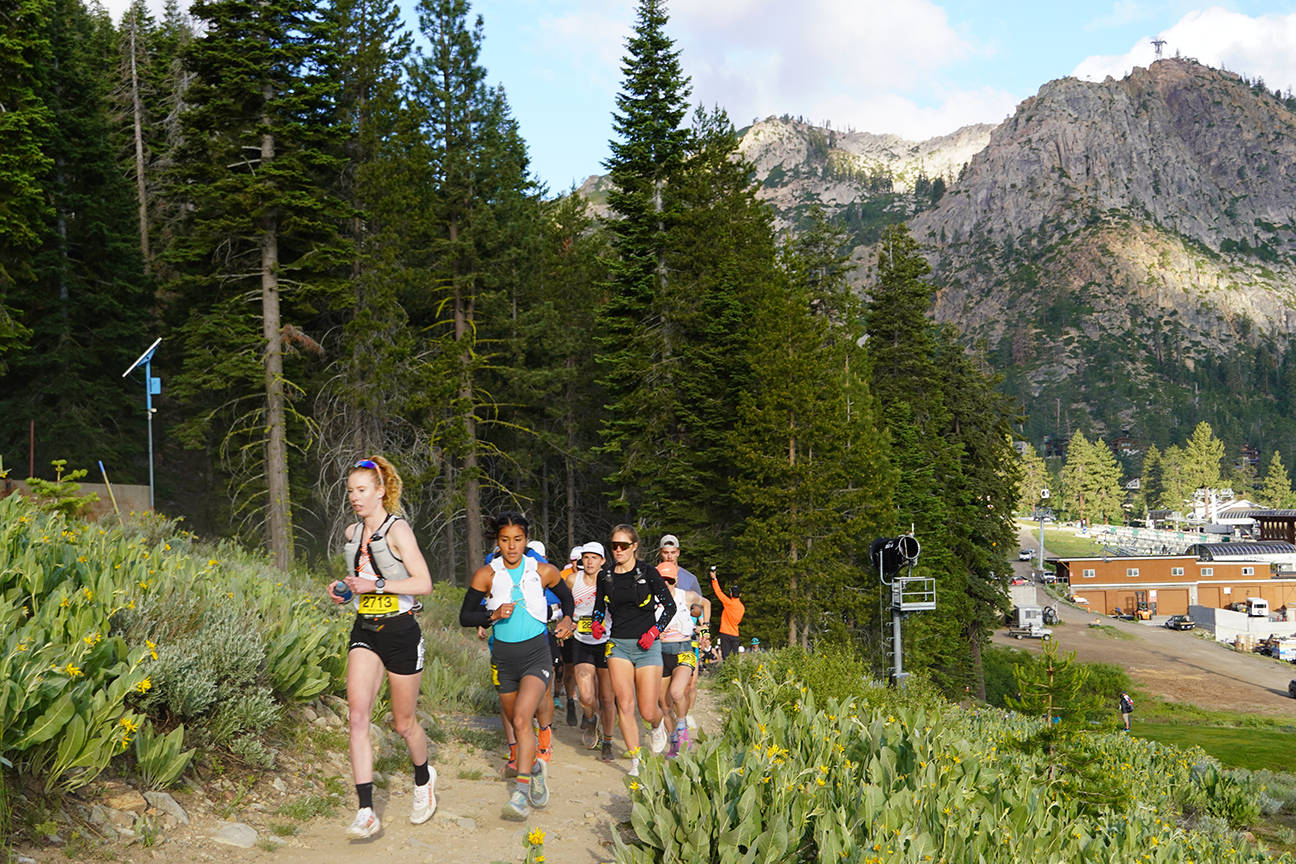
In trail running, effort matters much more than pace. In fact, what you know about pacing while running on the roads is almost irrelevant. Even on a relatively smooth trail without many technical features, your pace will usually be slower at the same effort. That’s OK; the terrain changes the math.
Mark Driscoll, an Asheville, North Carolina-based running coach, who works with first-time marathoners to nationally competitive ultrarunners, says prioritizing effort over pace is the first change a road runner must make when moving to the trails.
“The minutes-per-mile on their watch become meaningless once the trail starts twisting, climbing and getting technical,” Driscoll says. “Running by perceived effort prevents forcing the pace at the wrong times. As a result, they can stay patient and in control as the terrain changes.”
Learning to run by effort, not by pace, will also help you better tune into your body, properly set expectations, and how to best monitor your runs on your smartwatch.
Get Used to the Gear
One of the biggest ways trail running differs from road running is the gear. Having the right gear and learning the nuances of what to wear and what to bring on a long run or during a specific section of a race is a bit of an art that only comes with experience, advanced planning, and the ability to make mid-run adjustments.
First and foremost, you need a pair of trail running shoes that both fits your feet and matches your style of running, but also are appropriate for the type of terrain you’ll be running most often. Visit your local running store and browse reviews to understand the differences in shoes, both in how they fit but also the cushioning, traction, flexibility and breathability each offers.
Other than that, you’ll want to get used to wearing a trail running vest or high-capacity waist-belt to effectively and comfortably carry your fluids, gels and extra layers of clothing (like a light shell or gloves). Using lightweight trail running poles can help improve your efficiency and reduce fatigue on steep, mountainous terrain and on technical ultra-distance courses, but it takes time and effort to use them effectively and know when you stash them in your pack.
Tips to Make the Marathon to Trail Transition
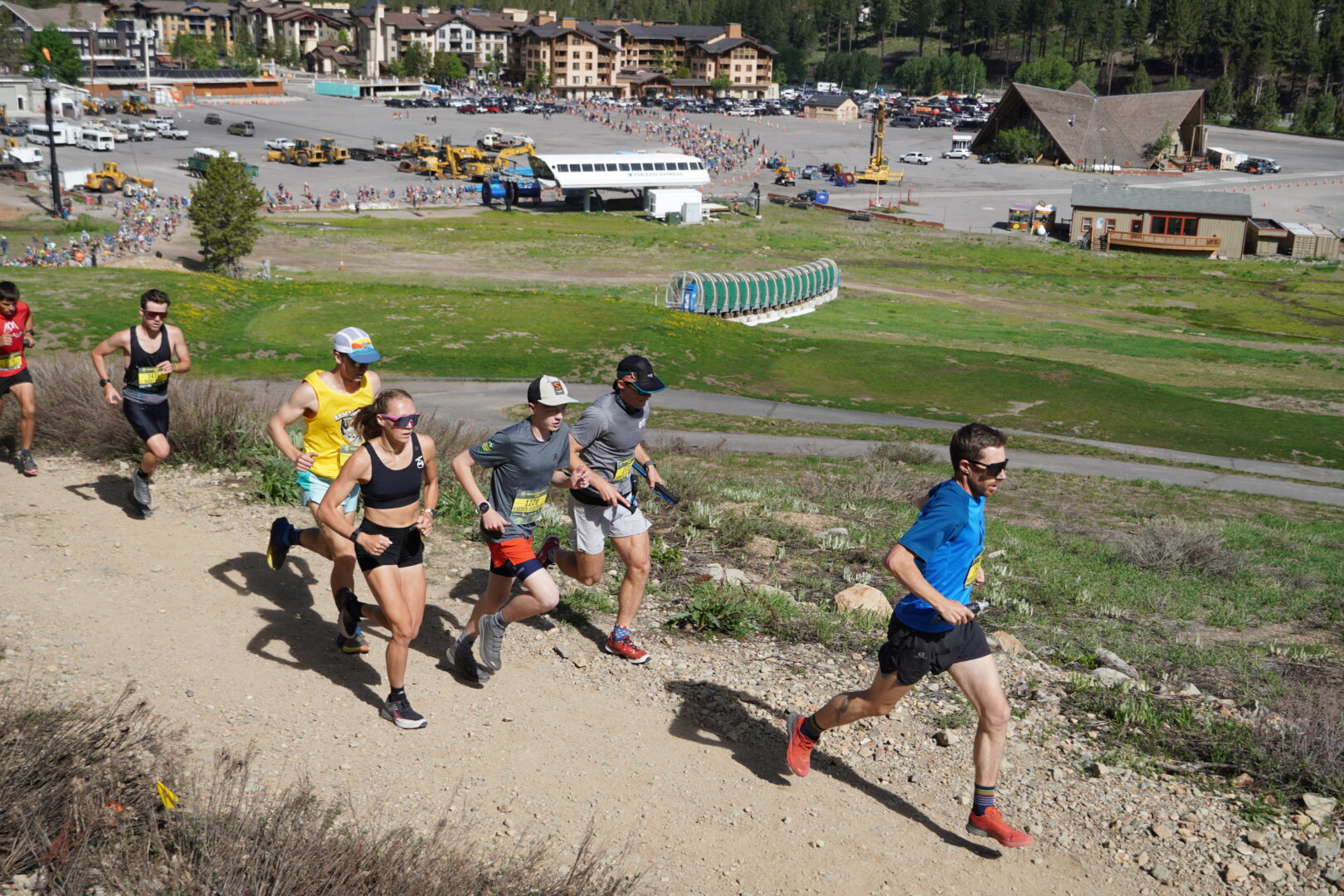
1. Start with an easy, runnable trail rather than an overly technical or steep one
It’s so easy to underestimate navigating gnarly rocks and roots on ankles that are only used to a smooth surface, and steep descents on quads used to flat running. So, ease your way in.
Driscoll offers this advice: “To avoid a sudden jump in overall workload, start on runnable trails and dirt roads with modest vertical gain.”
A dirt road is a great next step when transitioning over from the pavement.
2. Learn how to hike because trail running includes walking
Learning how to hike will make trail running a whole lot more enjoyable, and it opens up a whole new world of possible terrain to cover when running every step is not a requirement.
“Going into my first trail race, I thought ‘there’s no way I am going to walk in a running race,’” says Murphy. “But when I got hit with a 35-percent uphill grade, I quickly had to swallow my ego and realize that trying to run up the grade just for the sake of ‘running’ was not going to be the most efficient way up the hill.”
But it’s not just any kind of walking. Hiking efficiently is a skill. Some runners use lightweight trekking poles and others move uphill like they’re skinning on skis. Me? I literally imagine I’m pulling a rope with both hands as I drive my arms forward and backward and keep my gaze locked on the point I’m trying to reach. I actually make fists around this magical rope in my mind. It helps me to feel like I’m pulling myself up the hill. A mental trick, yes, but one that, every time, makes the hill feel just a bit easier.
The takeaway? Embrace the hike. Sometimes, walking is the fastest choice.
3. Go by heart rate or “feel” to stay honest about pace
If watching your mile splits tick by slower than your normal easy pace brings you stress, consider leaving your watch at home and just running for the sake of running (when’s the last time you ran without posting to Strava?). This is, perhaps, the best way to lean into “feel” without hyperfocusing on heart rate.
If you do bring your watch, ignore pace, and focus instead on the heart rate that makes the most sense for the run you’re doing. If you’re just starting out, this most likely means you’re staying in the endurance zone.
4. Practice running downhill
Downhill running is a skill, and one that takes time to learn and develop. And, to be honest, it’s one I only started to improve on after I took up gravel bike riding years after I was already a trail runner. Because I learned a bit more about how to navigate moving with speed and anticipating my next step with a quiet mind.
But why did this change the game for me? It forced me to hone my focus and choose my lines as best I could. Once I realized I could safely get down a steep hill going fast, the skill translated to downhill running quite well.
And Murphy’s experience backs this up. Part of what makes her such a great mountain runner is that she is somewhat fearless when she runs downhill. It’s actually something she talks with other runners about to help them improve their downhill prowess.
“Once you have identified where your fear is coming from [when it comes to running downhill] you can address it,” Murphy says. “Slowly dipping your toe in and exposing yourself to challenging bits of trail that might make you face that fear can help over time to be more fearless. I also have had some of my athletes go through ability drills, similar to what you would see a soccer player do, in order to get more in tune with their body in different coordinated movement patterns.”
In short: start small. No two sections of trail are the same, but you can build downhill running skills by learning to read the trail and teaching your feet and body how to react. Using your arms as a counterbalancing mechanism to your lower body movements, and learning to look one to two strides ahead where your feet are landing on the trail are key points of progression. Practice on short descents you can repeat. Build confidence through controlled reps.
So, while you don’t need to take up a third sport to run downhill efficiently, you can think about your fear of moving quickly down steep terrain and work on skills to grow your competency.
5. Add strength and movement that supports and complements trail running
Trail running requires more side-to-side stabilization than road running because the footing is uneven and always unpredictable. So incorporating strength exercises and cross-training that allows you to move in various planes (think about becoming proficient quickly moving side to side or diagonally) will increase your durability and decrease your injury risk.
Doing lateral lunges, calf raises and single-leg strength work (i.e., Bulgarian split squats, single-leg Romanian deadlifts, lunges, and single-leg calf raises) in addition to practices like yoga or HIIT will help improve your ability to react on variable terrain while also improving your stride security, stability, and fluidity on any section of the trail.
“The different movement patterns in cross-training also challenge your brain and muscle connections to work in different ways which helps you keep your agility sharp,” Murphy says. “I credit my cross-training, including lifting weights, to not only helping me be a better trail runner but also a less injury prone athlete.”
6. Do a ‘trail skills’ run each week
According to Driscoll, focusing on skill-building each week goes a long way to increasing your confidence and ability on the trail. He emphasizes the need to focus on steep and/or rocky terrain, taking time to hone skills on both the ups and downs.
”Use one run per week to target a terrain-specific skill, treat it like a key workout, and progress one variable at a time: steeper climbs, longer descents or more technical footing,” he says. “As durability improves and recovery stays steady, add vertical gain and introduce more complex terrain.”
As an added bonus, those skill-building runs can also double as a fartlek-style workout that trains your cardiovascular system.
7. Fuel earlier and more often
Trail running—especially in hilly and mountainous terrain—requires more energy than flat running. Taking in more fuel early and often will help you get through your run or race with more energy and jump-start your recovery. Although trail races have aid stations to aid the process of refueling, you really need to carry gels, blocks or other snacks on all of your trail runs to make sure you’re taking in calories on a consistent basis.
I like to aim for 100 calories from a carb-rich food or gel every 15 to 25 minutes depending on the terrain and my run intensity. Learning to stay ahead of your fueling needs and constantly consuming gels on the run are necessary skills for becoming proficient at long runs on the trails.
For reference, elite ultrarunners and coaches, most notably David Roche, recommend high-carbohydrate fueling, typically consuming 120 to 160 grams of carbohydrates per hour during hard, long training sessions and races. That might take a while to reach that level of consumption, but it gives an idea about what’s possible.
8. Keep a road or track speed session
This one’s optional, but I like keeping a road or track workout in the mix each week. Continuing to do some of the speedier workouts you’ve done during your half-marathon and marathon training will contribute to improved fitness, leg turnover, and agility on the trails.
Plus, running fast will help improve your running and send you energizing endorphins no matter what surface you run on. For me, it’s a predictable day to run hard and geek out over track splits, which often results in a reassuring confidence boost after several days of what can feel like grinding and slogging out on the trails.
9. Pick a race, follow a plan, hire a coach
Just as you very likely found success running half-marathons and marathons by following a training plan, the same will be true as you immerse into trail running and start targeting your first races.
The range and style of potential races is vastly different on the trails than the typical assortment of 5K to marathon options on the roads. My suggestion is to start small—for example a trail half marathon or something in the 20K range—before going big. That will give you a chance to experience and learn about all of the different nuances of trail running—gear, fueling, aid stations, varying speed/effort on different types of terrain, the community vibe, mid-race problem-solving, etc. The enticement to move up to longer, ultra-distance races might be strong, but building skills and learning to become a better trail runner will be invaluable when you target your first 50K or 50-mile race.
That said, a 50K race is “only” 5 miles longer than a marathon, but it could feel much, much longer depending on the terrain and your ability to fuel proficiently. If you are interested in going longer on the trails, consider a progression of running a 50K before advancing to a 50-mile or 100K race. Then, if you’re interested, take what you’ve learned and your improved trail fitness and consider a race of 100 miles or longer. Trust me, each of those race distances is a much different physical, mental, and emotional experience and a progression can help build perspective and temper expectations.
Following a smart training plan for any of those race distances can help improve your racing experiences, and so can working with a coach focused on trail and ultrarunning. A good coach will be able to help address all of your needs for a specific distance—building your fitness, incorporating the right types of trail terrain, guiding your fueling strategy, adjusting to weather conditions, and also helping you build problem-solving instincts along the way—or connect you to others who are experts in those specific areas.
How to Transition From the Road to the Trail in 8 to 12 Weeks
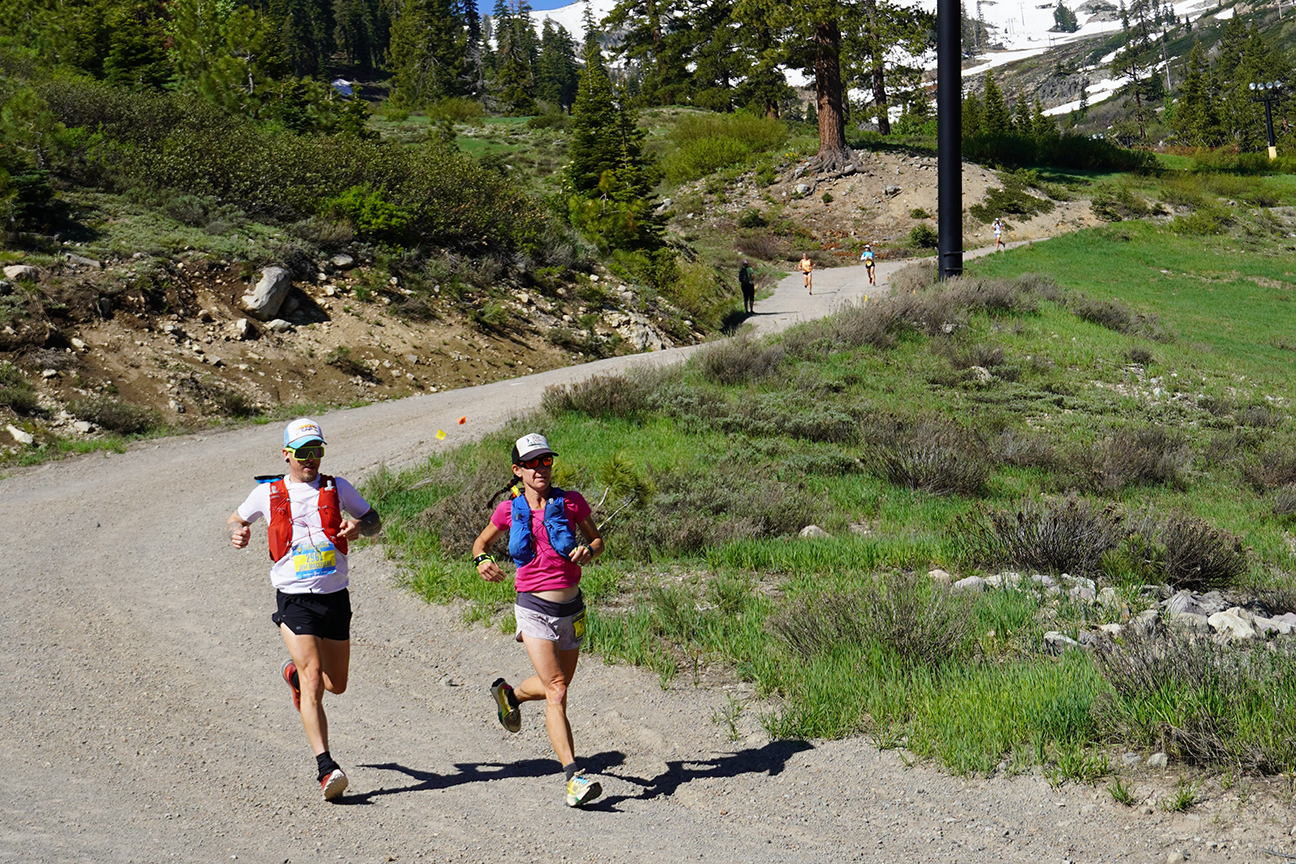
Adjusting to running on trails and approaching your first trail running race can happen quickly, but a measured approach with some guidelines will help it go more smoothly.
“In the first 8 to 12 weeks, keep the focus on the same fundamentals from marathon training: consistent aerobic running, gradual progression of volume and intensity, and targeted strength work,” Driscoll recommends. “Next, layer in the trail-specific skills and durability needed for efficient climbing, controlled descending, and technical footing.”
Here’s a simple plan to do just that:
Weeks 1 to 4 – Dabble, dabble, dabble
Focus on runnable trails and trail running skill building (like uphill running, moving confidently through challenging or technical terrain or speed hiking as examples). Let yourself have fun, play and lean into the adventure of learning about and exploring something new.
Weeks 5 to 8 – Figure it out
Gradually add in vert, practice downhills in a controlled way and keep leaning into your weekly road speed (if you’re enjoying it) to help balance your training shift.
Weeks 9 to 12 – Full send
Spend more time on the trail and incorporate a weekly long trail run where you practice fueling. This is also a good time to find your first trail race at ultrasignup.com and start training with specific terrain in mind.
Now, if you’ve gotten here and all of this sounds like a lot, remind yourself that you already know how to run. You’ve run marathons for goodness sake. And trust me, coming over the trails will be a transition you won’t regret.
“At the end of the day, running is running and if you can be open and flexible to using new skill sets and facing varying conditions then road running translates to trail running very well.”
Sometimes just finding and committing to a low-key race is the best way to jump-start training. Find your first trail race here.
Read More by Ashley Arnold
Contributing writer Ashley Arnold is an ultrarunner and the former director of brand at Fleet Feet who lives in Missoula, Montana, with her husband and two young children. She tells stories through video, words and photos, and is most at home running trails, adventuring in wild places with her family and sipping coffee while eating cake.
- Trail Tested: The North Face Altamesa 500 V2
 The North Face Altamesa 500 V2 is a cushy and versatile daily trainer for the trails with road running shoe comfort and performance.
 - Slowing Down to Immerse in the Landscape
 Instead of trying to conquer the trail, take time to fully immerse in the landscape around it.
 - Why Runners Should Care About the Roadless Rule
 Roadless areas are integral to trail running. If you want those places to stay intact, you need to act now.
RELATED: Do You Remember Your First Mile?
RELATED: What to Expect For Your First Ultra
RELATED: Transitioning from a Marathon to a 50K
RELATED: 8 Mistakes New Trail Runners Make (And How to Avoid Them)
RELATED: Your Training Should Be More Fun. Here’s How.