
Here are some key insights you should understand when you find yourself on the starting line of your first ultramarathon.
Here’s a secret nobody tells you before your first ultra: just about everyone standing at that start line once had no idea what they were doing.
The guy with the stoic stare? He forgot to put food in his drop bags and survived on pickle juice and vibes. The confident-looking woman in the matching kit? She cried in a porta-potty at mile 47 of her first hundred. The sport’s most decorated champions have all, at some point, made choices so baffling they became the stuff of legend. The first time I ever got to start a race in the elite wave, I realized I had left all of my nutrition on the counter of my Airbnb, miles away. Thank god for aid station snacks.
So if you’re reading this in a mild state of panic because you signed up for your first ultra and suddenly realized you have no actual clue how race day works, welcome. You’re in good company.
A Simple Guide to Running Your First Ultra
The Logistics Nobody Explains
Starting corrals, waves, and pre-race briefings.
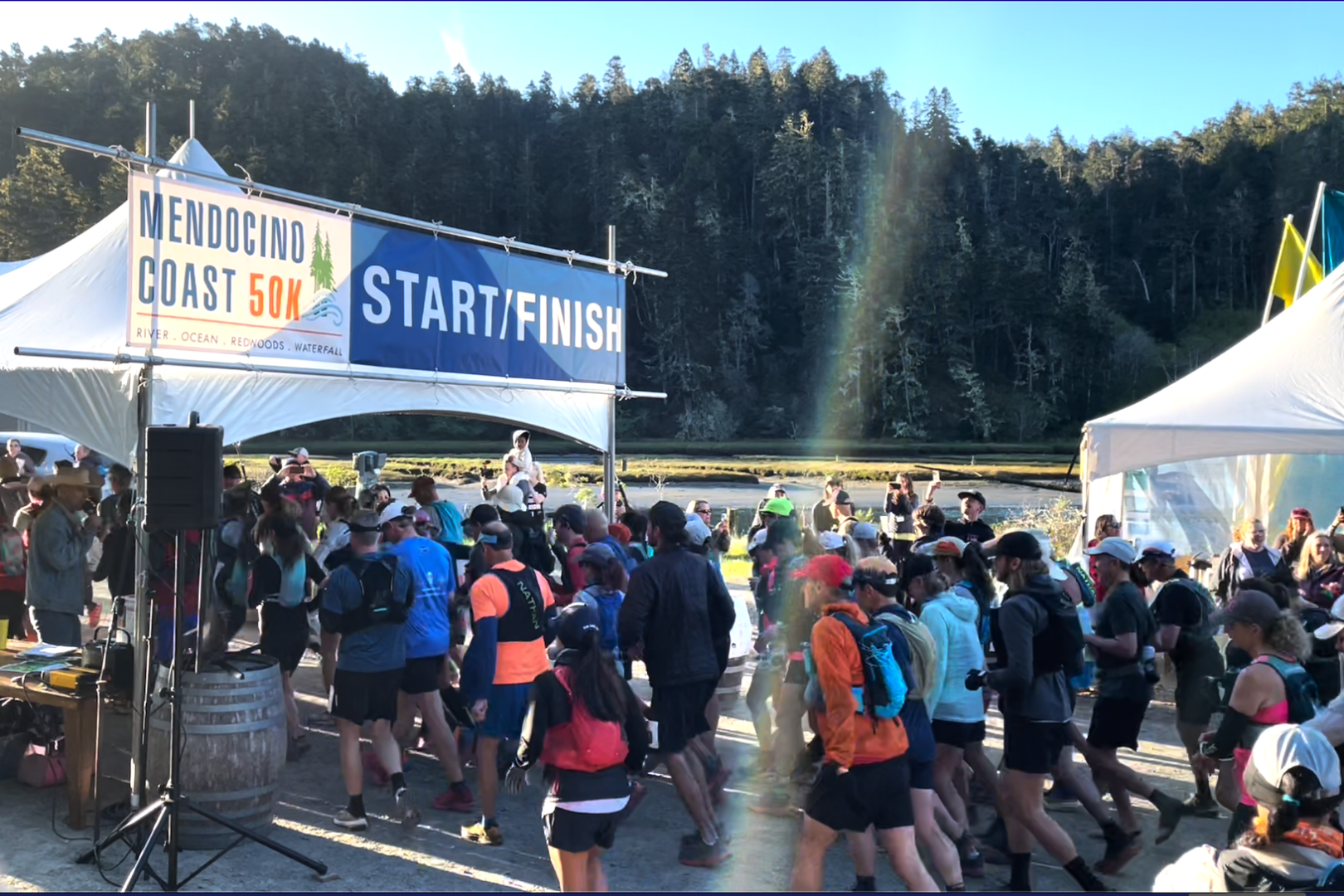
Ultramarathons operate on a different set of assumptions than road races. Most races won’t have starting corrals, and only the biggest races have separate waves, no pace groups, no mile markers every mile. Depending on the race, there might not even be a starting gun, just a race director yelling “Go!” while half the field is still adjusting their hydration vests.
Most ultras begin earlier than feels reasonable (5 a.m. starts are common; some 100-milers begin at dawn, others at dusk). The reason is practical: it gives everyone more daylight hours to work with, and it means the people at the back of the pack aren’t finishing in complete darkness. Or at least, not only in complete darkness.
Before the race, you’ll likely attend a mandatory pre-race briefing, either in person or via video. Do not skip this. Race directors will cover course markings, aid station locations, any last-minute changes and questions, plus specific hazards you should know about (wildlife, river crossings, exposed ridgelines, expected weather, and that one section where everyone gets lost). They’ll also explain the rules around pacers, crew access, and outside assistance, which vary wildly from race to race. Even if you don’t learn a ton of new information, it can help put to rest some pre-race anxieties.
To Crew, Or Not to Crew
Crew is not a requirement, but support can make a difference
Having a crew, someone (or several someones) who meets you at designated points along the course with supplies, encouragement, and fresh socks, can be a game-changer. A good crew knows when to hand you a sandwich and when to hand you a reality check. They can refill your bottles while you sit down, swap out your shoes if your feet are wrecked, and remind you that you wanted this when you’ve temporarily forgotten.
But here’s the thing: you absolutely do not need a crew for your first ultra. Plenty of people finish their first 50K, 50-miler, or even 100-miler entirely self-supported, relying on aid stations and their own stubbornness. If you’re doing a shorter ultra (50K or under), crew access may not even be an option.
If you do have someone willing to crew, make it easy for them and be as organized as possible ahead of time. Give them a simple list of what you might want at each checkpoint, a rough estimate of when you’ll arrive, and permission to make decisions if you’re too delirious to form sentences. A good crew member is part pit crew, part therapist, part babysitter, and they deserve a very nice dinner afterward. Resist the urge to overpack, but make sure your crew has food, extra clothes and warm layers, and basic first aid.
Drop Bags: Your Future Self Will Thank You (Or Curse You)
Pack carefully, but leave the kitchen sink at home
A drop bag is exactly what it sounds like: a bag you pack before the race and “drop” at a designated aid station, where it’ll be waiting for you mid-race. Think of it as a care package from past-you to future-you. The contents depend on the race distance, conditions, and what kind of person you become when you’re exhausted.
Some general wisdom: include things you might need, not everything you might need. A spare pair of socks, extra nutrition you actually like, maybe a fresh shirt if it’s hot or a warmer layer if it’s cold. Bodyglide. A headlamp and extra batteries if you’ll be running into the night. A small bag of your favorite candy, because sometimes the only thing that gets you moving again is a handful of sour gummy worms.
Don’t overpack your drop bags to the point where you’ll spend twenty minutes rummaging through them at 2 a.m., unable to make a decision. Label things clearly. Put the essentials on top. Future-you will be operating on fumes. Waterproof everything.
Aid Station Strategy
(Or How Not to Accidentally Sit Down for 45 Minutes)
Aid stations in ultramarathons are legendary. Depending on the race, you might find nothing more than water and electrolytes, or you might stumble into a full buffet: quesadillas, soup, peanut butter sandwiches, fruit, candy, chips, pickles, caffeinated everything. Some ultras have volunteers who will make you a custom burrito. I’m not kidding.
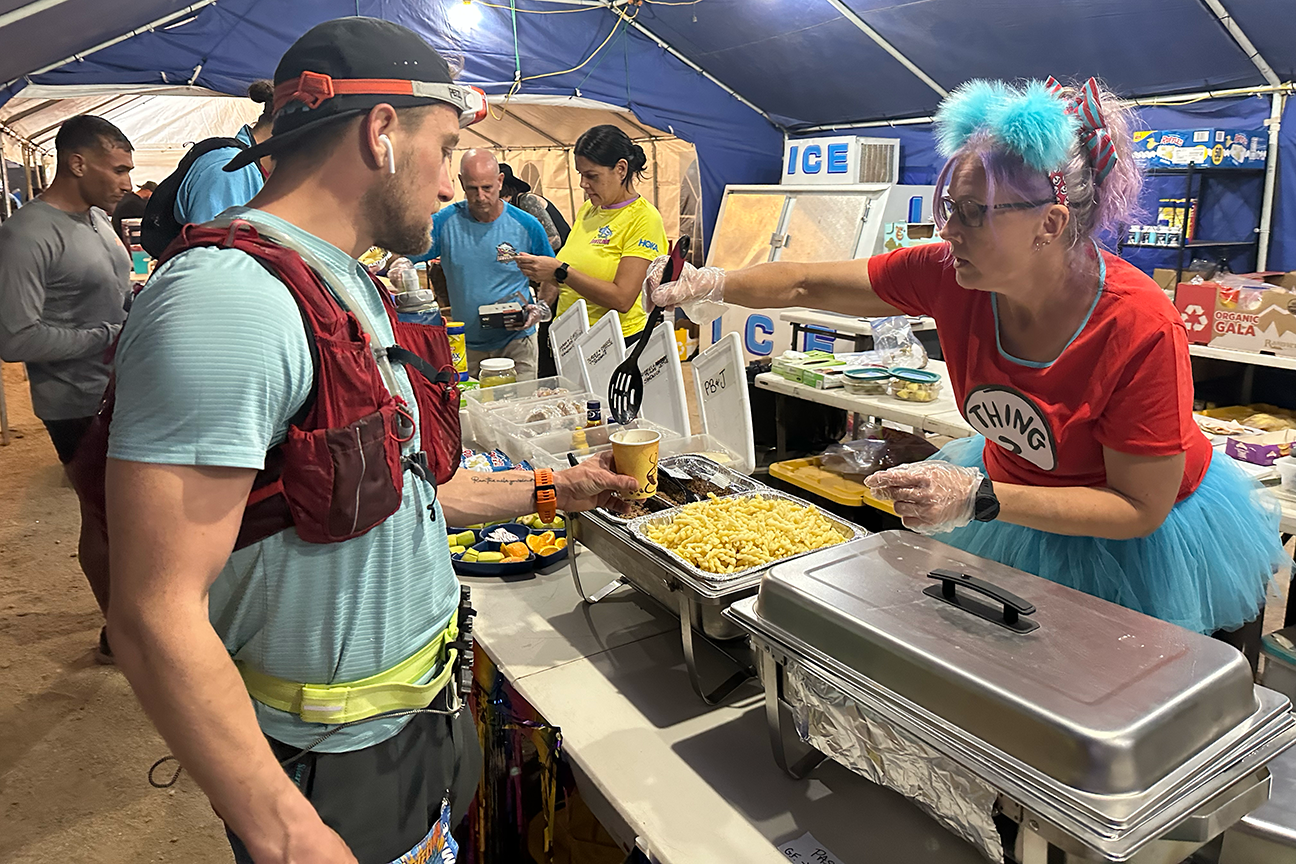
Here’s the trap: aid stations are comfortable. They have chairs. They have friendly people. They have food that isn’t crushed in the bottom of your pack. And if you’re not careful, you can lose an enormous amount of time sitting there, slowly eating potato chips, telling a volunteer about your blister situation, and generally forgetting that you’re in the middle of a race.
Have a plan. Know what you need to do at each stop, refill bottles, grab food, check feet, leave. Some runners use a rule: no sitting unless something is medically wrong. Others give themselves a time cap (five minutes, 10 max). The goal isn’t to rush out so fast you forget to eat, it’s to keep yourself from sinking into a chair and losing the will to stand back up.
What Time Cutoffs Actually Mean
Familiarize yourself ahead of time
Most ultramarathons have cutoff times: deadlines by which you must reach certain aid stations or the finish line, or you’ll be pulled from the race. They exist for safety reasons (races can’t staff aid stations forever, and course conditions can change), and they vary widely based on course difficulty.
Getting cut is not a moral failing. It’s a logistical reality. Some courses have generous cutoffs; others are notoriously tight. Knowing the cutoff times in advance, and doing some basic math about whether your target pace keeps you ahead of them, is just smart planning. As annoying as cutoffs may seem—especially if you’re fighting to stay ahead of them—they are the race directors’ logistical love language to prevent you from wandering around in the woods all night.
I like to write down splits and cutoffs on my arm (and accept that I will inevitably sweat it off), and put it on an index card, and DIY laminate it with packing tape so I have a more permanent option I can stash in my vest. This helps me remember some rough time goals, cutoffs, and aid station locations and distances when my brain forgets ho w to do basic math because it’s just been eating chocolate flavored goop for hours.
If you’re on the bubble, communicate with aid station volunteers. They’ll often tell you honestly whether you’ve got a shot. Just knowing what the reality is might help, especially because you can make miraculous comebacks after ingesting calories and fluids. But if you do get cut, know this: you still covered more ground than everyone who stayed home. Getting to a cutoff means you tried something hard. That counts for a lot in this sport. Always be respectful to volunteers and race directors, we couldn’t do this without them.
When It All Goes Sideways
“If you start to feel good, don’t worry. It won’t last.”
Here is the only guarantee I can offer: something will not go according to plan. Maybe it’s the weather. Maybe it’s your stomach. Maybe it’s a wrong turn, a rolled ankle, a headlamp that dies, realizing the only music you uploaded to your mp3 player is Fleetwood Mac’s “Rumors,” a mental low that hits at mile 23 and doesn’t lift until mile 38. Ultras are long enough that things will go wrong, and then, if you’re patient, often right again.
I received my all-time favorite piece of ultrarunning advice during my first 100-miler from an experienced stranger, “If you start to feel good, don’ t worry. It won’t last.”
Any feeling is temporary. Knowing that you stayed curious when things got hard lasts a lifetime. Often things will start to get better not long after you feel like you’ve reached rock bottom. Hang in there and do your best, but don’t bury yourself if things don’t work out.
The runners who finish aren’t necessarily the fastest or the most talented. They’re the ones who figured out how to solve problems in real time. They adjusted their pace when it got hot. They changed their nutrition when their stomach revolted. They walked the climbs, ran the descents, and kept moving when everything in them wanted to stop.
The most important skill in ultrarunning isn’t speed. It’s flexibility. The willingness to throw out the plan and make a new one. The ability to be uncomfortable without panicking. The stubborn belief that if you just keep putting one foot in front of the other, something will eventually change.
You’re More Ready Than You Think
First-time ultra nerves are almost universal. You’ll stand at that start line convinced you have no idea what you’re doing. And you’re right. You don’t, not really. Not yet.
But the beautiful thing about ultras is that they teach you as you go. Every mile is new information, and it’s your job to stay open and receptive to whatever lessons this quirky sport has to teach you.
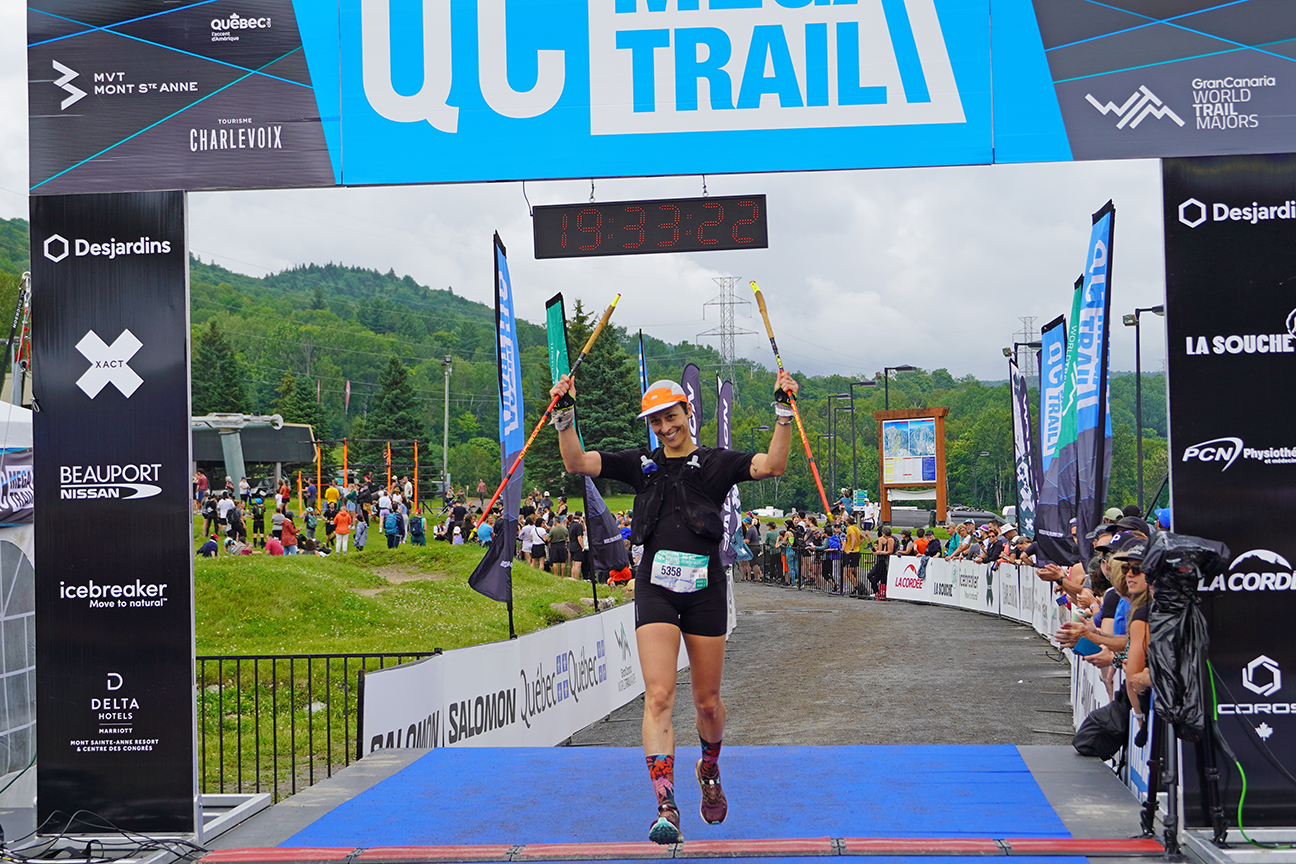
Every low is followed by a high (eventually). And when you finally cross that finish line, whether it takes you eight hours or thirty, you’ll know something you didn’t know before.
You’ll know what you’re capable of.
And that’s worth every confused, terrified, triumphant step.
About the Author
Zoë Rom is a journalist, writer, and podcast host based in Carbondale, Colorado. She’s the co-host and producer of The Trailhead Podcast and Your Diet Sucks Podcast, and author of the book “Becoming a Sustainable Runner” (2023).
RELATED: Why Ultrarunners Need to Embrace ALL Training Zones
RELATED: How to not DNF a 100-miler
RELATED: Why and How You Should Hydrate Before, During, and After a Run
RELATED: Your Training Should Be More Fun. Here’s How.
RELATED: Choosing the Right Ultrarunning Coach for You
2 comments
Ryan Peternell
Hey Zoe – Thanks for the article, and thanks for the podcast! Loving it and can’t wait to cross my first start line at Antelope Canyon in a month!
Question on the start – My 50 mile start time is 5am, what time should I plan to get there? With no corrals and a non traditional “Go”, I feel like hours before is ridiculous, but maybe 15 mins is not enough. Get there at 4am? 4:30am? If I show up at 5:05 can I still start running with the understanding that I am already 5 minutes into ‘race time’?
Cheers thanks!
Zoë Rom
Hey Ryan! Great question! I like to get there at least 45ish minutes early – enough to do a little warm up, blast some Lizzo, and potentially locate a porta-potty if necessary. It’s always better to be a little on the earlier side, as long as you don’t get too cold! Good luck out there, rootin’ for you!