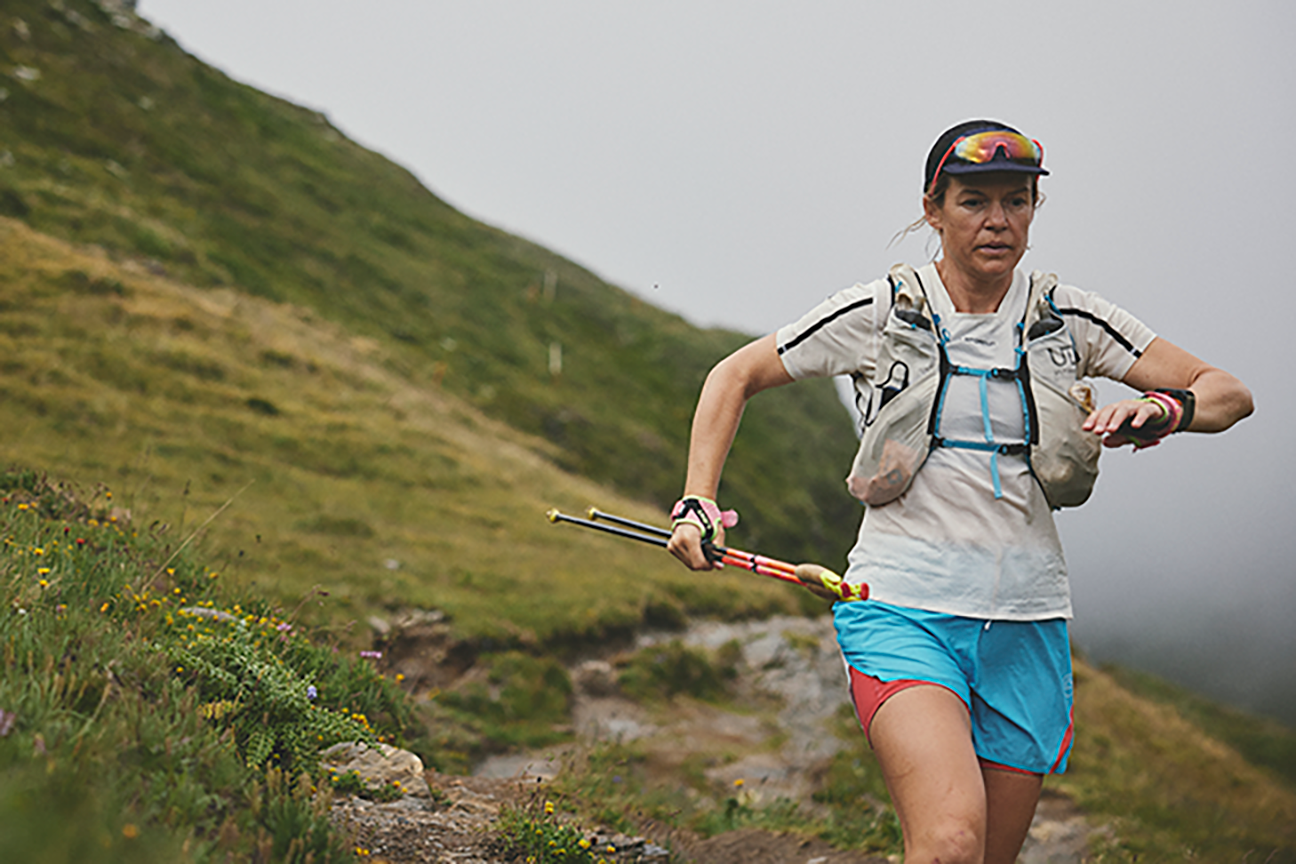
Instead of trying to conquer the trail, take time to immerse in the landscape around it.
I’m the kind of person who has a tendency to truly overschedule my day, account for every second and make it all productive. And for as much as I love spending time on the trail and in the mountains, it recently hit me: I was finding myself trying to optimize my time on the trail to simply get the most out of my training.
And as a goal-oriented person, that also meant each run became another thing to measure in my day: miles, vert, pace, time away from kids and work. Time I needed to justify to make it count.
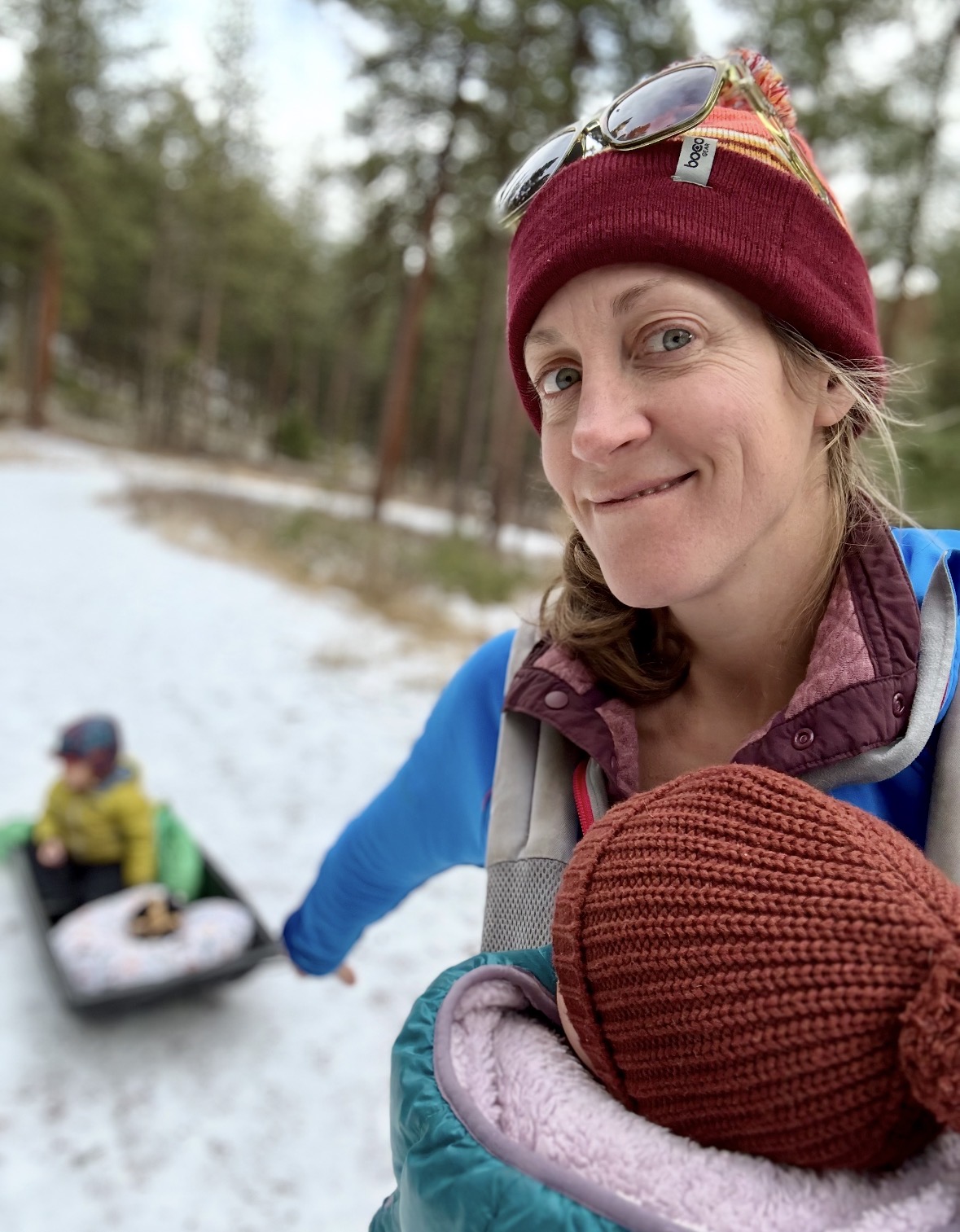
And it came from a good place: I’m 14 months postpartum and trying to find my way into racing shape. And every bit of progress helps me feel like I’m finding my body and strength again in a new way.
And while there’s a lot of value in that, because I love training and working hard toward something, there’s also value in moving slowly without a mileage or destination goal. Without turning every moment outside into another extension of productivity.
Now, this isn’t to say I don’t notice things when I run. I do. It’s part of why I love trail running: the flowers, the change of seasons, the light filtering through trees or washing over the mountains, the sounds of birds calling to one another as I pass by, the sound the trail makes underfoot depending on the weather and conditions.
But attention has different speeds and tolerances.
Moving Slowly Through the Landscape
There is a type of observation and appreciation that happens while moving quickly through a space. It’s sweeping and fleeting. And the type of deep appreciation that happens when you stop long enough to just be in a place. And that’s hard to find when you have time boxed yourself to 90 minutes desk-to-trail-to-desk.
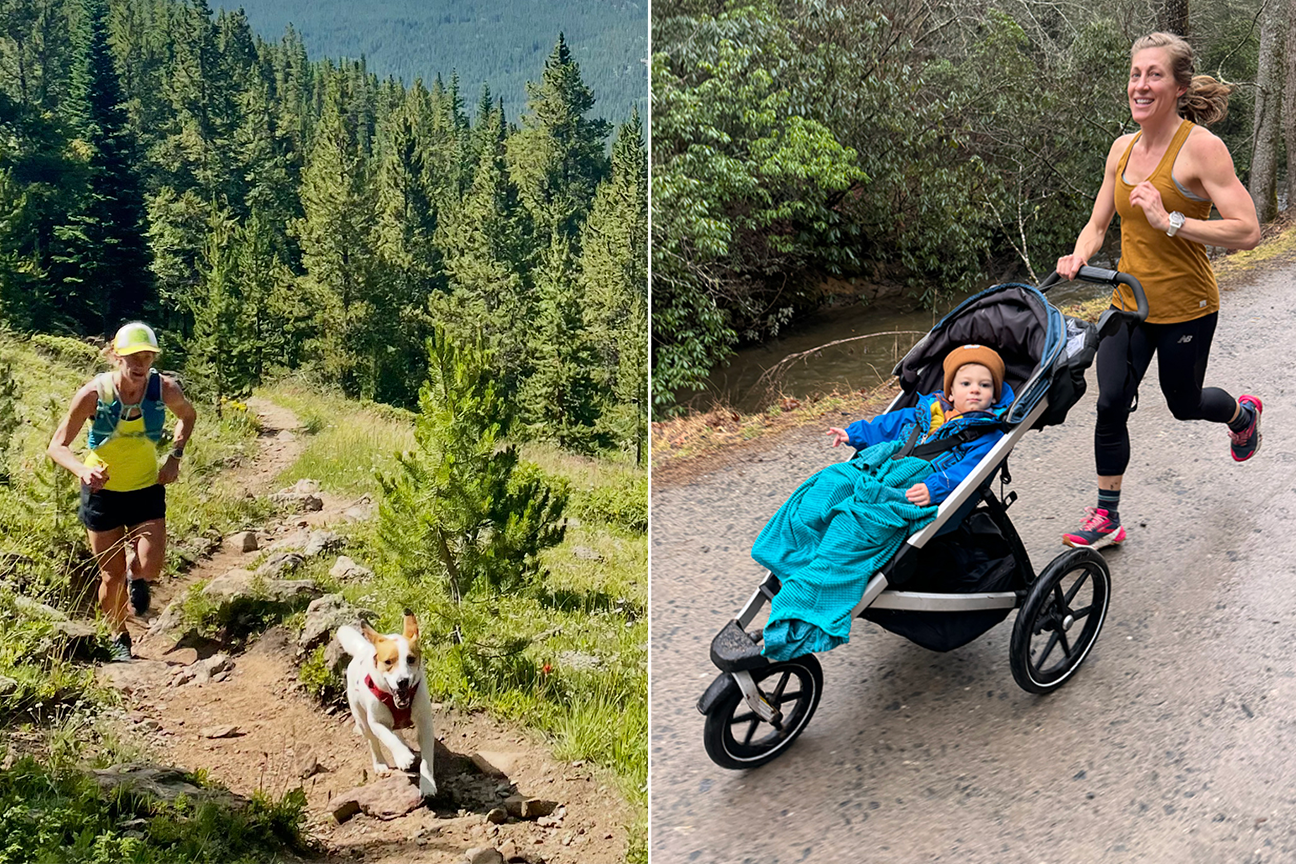
I first started thinking about this a few months ago when I took my 3-year-old hiking. For days he had been telling me that he wanted to hike all the way up the M in Missoula, which is a really well-known destination midway up Mt. Sentinel. It’s a well-traveled route that’s about seven-tenths of a mile from the trailhead that zig zags and switchbacks all the way.
I was excited to set out on this adventure, excited to watch him do something hard and excited to celebrate his accomplishment when we reached the top.
Despite all his talk of “summiting,” we made it to the first switchback.
And there, he found a whole world in the rocks and plants and dirt. We never left that corner of the trail … for the next 90 minutes.
At first, it was an internal battle to let go of reaching our destination. I could feel the familiar pull in me: keep going, get somewhere, finish the thing we came here to do. But when I stopped resisting I realized he wasn’t trying to conquer the M, he was intent to full immerse himself in the landscape around it.
And that’s when I decided I’d better let him take the lead. And so I settled in to see what I could learn and discover with him.
There was an entire world tucked into that switchback I had moved past countless times and never actually seen.
And that’s one of the incredible things kids can do for us: interrupt our efficiency and help us to see that wonder and awe is everywhere.
It made me think about trail running. And how I can make more room for awe and wonder.
Studies have linked nature exposure to lower stress, improved mood, better attention and reduced rumination. In one Stanford-led study, a 90-minute walk in a natural setting reduced self-reported rumination and activity in a part of the brain associated with repetitive negative thought. Another large study found that people who spent at least two hours a week in nature were more likely to report good health and well-being.
Attention Restoration Theory suggests that simply being in nature supports the development of a “soft” attention that helps our brains recover from the fatigue of daily time management and optimization.
And when we put our head down and power up the mountain as hard as we can, we simply don’t notice everything around us. And, paying attention to the world around us matters.
The Simple Art of Noticing
This came up when I recently interviewed author Richard Louv for a podcast I launched this summer called Raising Wild. Louv is best known for Last Child in the Woods, and his forthcoming book, Noticing, explores what it means to develop a deeper, more sensory relationship to the natural world.
Louv argues that a deeper, more sensory, more intimate relationship with the natural world that uses more than our obvious five senses helps us rediscover the world and ourselves. And just because we spend a lot of time outside doesn’t mean we spend a lot of time noticing where we are. He reminds us that noticing involves developing a relationship with the non-human world and no longer viewing it as simply a backdrop.
And when we’re training for races and focused on optimizing workouts on the trails, we can easily slip into not noticing the magic of the landscape around us and, instead, leaving it to be simply the vehicle through which we become fit.
The landscapes that we run through are living places. And the more closely we pay attention, the harder it becomes to treat them as backdrops.
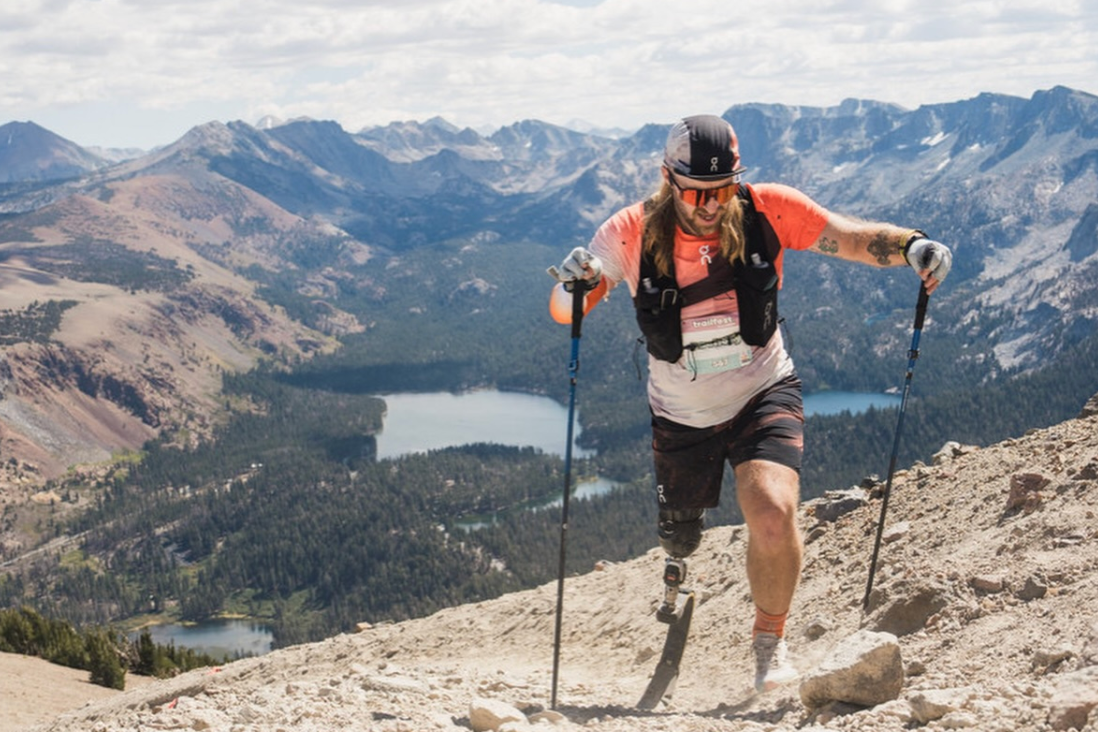
This came up again, just yesterday, in a conversation I had with Mike Foote. Foote, who also lives in Missoula, has spend over 15 years in the sport of trail and ultrarunning, and has built much of his life around moving through the mountains.
But for almost two years he’s battled with health complications from COVID-19, which kept him from running and doing much physical activity at all.
When I asked him about what his period of inactivity taught him and changed in him, it reminded me of Louv’s invitation to notice:
“There’s this ponderosa pine in the park next to our house that has bear claw marks on it that I never noticed before. I’d walked by it a hundred times. Now I know where certain bird nests are, and I’m more curious about the species of the underbrush,” Foote told me. “I didn’t notice those things when I was running by them.”
Taking Time in Our Landscapes
Earlier this week, Foote summited a local Missoula peak for the first time in a long time. He told me he hung out on the top for 20 minutes, just looking around and taking it all in.
Perhaps, he said, that kind of attention will fade as he starts moving faster through the mountains again.
But I don’t think it has to. At least I hope it doesn’t.
Because as someone who is chronically moving too fast, I know how easy it is to let trail running become another excuse to keep moving fast. Even in the places that demand we slow down and pay attention.
And I’m not saying every run needs to become a slow, contemplative walk. I still want to train hard. I still want to race. I still want the satisfaction of running as hard as I can to reach a summit.
But I also don’t think that’s everything.
So, lately, I’ve been building in small moments of noticing as Louv suggests, into my runs. It’s nothing dramatic. I stop two or three times, sometimes for just a minute. And I look around. I listen, smell the air, get closer to the ground to view the landscape from another angle and perspective.
And, you know what? I’m loving trail running even more. Not because I’m training less seriously, but because I feel like I’m relating to the landscape in an even bigger, more meaningful way.
Plus, the more closely I pay attention to the mountains I run through, the more responsible I feel for them. And when we’re in relationship with a place, we’re far more likely to stand up for it.
RELATED: The Importance of Celebrating Microwins
- Trail Tested: The North Face Altamesa 500 V2
- Slowing Down to Immerse in the Landscape
- Why Runners Should Care About the Roadless Rule
- 10 to 100: A Program To Guide More Women into 100-Milers
- Fueling for Ultras Can Be Complicated: Here’s How I Finally Made it Work for Me
- How to Train for Trail Races Without Access to Trails