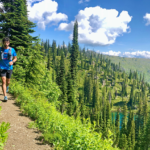
If you don’t have regular access to trails, make these adjustments to increase the likelihood for success on race day.
You don’t have to live in a trail mecca to train for trail races. And for many people interested in trail running, regular trail access just isn’t in the cards because of where they live or their daily schedule.
I now live in a city with unbelievable trail access. I can run out my door any day and be on dirt within a mile. But even when I lived in Asheville, North Carolina, a southern mountain town known for its outdoor recreation opportunities, I still had to drive about 30 minutes to get to the nearest trail network. And my schedule rarely allowed me to make that hour-long commute more than once a week.
But, if you want to run trail races and you don’t have access to trails, fear not: You can still be successful off-road, it just takes understanding the right way to train for trail races based on where you live and what you have access to. Because trail running demands more than fitness. And if you don’t prepare for that, the gap becomes obvious real quick.
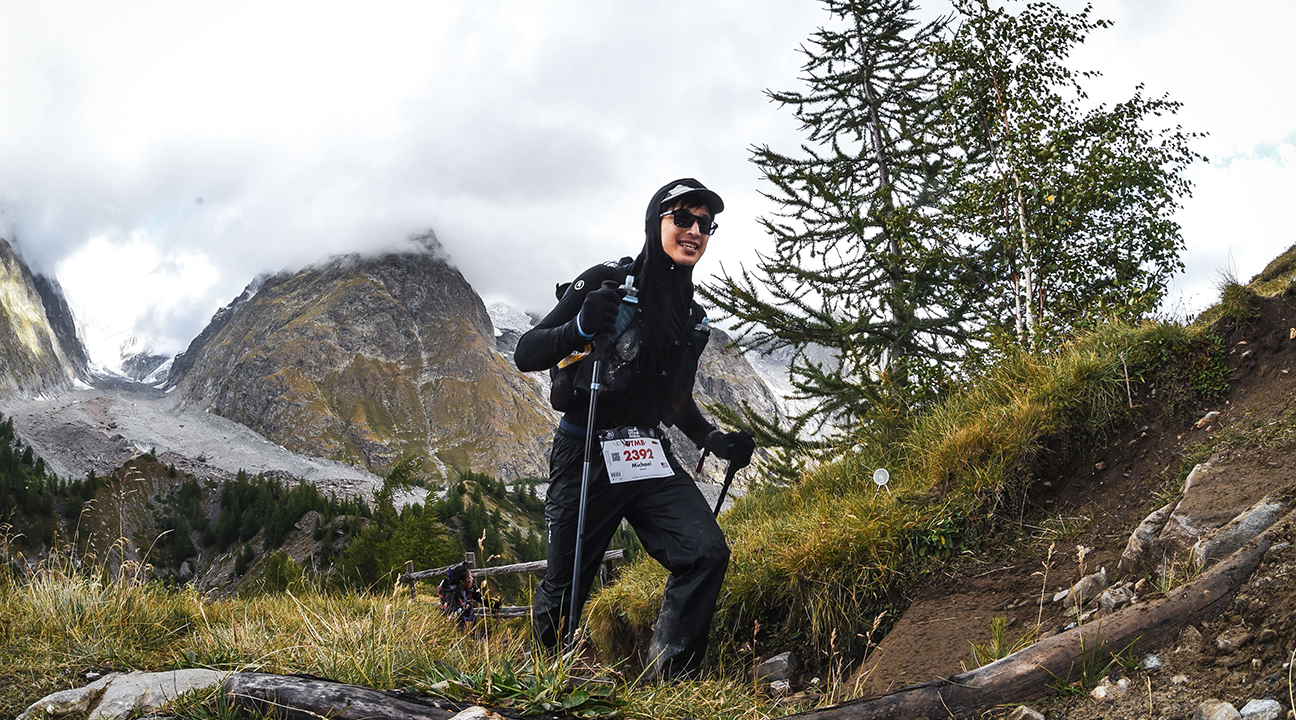
And that’s where Victor Ornelas, a 2:26 road marathoner and competitive runner in Chapel Hill, North Carolina, found himself after a big build up for the Canyons 50K in Auburn, California, last year.
RELATED: Find Your Next Trail or Ultra Race
Fitness is your foundation, but road running alone won’t cut it
Ornelas loves racing trails. But as a busy dad of two young girls and also the head of vendor management at Fleet Feet, he has little time to drive to the mountains for truly challenging singletrack terrain. So he starts with the basics.
“Road and bike path training first builds a strong engine,” he says. “And then I work backward from my race and adapt my training to fit the reality of my environment and my life.”
For Ornelas this often means accepting that his trail-specific training will be far from perfect, and that some of those gaps won’t clearly show up till race day.
Last year, Ornelas put in the miles and speed work needed to cover the 50K distance. What he didn’t fully account for, though, was the technical element of the trails he’d be traversing throughout the race.
“I underestimated the severity and technical nature of the downhill terrain,” he says. “I found myself hesitating, concerned that one misstep could lead to a serious fall.”
The mental intimidation held him back as much as the terrain itself.
That hesitation is something running coach Greg McMillan often sees in athletes who are transitioning from the roads to trails, or in runners who aren’t getting enough technical terrain exposure, but are otherwise strong athletes, like Ornelas.
Plus, McMillan says, “One of the hardest things is learning to tolerate uneven surfaces for a long time. On the roads, you just don’t get that variety.”
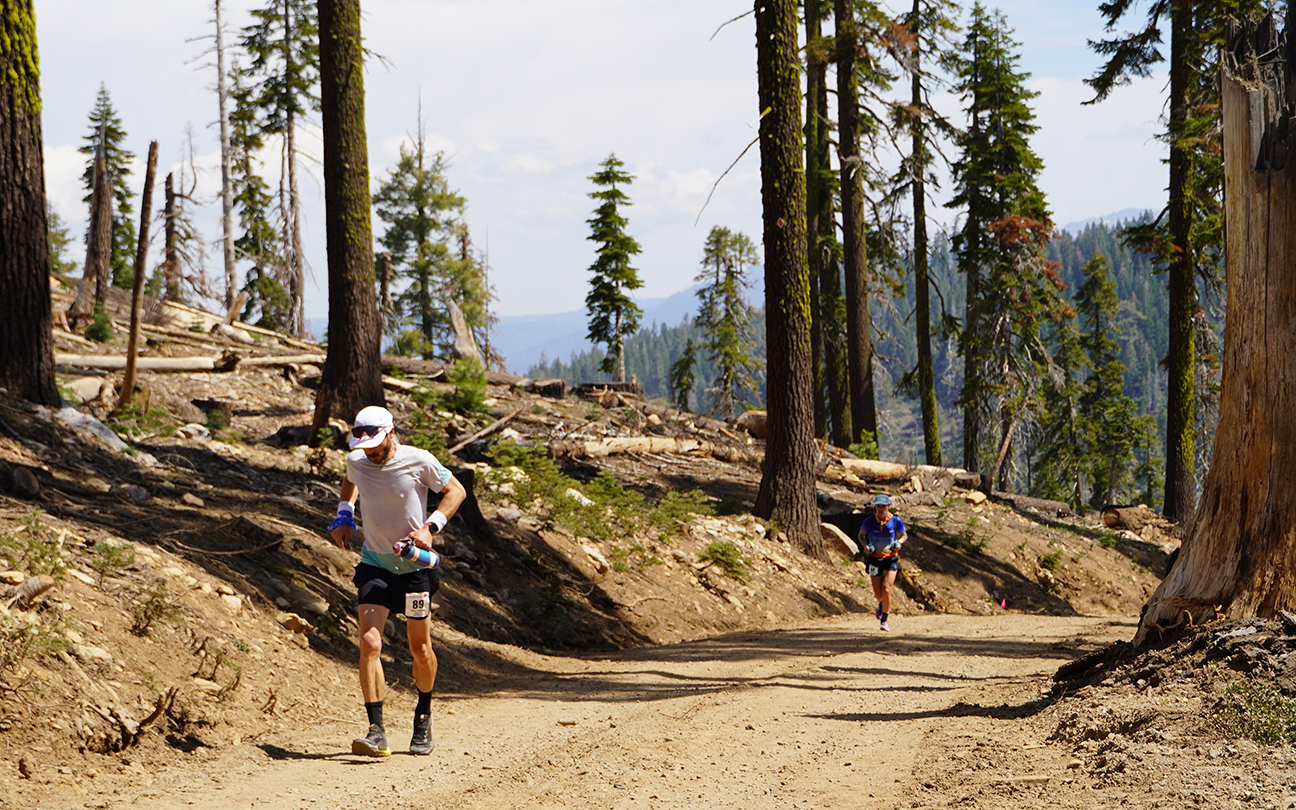
If you can’t replicate trails, how can you train for trail races?
McMillan says most people don’t have the ideal environment to train for trail races. But almost everyone has access to uneven surfaces. This is where you get to be creative. And it’s also what makes training for trail races without trails surprisingly doable.
That’s because trail running requires a combination of systems that are quite different from road running. And each of them can be trained, even if imperfectly.
The challenge isn’t just fitness. It’s learning stability, anticipating the best foot placement, climbing efficiently, building durable quads for downhills, understanding sporadic trail-running pacing and even getting the gear right.
So, how do you do it? Here are five key adjustments you can make to increase your likelihood for success.
1. Train for Trail Races: Develop better proprioception
If you’re a road runner, proprioception isn’t something you’ve spent much time thinking about. That’s because running on the road is repetitive and predictable. The surface is smooth and foot placements are rarely dramatically different. Not so much on the trail.
Once you move off-road to a surface with rocks, roots, gravel, mud, rutted hillsides and off-camber terrain your ability to sense where your body is in space and adjust quickly becomes part of how you run.
And if you don’t train those muscles, even a modestly technical course (honestly even smooth singletrack with some off-camber sections) can wear you down fast as your stabilizer muscles fire over and over with each step. And if you haven’t practiced, they’ll send the alarm.
This happened to me once during a big race. It was a marathon course that started on the road and ended with a steep, rocky trail climb. I spent the majority of my training focusing on road speed to tackle the early miles and neglected to think through the toll those miles would take on my body late in the race when I needed to push hard on technical terrain.
I fell over with cramps in both my calves. Simultaneously. Why? I hadn’t prepared for the micro adjustments I needed to make on a technical, fast course. My stabilizing muscles were not ready, Big mistake.
Ornelas has experienced this, too. “There’s a level of awareness required,” he says. “Foot placement, body positioning, quick decision-making … it all adds up.”
According to McMillan, even if you don’t get to the trails, you can find uneven surfaces just about anywhere. “Grassy fields, dirt next to a paved path, soccer fields, playgrounds … they’re all great options,” McMillan says.
He recommends incorporating surfaces like this during normal and easy runs. Whenever possible, he suggests swapping pavement for grass, gravel, or dirt, stepping off the sides of paved paths and back again mid stride to practice micro adjustments on uneven terrain.
“You might just have to do figure eights or small loops, but that exposure helps train the stability muscles that don’t get worked as much,” he says. “You get more dynamic and athletic. It may not be exciting, but you do what you need to do.”
RELATED: How to Transition from Marathons and Train for Trail Races
2. Train for Trail Races: Incorporate dynamic movement and play
The ability to move laterally, absorb impact and stay smooth over unpredictable terrain is critical on race day.
Unlike road running, when you race trails, you move side-to-side as you navigate obstacles, adjust mid-stride and hop up over rocks, roots, even downed trees.
This stands out a lot for Ornelas when he gets trail time. “Your cadence is constantly changing based on terrain, elevation and footing, he says. “Trying to force a road-based rhythm often leads to early fatigue.”
So this is where McMillan encourages runners to get creative. Run across a soccer or baseball field, cut through a playground, jump off low structures and practice moving up and side to side. On trails, he says you do a lot more hopping around than most runners expect … particularly on descents.
The moral of this story? Take playground running kind of seriously, but also approach it with a sense of play. Parkour, anyone?
It’s also different from the usual tempo or track workout, and McMillan says this is a good thing. “It’s a more specific, fun and creative way to mentally rehearse what race day might feel like.”
3. Train for Trail Races: Learn to move efficiently uphill and downhill
Knowing when and how to hike is an underrated skill. And it’s one that many road runners don’t expect when they hit the trails. In trail racing, especially ultras, walking uphill is a part of the game.
“Getting comfortable power hiking is really important,” McMillan says. “And it’s counter to what you do in road running.”
For Ornelas, that shift has been just as important as any workout. He treats hill repeats as a way to both run hard and simulate sustained climbs that require hiking.
McMillan suggests a similar approach: hill repeats with hiking segments, leaning into treadmill inclines as much as possible and also seeking out stairs and parking garages for adding steepness.
He also recommends hiking uphill and running downhill as an alternative hill workout that helps prepare your quads for impact.
This is a very important place that many runners fall apart during ultras when they haven’t adequately prepared eccentric strength ahead of time.
Ornelas felt that firsthand at Canyons … in a big way. And it really held him back.
The takeaway? Downhill repeats, even on mild grades, can have huge payoffs on race day.
RELATED: Why You Should Run at Least One Practice Trail Race Before Your First—or Next—Big Ultra
4. Train for Trail Races: Break your “steady pace” mindstead
I think the best way to describe trail pacing (particularly on mountainous terrain) is sporadic, which is honestly quite fun when you’re used to it. Sometimes a mile with a climb can take 30-plus minutes while a flat mile can take eight or nine.
“The biggest shift is letting go of pace as my primary metric,” says Ornelas. “On trails, trying to force a road-based pace often leads to early fatigue.”
The flats are fast, the climbs are slow and sometimes the descents, if they’re technical enough, can feel even slower.
To prepare for this, McMillan suggests utilizing workouts that alternate effort rather than pace, and incorporating tempo pace followed by hill hikes that move immediately into flat tempo pace again in order to stack the variation in pace and movement.
Mixed terrain runs can help here too. Think running from the road to the soccer field, over and through playground structures and back to the road.
Remember, the goal isn’t consistent speed, it’s adaptability and variation with sustained effort.
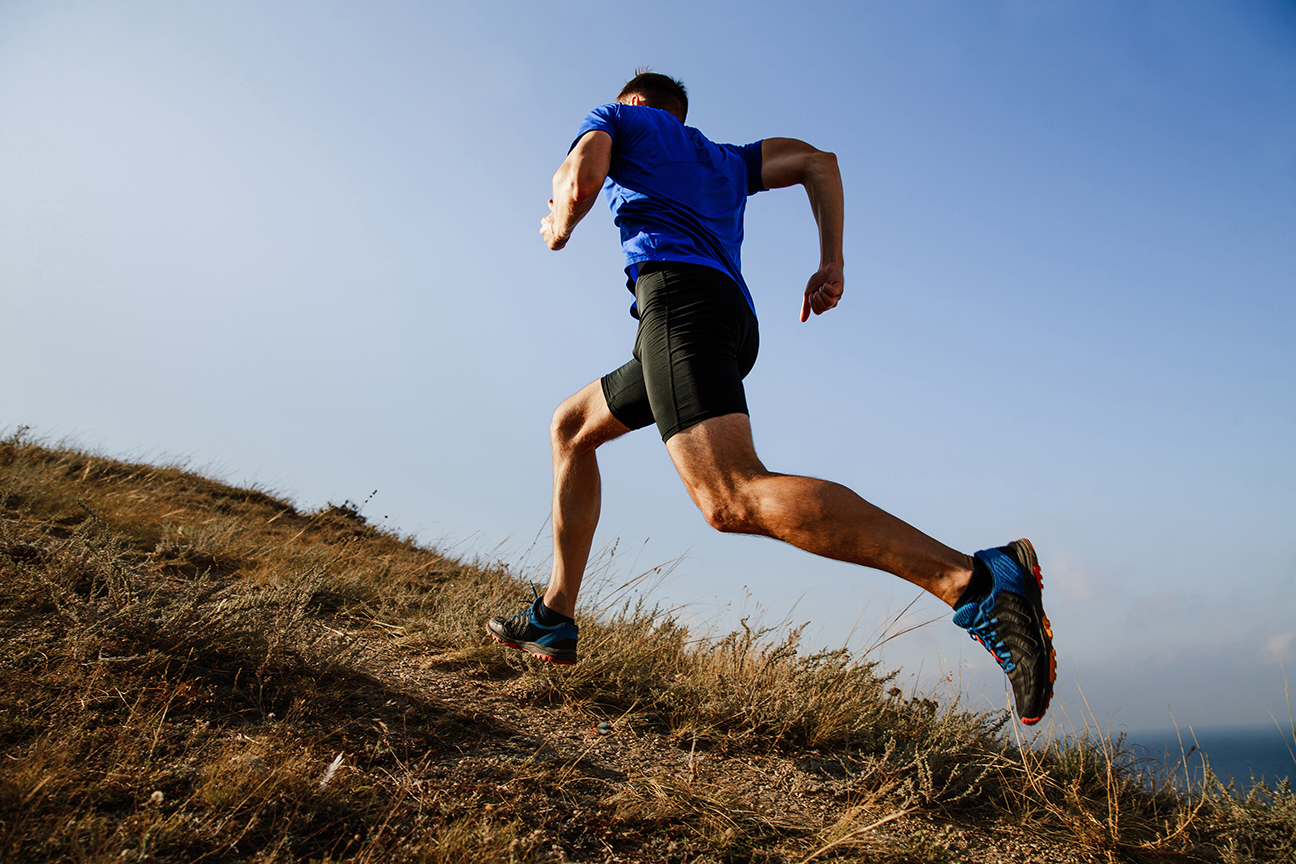
5. Train for Trail Races: Use trails strategically if you have intermittent access
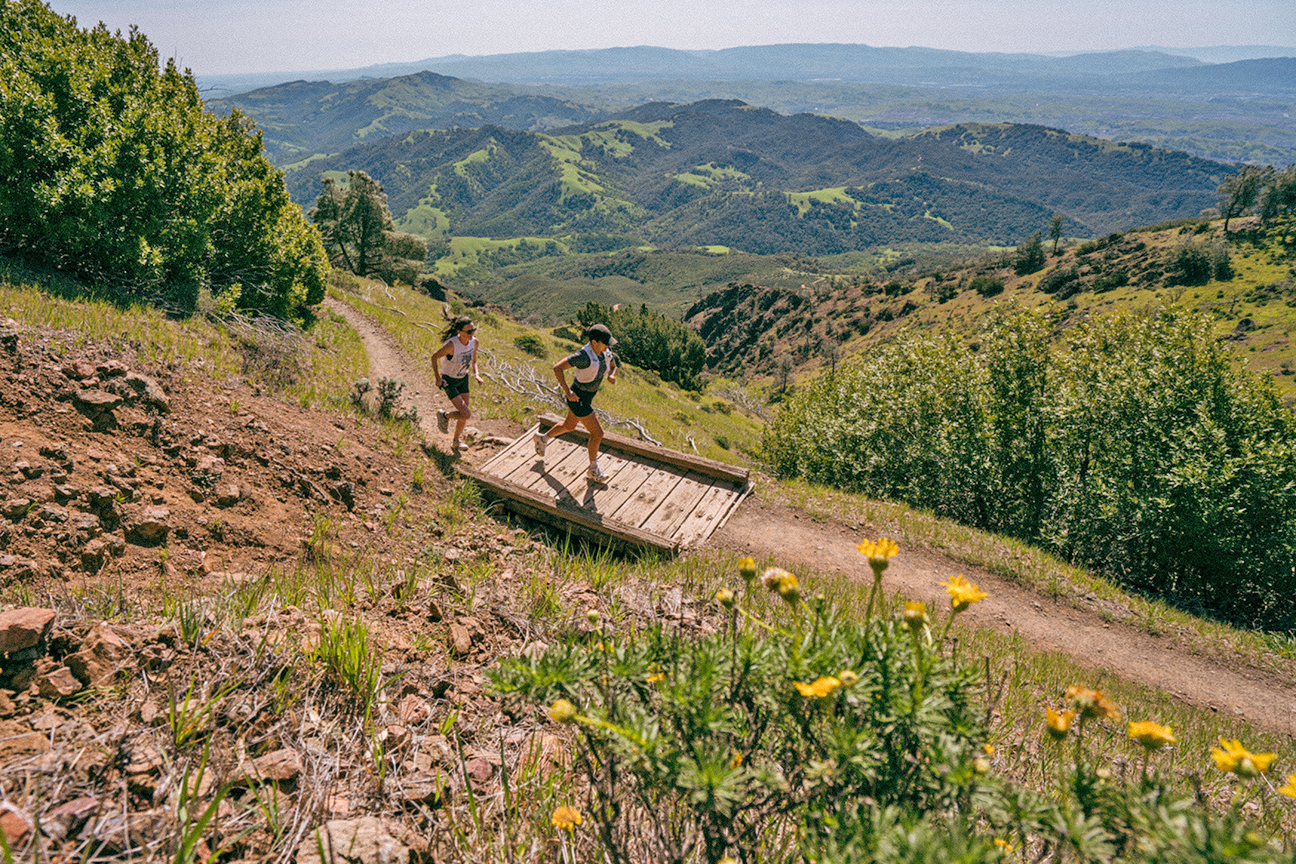
The best way to train for trail races is on trails similar to what your race course will have. If you can get yourself to a bona fide trail every so often, do it. Even if there’s only one steep hill, use that repeatedly with unique up-and-down circuits or hill repeat workouts. Or create a long run with multiple loops on that specific section. And use those runs as dress rehearsals for race day. “It’s almost like planning an expedition,” says McMillan, who says points out that it’s also an ideal time to test all your gear.
Ornelas agrees. He says he makes several dedicated trips to the mountains during his training cycles, because, as he says, “that can’t be fully replicated on pavement.”
If you can, do your long runs on the trails. But if that doesn’t work with your schedule, prioritize race conditions and quality sessions when you can.
“Confidence on technical terrain ultimately comes from exposure. And there’s no substitute for putting in the reps,” Ornelas says. “And living outside of a mountainous area means I can’t fully replicate race conditions during training.”
But you can control your mindset. “I approach races with an open mind, and I take the day as it comes,” he says “When conditions push me outside my comfort zone, the key is to reset. Those moments often become the most valuable learning opportunities.”
You can’t control everything on race day, you will likely be surprised—albeit even humbled— by a few things. But that’s also just part of the sport. Trail running is one part adventure after all.
“It doesn’t have to be perfect preparation,” McMillan says. “But if you give yourself exposure over time, you can feel like you’ve done a good job getting ready.”
You’ve got this
All that said, even with such careful and planned preparation, the hill work, the playground sessions, the carefully mapped out trail days, there will still be a gap. But that’s just training. And also life. With some adaption and adjustments, you can still train for trail races—even if you don’t live in the mountains.
So remember this on race day: When you come to a decent you didn’t really fully prepare for, and your quads that feel like warming string cheese, and your ankles feel one step away from rolling over and giving out, and you’re salty and sweaty and caked in sticky gels, be sure to remind yourself that none of that is any failure of your training. It’s simply trail running. And it’s really dang fun.
RELATED: Find Your Next Trail or Ultra Race
About the Author
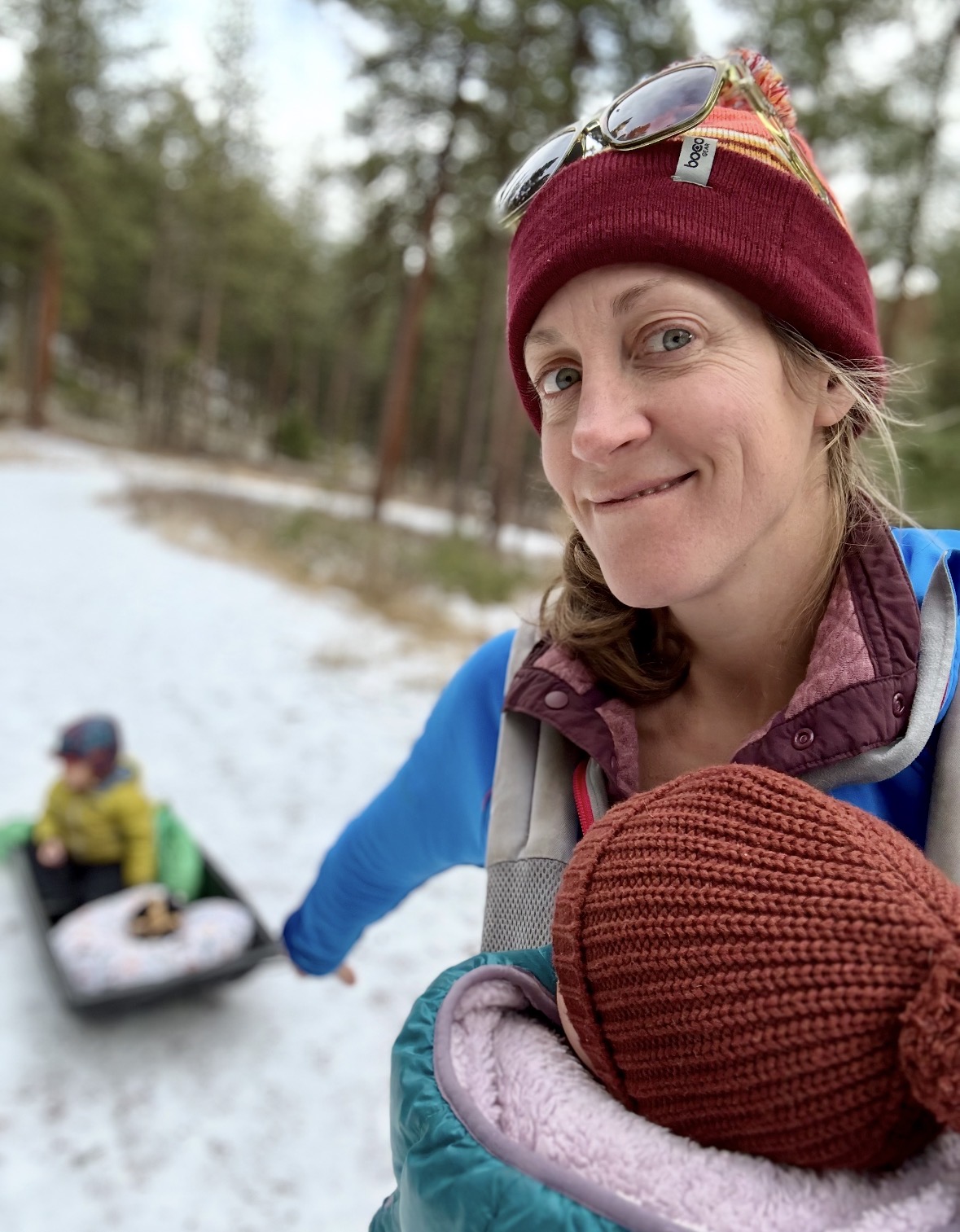
Contributing writer Ashley Arnold is an ultrarunner and the former director of brand at Fleet Feet who lives in Missoula, Montana, with her husband and two young children. Aside from writing about running and motherhood and how to train for trail races, she tells stories through video, words and photos, and is most at home running trails, adventuring in wild places with her family and sipping coffee while eating cake.
- Trail Tested: The North Face Altamesa 500 V2
- Slowing Down to Immerse in the Landscape
- Why Runners Should Care About the Roadless Rule