The 2026 Hardrock 100 was one of the most memorable of the 34-year history of the event. Here are 5 key takeaways from this year’s “Wild and Tough” run (not a race) through the San Juan Mountains of Colorado.
1. Its Always a Stunning Challenge
What always makes the Hardrock 100 special is the community it fosters—both from the respect, awe and care that the event organization, runners, volunteers, pacers, and crew have for the event and each other, and of course, from the shared suffering of such a massive challenge through the rugged San Juan Mountains. Plus, it is unique because of the paradox of how big of a challenge it is—the 101.8-mile course includes 33,000 feet of vertical gain and descent, going over the summit of 14,058-foot Handies Peak and a average elevation of 11,000 feet above sea level—and the massive amount of attention it gets for such a small event in such a tiny mountain town.
The event has often seen a finisher rate between 60 and 70 percent, but 2026 Hardrock 100 had a 79 percent finisher rate (116 finishers out of 147 starters). It goes without saying that every finish was notable and will become a lifetime memory for those runners and their pacers and support crew. And, just like the Western States 100, older runners are tough as nails. At this year’s Hardrock 100, 36 percent of the finishers were aged 50 or older (42 out of 116), and 8 percent were 60 or older (10 out of 116).
Rick Kneedler, 64, of Portland, Oregon (38:41:42), and Susan Henry, 64, of Baker City, Oregon (45:49:39), were the oldest finishers. (The oldest entrant was Paul Smith, a 70-year-old runner from Colorado Springs, who reached the 43.9-mile Ouray aid station at 12:46 a.m. and withdrew from the event.)
After more than 47 hours traversing 100.5 miles with 33,000 feet of elevation gain, 15 finishers came through in the final hour of the before 6 a.m. Sunday just as the sun was about to rise for the third time. Among them was Ann Ongena, 63, of Newbury Park, California, who had waited more than 10 years to get into Hardrock before running her first one last year in the counterclockwise direction and this year became a “true Hardrocker” after completing this year’s clockwise route.
The penultimate finisher, Dima Feinhaus, 63, of Waban, Massachusetts, notched his fourth Hardrock finish in his fifth start, 13 years after his first one in 2013. The final finisher, Justin McMillan, 52, of Atascadero, California, finished Hardrock (47:54:13) for the third time in three tries since 2021.
Full Results: UltraSignup
2. Ludo and Courtney Dominated
Ludo Pommeret and Courtney Dauwalter silenced low-key doubters and did it again, even more stupendously than they had in the past to earn victories at the 2026 Hardrock 100. Pommeret, a 50-year-old Frenchman, had won the past two Hardrocks, but there was more pre-event buzz about British runner Tom Evans, the 2025 Ultra-Trail du Mont-Blanc (UTMB) champion, than there was about Pommeret.
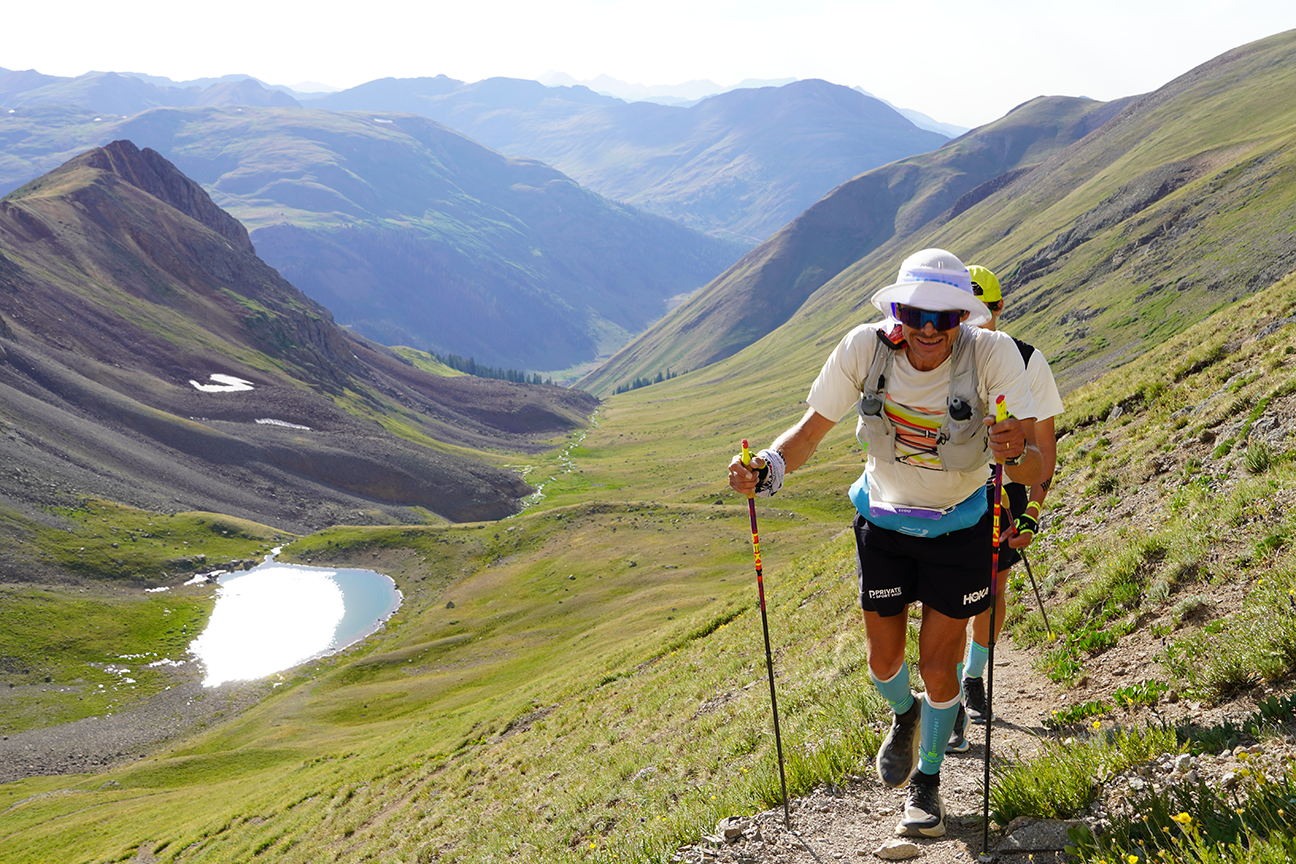
Dauwalter was probably considered the favorite in the women’s field, but she was coming off a bit of an odd year in 2025 when she dropped out of the Cocodona 250 and then led but faded considerably in her quest to win another UTMB last August. But there was a lot of pre-Hardrock chatter about Careth Arnold, the TDS champion, and plenty of curiosity about Tara Dower, who just 12 days earlier had placed sixth in the Western States 100.
All Pommeret and Dauwalter did was flat-out dominate like never before, essentially going wire-to-wire from the opening stages of the run. Each of them went hard and pushed off the front, and as a result, each one suffered. But that’s the essence of Hardrock. Everybody suffers at some point.
Pommeret won his third straight Hardrock title in 21:11:36, breaking his own overall course record by nearly 22 minutes, while Dauwalter took her fourth win in 26:03:10, beating her own clockwise course record by almost 9 minutes.
“It was really hard,” Dauwalter said. “(Going over) Handies was beautiful, but it was kind of the beginning of the end for me. Going down Handies just made my stomach turn, so then I spent the night fertilizing the course quite a bit. It was a very cool first part of the race to get to the top of Handies, but a very difficult last 30 miles.”
Dauwalter has the most wins among women in Hardrock history. Aside from her, only Utah’s Karl Meltzer (five wins) and Spain’s Kilian Jornet (four wins) have earned more Hardrock titles than Pommeret, who said he would likely return in 2027 to try to make it four in a row.
“It seems it is easier when you’re getting old,” Pommeret said. “You can see the end (of your career) and these moments are a lot less. So maybe like good wine, when you are older, you are better.”
Find Your Next Race: UltraSignup’s New Event Finder
3. Women Are Rising at Hardrock
The women’s Hardrock was much more than just Dauwalter’s fast result off the front of the pack. The 2026 Hardrock 100 set a new record of 25 women finishing the demanding 102.5-mile course, which signals not only increasing participation but also the growing strength and depth of women competing at the highest level of ultrarunning.
In recent years, organizers have revised the lottery process so that women’s odds of being selected more closely reflect their share of the overall applicant pool, helping boost female representation on the start line. This year, women accounted for roughly 22 percent of entrants (33 women out of 147 runners), the highest in the event’s history. While it would be easy to look at that number and be disappointed—and, yes, diversity is almost entirely lacking at Hardrock, too—but the good news from this year’s event is that participation among women has gone up almost every year, as well as in the general participation of long (100K+ ultras).
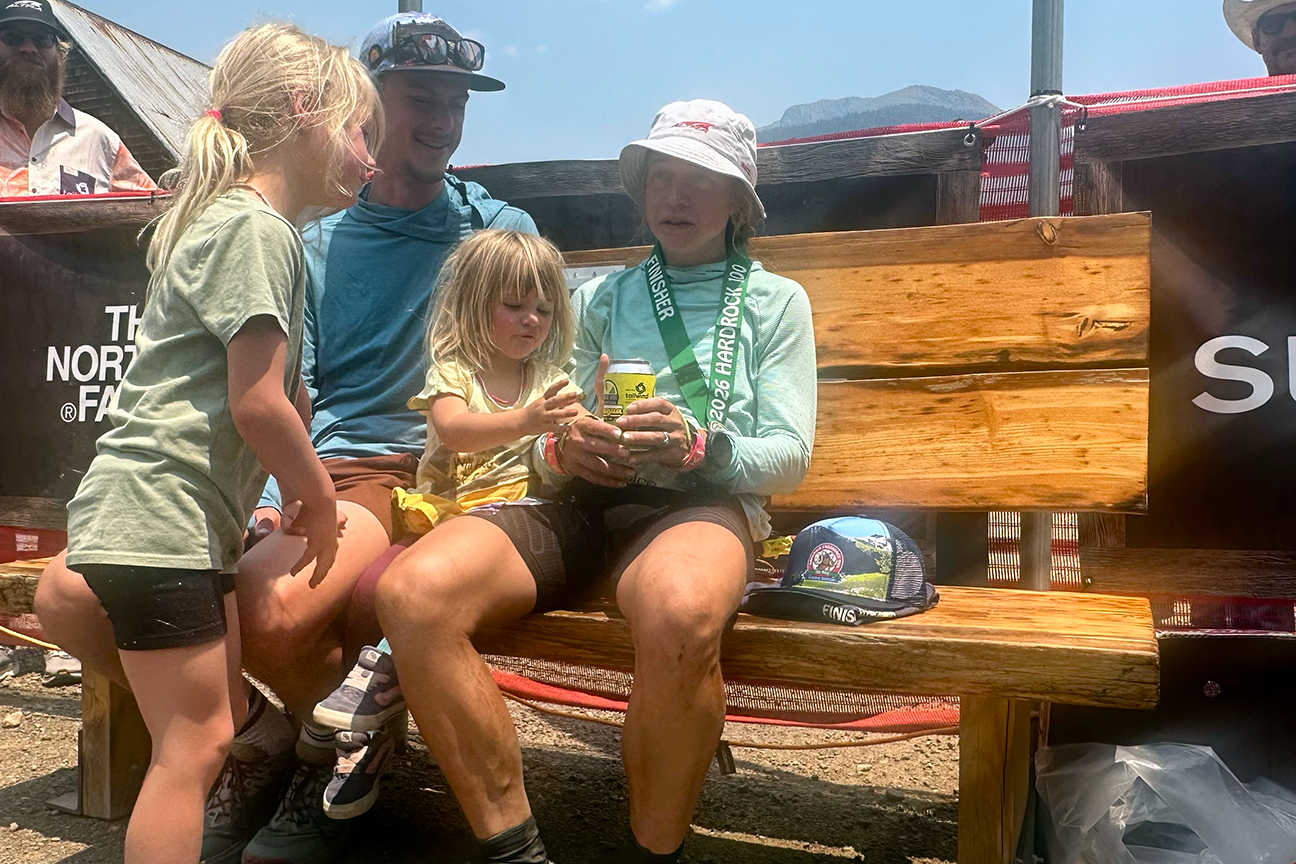
Arnold made her first Hardrock start and turned it into a breakthrough performance, finishing second in the women’s standings and eighth overall (30:32:31). She finished with tears rolling down her face and then cried almost uncontrollably after kissing the rock. She was joined by her two young daughters and her husband, Derek Brinks, in one of the sweetest moments of the entire weekend.
And then there was the amazing effort of Tara Dower, who toed the Hardrock start line less than two weeks after finishing sixth in the Western States Endurance Run. Dower appeared to struggle early, visibly wobbling near the 18-mile Chapman aid station but persevered, continuing her way around the loop. She arrived at the 58.2-mile Grouse aid station covered in blood and a bit delirious after falling several times, with pacer Jacob Banta at her side, but she regrouped with new pacer Rachel Entrekin and kept moving through the night.
Dower said her quads were trashed and she had to walk a lot through the night, but she kept going and eventually finished third, just after 3 p.m. on Saturday afternoon (33:02:04), and in doing so set the fastest Western States-Hardrock combined time (49:15:11) for the 13-day gap.
“I’m confident to say it was probably one of my harder races that I’ve done,” Dower told iRunFar. “You tell yourself, ‘This is Hardrock, this is what you signed up for. The motto is Wild and Tough. It’s not easy.’ So I was like, ‘This is Hardrock. You’ve got to embrace this.’ So that’s kind of what I leaned more into and just had 33 hours of suffering.”
4. Wildfire Smoke Was an Issue
Wildfire smoke became an added challenge at the 2026 Hardrock 100 as the Ferris Fire in southwestern Colorado and the Babylon Fire in eastern Utah sent haze into the San Juan Mountains during Hardrock week. Conditions varied throughout the 102.5-mile course, with the thickest smoke often settling into lower valleys around Silverton before shifting as winds changed and afternoon thunderstorms developed. The event started amid clear skies on Friday morning in Silverton, but by the time runners were approaching the first big climbs on the way to Grant-Swamp Pass, a light haze of smoke could be seen sitting in the canyons.
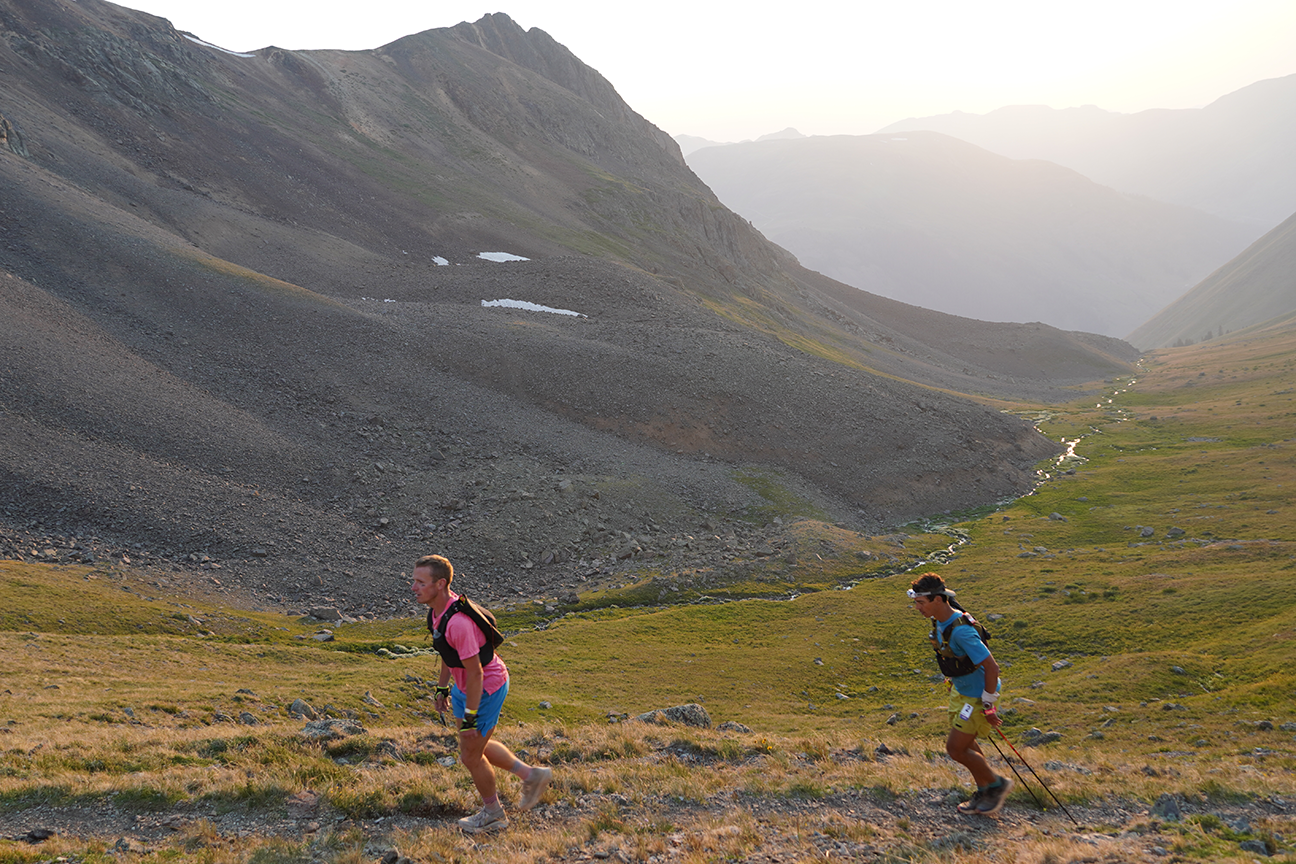
Some smoke from the Gold Mountain Fire in Ouray appeared to settle over the north end of the Hardrock course on Friday night and Saturday morning, and several runners complained about irritated eyes and throats after reaching the finish line.
Hardrock officials kept a close watch on air quality and weather forecasts in the days leading up to the event, ultimately deciding that conditions remained within acceptable limits for the event to proceed. While the spectacular alpine scenery was occasionally muted by the smoky skies, runners still faced the same demanding climbs, high-altitude passes, and rugged terrain that define Hardrock.
5. Zach Miller’s Donuts Were a Huge Hit
One of the most popular attractions in Silverton during Hardrock weekend was the Zach Shack, where Zach Miller and his wife, Jess, were frying up batches of Pennsylvania Dutch fastnachts on Saturady as runners were finishing.
Miller finished fifth in his first Hardrock last year and just finished fifth in his first Western States 100, but he made the long drive to Silverton just to watch runners finish and to hand out free homemade donuts.
The rustic pastries trace their roots to the Pennsylvania Dutch communities of Lancaster County, where Miller was raised, and differ from a traditional doughnut with their potato-based dough, hand-cut square or diamond shapes, and generous dusting of powdered sugar.
What started as a way to share a taste of home has grown into a beloved Hardrock weekend ritual. Runners, pacers, volunteers, and spectators lined up for the homemade treats, turning the Zach Shack into an informal gathering place where the community could grab a bag of fresh fastnachts.
RELATED: Waiting Game: Entering Hardrock and Western States
- Take 2 Trail Gives Used Trail Gear a Second Life
- The art of accepting abject failure and moving on
- The Race is Over, Now What? Your Nutrition Guide to Recovering from Ultra-Distance Trail Races

- Introducing The Claims Department Podcast

- Hit Me Where It Hurts: How Ultrarunners Manage Pain
- How Andrea Moore Became a Prolific 200-Miler