Candice Burt admits when she first decided to put on a 200-mile race in 2014, she really didn’t know how it would pan out. And while she thought a 200-mile race around Lake Tahoe could be a novel idea that would intrigue a few runners as much as it did her, she certainly didn’t see the category growing to what it has become.
“No, it just happened,” she said. “I mean, I jumped into it having no clue what I was doing. I remember posting on social media that I was going to put on this Tahoe 200. And people just freaked out. The response was overwhelmingly positive. At that point, I was just like, ‘OK, I really have to figure this out.’”
Figure it out, she did. But it took time. There was no blueprint. It took a lot of investment that she couldn’t afford. She had to work hard to get permits. She had to go above-and-beyond to take care of athletes at aid stations. It was a lot.
And yet in successfully organizing that original Tahoe 200 Endurance Run in September of 2014—followed by the initial Bigfoot 200 Endurance Run in August 2015 and eventually the Moab 240 Endurance Run in 2017—she almost singlehandedly launched the 200-mile+ ultrarunning category and eventually helped it become a fast-growing trend in the sport.
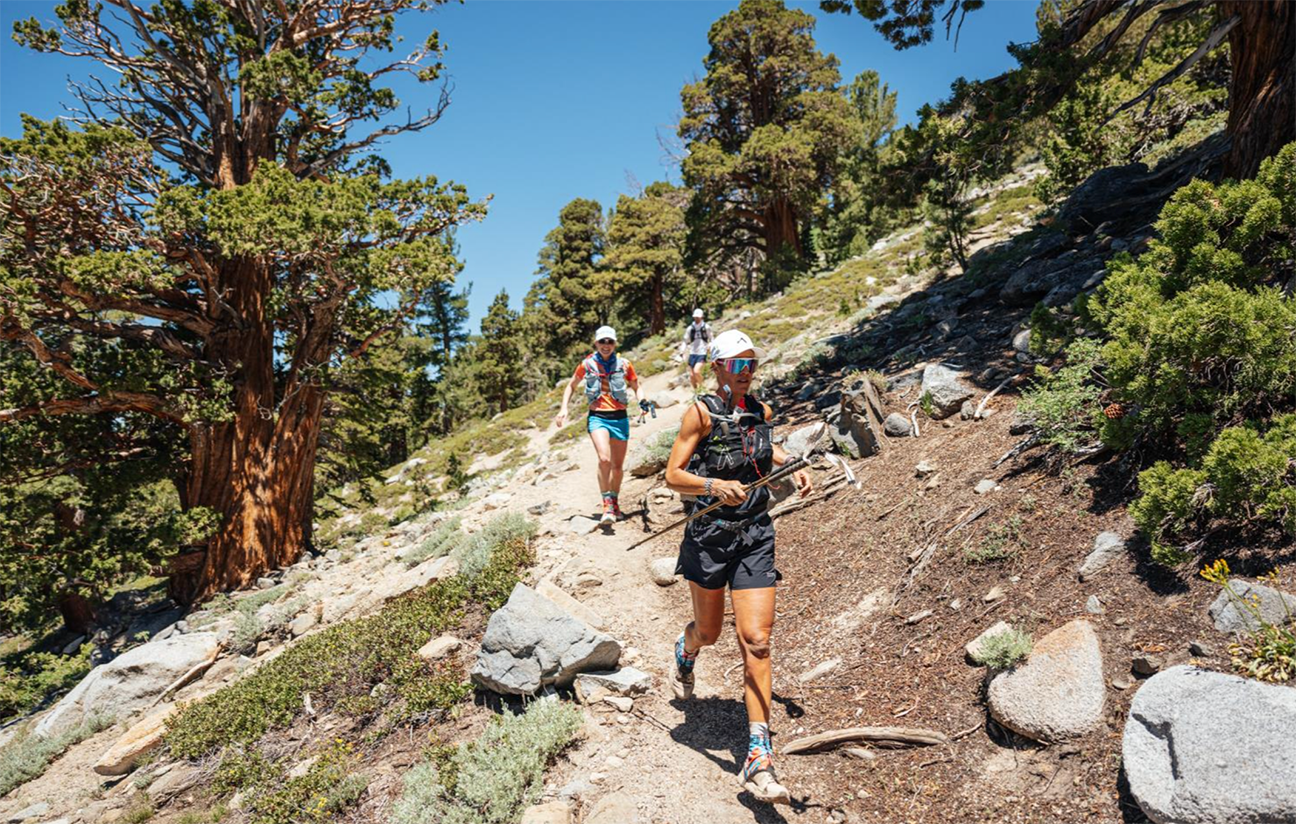
Although Burt lived in Bellingham, Washington (where she worked as a race director for Rainshadow Running), she loved Lake Tahoe. She had run the Tahoe Rim Trail 100 in 2012 and made an attempt at the Tahoe Rim Trail fastest known time (FKT) that year. She was intrigued by the notoriety that the 330K Tor des Géants in Italy was starting to get in Europe and wanted to replicate something like that in the U.S. But she couldn’t figure out where it could happen until she penciled out a course around Lake Tahoe.
“I was like, ‘Oh, I’d love to turn this into a race,” she recalls. “And my boyfriend was like well, why don’t you just do it? I was like, ‘Oh, OK.’ And then it became a matter of trying to figure out how to make it happen, and that was the most stressful year of my life.”
RELATED: How to Train for 200-Mile Races
The Rise of 200s
In the early 2010s, the 100-mile distance was what most ultrarunners aspired to run, no matter if they were seasoned ultrarunners or marathoners who were just dipping a toe into ultra-distance races. And that includes Burt, who, after running several 50Ks and 50-milers, ran her first 100-miler at the Cascade Crest in 2011.
While the entire sport has mushroomed since then and 50K, 50-mile, 100K and 100-mile distances have all proliferated—not to mention the emergence of new categories like backyard-style races, 24- and 48-hour track races, and multi-duration timed events on a loop courses—the 200-mile+ category is certainly booming (114 percent growth year-over-year according to the American Trail Running Association) and is one of several next big things in ultrarunning.
Far from being an anomaly, these races now represent one of the sport’s fastest-growing sectors, attracting runners eager to explore deeper, more demanding challenges. Burt’s Destination Trail are so popular she uses a lottery to manage the entry process.
Driving this surge is a fundamental shift in perspective. For many athletes, the goal is no longer simply to conquer 100 miles, but to discover how far their limits can truly extend. The appeal of 200-milers lies not just in the distance itself, but in the complexity—managing sleep, navigating prolonged fatigue, and adapting over days rather than hours. As ultrarunning continues to evolve, these events are reshaping the definition of endurance, turning what once seemed extreme into the next natural progression.
As of 2026, there are nearly two dozen races of 200 miles or longer in the U.S., including four that Burt organizes through her Destination Trail company—the Tahoe 200, BigFoot 200, Moab 240 and the Arizona Monster 300.
“I think that it’s just normal for people to kind of always be looking for the next big thing when you’re pushing boundaries in a sport like this,” Burt says. “But we learned early on that these events weren’t just for runners. So I was kind of looking a little non-traditionally at and asking, ‘How can we spread the word about these races?’”
Burt started her races when the social media influencer genre was still on the rise. Knowing the 200-mile races were attracting participants who didn’t come through the typical ultra-distance progression, she smartly reached out to Cameron Hanes, a bowhunter and 2010 Western States 100 finisher, who was starting to gain a pop culture following, and encouraged him to run the Bigfoot 200 in 2016.
She also contacted Navy Seal-turned-ultrarunner David Goggins, a three-time Badwater 135 finisher, to see if he wanted to run the Moab 240, and although he famously didn’t finish in 2019, he returned in 2020 and finished second overall and came back again last year to do it again.
It also didn’t hurt that Courtney Dauwalter was the outright winner of the inaugural Moab 240 in 2017 by a whopping 10-hour margin, which not only made a splash in the running world but also caught the attention of UFC commentator and star podcaster Joe Rogan. Two weeks later, Rogan hosted Dauwalter as a guest on “The Joe Rogan Experience” and exposed the 200-mile+ race category to a whole new audience.
The reason so many 200-mile+ participants come from non-traditional running backgrounds or not at all from running suggests that people are looking for an out-of-the-box type of challenge entirely, Burt says.
“These 200-mile races are for more than just runners, they’re for people who want a really big adventure,” she says. “And I think in the world we live in, where we’re so caught up in our phones, in these small bubbles and almost caught up in this inner world on the internet. But 200s give us a chance to put ourselves outside of that and get back in the real world and become a part of our environment instead of feeling so separate from everything. And I think that more than anything we really need those experiences where we’re building a community outside of our usual circle, you know, whether it’s our cars or our phones or our work.”
Although the Covid-19 pandemic briefly stopped the world in its tracks, it only seemed to spark a new boom in adventure-oriented trail and ultrarunning—especially among younger Millennials and Gen Zers who are seeking community in real experiences outside of the digital world.
That’s been especially evident in the fast rise of the Cocodona 250, which sends runners 250 miles across central Arizona. During the first day of the livestream of this year’s race, more than 195,000 unique viewers logged in to watch the action. But the interest in wanting to participate in the event (and its four coinciding races) has gotten so popular that Aravaipa Running has had to turn to a lottery for the first time to manage registration for the 2027 race.
“I definitely think there’s been a shift in the science of ultra-distance running,” says Cocodona 250 co-race director Erika Snyder. “But there’s two ends of that spectrum. At the elite end, it’s ‘how fast can people do this?’ But most of the runners in the race are just regular people, but they are benefiting from those advances in science, too. And everyone is sort of experimenting to see how they can make it work for them. It’s fueling, it’s training, it’s shoes, it’s packs, but also our understanding of the physiology of running really, really long distances and how to sleep, when to sleep, when to keep going. Our understanding of how to push the human body is just playing out in real time on the Cocodona course.”
RELATED: 20 Great 200-Mile+ Races in the U.S.
300s Could be Next
Lila Miller is one of those non-runners whose entrance into the wild world of ultrarunning is hard to believe. Yet, as she’s preparing to graduate from Vassar College in Poughkeepsie, New York, in a few weeks, she’s one of the rare runners who already has 100-, 200-, and 300-mile race finishes to her credit.
Three years ago after she had completed her freshman year in college, Miller spent her summer break hiking across several states in the Eastern U.S., covering more than 1,200 miles loosely following the Appalachian Trail.
“I really got kind of infatuated with the idea of distance and wondering how much ground can I cover?” she says. “It was the most liberating experience of my life. I loved it. I like never really been camping before that. But I just put a bunch of stuff in a backpack and kind of went for it. Then after that I just kind of really got hooked and I spent every other moment of free time I could just putting on a backpack and like going as far as I could.”
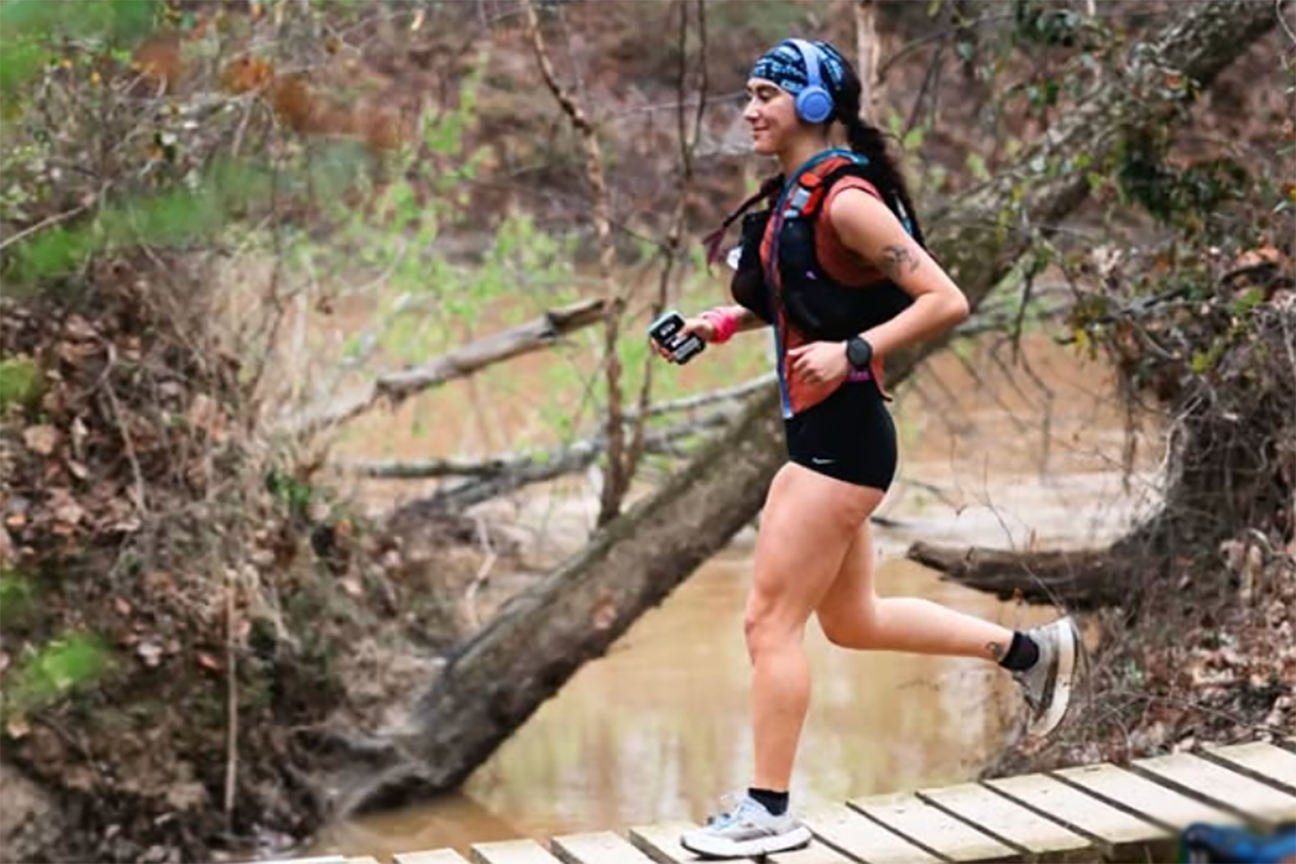
Back in school that fall, she couldn’t stop thinking about how she spent her summer, so a few months later during her winter break, she headed south and, with a combination of hiking, fastpacking, and running, she covered about 350 miles of the Florida National Scenic Trail. Then she did the same on the Arizona Trail, running with a backpack slowly but intentionally for more than 100 miles over the course of a week.
Surprisingly, it was only then that she learned about the concept of ultra-distance races.
“I found out about ultramarathons and then I was like, ‘Oh, this is crazy. I can race doing this!” she says. “It just kind of became a thing that I was obsessed with. I had no idea, but my reaction was like, ‘This is the coolest thing ever. I can’t believe there are competitions for this kind of thing.’”
That eventually led to her first attempt at a 100-miler in May of 2024. She went in with blind enthusiasm and little training, and, well, it ended how you might expect.
“I didn’t know how to train. I had no crew. I just showed up with some Skittles and a ham sandwich and an energy drink,” she admits. “I just went for it in a big way.”
The bad news is that she turned herself inside out and, delirious with fatigue after about 70 miles, she dropped out of the race.
The good news is that she was inspired like never before.
“That just really got me so stoked, and I was like, ‘Wow, I have to get 100 miles,” she said. “So I started training, tried again, and got it on my second try.”
Back at school in New York, Miller completed her first 100 in October 2024 at the Tesla Hertz Run in Rocky Point, New York. She struggled, but she persevered and finished after 47 hours and 36 minutes of running.
“Then I found out about 200s. So I wanted to do my first 200,” she said. Miller decided she’d train all summer, get into great shape and run the Cowboy 200 in Norfolk, Nebraska. Once again, she persevered, finishing just a few ticks under 78 hours.
“And that was great, but it was like the hardest thing I’ve ever done,” Miller says. “But then I found out there are 300s, and so, of course, I had to do a 300.”
That led her to the inaugural Viper 300 on March 9 in Tennessee, which conveniently aligned with her spring break. While many college students were headed to the beach, Miller drove 17 hours from Poughkeepsie to Shelby Farms Park in Memphis, and, with some of her college friends crewing for her, ran nine laps on the 33.4-mile loop course to win the women’s division and finish third overall after 125 hours of running and a little bit of sleeping.
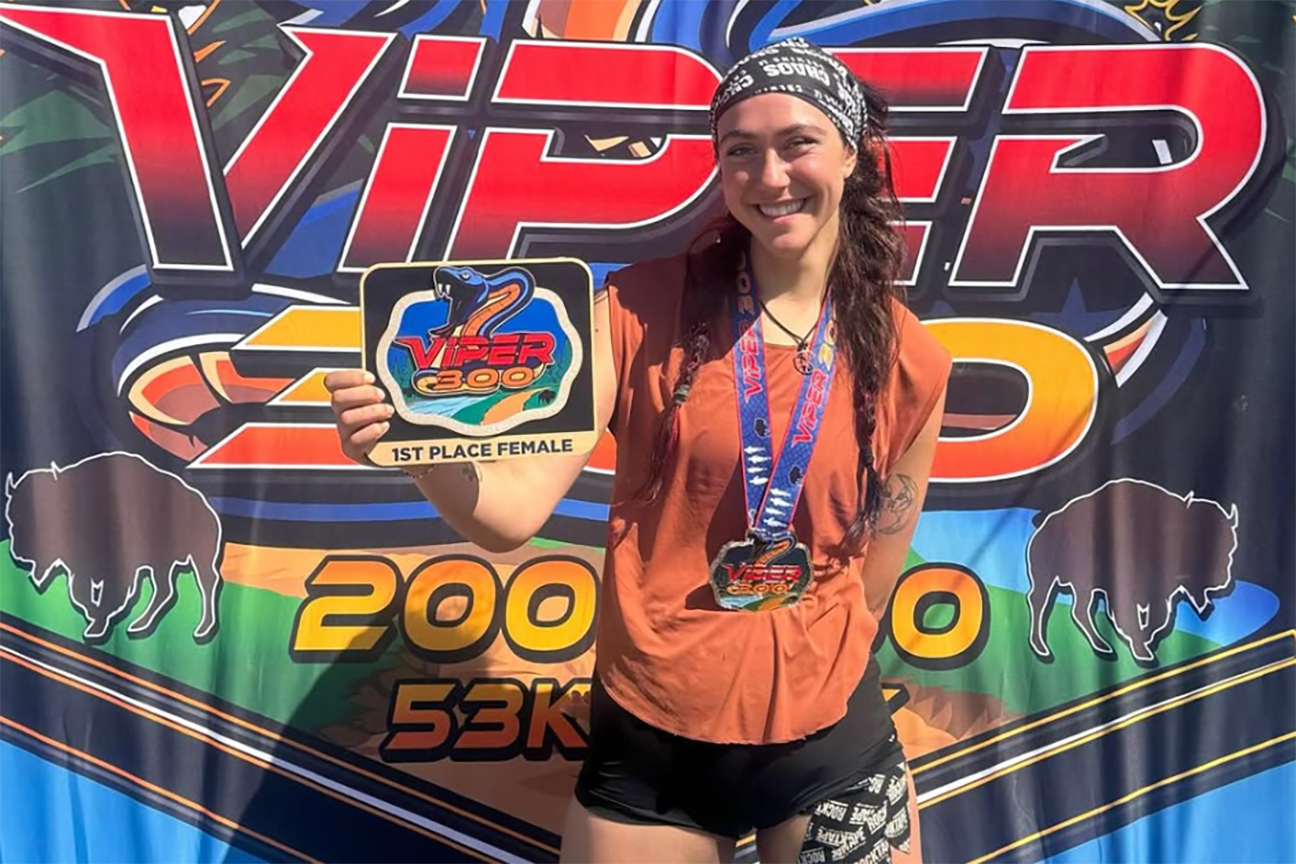
Race director James Boler had hoped to put on a 300 in 2025, but stormy weather and relentless rain forced the event off the trails. He thinks the growth curve of 200-mile+ races will continue for years to come.
“I feel like 300-mile distances are pretty much the next thing coming up,” Boler says. “There are a lot of 200-milers in the country now, and I feel like more 300s are going to start popping up soon. As a race director I’m seeing runners push distances, especially beyond the 100-mile distance. And what I’m seeing is that runners who run 100 miles, then they want to go for 200, the runners that just ran the 200 miler, are now going after the 300-miler. So I really just don’t see runners stopping at 200 miles. Where’s the end? I don’t think nobody really knows what the end is. Eventually, there may even be a 500-mile race, you know, who knows?”
About the Author
UltraSignup Director of Media Brian Metzler was the founding editor of Trail Runner magazine, has written for Runner’s World, Outside, and Sports Illustrated, and is the author “Kicksology: The Hype, Science, Culture and Cool of Running Shoes” (2019) and “Trail Running Illustrated” (2021). He has raced just about every distance from 100 meters to 100 miles, but he’s most eager to share stories about his experiences pack burro racing in Colorado and riding trains to run trails in Chamonix, France.
- Trail Tested: Brooks Cascadia 20
- Why Volume is King When Training for Ultras

- How Meg Eckert Ran a Record 636 miles in 6 Days
- Built on Rugged Terrain and Grassroots Vibes, Stoked Ultra is one of Canada’s Premier Trail Running Events
- Closing the Gap Between Ability and Ambition

- 21 Great Trail Marathon Races to Run This Fall