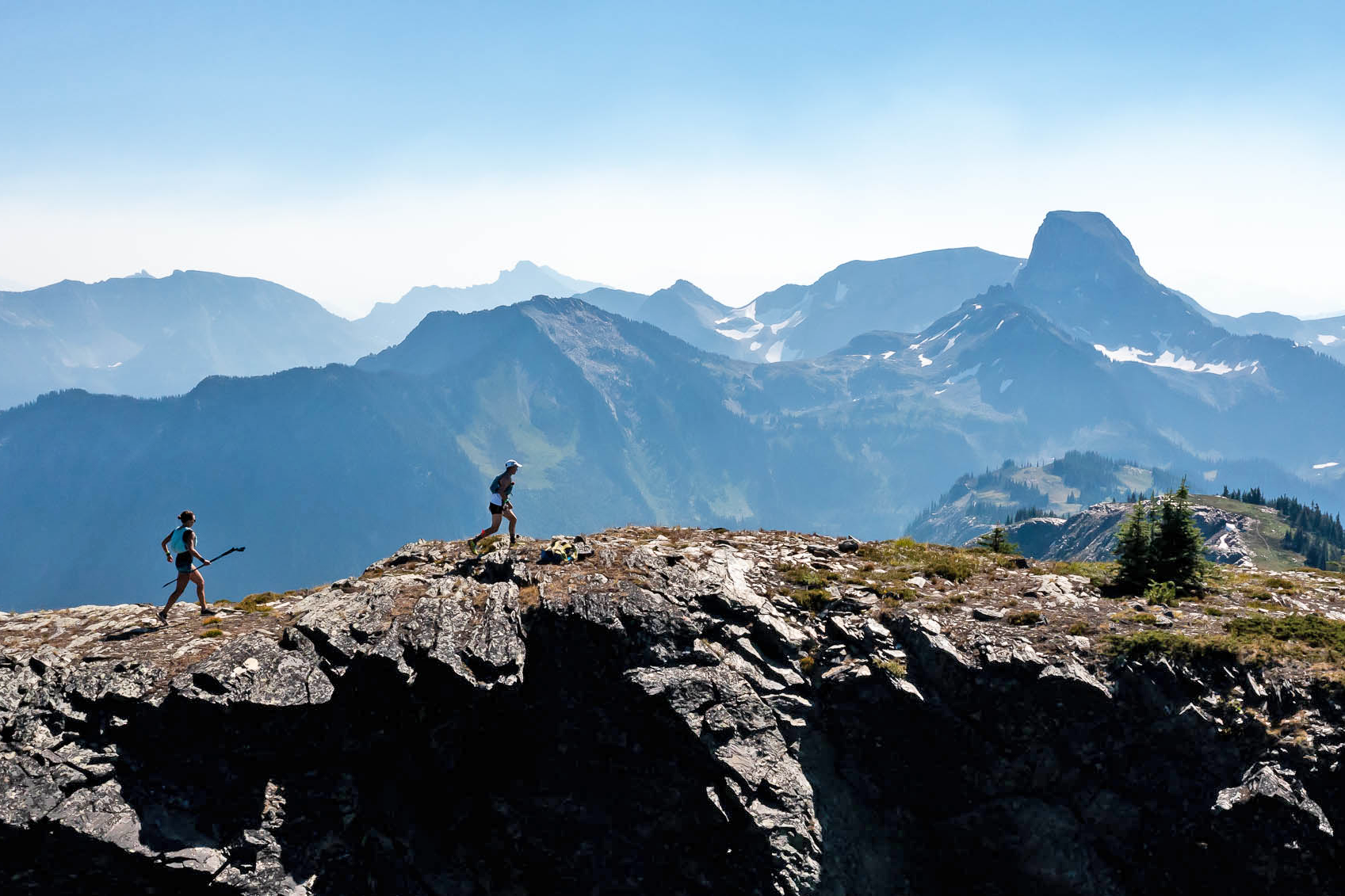
The 2026 Broken Arrow Skyrace includes eight races and two triple crown competitions for runners of all abilities and a prize purse of $150,000.
Every June, the high-alpine terrain above Olympic Valley, California becomes the center of the trail running universe. The Broken Arrow Skyrace, held June 19–21 at Palisades Tahoe—home of the 1960 Winter Olympics—is that rare event that manages to be simultaneously one of the most competitive mountain races in the world and one of the most welcoming.
The three-day event includes eight race distances and two triple crown competitions for runners of all abilities and a $150,000 prize purse. From the international elites chasing podiums and prize money to first-time trail runners lining up for a gateway distance, everyone shares the same finish line. And as the traditional kickoff to the biggest week in American trail running—aka “Tahoe Week” that also includes TrailCon and the Western States 100—the 2026 Broken Arrow Skyrace has become the event that sets the tone for everything that follows.
“From the start in 2015 until today, our North Star has been the entire trail running community,” says Broken Arrow Skyrace co-founder Brendan Madigan. “We wanted to create a multi-distance, multi-day experience that was progressive and new school and had a big purse and, and cool branding, but also one that paid homage to the DNA of the sport. And that’s namely the importance of every single runner. I think that’s what makes the trail running community so special.”
RELATED: Everything You Need to Know About Western States 2026
ELATED: Tahoe Week 2026: Enter the Giveaway!
1. Something for Every Runner
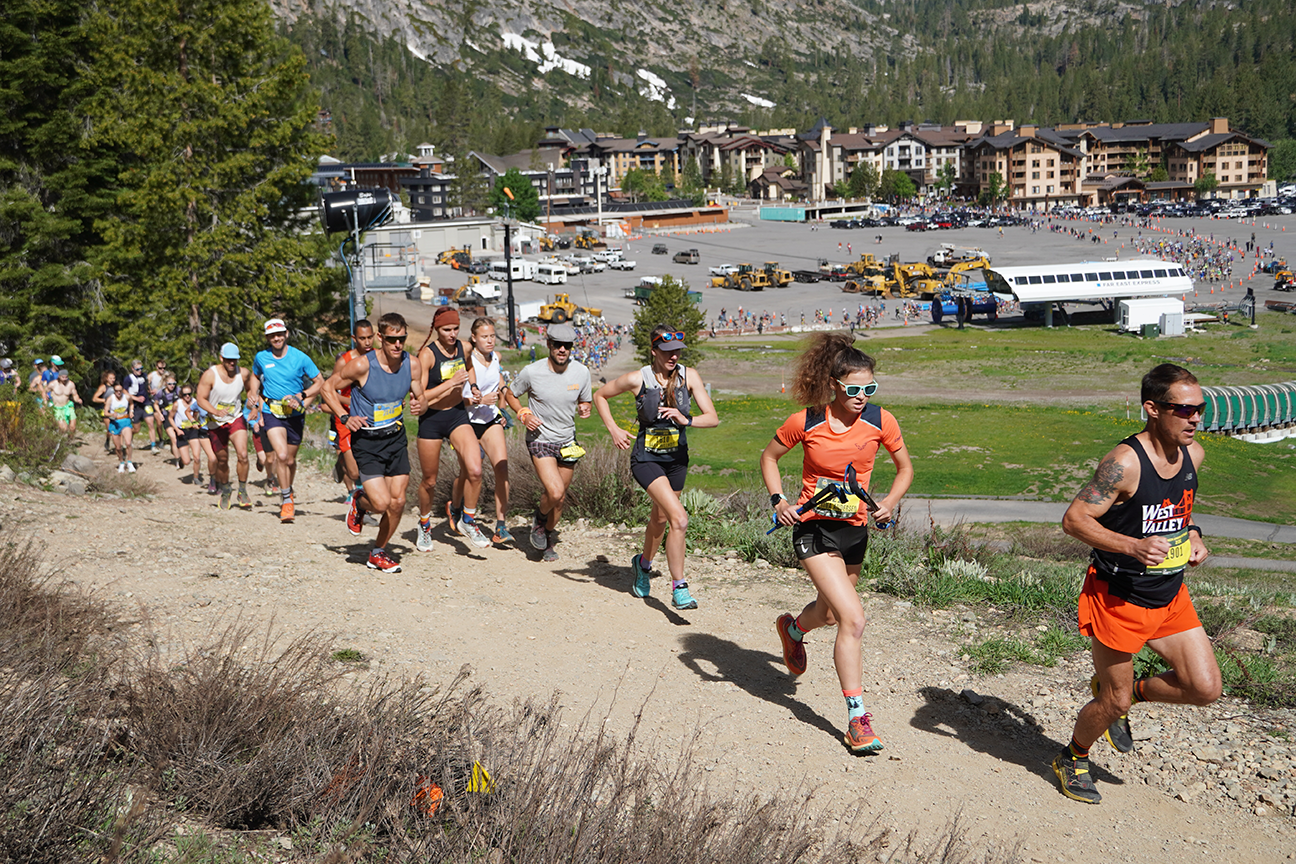
One of the things that makes Broken Arrow genuinely unique is the sheer range of what’s on offer across the four-day festival. The 2026 event features ten distances in total, from a kids’ one-kilometer run all the way to the brutally demanding 46K, which racks up more than 10,000 feet of vertical gain and is widely considered the hardest event of its type in North America. In between, runners can choose from an 11K gateway distance, an 18K, the 23K WMRA World Cup race, the uphill-only Ascent (3 miles, 3,100 feet of gain), and the via ferrata-style Iron Face Challenge on Palisades Tahoe’s granite Tram Face.
For the truly masochistic, the Triple Crown combines the Ascent, 23K, and 46K across the weekend, while the Iron Crown combines the Iron Face, 23K and 46K. Most of the terrain runs above treeline, offering sweeping views of Lake Tahoe’s blue water to the east—which helps, because you’ll need something to look at besides the next switchback.
The Ascent (June 19), 46K (June 20) and 23K (June 21) will be livestreamed on the Nike’s YouTube channel. In the meantime, you can check out course conditions on this 2026 Course Preview video.
“The start line is a great equalizer for all ability levels and, you know, just like we celebrate the elites with one of the biggest purses in the sport, but we also celebrate the mid- to back-of-the-packers equally because they are the foundation of, of the sport. And with, without them, we don’t have these great human interest stories or people coming to races. So everyone deserves to be celebrated, and that’s why we say at the Broken Arrow Skyrace, ‘whether you finish first or last, you’re a rock star, and we’ve literally, that is our North Star. We make every decision and our dogmatic about staying true to that.”
2. Record Prize Purse
The 2026 Broken Arrow Skyrace carries the largest prize purse of any trail race in the world: $150,000 spread across three marquee distances, made possible by a new multi-year title sponsorship with ACG, Nike’s All Conditions Gear division. Ultimately it’s not about the money, it’s about the marquee status and high level of competition the prize money draws.
The Broken Arrow Skyrace 23k is once again part of the 2026 World Mountain Running Association World Cup as a Gold Label long distance event, while the Ascent is doubling as the official 2026 USATF Uphill Mountain Running Championship. Those races are stacked with talent, as is the 46K race—including top international runners Elhousine Elazzaoui (Morocco), Patrick Kipngeno (Kenya), Philemon Ombogo Kiriago Kenya), Jazmine Lowther (Canada), Nienke Brinkman (Switzerland), Joyce Muthoni Njeru (Kenya) and Elisa Morin (Canada) and a deep contingent of U.S. athletes that includes Mason Coppi, Lauren Gregory, Anna Gibson, Christian Allen, Courtney Coppinger, Noah Williams, Dani Moreno,Taylor Stack, and Eli Hemming, and Tabor Hemming, among many others.
This year’s prize money represents a huge jump from the $85,000 offered in 2025 and fundamentally changes what’s at stake on the starting line. Winners of the flagship 23K will take home $30,000, the largest winner’s payout in trail running history, while the Ascent and 46K champions will earn $6,000 and $4,000 respectively, with cash prizes extending down to the top 10 finishers in all three races. The infusion also funds travel stipends and lodging support for elite athletes, making Broken Arrow increasingly viable as a destination race for the world’s best mountain runners.
3. Welcoming New Runners Through the Inclusivity Initiative
Broken Arrow’s reach has always extended beyond the elite field, but starting in 2024 the event began putting real resources behind that commitment. This year, working in partnership with Nike ACG, Broken Arrow’s Inclusivity Initiative will provide nearly 100 complimentary race entries—along with gear support and travel stipends for select clubs—to runners from BIPOC, LGBTQIA+, and non-binary communities across California and beyond.
The program was developed in collaboration with more than 20 run clubs representing historically underrepresented communities and the advisory council helps shape how it’s carried out. The initiative also includes 20 guaranteed entries for adaptive athletes, developed in partnership with Paralympian Dani Aravich and Born to Adapt founder Zach Friedley, and 2026 additions include expanded lactation stations and limited childcare options on-site.
“It’s been a tremendously fulfilling program, because it’s been our hope that we could walk the talk of making the sport actually more inclusive with concrete examples,” Madigan says. “And the hope was that other brands and other races could then follow this blueprint to do the same thing. We’re in a very unprecedented time, and we just feel like we have a platform and we have a responsibility to use it to do good in the world.”
4. A Youth National Championship Is Born
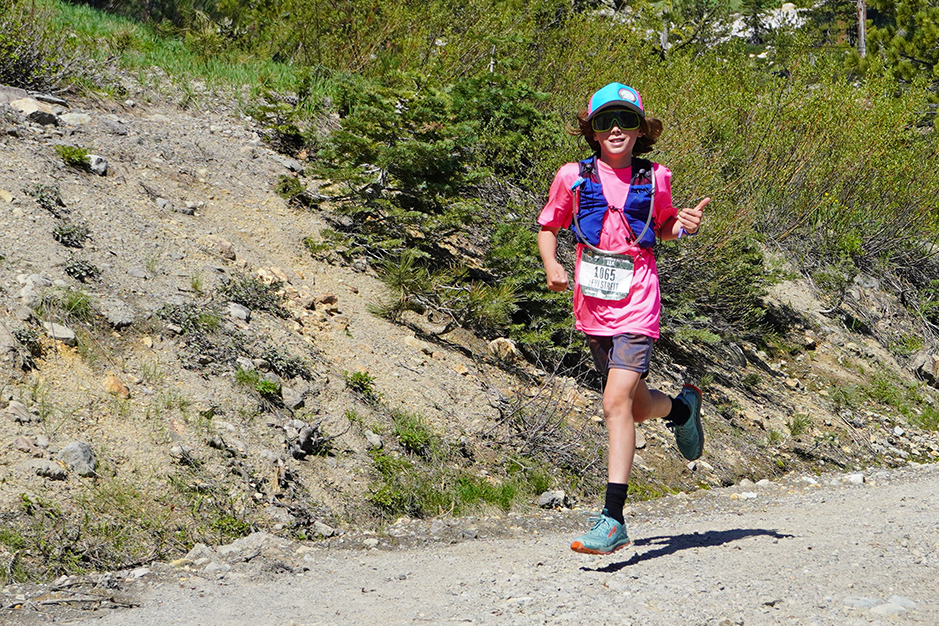
Inspired by the model that NXN—Nike Cross Nationals—established for high school cross country, the 2026 Broken Arrow Skyrace will debut Trail Futures NTN (Nike Trail Nationals), a new youth national championship-caliber event aimed at runners ages 10 to 20. The goal is to build a legitimate development pipeline for the next generation of American trail runners, creating the kind of structured competitive framework for young mountain athletes that has long existed in road and track but has been largely absent from the trail world.
Trail Futures NTN will showcase two distinct courses: The Kestrel, a 4.6-mile race with 1,400 feet of vertical gain for runners in the 10 to 13 age range, and The Eagle, a 10K race with 2,100 feet of vertical gain for 14- to 20-year-old runners. Both races will take place on the afternoon of June 19, allowing youth trail runners to compete against their peers and run on a unique course designed to showcase their talents.
Among the top athlete in the The Eagle field is Sophia Rodriguez, a 17-year-old high school junior from Mercer Island, Washington who is one of the most exciting young distance runners in the country right now. In addition to winning three consecutive individual state titles in cross country, she also earned the top American finish at the U20 World Mountain and Trail Running Championships in Spain last September with a 14th-place showing in the 7.8K race.
RELATED: Broken Arrow Skyrace Adds Two New Youth Trail Races
5. Elite Road Runners Find the Mountain
One of the more compelling storylines heading into 2026 is the growing wave of accomplished road runners crossing over to test themselves in the mountains. Canadian sub-2:07 marathon talent Rory Linkletter—who ran 59:49 for the half in January and 2:06:04 at Boston in April—will make his elite trail debut at the Broken Arrow Ascent, drawn by the simplicity of an all-out uphill effort against some of the world’s best mountain specialists. Arizona’s Steph Bruce, one of America’s most decorated women’s road racers, is also expected to race in the Ascent.
Their presence at Broken Arrow reflects a broader shift happening across the sport—elite road runners increasingly viewing technical mountain terrain not as foreign ground, but as the next frontier. Utah’s Christian Allen, who won the 2025 Ascent and earned a spot on Team USA for the World Mountain Running Championships in the process, is a versatile runner and 2:09 marathoner who’s running both the Ascent and the 23K. In addition to placing fourth in the uphill race at last Septembers world championships in Spain, Allen has won several USATF trail running national titles.
“In layering $150,000 into the prize purse, we’ve seen fast marathoners and road runners come into the mix and post-collegiate track and cross country runners jumping straight into trail instead of pursuing road running,” Madigan says. “So we feel like it’s a really exciting time in trail running and we want to celebrate all those runners and see what they can do on race day.”
RELATED: 7 Great Trail Shoes for Technical Mountain Running Races
6. A New Finish Line Bell
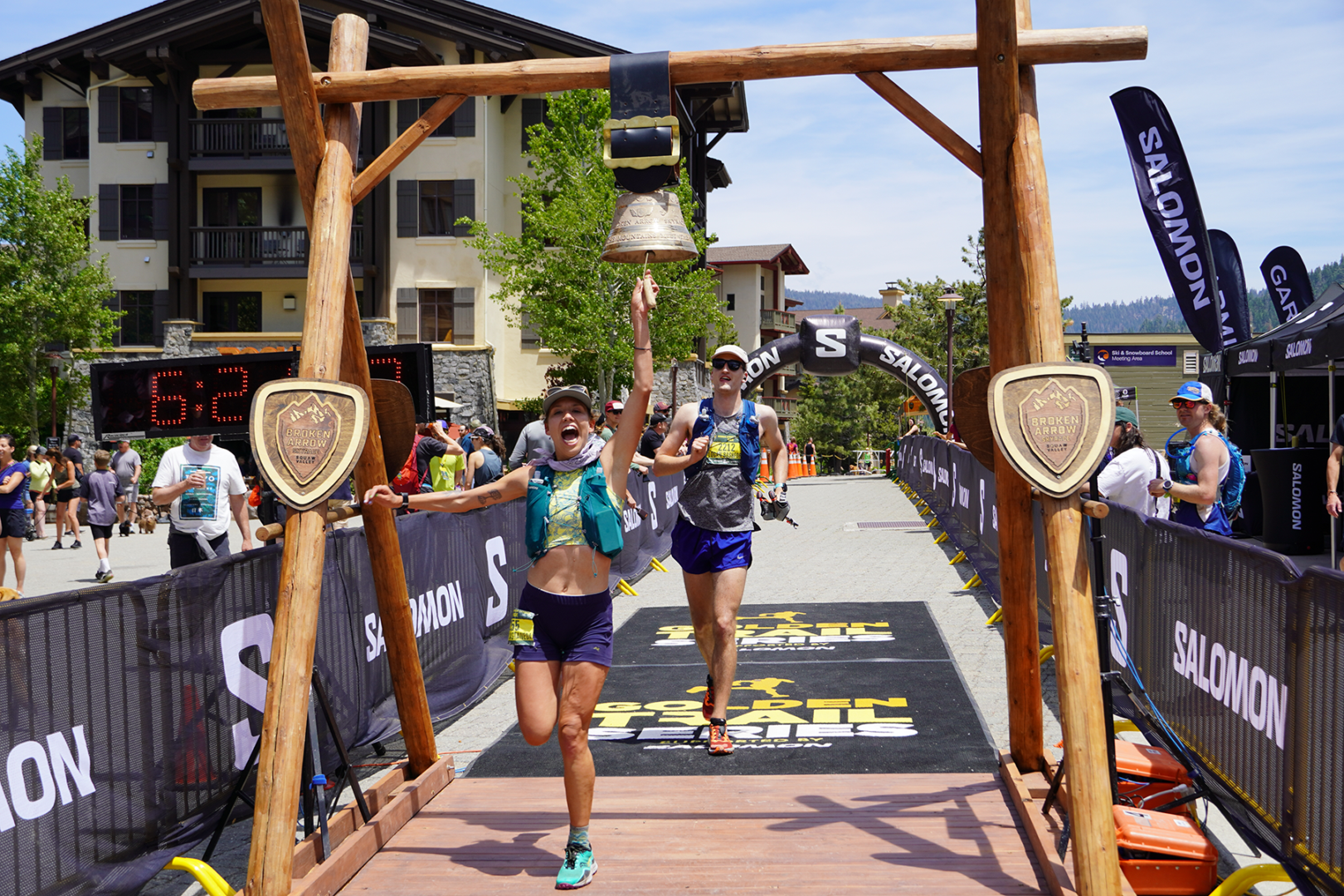
If you’ve run or watched Broken Arrow Skyrace events in recent years, you know about the finish line bell. Runners leap up to ring the cowbell-style fixture above the finish arch as they cross the line, a tradition that turns every finish into a small celebration. Last year, the cumulative enthusiasm of thousands of finishers proved too much for the old bell, and it was quite literally broken by the sheer volume of people jumping up to hit it. Two big chunks came off the bell, leaving an 8-inch chasm on one side.
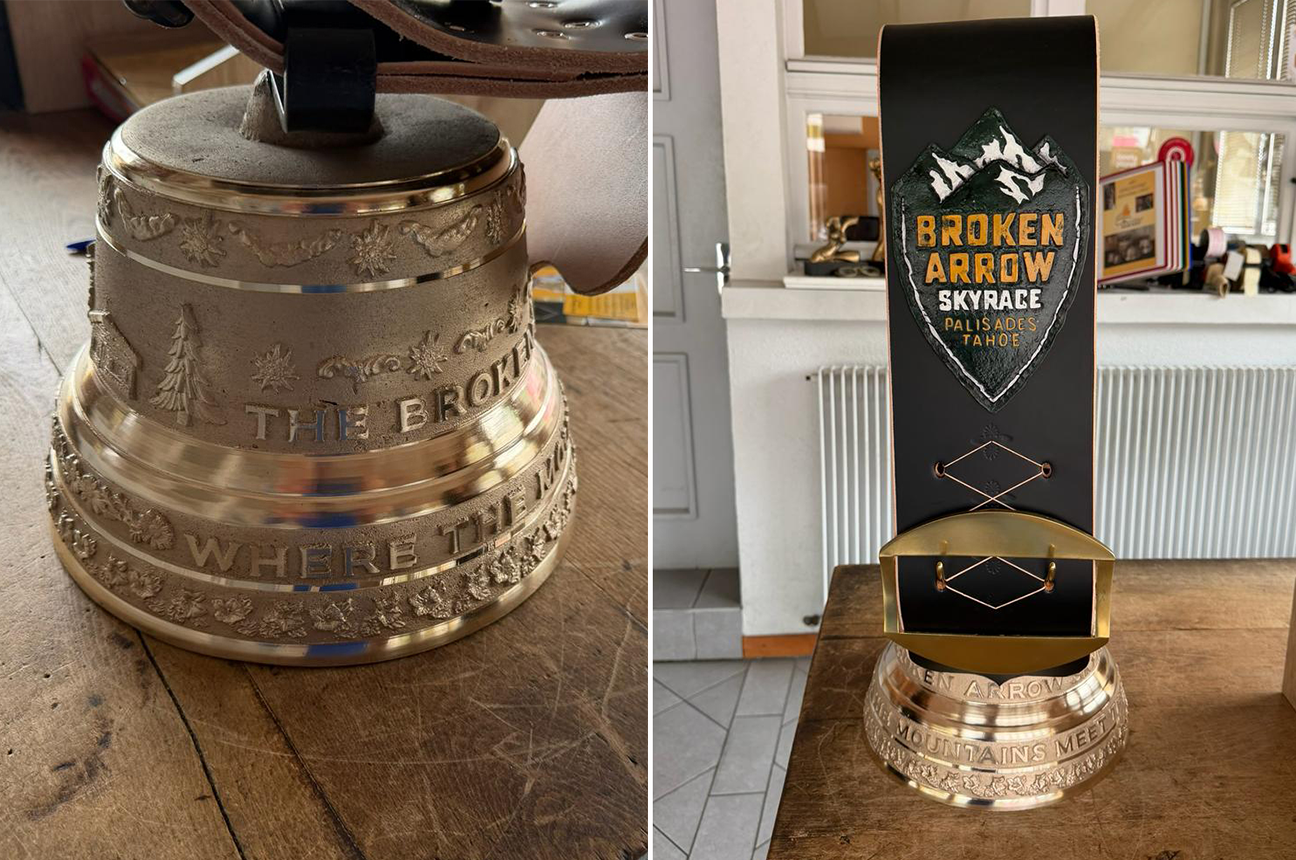
After the original bell was broken, event director Brendan Madigan sought out a new bell with the help of Doug Mayer, the founder of the Run the Alps tour company based in Chamonix, France. The new bronze bell, which cost about $3,500, was crafted by Obertino Morteau, a French foundry with a heritage that dates back to the 1700s.
Mayer picked up the new 37-pound bell, transported it back to Chamonix on a train and handed it off to colleague Leigh-Anne Burns, who then packed it up for Carrie Craig, another Run the Alps team member, to take to the U.S. on her transatlantic flight. The bell will be presented to Madigan on Thursday at the Broken Arrow Skyrace finish line in the Palisades Tahoe resort village.
Whether you finish the Ascent in under 30 minutes or the 46K on the edge of the cutoff, the bell rings the same for everyone. “It’s our whole thing at the finish line,” Madigan says. “You ring the bell or the race hasn’t stopped.”
RELATED: Broken Arrow Skyrace Ups Prize Money, Inclusivity with Nike ACG
- 6 Things That Make the Mammoth Trailfest Great
- Mammoth Trailfest Debuts World’s First Para Athlete Prize Purse in Trail Running
- Inspiring Images from the 2026 Run Rabbit Run
- Trail Tested: Brooks Cascadia 20
- Why Volume is King When Training for Ultras

- How Meg Eckert Ran a Record 636 miles in 6 Days