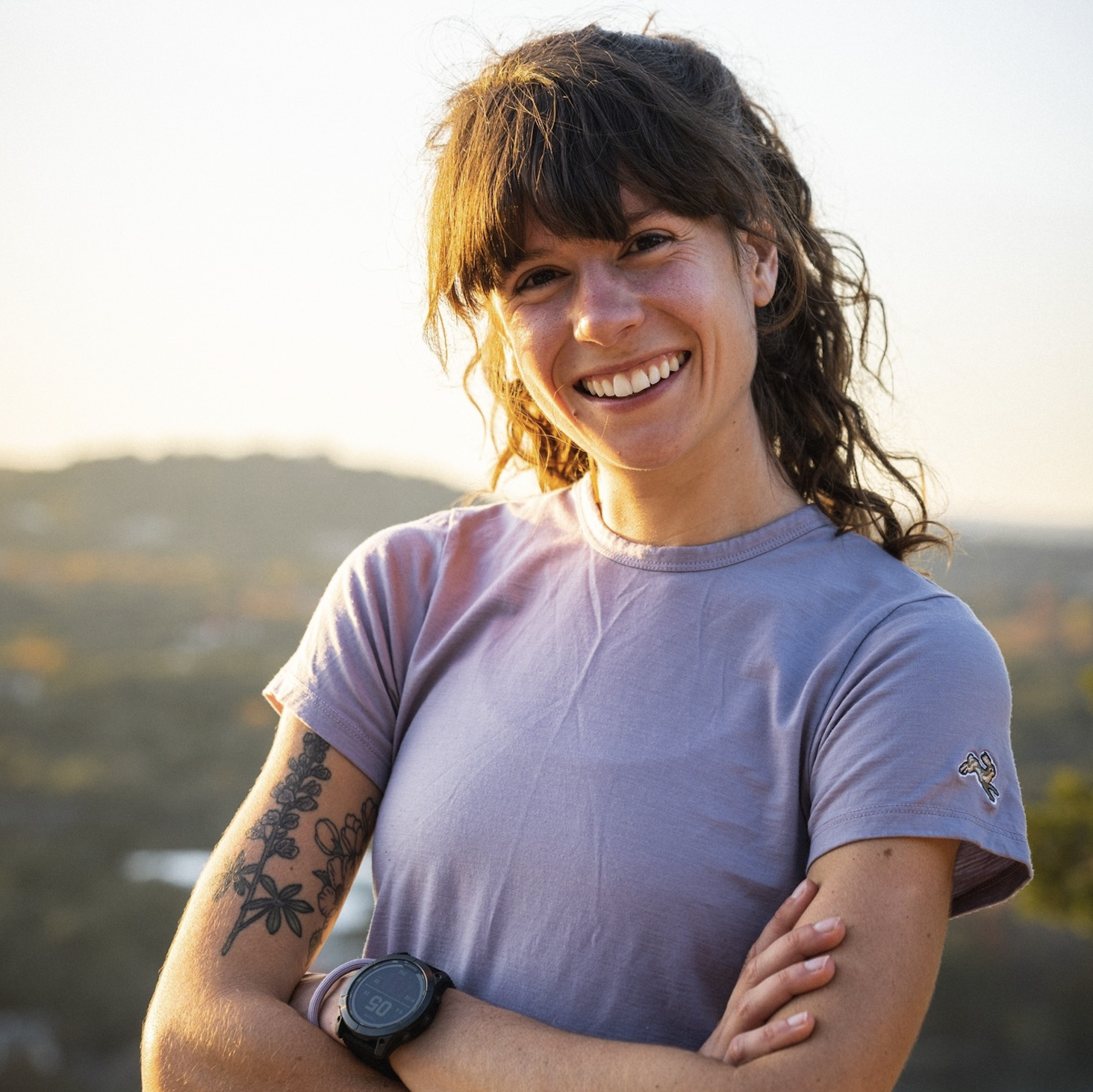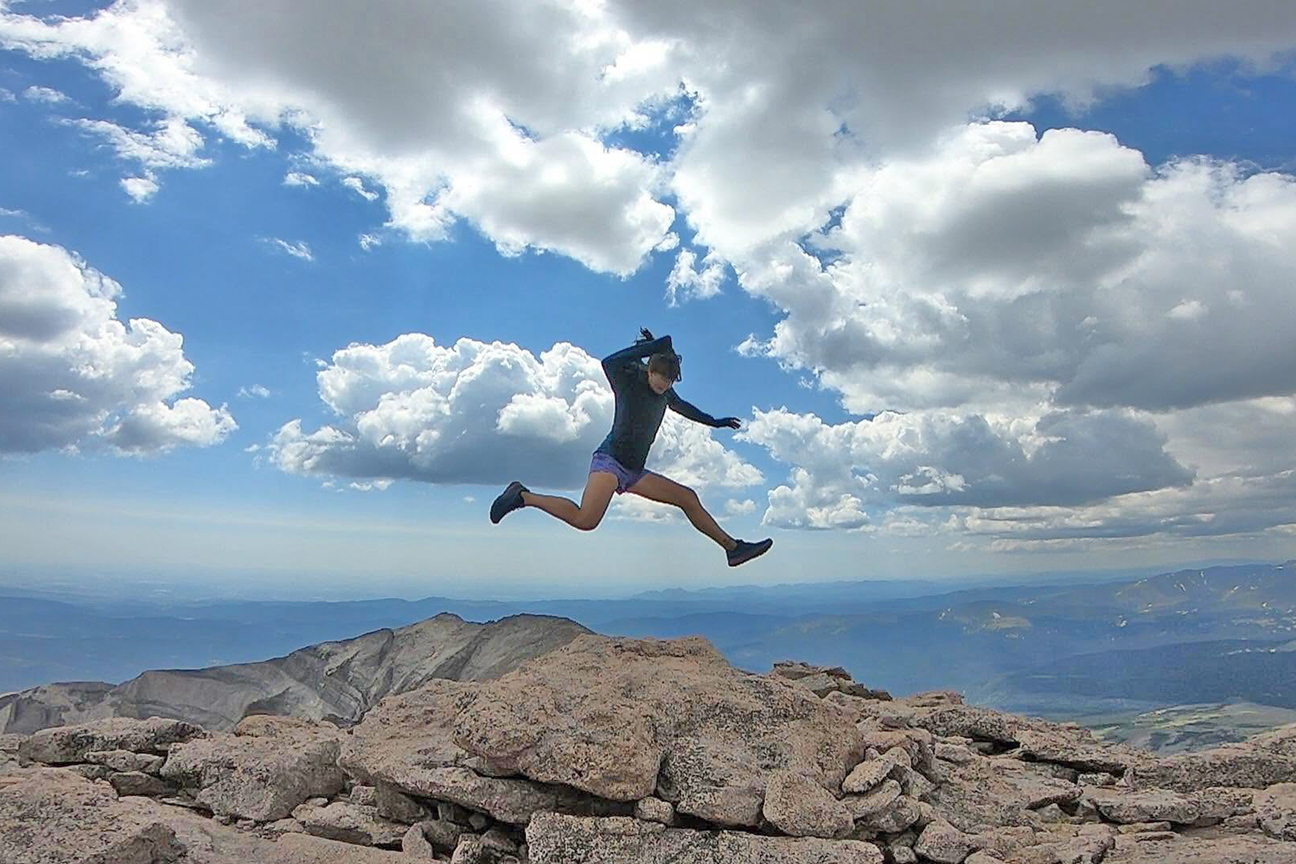
Zoë Rom riffs on the challenges she’s faced while coming back from injury.
As a writer, I deeply resent sustaining an injury as clichéd as Achilles tendinitis. Being felled by a few inches of tendon near the ankle feels less like a medical condition than a heavy-handed editor insisting the symbolism isn’t obvious enough.
But this spring, just as I was building toward the first race of my season, the San Juan Summer Solstice 50, an Achilles that had been merely creaky suddenly escalated to “Oh, absolutely the f*ck not.” So I pulled the plug on my training block and bought myself a new bike jersey as a consolation prize. I’ve found that nothing promotes tendon healing quite like spending half my paycheck on PT, and the other half on a shirt with three tiny pockets.
Injury is an occupational hazard of running (read my essay about that here), especially when you’re trying to push your limits in training, which is generally good and healthy, and in life, which for me tends to have a stronger Icarus component. I rarely realize I’ve flown too close to the “doing too much” sun until my wings have fully melted and I’m plummeting toward the ocean, still checking my email because technically I have cell service.
Here are the three biggest tips I have for working through injury while staying mostly sane.
#1 Have a plan B that you actually like.
The advice about injury is clichéd because injury itself is clichéd. It forces you to confront your own fragility in tiny, medically non-serious doses. It’s like microdosing your own mortality. Enough virtual ink has been spilled explaining that if your entire life revolves around running, your athletic identity, and doing whatever it takes to appease the Kudos Gods, injury will bring that particular validation pipeline to a screeching halt.
Three years ago, I pissed off the same Achilles during my buildup to Western States. Again, I’m just a girl, standing in front of the largest tendon in her body, asking it to please calm the f*ck down.
The buildup to Western States is really not an ideal time to confront your own mortality. I’d prefer to schedule my existential crises during the off-season, when they’re less disruptive to my aerobic development, and I can listen to Folklore on repeat.
At the time, I was the editor of a trail running magazine and trying to compete at an elite level. My entire identity was basically a Jenga tower built out of running shoes and perched on quicksand. As soon as I had to rest the ol’ tendon, the whole thing came down.
“Depression” might be too melodramatic a word for what followed, but there was a lot of lying on the couch under several blankets, watching stand-up comedy while slowly becoming one with a layer of Cheez-It crumbs. Eventually, I exhausted most of the good comedy specials on streaming and, more importantly, got bored with my own despair. Then I had an epiphany:
Hey. I could do comedy.
So I auditioned for an improv group. Then I started doing stand-up. It turns out the psychology required to run ultramarathons translates remarkably well to performing comedy: an unusual tolerance for discomfort, a desperate need for external validation, and the delusional belief that suffering for several hours in front of indifferent strangers will eventually become rewarding.
And I really, really liked it.
Previously, I’d tried to placate myself with halfhearted hobbies, the emotional equivalent of insisting that O’Doul’s tastes just like the real thing. I tried knitting, beading, writing “for fun,” and studying wine, which mostly meant drinking wine while retaining nothing about it. None of them took. But comedy stuck.

#2 Assess Weaknesses.
Injuries are a gift, in that they allow you to see just how hollow and irritating every aphorism describing injuries as gifts really is. They’re also useful diagnostic tools. They have a way of illuminating weak links, imbalances, and questionable structural decisions, like hiring a home inspector after part of the roof has already collapsed.
In my case, one likely contributor to the Great Connective Tissue Crisis was an ankle with roughly the same range of motion as an elderly manatee. Because the ankle wasn’t moving especially well, my Achilles appeared to be absorbing more of the load. Thankfully, mobility and strength work have helped restore some movement while making the tendon more resilient.
But injuries don’t just expose weak links in our kinetic chains. They also reveal weak links in our recovery, mental game, and overall life load. A stiff ankle is one thing. Add 80-to-100-mile weeks, the 25/7 administrative emergency of being a freelance writer and podcaster, a burgeoning comedy career, and the occasional sighting of the nice man I married, and my candle was getting aggressively Edna St. Vincent Millay’d. It was burning at both ends.
So along with mobility and strength work, I tightened up my nutrition and recovery. I also had to establish some boundaries, which had previously been considerably more flexible than my ankle. My Achilles seemed to be the final structure absorbing every stressor I refused to acknowledge elsewhere. So while I deloaded my training, I tried to deload my life a little, too.
But ah, my foes, and oh, my friends, it gave a lovely light.
It also required six to eight weeks of physical therapy.
#3 Gratitude Reset
Anyone who has taken sustained time off running knows the pure, disproportionate joy of those first tender steps back. Sure, I’ve finished 100-milers, but nothing compares with the triumph of completing a 30-minute run without pain. Then comes the first run when you don’t think about your Achilles every 11 seconds. Then your first long run. Then, finally, the first run when you stop brainstorming injury-related essays to pitch to UltraSignup.
It’s easy to get lost in the sauce and forget how extraordinary it is that we get to do any of this. Sometimes you need a brief vacation from running to remember that running was your vacation from everything else. Absence really does make the heart grow fonder.
Goddammit. Another cliché.
But perhaps that’s the final indignity of a clichéd injury: sometimes the clichés are true. That doesn’t mean you have to call your injury a gift, feel grateful for it, or emerge from physical therapy as a completely transformed person with a podcast about resilience. It just means you can choose to take something useful from it: a Plan B you genuinely enjoy, a stronger body, better boundaries, or a renewed appreciation for the ordinary miracle of a pain-free run.
You don’t have to be grateful for the injury. Just try to come back carrying something besides burnout or resentment.
And perhaps a needlessly expensive bike jersey.
RELATED: In Praise of Doing it The Hard Way
RELATED: Go Touch Some Grass
- 3 Things I Learned from Coming Back From Injury

- Closing the Gap Between Ability and Ambition

- What Causes a UTMB DNF? Here’s What The Data Says

- Nine Lives: My Life in 9 Transcendent Pairs of Shoes

- Race Through the Night: Stay Awake, Alert + Mostly Sane

- New Ways to Think About Data for Runners