
Ultramarathons may be a safe space for older runners, but you still need to make concessions when running ultras as you age.
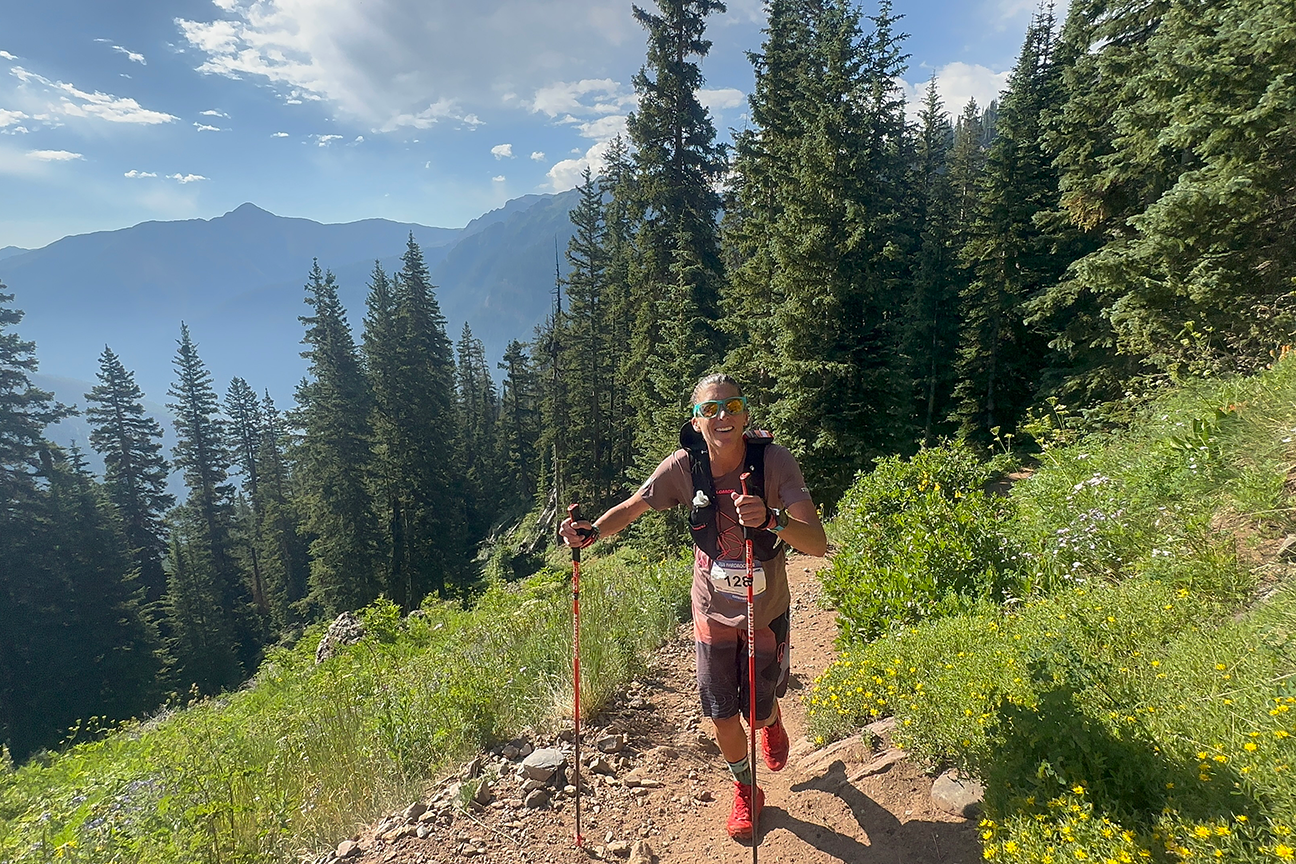
Rachel Kelley, just like most ultrarunners in the throes of a tough race, has to remind herself to ditch the discouraging thoughts.
Most of her own intrusive talk, she admits, has to do with her age.
Kelley won races in her 30s. She won the Cruel Jewel 50 more than once and several smaller races, even a 100K once. Now, more often than not, at age 46, she finds herself in the middle of the pack.
“I used to feed off passing people,” Kelley says. “I have to remind myself, mid-race, that this is where I am now. I have a different mental game I have to play with myself.”
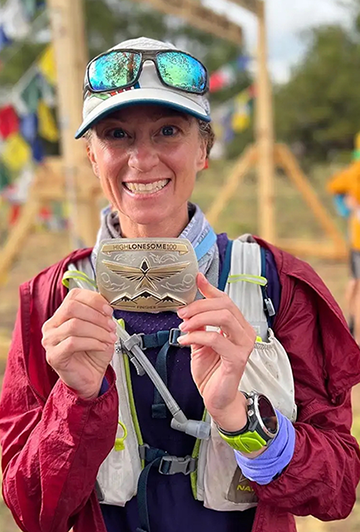
The thing is, Kelley remains a successful ultrarunner. She finished the High Lonesome 100 this year near Nathrop, Colorado, when a quarter of the field didn’t. She finished Western States in 2019. She finished Hardrock in 2023.
None of those races are for weenies. Kelley runs these events because she loves them but also to set an example for her clients: She specializes in coaching older runners. Her message is pretty simple: Older runners can still do great things with a few adjustments. In fact, the most experienced runners have an advantage over all those babyfaced eager beavers looking to “crush” the course on vibes alone.
“100-milers are hard,” Kelley said. “And the older you get, the better you are at getting through hard things.”
Experience sets older runners apart
If older runners want some inspiration, they can turn to Ludo Pommeret, who won this year’s Hardrock at age 50. Even Courtney Dauwalter, who won Hardrock for the fourth time, is 41, an age typically too old for marathon runners to remain competitive at the top levels.
In ultrarunning, where raw athleticism gets beaten down by its punishing distances, other factors can make a big difference, including perhaps the biggest of all—experience. Experience is how a veteran pitcher still gets batters out when he loses his fastball or how a quarterback extends his career by throwing the ball away instead of scrambling.
Swiss physician and endurance athlete Beat Knechtle cautions against someone like Pommeret as proof that 50-year-olds can still win races. Indeed, there’s no argument that he is an outlier: Pommeret’s win at Hardrock was his third in a row and he also won UTMB at age 40 in 2016. But Knechtle also believes that experience can be a huge factor in ultramarathons. It might even be THE factor.
“Multiple studies consistently indicate that in long and very long running distances, older athletes—particularly those around 50 years of age—may outperform younger competitors due to accumulated experience in pacing, nutrition and self‑regulation,” Knechtle said in an email interview.
Knechtle is one of the top researchers regarding physiology, but the Swiss doctor is also a triathlete and ultramarathoner. When he was 49, he won his first Deca Iron Ultra triathlon, besting 24 athletes from all over the world. The event requires participants to finish 10 Ironman-distance triathlons.
He won again at age 59, mostly because his experience paid off again: He was the only to not only survive the extreme weather conditions, where it was both blazing hot and then very rainy and cold, but finish.
Sometimes it’s not even the event itself where experience matters as much as the years of training and racing. A 50-year-old once won a Triple Iron on his first attempt, Knechtle said, because of his extensive long-distance cycling and running experience.
“This enabled him to distribute his effort optimally throughout the event,” he said. “With increasing age, the experienced ultramarathoner is better in the longer distances.”
This is likely especially true for 100-mile races, which require a lot more problem solving and knowledge on fueling and pacing than any shorter distances. (Yes, 200-milers exist now, but those tend to be multi-day events for most runners and are their own thing).
“There’s a big learning curve in a 100,” Kelley said. “A lot of people who are successful at this have been in ultras for quite a while.”
That’s because it can take years before runners know what works for them (and what doesn’t). They rely on that knowledge because they know they can’t just run their way through it any longer. They’re also more willing to make adjustments, as Kelley had to do.
“You know yourself more,” Kelley said. “Sometimes it takes that much time to realize their potential. There is so much mental game in a 100-mile race.”
Ultimately, race day experience matters so much that even in cases where older athletes couldn’t train as hard as younger ones, Knechtle said, individual strategies proven over time mattered. Older athletes were more likely to take in fuel when they should and not go out too hard in the beginning, according to his research.
“Race-day behavior proved to be a decisive factor,” he said.
Fewer finishers
Now that we’ve pumped you seniors up, here comes the bad news: Finisher rates have increased at Western States—this year was an astronomical 87 percent—but older runners aren’t matching the trend.
Less than 25 percent of runners over the age 65 finish Western States. For women over 65, it’s even bleaker: Only three women that age have ever finished the race.
This is according to KenWard, an analytical chemist with a doctorate. He is also a 10-time Western States finisher. Using models with data he obtained by examining UltraSignup records, he can not only point out trends among those who enter but predict whether they will finish or not.
Ward doesn’t love his discouraging findings. He’s 69 himself. But he’s using them to fight for older runners. One suggestion, in a letter to the board, did get approved: The race allowed poles for the first time this year. But his other suggested changes haven’t, including an early start for older runners, especially women, or increasing the cutoff. He’d like to see older women get an early start because, on average, they run 7 percent slower than men, according to his records. That 7 percent equates to two hours.
“It’s unfair to women who are older,” Ward said.
The race may have to grapple with this as the years go on, given that runners have to wait several years, if not a decade, to get into Western States now via the lottery.
Ward’s best advice is also the toughest to follow: Don’t slow down as you get older.
“Age is a factor,” Ward said, “but not as much as their ability to maintain speed, and if they are still doing longer ultras.”
Ward used his own findings to motivate him to do more speed work in 2024, and he finished the race at age 67. But Ward also cautions those who think speed work is the fountain of youth.
“You have to not get hurt,” Ward said. “That’s the only downside.”
In fact, Lindsey Parry, known as Coach Parry on YouTube who specializes in older runners, believes the key is training without getting injured. When older runners get hurt and have to take time off, it severely damages their progress, so much so that it’s not uncommon for them to stop running altogether.
“What I was seeing in real life is keeping them on the road and minimizing their time off helps them make the biggest improvements over time,” Parry said in an interview. “We get punished harder for making the same mistakes we did when we were younger. We used to get away with it. We don’t get away with it anymore.”
Those mistakes include running too hard all the time, a mistake he believes most amateurs make. They also tend to run too many miles, and they ignore strength training.
“For non-elite athletes,” Parry said, “the best way to keep them on the road is to slightly undertrain rather than overtrain.”
Ultramarathoners may have another advantage to avoiding injuries, Parry said, and that’s because trails are less taxing on the body. They take place on softer terrain, use a wider variety of muscles and require, even demand, a lower intensity than marathons. But there’s also a caveat.
“People who do ultras typically like to do lots of ultras,” Parry said.
That’s a problem because ultrarunners do need to recover after races, and recovery takes longer as people age, both Parry and Kelley said. Recovery takes time, and too much time away hurts older runners more.
“If you just want to finish these races, that’s fine, you can keep doing them,” Parry said. “But if you want to perform better, you can’t do all of them. And eventually, you may have to limit yourself as you turn 50 even if you just want to finish.”
It’s never too late
Robert Long had no real interest in running a 100-miler. He thought they’d passed him by. And then he watched his wife finish one two years ago. Anne Mandeville-Long was 65 when she completed the Umstead 100. Long finished the same race last year.
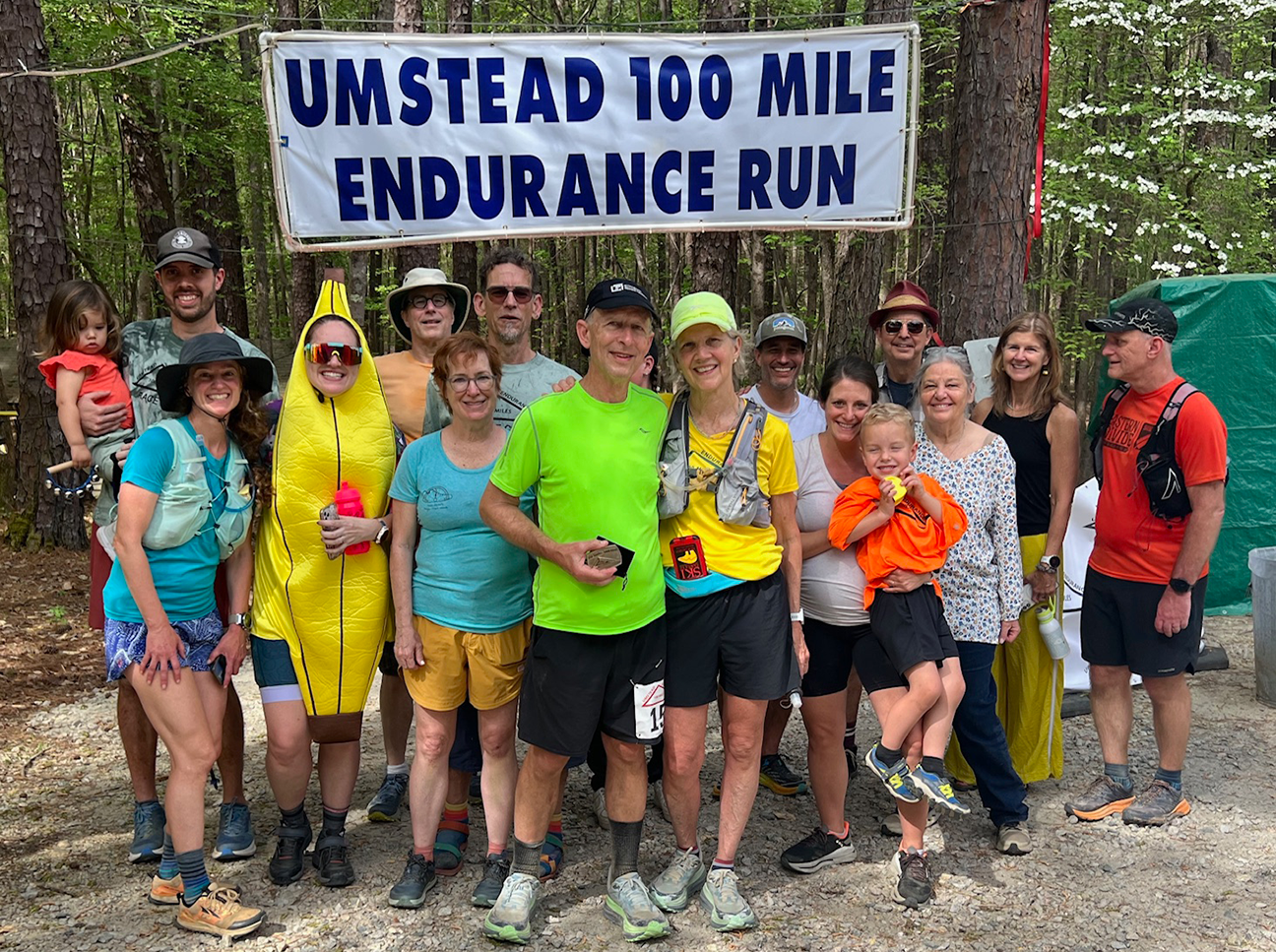
“I didn’t imagine I could do it until I saw her do it,” said Long, now 75. “I guess I’ve been chasing her for 15 years.”
They’d run ultras since 2017, when the call of the singletrack trail system in Chapel Hill close to their house was too strong to ignore. Their first was Antelope Canyon, and they were pleasantly surprised how good they felt after the race. The two have been married nearly 25 years and have a blended family of seven children and seven grandchildren. She is a retired preschool teacher, and he is close to retirement after decades of working as a design consultant on performing arts buildings.
Long thought he could do the 100 partly because they already had a system in place for Mandeville-Long, including a physical therapist, strength training, yoga and a coach (Kelley). They picked the Umstead 100 because it’s eight loops of 12.5 miles, and it was 20 minutes from their home. Both made the race easier.
They’ve done most of their ultras together and paced each other in the 100. Long is considering doing it again. He was 74 when he finished last year, one of six 74-year-olds in the history of the race.
If he finishes again, he can get the age record, but he hesitates because doing so, he said, would be for vanity. Plus the 100-miler hurt.
“I was more beat up than I thought I was,” Long said.
“You definitely were,” Mandeville-Long said. “His feet were so terrible. They were like one big blister.”
Regardless of whether they do another 100, they will keep running. They are out on the trails nearly every day, either for a walk in nature, to run with their friends or to train for their next race.
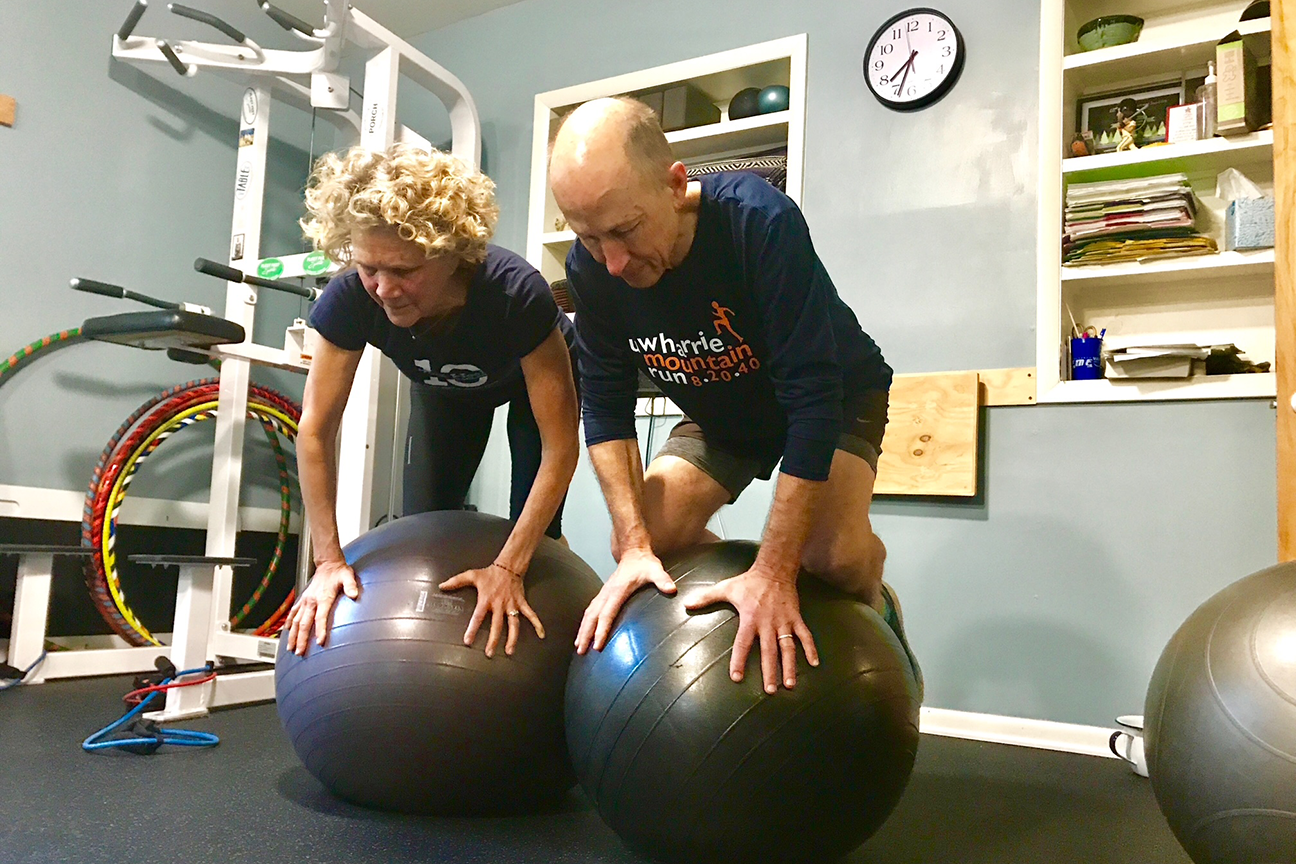
“It’s our lifestyle now,” Mandeville-Long said.
How to keep running ultras as you age
• Pay attention to the niggles: Small tweaks can turn into injuries if you ignore them.
• Focus on improving the current version of you: Some runners restart their PR list after age 50.
“I won’t get you back to where you are when you are 30,” said Lindsey Parry, known as Coach Parry on YouTube. “But I can make you faster now.”
• Conversely, don’t compare your times to your younger self: It’s not only unrealistic to run the same times you ran 25 years ago, it’s dangerous.
“If you continue to compare yourself to 35, you invariably push yourself too hard,” Parry said, “and the second thing that happens is you’re constantly demoralized.”
• Find a good physical therapist: Rachel Kelley, a coach who has many older runners, said to find someone who works specifically with endurance athletes and understands aging.
“The sooner you address impending injuries,” Kelley said, “the better and more consistent aging runners can be.”
• Consistent training should be the goal: Older runners can still maintain high levels of fitness but have a harder time bouncing back from time off. Train to avoid injuries, not just stay in shape.
• Strength training is vital, and once you’re in the gym, emphasize mobility and balance.
• Recovery time is crucial: Prioritize sleep, give yourself more easy days and even an extra day off if you think you need it.
• Speed work is still important: Speed is important for making cutoffs in races, so try to maintain some speed while remaining cautious about injuries.
• Find goals other than speed: This is why ultras can be good for older runners: Finishing is a prized result.
• Do the boring stuff: Eat well, don’t drink too much (if at all), go to bed early, blah blah blah. Older runners don’t have the margin of error for the bad stuff anymore.
- The Race is Over, Now What? Your Nutrition Guide to Recovering from Ultra-Distance Trail Races
- Hit Me Where It Hurts: How Ultrarunners Manage Pain
- How Andrea Moore Became a Prolific 200-Miler
- UltraSignup Hosting 2026 US Trail Running Conference in Nashville, Launching New Registration Platform
- UltraSignup’s David Callahan on the Unrationed Pod
- The Art of Taking Running Seriously, But Not Too Seriously

2 comments
Mandy Hansel
Great article Dan! Love the tip to restart PRs!
bill
I am 72. My #1 is to avoid injuries. Figure a top 5 finish matter how slow I am. So already doing better than at age 52 🙂