Physical and mental pain are part of the ultrarunning experience. Here’s how four runners have learned to manage it.
During my first ultra, I waited for my epiphany. I wanted to uncover whatever had taken root in the back of my mind and propelled me toward what felt like a ridiculous goal. If the epiphany ever happened, I don’t remember it. What I mostly felt for 50 kilometers was far more mundane: a deep, full-body ache I’d never known.
When my friends hugged me at the finish line, they wanted to know what I’d discovered, too. All I could say, limbs sprawled on the grass, legs like jelly, was “that really, really hurt.” But by morning the memory had changed, and within a few days I signed up for my next adventure. Now, when I remember that race, I don’t think about the pain first. I think about the euphoria of seeing my friends, how my body felt heavy as a stone that night in bed, the music of my steps in the quiet woods.
Since then, I’ve been fascinated by the relationship between all of these thoughts. How pain, something that carries no inherent value or meaning, can become meaningful when we choose it for ourselves. How we can talk ourselves into and out of and back into the hard thing. How the acceptance of pain changes our sense of self and our capacity for discomfort.
I interviewed four ultrarunners to ask them what their pain looks like, how they get through their lowest moments, and what, if anything, is on the other side of all that hurt.
RELATED: Find your next trail or ultra race with UltraSignup’s New Event Finder.
“Can I forge a diamond out of this?“
Michael Wang
35, data analytics and AI product manager, Chatham, NJ
From his first 50K, Michael knew ultras were special. Everything from the raw conversations on the trail to the unrestricted permission to walk to the endless rotation of dates and PB&J sandwiches felt less scripted than other races.
The pain was also different. Hours on the trail meant shifting his stride to accommodate the changing terrain and alternating body aches. For him, the pain was a metaphor for life.
“That spread-out nature of the pain is why I like it a lot more than a 5K,” he explains. “Each step is not so bad that you can’t take the next one.”
The mental gymnastics of running an ultra is its own sport. Breaking down intimidating distances into smaller goals offers runners periodic moments of accomplishment that help boost mood and self-confidence.
“I’m just trying to go from aid station to aid station,” Michael says, adding that mentally condensing his pain allows a kind of momentum to take over. “The next step is so small… I just have to take the next step.”
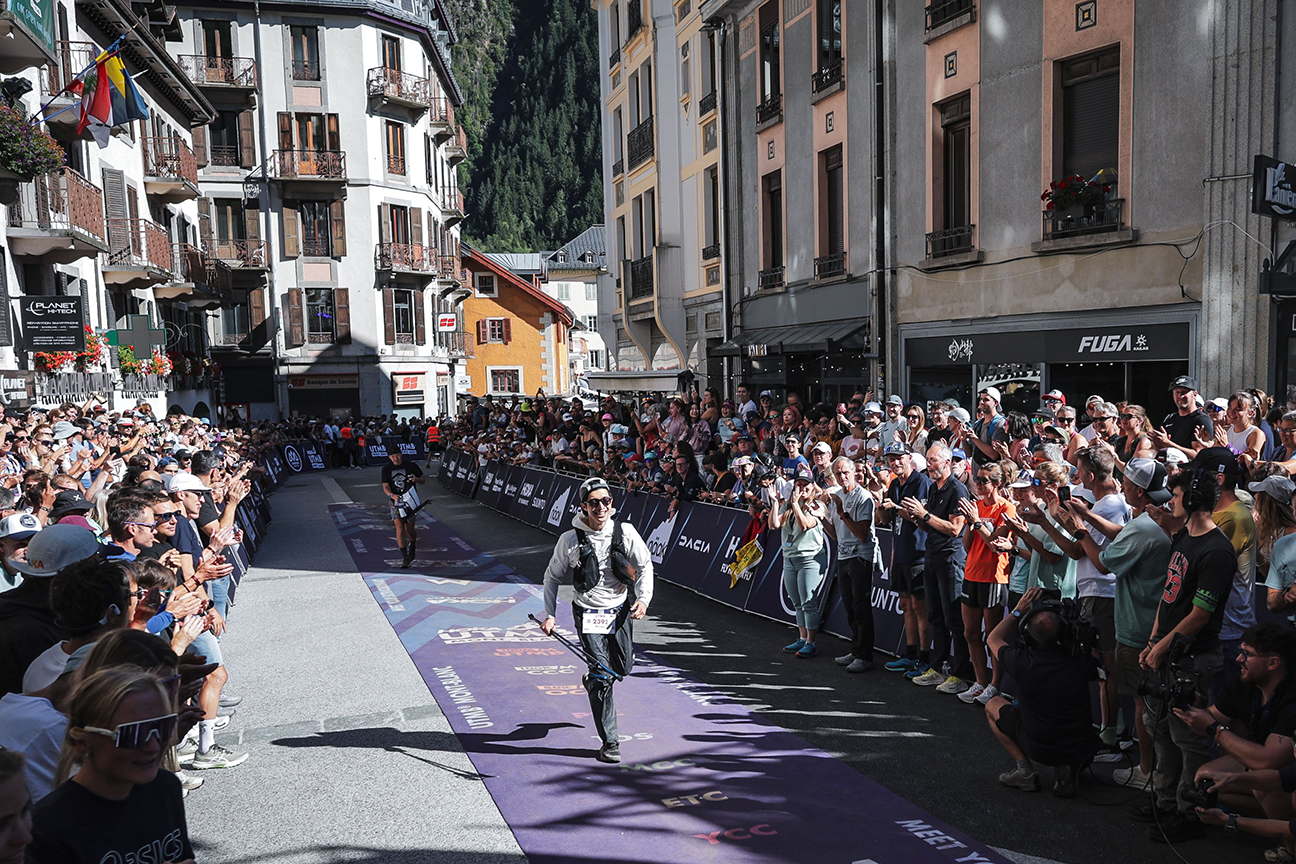
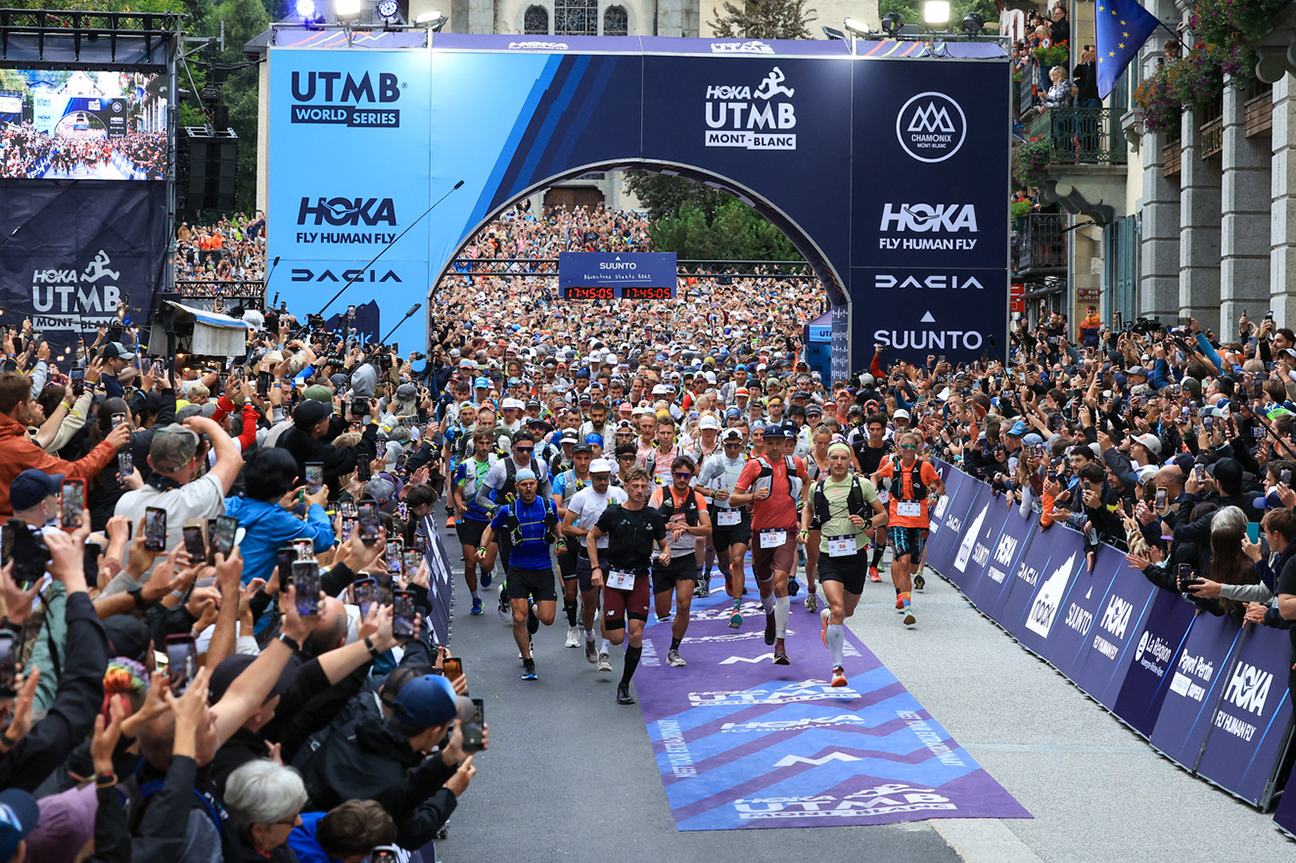
Sometimes even the next step feels impossible. Racing the 106-mile Ultra-Trail du Mont-Blanc (UTMB) last summer, Michael found his mood plummeting after a first day spent slipping and sliding on muddy trail. He needed something to pull him out of his frustration.
Before the race, he had asked friends and family to send him voice messages. “I got about 100 messages. Over 2½ hours of content,” he recalls. In the darkest hours of UTMB, he put on his headphones and pressed play.
“It kinda felt like a living funeral for me,” he reflects, describing what it was like to hear how much he had affected so many people’s lives. But it also got him out of his funk, grounding him in a sense of identity and community.
That connection between personal identity and athletic performance is especially strong in ultrarunning. Studies indicate that while “marathon runners are driven by a combination of health, fitness, and social factors,” ultrarunners are fueled by “internal psychological factors, such as self-esteem and personal discovery.”[1]
For many ultrarunners, finishing time is less a motivator than completing a once-unthinkable distance. The ultramarathon fuels and builds a sense of self that depends on running through the pain. By the end of the race, the cramped calves, blisters, and bunions are secondary to the sense of pride and accomplishment. “Can I forge a diamond out of this awful rock?” Michael recalls thinking during one of his most difficult moments on the trail.
He also uses humor to find levity amid the suffering and remind himself of the total absurdity of what he is doing.
“We’re just molecules bouncing around in the universe that decided to do this random thing,” he says. “Me and just all these other people are running in the same direction for no good reason at all on our own volition just because we want to… Maybe that laughter at the situation keeps things in perspective and pushes away some of the pain. You’re doing this silly thing, but the silly thing is kind of wonderful at the same time.”
“If it wasn’t hard, you wouldn’t be doing it.“
Jana Velíšková
42, UX designer, New York City
Ultrarunning asks athletes to be at once deeply in tune with their bodies and able to withstand signals of distress. Interpreting those signals and distinguishing between different types of pain is one of the biggest challenges for runners.
When Jana finished a marathon with a pain she later discovered was the result of a stress fracture, she struggled to tell “good” pain from “bad.” She’s not alone. Ultrarunning inherently involves a degree of pain, and many athletes adopt “a mind-body dualistic approach” to deny their physical signals and distance themselves from the experience in their bodies.
For Jana, distinguishing between expected discomfort and injury-related pain has been a journey of its own.
“I didn’t know what the difference was between hurting because I was working hard and pain because I was injured,” she recalls. “Emotionally, I just felt like I couldn’t trust myself.”
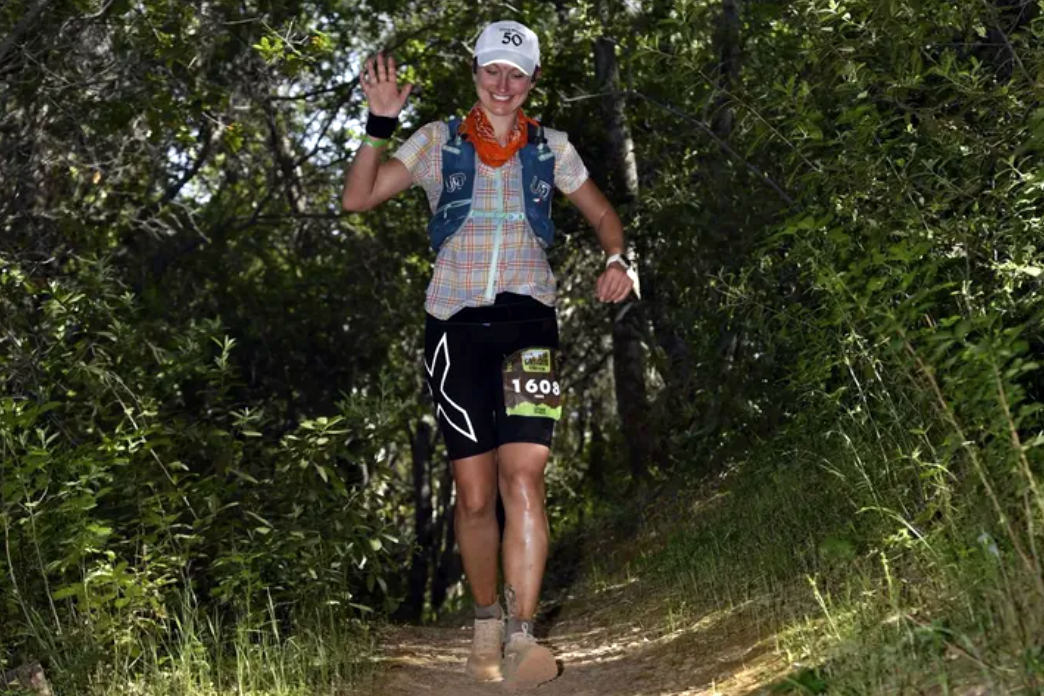
In the face of that uncertainty, Jana turns to coaches and trusted friends for a more objective perspective and for help deciding when it is okay to push and when to hold back.
Despite all the physical discomfort, it is often the mental pain that is hardest to conquer.
“You’re just battling these intrusive thoughts,” she explains, recounting a DNF (did not finish) last year. “My internal monologue was screaming.”
More than with shorter distances, a runner’s mental and emotional state deeply influences performance. One study noted, “Successful ultramarathoners reported good moods and enjoyment throughout the event.”[3]
Creating that mental space is an integral part of Jana’s training. She’s learned to slow down on easy runs, take breaks from Strava, and ground herself in gratitude and presence. Her approach is supported by research showing that mindfulness-based training supports “emotion regulation, flow-related processes, and pain-related appraisal.”[4]
Learning to pay attention to the world around us doesn’t just build mental fortitude; it allows for magic within the mundane.
“Even if you’re running in the same place every day, it’s so different every single day,” Jana says, adding that training gives her an opportunity to notice all the big and small changes in her environment.
“Instead of focusing on the speed, I can focus on the turtles in the park,” she says. “You look for the magnolia at the top of the hill, you start to appreciate being outside and using your legs to see all these amazing things.”
“That’s the reward for making it in the late stage of an ultra.”
Carmen Cramer
43, marketing and advertising executive, Brooklyn, NY
Carmen was hesitant when she first learned about ultras. “I never finished a marathon and thought, ‘Geez, I wish I could run further,’” she says. But after her first race, she was hooked.
“I felt like this was my place, I’d found my people,” she explains. “Not focusing on pace was a breath of fresh air… You can really just get into the groove and focus on nature.”
Rather than deterring Carmen from the sport, pain became something to explore, a question she wanted to answer.
“As soon as I accomplished my 100-miler I thought, ‘Wow, what else could I do?’” Having extended beyond what she believed was her pain threshold, she wondered how far she could take it.
During the Grindstone 100K in Virginia, she got a chance to find out. After a wrong turn left her five miles off course with slim chances of making the cutoff, her mental state plummeted. She found herself caught in a loop of negative self-talk and figured she should pull out at the next aid station.
But somewhere within those miles, that self-doubt turned into curiosity about whether she could flip the narrative. She started telling herself a different story, one shaped not by her mistake but by her ability to continue despite it.
“All I could do was keep going forward as quickly as possible.”
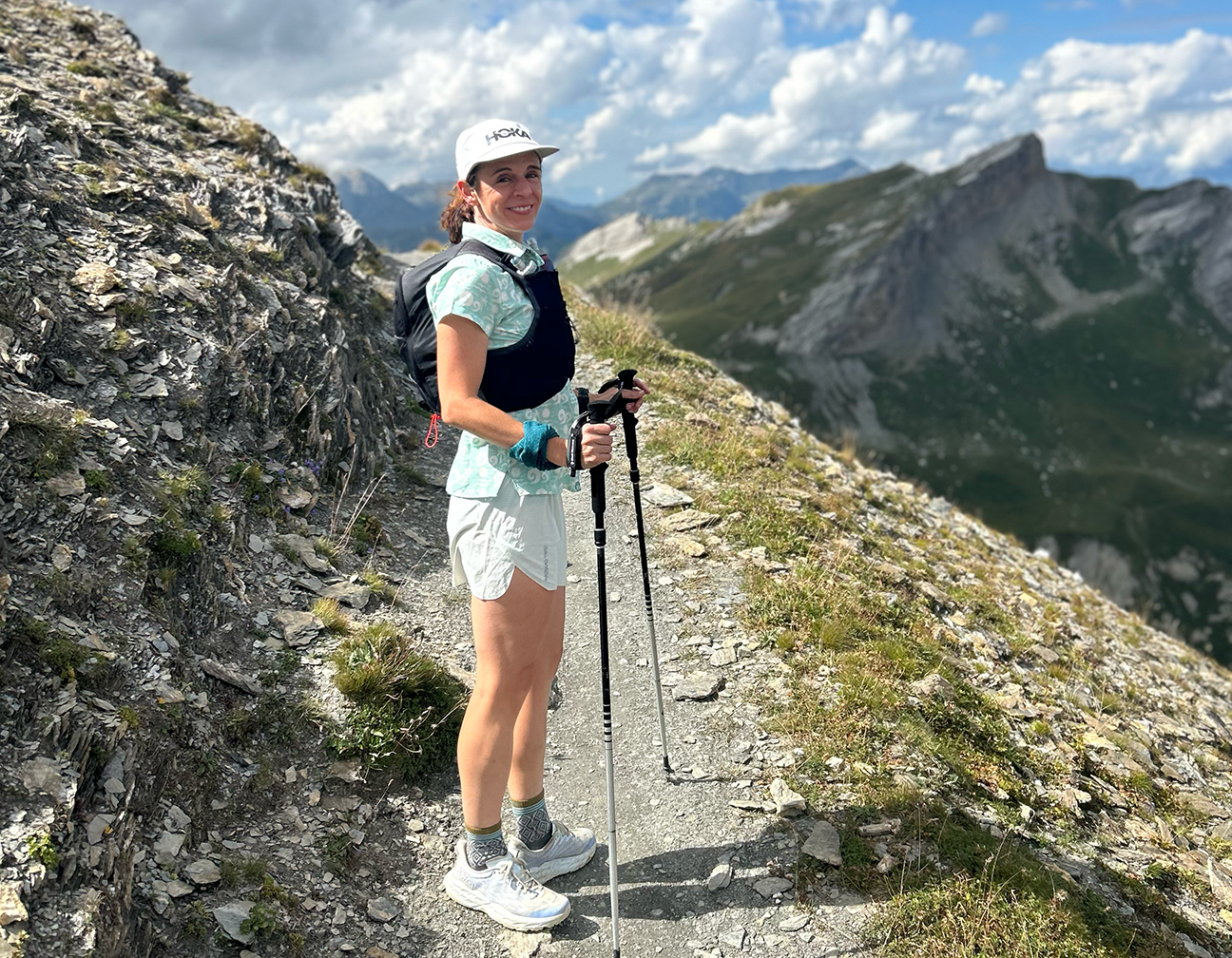
She greeted each runner she passed on the trail, collecting tiny moments of camaraderie that lifted her spirits one by one.
“The friendliness of just saying hello to people put a smile on my face and just made me so much happier to be there and really helped me turn my mindset around,” she recalls.
She finished with two hours to spare. But the biggest accomplishment was learning how to reset her mental state.
“That ability to change from ‘I hate this, I just want to quit’ to something positive where you can turn that anger into fuel was really valuable for me, and I think in the long run it’s made me a stronger runner mentally.”
With every race, Carmen has collected new tools to get through the mental and physical anguish.
She uses visualization techniques in training, imagining how her body will feel at mile 30, 70, 100. Such preparation has been linked to success among endurance athletes, with research showing that “increased expectation and acceptance of pain is associated with less negative thoughts during the race.”[5] That expectation and acceptance allow for a kind of freedom, one where a welcome level of “good pain” is not something to avoid but an “inevitability for race completion.”[6]
Accepting pain as an inevitability has been a huge part of Carmen’s evolution as a runner.
“I didn’t realize pain was a part of running,” Carmen recalls of her early days. Now, hours deep into a race, she knows everyone else is feeling it too. “It’s not an issue I’m having personally, it’s part of the process… When you’re feeling it, it’s not a bad thing, it’s just a fact. Stop giving it judgment. It’s just a thing.”
Pain is an inevitable part of ultras, and for Carmen it’s an opportunity to have an experience we can’t get in everyday life.
“In a way that’s the reward for making it in the late stage of an ultra, to feel that pain… you’re never going to feel it on just a short run.”
Even during the 250 miles of Cocodona, through sleep deprivation, nausea, and a night spent running, the pendulum of Carmen’s experience always swings positive. When she looks back on all the miles, a smile bursts across her face. “The happy memories of a race outlast the bad memories,” she says.
Carmen’s positive memories are supported by something called the “peak-end rule,” which indicates that a painful experience is most strongly remembered for its intense moments and its ending.[7] It explains why someone might opt for a longer pain experience with more peak moments rather than a shorter one that is less emotionally charged. Those emotional peaks, all the pride, disbelief, and euphoria of doing something that once felt impossible, stand in for the entire experience.
All’s well that ends well. “The euphoria of the finish line makes all the pain fade away faster,” Carmen says.
“Inherently running 100 miles has no meaning … but it means a lot for me.”
Kei Vonko
24, content creator and social media manager, Ventura, CA
With a background in surfing and cycling, Kei is no stranger to endurance sports. But when he began running ultras, he was struck by the social connection at their core. He started building his own community on social media, sharing his training, triumphs, and trepidations on Instagram.
“I just want running to be fun again,” he says of his motivation for becoming a running influencer.
He mixes training tips with entertainment, tier-ranking race products, sharing his favorite pre- and post-workout meals, and offering his own scientific breakdown of the ultrarunner’s brain. (Ever heard of the trauma lobe?).
Within the humor is a place to bond over the shared highs, frustrations, and intrusive thoughts that make up the hours and hours of ultra training.
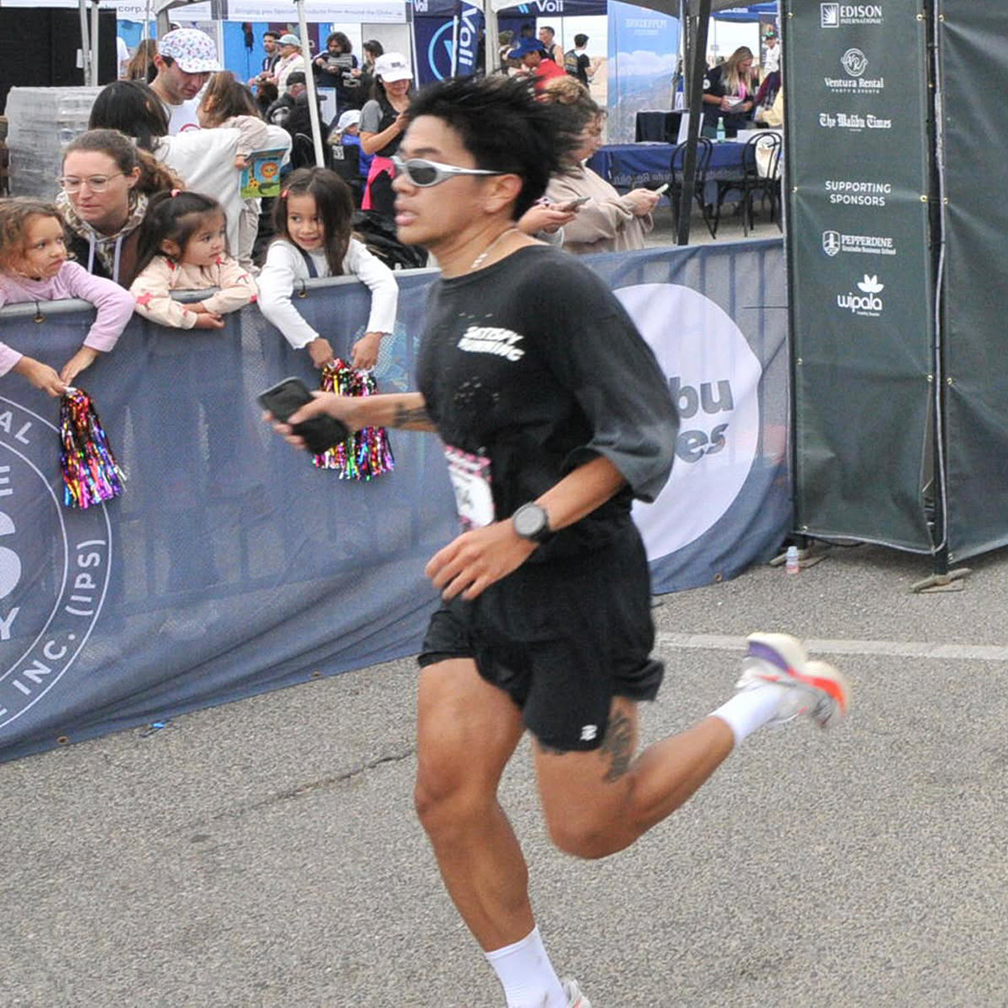
Sharing painful experiences can inform the meaning assigned to them. The social element of ultrarunning “might give rise to a community united by pain.”[8] That shared community allows painful experiences to gain social and cultural meaning, a connection through which “ultramarathon runners can transform negative sensations into positive ones.”[9]
A community united by pain might also explain why camaraderie supersedes competition in ultrarunning. While competition often dictates the relationships between athletes in other sports, ultrarunners play a uniquely supportive and encouraging role for one another.[10]
That focus on relationships allows personal running goals to carry a deeper purpose. The opportunity to give back to the running community through social media has been one of the most meaningful parts of Kei’s running journey.
“It’s nice to see that people go through the same struggles as me,” he says. “I feel like I’m doing something good for the community.”
Kei finds that his approach to running mirrors his perspective on life’s setbacks and breakthroughs. He celebrates the journey. The purpose is ultimately up to the individual.
“You go through life giving it meaning,” he explains. “Inherently running 100 miles has no meaning … but it means a lot for me.”
[1] Partyka, A., & Waśkiewicz, Z. (2024). Motivation of Marathon and Ultra-Marathon Runners. A Narrative Review. Psychology Research and Behavior Management, 17, 2519–2531. https://doi.org/10.2147/PRBM.S464053
[2] Delalay, M., & Boendermaker, S. H. (2026). Mental Pain Responses of Ultramarathon Runners: A Scoping Review. Sports, 14(2), 72. https://doi.org/10.3390/sports14020072
[3] Thorntona OR, et al. The Psychological Indicators of Success in Ultrarunning-A Review of the Current Psychological Predictors in Ultrarunning. Ann Med Health Sci Res. 2023;7:730-736
[4] Laulan, P., Rimmele, U. & Cuadrado, J. Mindfulness-Based Interventions for Ultra-Trail Running: A Narrative Review of Mechanisms, Applications, and Future Directions. Mindfulness 17, 667–683 (2026). https://doi.org/10.1007/s12671-026-02767-0
[5] Delalay, M., & Boendermaker, S. H. (2026). Mental Pain Responses of Ultramarathon Runners: A Scoping Review. Sports, 14(2), 72. https://doi.org/10.3390/sports14020072
[6] Delalay, M., & Boendermaker, S. H. (2026). Mental Pain Responses of Ultramarathon Runners: A Scoping Review. Sports, 14(2), 72. https://doi.org/10.3390/sports14020072
[7] Kahneman, D., Fredrickson, B. L., Schreiber, C. A., & Redelmeier, D. A. (1993). When More Pain Is Preferred to Less: Adding a Better End. Psychological Science, 4(6), 401–405. http://www.jstor.org/stable/40062570
[8] Delalay, M., & Boendermaker, S. H. (2026). Mental Pain Responses of Ultramarathon Runners: A Scoping Review. Sports, 14(2), 72. https://doi.org/10.3390/sports14020072
[9] Delalay, M., & Boendermaker, S. H. (2026). Mental Pain Responses of Ultramarathon Runners: A Scoping Review. Sports, 14(2), 72. https://doi.org/10.3390/sports14020072
[10] Delalay, M., & Boendermaker, S. H. (2026). Mental Pain Responses of Ultramarathon Runners: A Scoping Review. Sports, 14(2), 72. https://doi.org/10.3390/sports14020072
RELATED: 6 Smart Tips to Successfully Navigate Aid Stations
RELATED: When A Race Crumbles: What’s Solvable and What Isn’t?
RELATED: Strength Training For Trail Running Durability
- Trail Tested: Teva TrailPeak
- Sonoma Fall Classic: The Ultimate Trail Festival

- Behind the Bib: Leavenworth Trail Fest

- How to Keep Running Ultras as You Age

- 20 Great Fall Trail Running Races You Will Love

- 6 Things That Make the Mammoth Trailfest Great