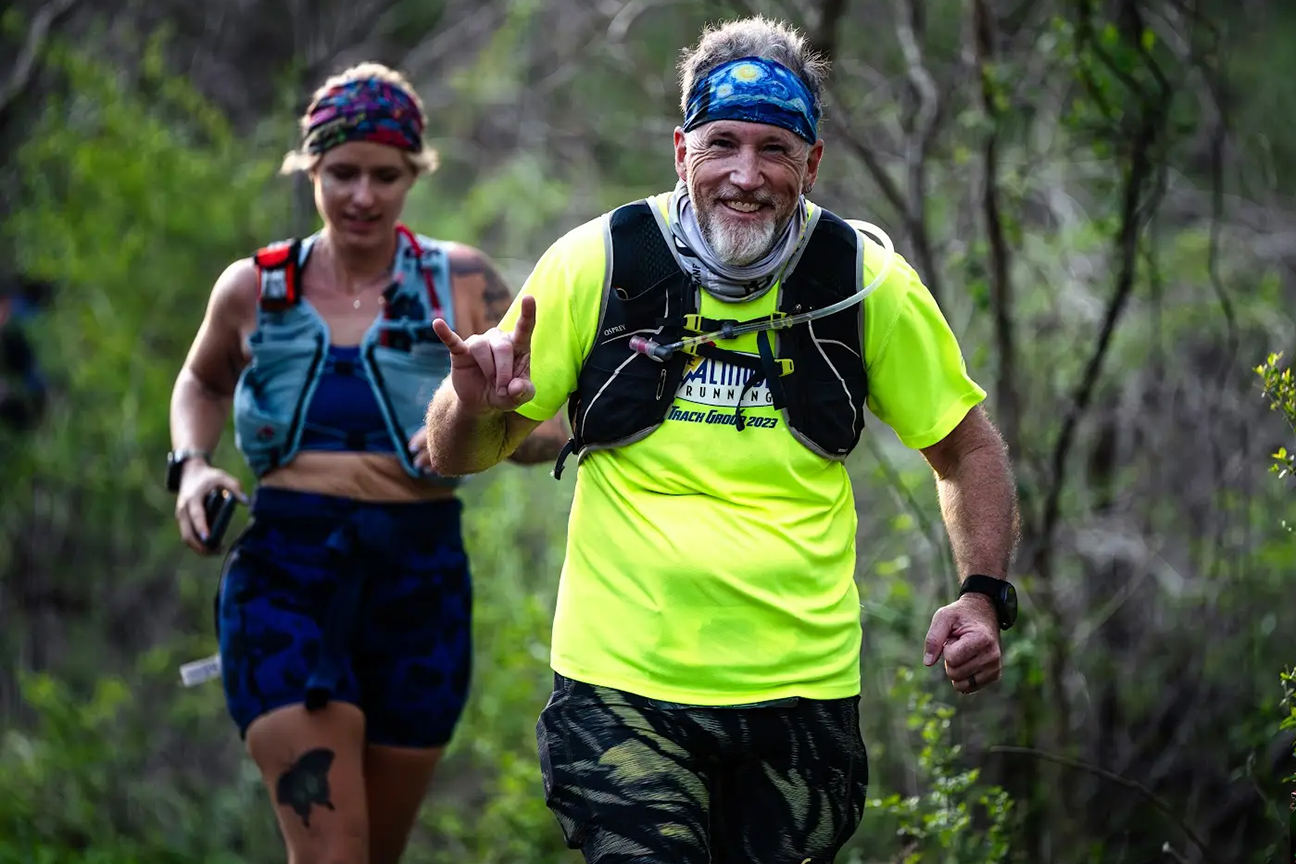
Here are a few insights from a Colorado schoolteacher who has pursued a goal of running 50 miles in every state.
Karen Smidt was about to turn 50 when she finished the Leadville 100 in 2016. It was a good time, she decided, to have a midlife crisis.
At least, that’s what her husband, Dan, thought when he first heard about her idea. To celebrate her 50s, she wanted to run a 50-miler in all 50 states by the time she turned 60.
Dan rarely questioned her. He enjoyed crewing for her. But this seemed different.
“He just laughed, like he does with a lot of my harebrained ideas,” she said. “Then came the realization. He said, ‘You’re actually going to do this?'”
Yep.
RELATED: Find Your Next Trail or Ultrarunning Race with UltraSignup’s Event Finder
Lesson #1 — Create your own goal
You’ve probably heard of people running a marathon in every state. Mike Smith completed that challenge before going on to run 250 100-milers, the second most all-time. There’s even a 50 States Marathon Club, and nearly 5,000 runners have completed the challenge, according to the club.
But Smidt created her own goal because nothing else seemed to interest her. She’d run some iconic races, including the Leadville 100 and the Western States, and done well in her age group in many others. A goal she made up herself excited her.
She asked many race directors if they knew anyone else who had run 50-milers in all 50 states. No one did. No one even knew anyone who had run a 50K in each state. In fact, few race directors had even considered the idea. That excited her even more.
“I wanted to do something big for my 50th,” she said, “and this was big.”
Indeed running an ultra in every state is a big (and rare) feat. Paul Morgan and Jim Sullivan were among the first to run 50K in all 50 states back in 2004. Rich Tenaglia of Michigan and Mike Ortiz of New York have both recently finished 100-milers in every state, and in September Brady McDonald completed a fundraising quest of running a 50K in all 50 U.S. states in 50 days. Although there aren’t definitive records about those kinds of feats, Smidt is certainly among the first women to do it.
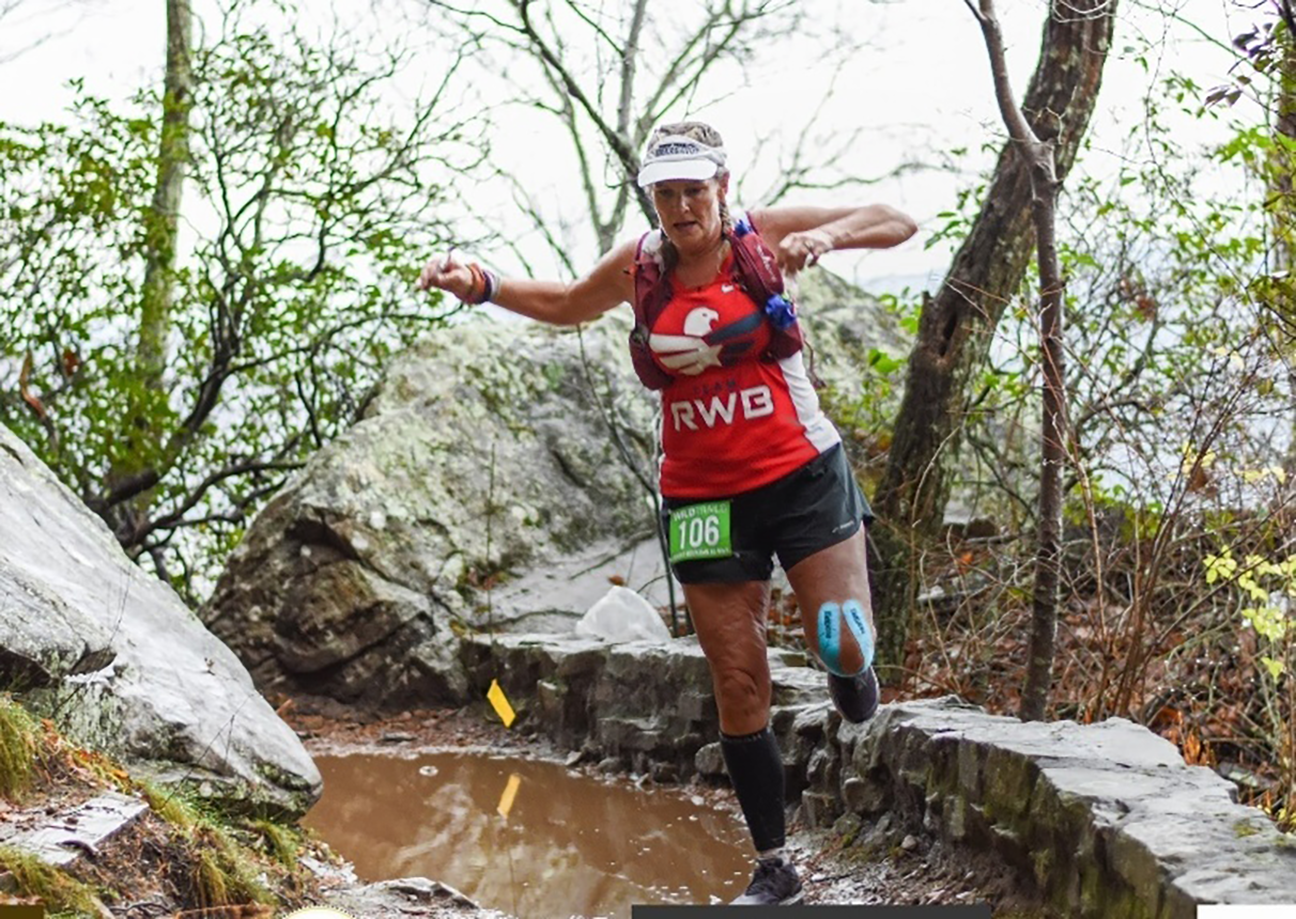
Lesson #2 — Include your spouse
If Dan seems grumpy about Smidt’s ambition, consider that his first time crewing was at Western States. That’s an iconic race, of course, but it’s also hot and spread out and full of cars, including a lot of media crews you likely wouldn’t find at most other ultras.
“He hated every second of it,” she said. “He gets carsick, and they’re driving three times the distance we’re running, on mountain roads and in traffic.”
Still, she let him know how much he meant to her. They got a Sprinter van. She encouraged him to explore the states they visited, even when she couldn’t be there with him, and he began to embrace the adventures. He knew Smidt was a runner when they got married: She’d been running since she was 10 years old. He just needed time to absorb the huge goal and become a part of it.
By 2023, when she ran nine races, Dan was so into the goal that he supported other runners, not just her, including at an especially hot race in Florida, a point-to-point 50-miler that sent runners from Flagler Beach to Daytona Beach.
He offered pickle juice to runners to help with cramping.
“I’d see other runners struggling on the course, and I’d tell them to go see my husband for help,” Smidt said.
Lesson #3 — Be grateful
Smidt dealt with injuries right away. But they had nothing to do with running.
She blew a disc in her back after a motorcycle mishap. Doctors told her she would never run again.
“‘Hold my beer’ is what I said to them,” Smidt said. A year to the day later, she tore the meniscus in her knee. A few months after that, she ran her first 50-miler of the challenge, the Antelope Canyon Ultras in Page, Arizona, in 2019.
The setbacks continued. She had spinal fusion surgery, and again doctors told her she would never run again. She recovered fully within a year, but the Covid-19 pandemic canceled many races.
By the time she and the world were healthy enough to race again, half her 50s were gone. She’d run only five races to date, which meant she’d have to run 45 in five years to reach her goal.
But all those problems made her grateful to still be running. That gratitude pushed her to fill her schedule with races and to be happy to run them. It would carry her a long way.
Lesson #4 — Embrace the variety
Running in all 50 states meant tackling an incredible variety of terrain, weather and atmosphere, so much so that she might as well have been traveling the world, not just the U.S.
Smidt lives near Brighton, Colorado, north of Denver, where she trains through thin, dry air, no matter if she’s running on rolling dirt trails or rocky, technical terrain. She had to run through humid swamps, high-step across grabby tree roots and wade through mud, snow and sand. She had to carry bear spray in Montana, you know, just in case.
All that variety, at first, drove her nuts.
“In the beginning, I would resist (the differences) and fight them, instead of just taking it in slowly,” Smidt said.
The first step, she said, was developing a drop-bag strategy for whatever conditions she faced at each race.
“I also had to keep a running store’s inventory of shoes,” she wrote in an email. “Having a rotation of footwear that could handle slimy mud, clay mud, deep mud, surface mud, gravel, scree, water crossings, slickrock, pavement, fine cigarette sand, packed beach sand, technical downhill, slippery uphill, foot-deep crunchy fall leaves or slimy leaf surfaces is NOT a cheap endeavor.”
The main key to handling all those conditions, she said, was to stop resisting them. Every state was crazy in its own way. That’s also what made the quest interesting.
“In Vermont, near the end of my goal, there was a torrential downpour, and I laughed and smiled about it,” Smidt said. “Embrace it, man.”
Lesson #5 — Do prehab instead of rehab
As the races piled up, Smidt had to avoid getting hurt. When she did get hurt, she had to decide whether continuing was worth risking the rest of her year.
She broke her hand in the first 10 miles of her 11th 50-mile race, but you don’t need your hands to run. When she rolled her ankle and heard it pop in her 17th 50-miler, she grabbed her poles and hiked on, because she had three months to recover before her next race.
Being so careful added stress to her races, she admitted, and some of the worry might have been avoided with strength training and mobility work.
“I wish I had prioritized those things for my prehab,” she said, “instead of relying on a wish and a prayer.”
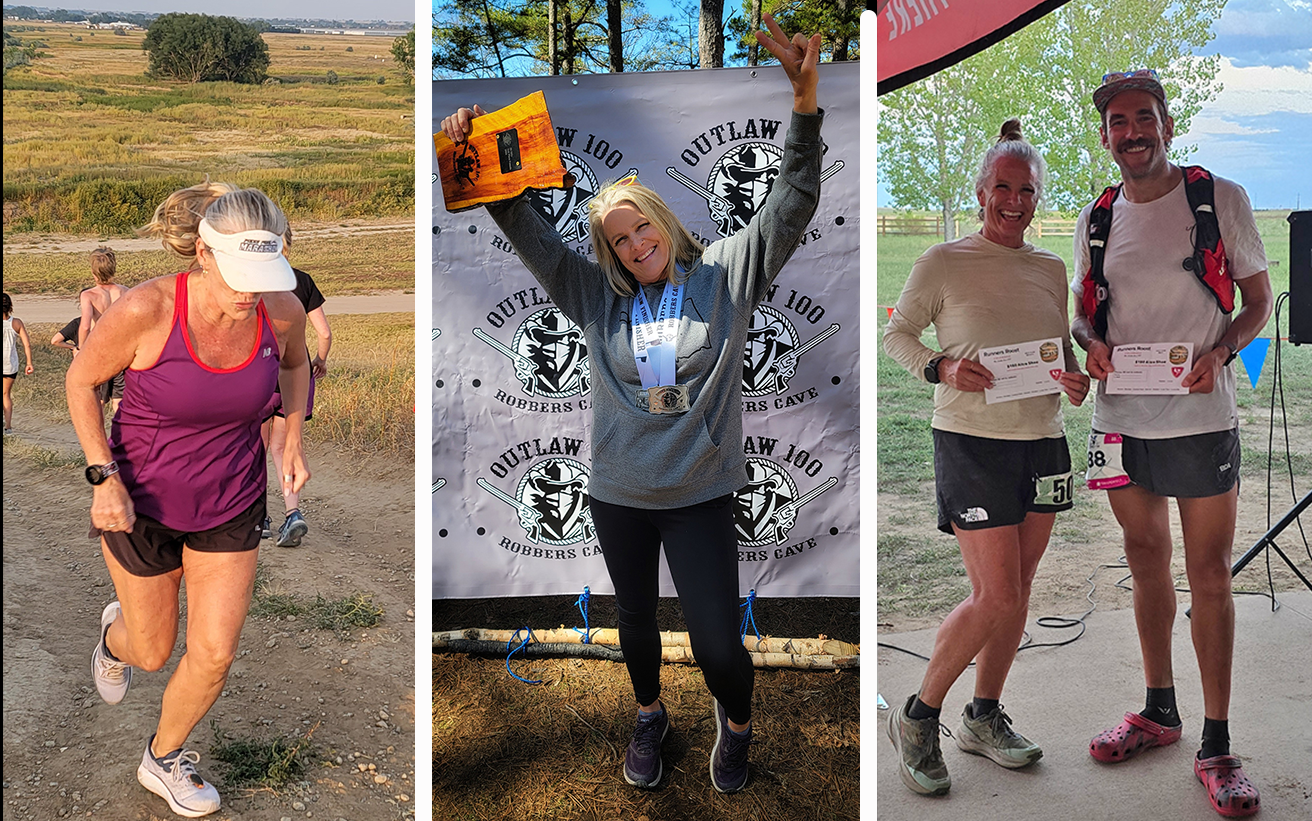
Lesson #6 — Be patient
Smidt, being the competitive spirit she is, ran her early races at 100 percent effort. She later discovered that racing at 80 percent helped her feel better for the next one.
“Treating some of my races as fully supported, scenic training runs was also key to completing my goal, even if that meant changing my focus mid-race when it became apparent that my goal time was not achievable,” Smidt said. “I had to be mindful of pacing the long game.”
As a result, she DNF’d only twice while pursuing her goal: once when she raced with bronchitis, and once when a race volunteer mistakenly pulled her off the course at mile 45 with three hours left to finish. (“That,” she said, “is another story.”)
Lesson #7 — Get “gud” with the gut
Imagine eating a gel. Are you making the same face I am? Now imagine consuming 50 gels on back-to-back weekends. Your stomach is probably making the same expression. That’s why Smidt worked up to those 50 gels.
“The tolerance for that doesn’t just happen,” she said.
True, maybe she has a sensitive stomach. She said it took her months, if not years, to develop a stomach that could handle a sausage-and-egg breakfast sandwich on the starting line of a 50-miler. I could do that right now, but I’ve probably had years more practice eating food that Smidt probably eats once a year, for, like, Christmas or something.
Lesson #8 — Be flexible
Smidt had a hard time finding 50-milers that fit her timeline. There aren’t many good resources for finding them, especially the lesser-known ones.
“The number of times I had to reschedule a race just to fit them all in,” she said, “was insane.”
Most 50-milers, like most races, take place in the summer, so even racing every weekend or twice a month, she was running out of time. The most important thing, she said, was finishing her goal while she was still in her 50s. So she began to count 50Ks.
“My goal,” she said, “my rules.”
In fairness, she couldn’t find a 50-miler at all in some states, such as Delaware.
She’s counted eight 50Ks toward the goal. But having to run 50Ks still nags at her.
“I feel a bit like a cheater,” she said. “I feel bad enough about it that I may just go back to the states I counted a 50K in and do a 50-miler.”
Her insistence on finishing in her 50s came down to the wire. Believe it or not, the last state on her list was her home state of Colorado, and she couldn’t find a race leading up to her 60th birthday. So on a weekend in late September, she put on her own at a park not far from her home.
“That’s how stubborn I am,” she said with a laugh.
She organized 6-hour and 12-hour events in which runners circled Barr Lake State Park near Brighton on 10-mile loops. Proceeds benefited the Friends of Barr Lake and the cross country team she coaches at Brighton High School, where she also teaches.
Some of her current and former cross country runners showed up. So did former teammates from her track and cross country days at the University of Northern Colorado, where she competed in her 30s, and friends from her Pikes Peak Ascent and Marathon days.
Raising the Barr turned out to be one of her favorite races ever.
“It was so cool,” she said. “I even had family fly in from California and do the race as a relay, and they aren’t runners.”
She loved the experience so much that she hopes to put on the race again in 2027.
Lesson #9 — It’s OK to relax after a big goal
Smidt admits something: She’s lazy.
“I’m lazy as hell,” she said. “If I’m not out, I’m prone on my couch reading a book. The last two months I’ve pretty much done nothing. It’s the first time in 10 years I’m not training or recovering from something.”
She recently ran the Blue Sky Marathon in Fort Collins, Colorado. She signed up on a whim and finished two hours slower than usual. That didn’t bother her.
“I walked a ton of it,” she said. “I just enjoyed myself.”
She will start training for something soon. She’s just not sure what yet.
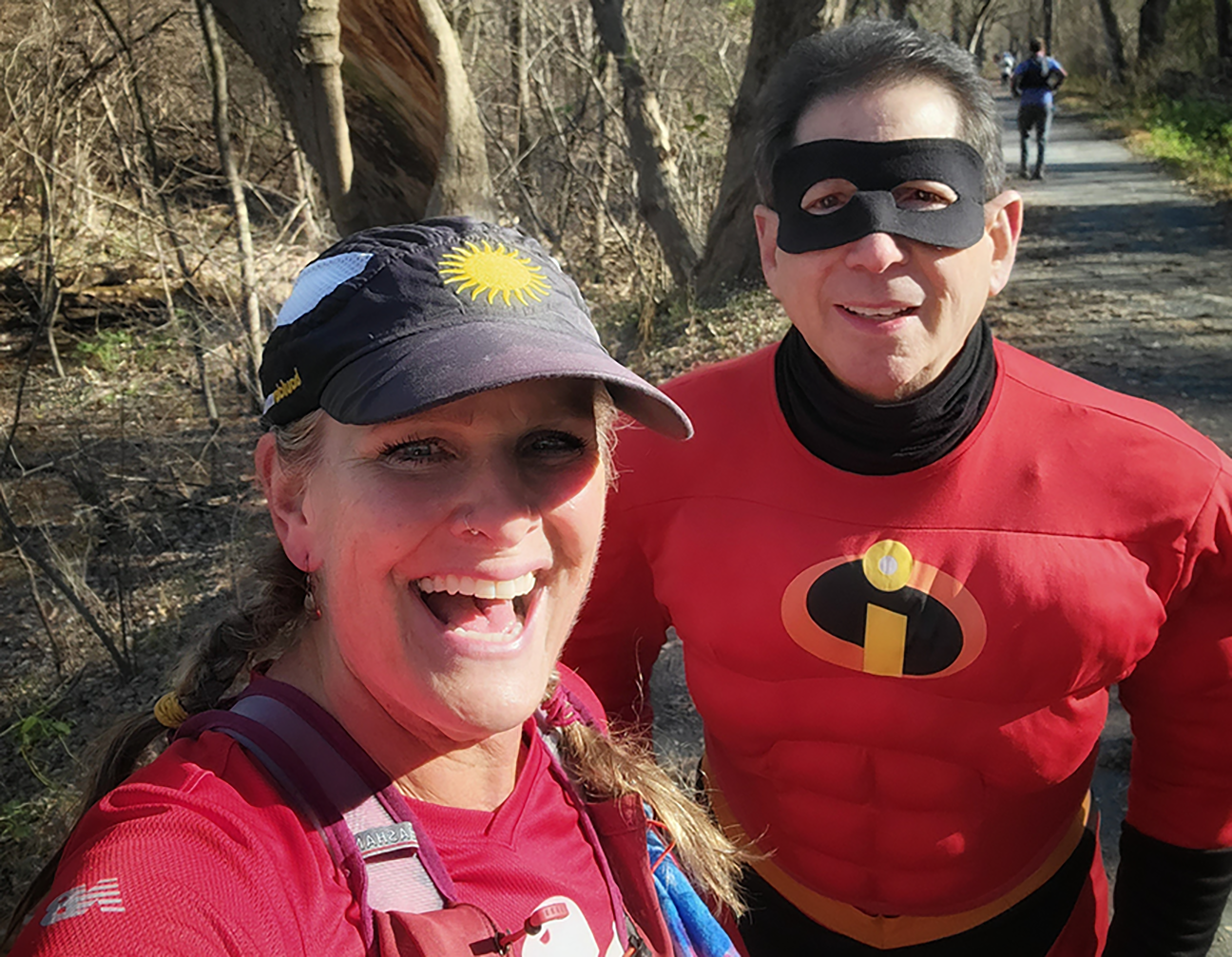
Lesson #10 — “Have fun and make new friends”
Dan would tell her the same thing at the start of every race.
“He would say, ‘Have fun and make new friends,'” she said. “He probably made more friends than I did.”
The slogan shows how fully Dan embraced the hectic schedule. It also captures one of the main points of ultrarunning, even as Smidt was checking off races toward her big goal.
“He made sure I enjoyed it,” she said.
RELATED: How Andrea Moore Became a Prolific 200-Miler
RELATED: How to Keep Running Ultras as You Age
RELATED: The Wit and Wisdom of Mike Smith, One of the World’s Most Prolific 100-Mile Runners
LATEST STORIES
- The Trailhead Podcast: A Chat with Former Pro Cyclist, Physiologist and Trail Runner Noah Collins

- All the Brilliant Things About Running

- 10 Lessons from Running An Ultra in Every State
- The Buzz Podcast: Buzz Burrell Talks with Kelly Halpin, Mountain Runner, Illustrator and FKT record-holder
- Run Rabbit Run to Offer Record $350K Prize Purse
- The Order of the Unchosen: Win a Western States Entry