The sport’s first para athlete prize purse will award $6,200 to adaptive trail runners, thanks to Fractel.
All Zach Friedley ever wanted was an opportunity—not only for himself, but for any other adaptive athlete interested in getting into trail running.
For most of the sport’s history, adaptive athletes have had to fight just to find a start line, and this 42-year-old runner from Mendocino, California, knows that story better than most.
Friedley, who was born missing his right leg above the knee and competes as one of a small handful of above-knee adaptive runners racing internationally, didn’t see anyone who looked like him when he first got into the sport. So he built the space himself, founding Born to Adapt in 2021 to create real opportunities for the disabled community in trail and mountain running.
Five years later, that work is paying off in tangible ways across the sport. Born to Adapt has partnered with major events in recent years—from Broken Arrow Skyrace’s formal adaptive athlete program (which included 20 guaranteed entries for para athletes in 2026) to a growing Para Trail Running Summit held in conjunction with UTMB.
But this weekend’s development in Mammoth Lakes, California, may be the clearest marker yet of how far things have come.
Trail Running’s First Para Athlete Prize Purse
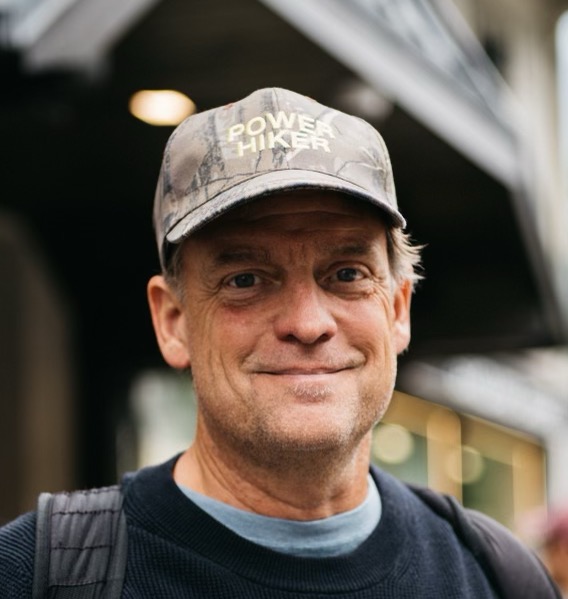
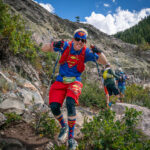
With the guidance of Friedley (pictured above, photo by @jasonpetersphoto) and the support of many along the way, Mammoth Trailfest offered 25 free entries to para athletes for its 26K race on September 29. And with financial backing from running hat and apparel brand Fractel, the event is awarding $6,200 to adaptive podium finishers in that race. (Eligible athletes include those with physical or visual impairments that align with the eligible impairment types defined by World Para Athletics.)
It’s believed to be the first para purse for trail running anywhere in the sport, and it’s a milestone years in the making. Friedley, through his Born to Adapt nonprofit, has spent more than five years pushing to get adaptive athletes not just onto race courses, but onto podiums with real stakes attached.
Overall, Trailfest has a prize purse of about $30,000, which Trailfest founder and co-director Tim Tollefson knows will encourage a deep field runners while also supporting those competing at the highest level. That same will be true for the para athlete prize purse, Friedley said. Those two began talking about adding an adaptive prize purse a few years ago in Chamonix, France, when the two were both staying in the Run the Alps house during UTMB week.
“Tim was just really receptive to things and really wanted to make it work,” said Friedley, who has run the Mammoth Trailfest 26K each of the past two years. “And as a result, Mammoth quickly became one of the go-to places for para athletes in trail running.”
As things advanced, Fractel co-founder Matt Niutta expressed interest in getting involved to help fund it. Niutta was diagnosed with retinitis pigmentosa in 2011 and is now legally blind, which limits his ability to run.
Niutta said supporting the para athlete prize purse aligns with his company’s inclusive philosophy, centered around “Why We Run.”
The Freedom to Run
Friedley isn’t the only para athlete fighting for a chance to be included, but he’s certainly led the charge in recent years. His race résumé includes finishes from UTMB’s 40K MCC race, the Val d’Aran 15K Skyrace, and the Tarawera 21K trail race in New Zealand, as well as the historic 31K Sierre-Zinal mountain race in Switzerland.
He’s much more than an adaptive athlete, though. Zach has spent time at ashrams in India, summited 6,000-meter peaks in South America, and spoken on disability access issues at panels around the world—including addressing members of the U.S. Congress and speaking at the 2024 Paris Olympics.
It was his passionate leadership that helped strike up a connection with Niutta.
“”We connected with Zach a few years ago and immediately found common ground through our respective disabilities and our relationship with running,” Niutta said. “So what Zach is building through Born to Adapt really resonated with me personally. Trail running should be a sport where athletes of all abilities have the opportunity to participate, compete, and be recognized. There are obviously additional challenges involved in creating para divisions, but that shouldn’t be a reason not to start. Brands and larger events have an opportunity to help lead that change.”
Niutta’s vision has progressively deteriorated since 2011, particularly over the past five years. Low light, technical terrain, changes in grade, branches, and even uneven footpaths can be difficult to navigate. He can no longer run technical trails or run at night.
He also lost his driver’s license when he was diagnosed, so running became a form of transportation and, more importantly, independence.
“I’ve learned to adapt by positioning myself carefully within running groups, and I’m fortunate to have mates who will run ahead and call out obstacles,” Niutta said. “It’s my outlet, it clears my head, and it gives me a sense of freedom. I’ll keep doing it for as long as I can.”
Friedley points out that 15 percent of the world’s population lives with some sort of disability and that adaptive athletes have had huge success in competitive track and field and road running, in part because those sports have been inclusive of competitive para divisions for decades. Friedley is certain there will be more para athletes in the sport if there are more opportunities to both participate and compete at a high level at the world’s most notable events.
For Friedley, equal opportunity is the whole point. He’s been vocal about wanting adaptive racing to share infrastructure with existing elite fields rather than exist as a separate, lesser event bolted onto the side of a race weekend. A funded purse does exactly that—it puts adaptive athletes on the same start line, competing on the same course, in front of the same crowds, for the same kind of recognition, rather than as an afterthought category.
Friedley doesn’t see this weekend as a novelty or a one-off gesture. He sees it as where the sport is inevitably headed—a signal that trail running’s growth in prize money and professionalism over the last few years needs to include every athlete capable of racing at that level, not just the able-bodied ones.
But to Friedley, it’s simpler than that: this is just what trail running is supposed to look like now.
“There’s not really a competitive aspect [to para trail running] yet, but I think there’s been progress since I’ve been in the scene,” Friedley said. “Back when I first started trail running, I hadn’t seen any runner with a blade on a mountain. And now, fast forward to 2026, there are para athletes all over the place. I just really hope to see it continue to grow, and continue to see podiums and just more opportunity — not just for grassroots, entry-level events including these people, but opportunities on the elite side of the sport as well. I definitely think we’re headed in the right direction.”
If Trailfest’s para purse holds up as the”first of its kind,” it likely won’t hold that title for long, Friedley said. Races like Broken Arrow are already building out their own adaptive prize structures, and Born to Adapt’s ambitions extend well beyond California and into events on multiple continents.
Niutta won’t be able to attend this weekend’s Trailfest, but he’s excited to follow the results and hear how it goes.
“Hopefully it’s a stepping stone,” Niutta said. “One prize purse isn’t going to change the sport overnight, but it can demonstrate what’s possible and give other races and brands something to build from. We want to support other people’s reasons for running too, regardless of ability. If what Zach is building, Mammoth’s willingness to back it, and the small contribution Fractel can make encourages more events to create opportunities for para athletes around the world, that’s a pretty meaningful outcome.”
RELATED: Adaptive Runners Star in Chamonix
- 6 Things That Make the Mammoth Trailfest Great

- Mammoth Trailfest Debuts World’s First Para Athlete Prize Purse in Trail Running
- Inspiring Images from the 2026 Run Rabbit Run
- Trail Tested: Brooks Cascadia 20
- Why Volume is King When Training for Ultras

- How Meg Eckert Ran a Record 636 miles in 6 Days