Why wintering is becoming a useful adaptation for this trail runner.
I’ve long had a complicated relationship with winter.
Growing up in Arkansas, then moving to Colorado in my twenties, I felt like I had to learn a totally new culture and customs. I bought an ice scraper for my car. I acquired snow boots and learned to shovel a sidewalk. I still have to resist the urge to rush to the store to buy milk and eggs whenever the forecast suggests a stiff frost. In Arkansas, enough snow to dust a parking lot could earn us a day off. Here, eight inches could fall overnight, and still, you’re expected to answer emails. The indignity!
Even after years in the mountains, some part of me starts bracing when the leaves turn. The ridgelines of the nearby Elks go from gray to white, thirty years of aging overnight. The morning air progresses from chilly to bracing to almost hostile. As the days get shorter, I feel a slight sense of anxiety, like I’m feeling someone in a relationship pull away from me.
As a runner, hunching against the wind becomes an emotional posture. There are some practical reasons for an almost visceral, personal reaction to what is really just the Earth recognizing its own tilt on its axis. An ordinary run suddenly requires leggings, a base layer, a shell, gloves, a hat, and on the worst days, a Buff that makes me look like a bandit that recently raided an REI.
My favorite trails disappear under snow. Routes I could cruise through in September become slow negotiations with snow and ice. I respect, but do not understand, runners willing to strap medieval-looking hardware to their shoes and persevere, albeit slowly, on the trails. I’ll respect and admire you from the treadmill while I watch Food Network.
To me, winter can feel like an inconvenience. A hiccup in a universe otherwise very much on board with my personal running agenda. I experience it as something happening to me, rather than a predictable and impersonal consequence of Earth’s axial tilt. A seasonal reminder from physics that the universe doesn’t revolve around my aerobic development.
So, I’ve been trying to get better at winter. Apparently that means I need to understanding wintering.
Slowing Down Doesn’t Mean Falling Behind
In Wintering, Katherine May writes about the difficult, withdrawn periods of our lives, and the way we learn to move through them. Winter, and the less production-oriented posture it mandates, offers a counter-narrative to our cultural obsession with productivity and linear growth.
“To get better at wintering, we need to address our very notion of time. We tend to imagine that our lives are linear, but they are in fact cyclical.”
There’s an aphorism that I have a love-hate relationship with: Nothing in nature blooms all year.
It has a certain Snapple-cap superficiality. In my mind’s eye, it can only ever be written in the Live, Laugh, Love font. It also makes a point I find irritatingly difficult to dismiss. I want to keep improving, moving forward, progressing in some visibly obvious way. We’re encouraged to measure improvement in output: more miles, more work, more things to show for our time. There’s little encouragement to ask why we need to keep producing more, and plenty to document the process so everyone knows we’re working on ourselves.
Even rest needs a plausible connection to future productivity. Letting a season be quiet without asking what I’ll have to show for it does feel radical. Just because something belongs cross-stitched on an Oprah throw pillow doesn’t mean I’m above needing to hear it.
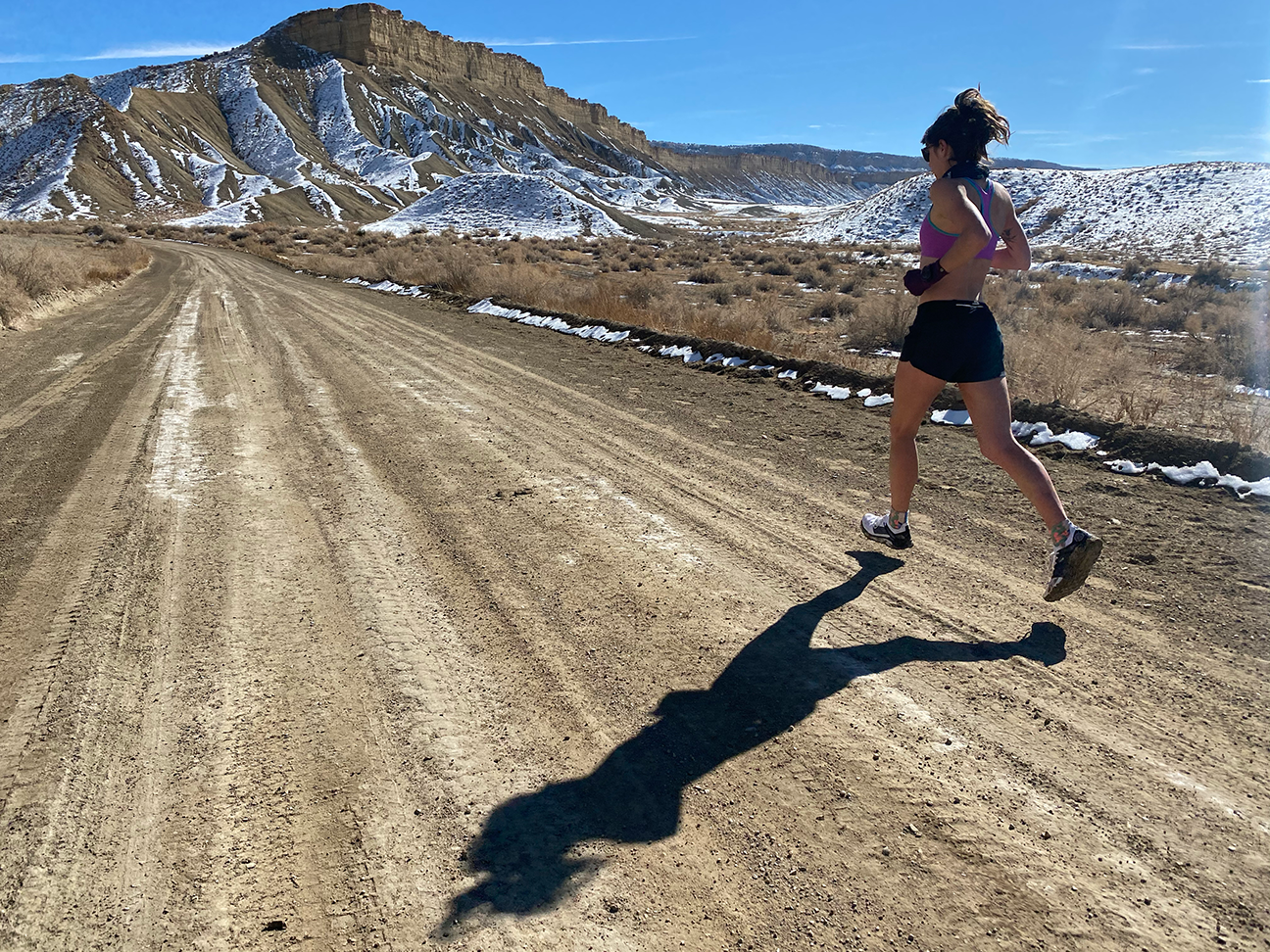
Training makes that contradiction obvious. We plan easy recovery days, down weeks. We build toward races, then recover from them. We know that we can hold peak fitness indefinitely; that’s literally what peak means. It implies a condition you can’t sustain. But gosh, it’s tempting. Still, when I feel less fit than I have in the past, or see my Strava chart trending down, my first response is rarely admiration for the elegant cyclical nature of athletic development.
It’s usually closer to: What the hell happened? Should I sign up for a race to prove to myself and others that I’m still improving?
There’s so much encouragement to keep improving that ordinary fluctuation in capacity can feel like something you owe an explanation for. Something that I can mitigate with the right training regimen or dietary intervention. I have a runner’s talent for finding an unoccupied pocket of time and wondering whether I could put some training in it. Winter arrives with fewer usable hours and more complicated conditions, and this feels like an almost direct attack on my plans. Intellectually, I know I want to be part of the natural world and at peace with its inevitable changes. But still, I want it to accommodate ME and my weekly mileage.
I still want to train through winter. As I’ve written before, off-seasons are for Spirit Halloween. But I’m recognizing that much of my frustration comes from expecting every season to offer the exact same possibilities, and expecting myself to use them the exact same way.
Wintering Has the Aroma of Cider
I grew up on my grandfather’s apple orchard in Arkansas, where my dad worked as a kid, and later I did, too. I climbed trees, helped prune branches, watched the first tender buds emerge, and picked apples to sell. The actual work of growing something shows you how work must change with the seasons, and that bare branches are a beautiful part of that cycle, not proof that something has gone wrong and that you need to hire a life coach.
There’s an old English tradition called orchard wassailing from Old English (wæs hæl or “be well” or “good health”), in which people gather among the fruit trees in the dead of winter to sing, make noise, and wish the trees a good harvest. They pour cider around the trees’ roots and hang cider-soaked toast from the branches. I deeply appreciate a tradition that involves actual toast and metaphorical toasting.
The ritual looks toward a future harvest, but what I really love is the attention it gives the trees while they’re bare. People gather around them, bringing food, drink, and song, months before there’s any fruit to pick.
In botany, vernalization is the process by which prolonged exposure to cold enables certain plants to flower. For them, winter is an essential part of blooming. Ice wine, too, owes its sweetness to the freeze. Grapes are left to freeze on the vine and then pressed while still frozen, which yields a much smaller amount of concentrated, very sweet juice. The most brutal conditions give us the most brilliant wine.
I find these examples reassuring. Look, winter produces flowers! Wine! Things I like!
But, I’m also noticing how quickly I’ve put winter to work. Even here, I’m making a case for the cold by pointing to what it eventually produces. There’s never really a guarantee your own freeze will result in a much-prized beverage.
I do the same thing with running. I’m comfortable resting when I can explain what it will accomplish: absorb the training, recover from the race, come back stronger. I can do less, as long as it directly allows me to eventually do more.
I’m less practiced at letting rest be enough on its own, and letting a quiet week, or a less productive period, just be, without immediately connecting it to a future breakthrough. I’d like to believe every slow stretch is setting me up for something impressive. I’d also like to stop requiring that assurance before I let myself slow down.
I’m hoping this makes it easier for me to slow down and do a bit less this winter. Embrace the process and the replenishment and rest that come with it without overburdening my expectations for the harvest later.
We haven’t yet had our first snow in town. But I’ve dusted off the winter clothes and put my gloves by the door. Maybe this winter I can better appreciate what my running can look like when I give it a little more room to change. Wæs hæl!
Winter reading and watching:
- Winter by Dallas Lore Sharp – a beautiful and poetic guide to thriving in the coldest season.
- Mary Oliver, On Winter’s Margin – A poem about the small signs of life that persist at the edge of winter.
- Adam Gopnik: Winter: Five Windows on the Season – how winter shapes our art, traditions and day to day lives.
- Henry David Thoreau, A Winter Walk – a close observation of a winter landscape and the life within it.
- Jenny Odell, How To Do Nothing – A radical challenge to productivity culture and reclaiming your attention
- John Keats, To Autumn – a reminder that a season nearing its end has plenty to pay attention to
RELATED: Shoes for Wintering: The Best Shoes for Cold, Snowy Trail Running Conditions
- My Earnest Attempt to Master the Art of Wintering

- Get to Know the Terroir of the Trails
- The art of accepting abject failure and moving on
- The Art of Taking Running Seriously, But Not Too Seriously
- 3 Things I Learned from Coming Back From Injury
- Closing the Gap Between Ability and Ambition