The light and agile Teva TrailPeak is Teva’s comeback swing at the trail running shoe market.
Teva is mostly known for building flip-flops and sandals—for beachgoers, for casual wear, for boaters and even for trail runners.
But in the early 2000s, Teva made some of the best light, fast, race-ready trail running shoes on the market, dating back to models like the X1 Racer. It sponsored a few elite runners focused on sub-ultra mountain running races and even backed the U.S. Mountain Running Team that competed in the World Mountain Running Championships for several years.
But by about 2012, the brand veered away from trail running and went back to its roots as a world leader in open-toed footwear. And fair enough; back then the trail running shoe market was much smaller then. Teva stepped out of the category just as big brands like Salomon, ASICS, Nike, La Sportiva, Brooks and New Balance were starting to go big, and as a wave of newer brands like Hoka, Newton, On and Altra were just coming onto the scene.
That was then, this is now.
Teva has been quietly working its way back into performance footwear, and this year’s launch of the TrailPeak marks the moment that return gets serious. After relaunching its trail running sandal line in 2024, the brand recently dropped its first genuine trail runner on the market this summer. The TrailPeak is Teva’s first fully enclosed trail running shoe built through its new Teva Bureau of Adventure (TBA) athlete program, and it shows. It’s also the lightest trail runner Teva has ever produced, a notable marker for a brand trying to reestablish its performance credibility.
This is a shoe shaped with the input of people who actually run technical terrain—including Teva pro trail runners Erin Ton and Mike Wardian, who helped test and refine it through prototyping—not just engineers chasing a category trend. Ton has spent the summer ripping new fastest known time (KFT) marks around the world in pairs of TrailPeak shoes (including her recent 8-hour, 33-minute record up and down Mount Kilimanjaro) while Wardian wore them for his shorter days on his 67-day north-to-south journey along the Pacific Crest Trail from mid-July to late-September.
I’ve spent several weeks logging miles in it to find out whether 40-plus years of sandal expertise (and the brand’s legitimate trail-running pedigree from two decades ago) translates into a genuinely competitive trail shoe today.
Short answer: mostly, yes. Longer answer: read below.
Teva TrailPeak Specs
Price: $160 (women’s / men’s)
Approximate weights: 6.5 oz (women’s size 7), 8.3 oz (men’s size 9)
Heel-toe offset: 6mm
* Women’s: 29.5mm (heel), 23.5mm (forefoot)
* Men’s: 30.5mm (heel), 24.5mm (forefoot)
Lug depth: 3mm
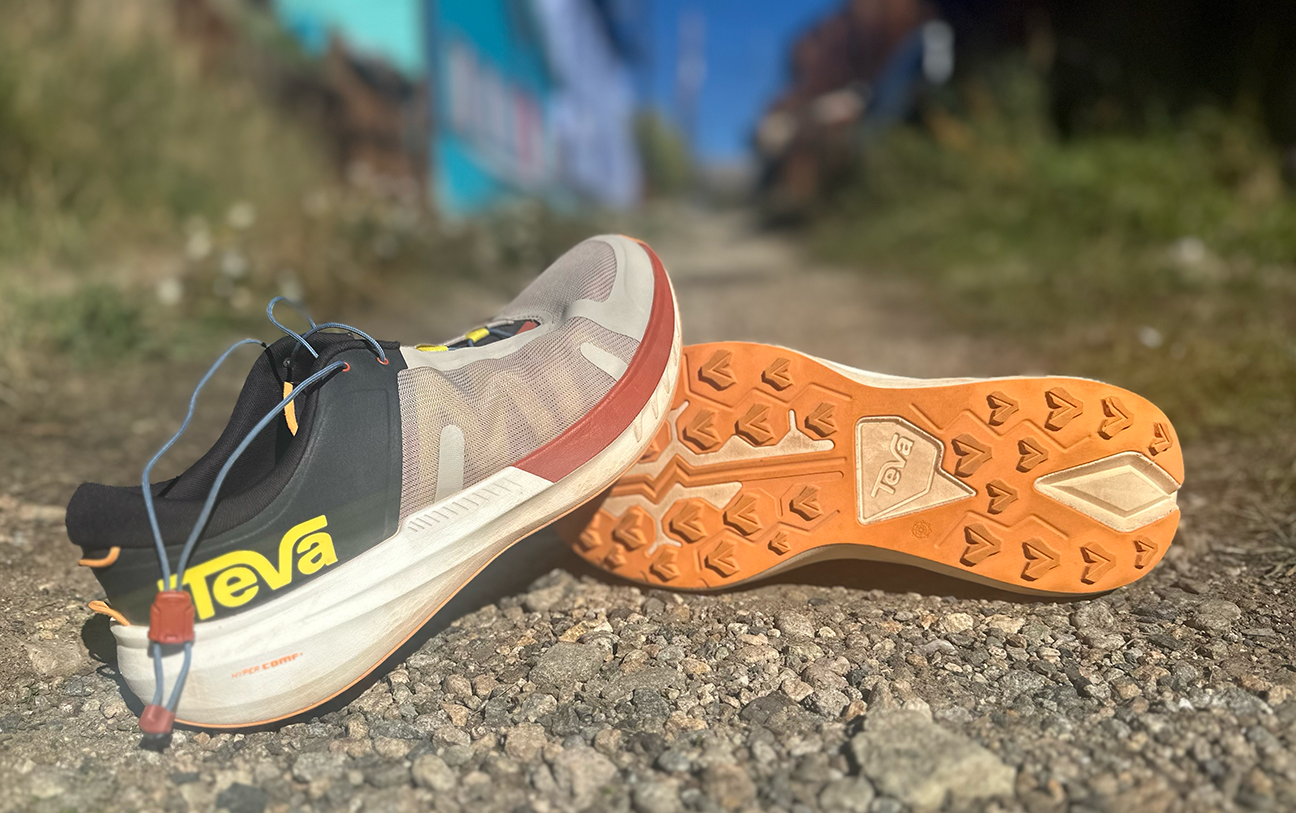
What’s New: At the core is a supercritical ATPU midsole Teva calls HYPER-COMF+, a lightweight, responsive foam that prioritizes ground feel over outright stack height. There is no rock plate and no propulsion plate in this shoe. The upper is a breathable, durable mesh with a partially gusseted tongue that wraps the midfoot, cinched down by a one-pull elastic speed-lace system instead of traditional laces. A reinforced toe bumper wraps the front of the shoe for modest protection without adding bulk. Underfoot, Teva’s proprietary Spider Rubber Endure outsole handles traction with a 3mm lug pattern built more for moderate trail and mixed terrain than deep technical scrambling.
Fit/Feel/Ride: The Teva TrailPeak fits true to size, with a notably wide volume at the midfoot and forefoot. That’s excellent news if you’ve got a wider foot that’s historically fought with narrower trail shoes. For runners with narrower feet, that extra volume up front can translate into a sloppier, less secure fit. The partially gusseted tongue creates a semi-snug, wrapped feel around the midfoot, but the quick and convenient one-pull elastic lacing system offers only modest security—something I noticed firsthand, needing to re-tighten the laces mid-run during a run more than once to keep the fit locked in.
Overall, it’s a shoe engineered around agility and proprioceptive feedback rather than max cushioning or bombproof protection, so it feels leaner and lower to the ground out on the trails. Once the fit is dialed in to match the size and shape of your feet, it delivers a genuinely lean and nimble ride with a semi-firm steep-in sensation and pretty good proprioceptive feel for the ground. I love how light and lithe it feels. It’s one of those shoes that doesn’t get in the way of your stride of feel remotely bulky on your feet.
Given it’s lower-to-the-ground ride, I have liked it most for 30- to 90-minute runs on mixed terrain, gravel roads and smooth dirt trails. It was OK running longer in it or on more technical terrain, but there were a few times (including a 9-mile roundtrip jaunt up and down 14,440-foot Mt. Elbert in Colorado) that I wished for more a bit more cushion and/or more protection. I have run plenty of technical trails in it, and it can shine, but it’s conditional on me being on top of my game and being able to pick and poke my way through rocky terrain.
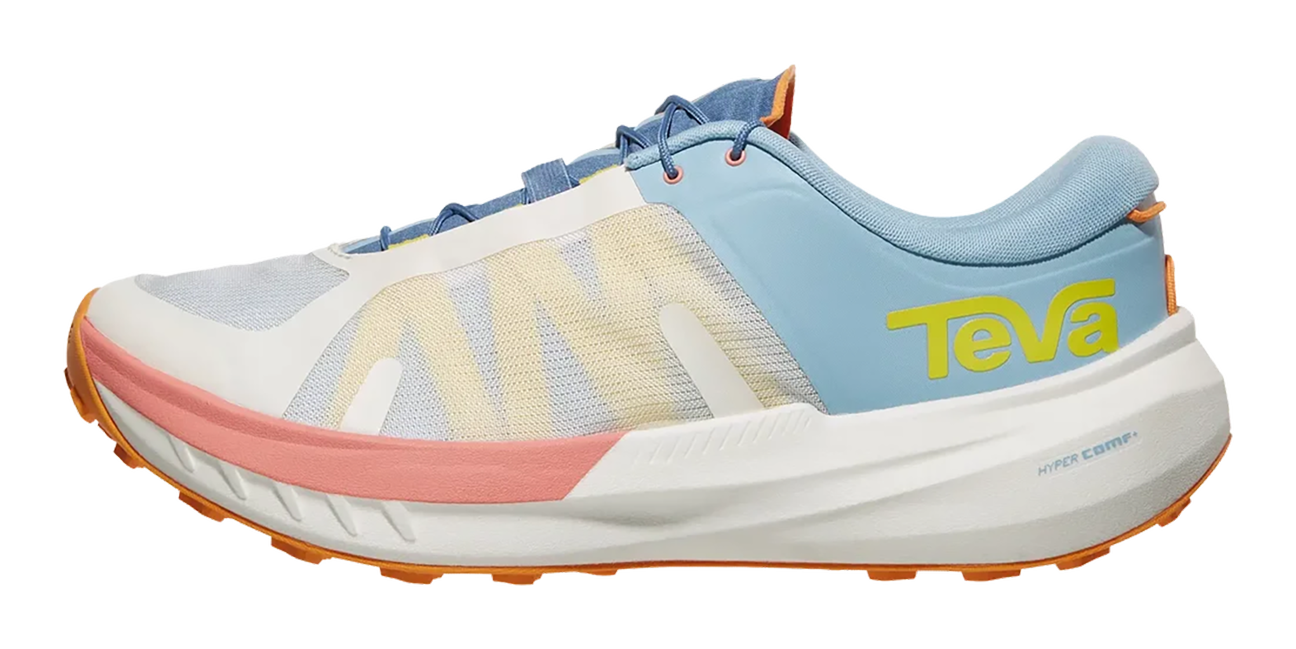
Why It’s Great: The Teva TrailPeak earns its stripes as a road-to-trail shoe or a go-to for mild dirt trails with the occasional technical section, and less so for fully technical, rocky ridgelines. The low-to-the-ground forefoot and modest, responsive cushioning give it a genuinely agile, lively ride that makes quick footwork feel natural rather than forced. On smoother singletrack, fire roads and trails with manageable terrain, it moves well and rewards an active, nimble stride.
Why You’ll Love It: If what you’re after is agility and a genuine feel for the trail, this shoe delivers it in spades. The low stack height and minimal cushioning create a connected, proprioceptive ride that lets you actually sense the terrain underfoot rather than running on top of it. For runners who’ve gravitated toward max-cushion trail shoes and miss that direct trail feedback, the TrailPeak is a refreshing return to a more grounded, responsive ride—fast-feeling, light on the foot, and fun to run in on the right terrain.
Why You Might Not Like It: Where the Teva TrailPeak starts to show its limits is on fully rocky, technical ground. Without a rock plate, sharper rocks and roots can poke through the midsole foam in a way that’s noticeable underfoot—nothing dangerous, but enough to make you pick your lines more carefully than you would in a shoe built for serious mountain terrain. The relatively thin Spider Rubber Endure outsole, meanwhile, grips reasonably well on dirt and standard trail surfaces, but doesn’t feel quite sticky enough for confident traction on smooth rock or slick, technical sections where you want real bite.
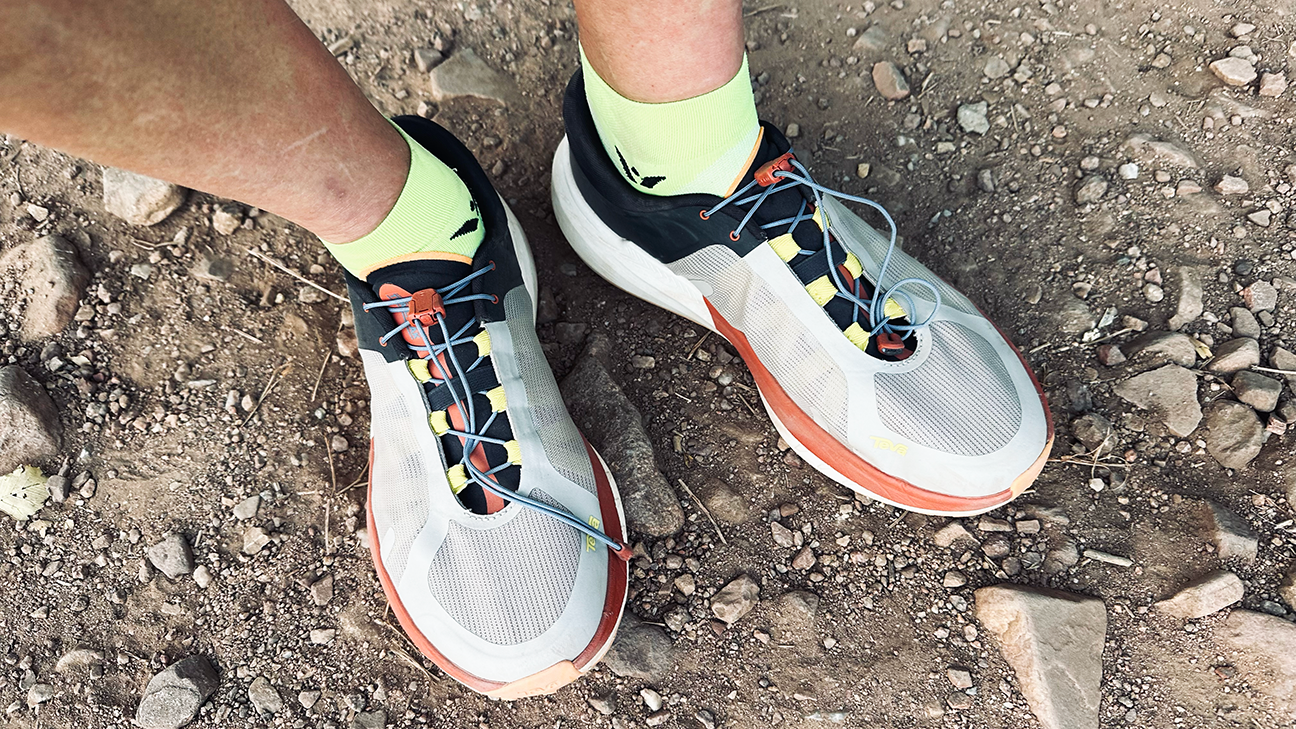
Pros: The responsive, well-tuned HYPER-COMF+ midsole delivers comfortably cushioned strides on smooth dirt trails, which makes the TrailPeak genuinely fun on moderate trails and road-to-trail transitions. Its featherweight build—the lightest trail shoe Teva has ever made—only adds to that nimble, easygoing character.
Cons: The one-pull lacing system doesn’t offer the same precise, incremental tightening you get from traditional laces, which becomes more noticeable given the shoe’s roomy forefoot fit. I found myself wondering how much better the fit would lock down with a standard lace setup instead.
Check it out the Teva TrailPeak at Running Warehouse → (women’s / men’s)
RELATED: 12 Great Trail Running Shoes To Consider Adding To Your Quiver This Summer
RELATED: Dirty Dozen: 12 of the Best Trail Shoes for Running in the Mud
RELATED: Breathable Trail Shoes for Hot Weather Running
- Trail Tested: Teva TrailPeak
- Trail Tested: Brooks Cascadia 20
- Trail Tested: Black Diamond x Norda 000
- Trail Tested: The North Face Offtrail Ultra
- Breathable Trail Shoes for Hot Weather Running
- Trail Tested: Mount to Coast M1