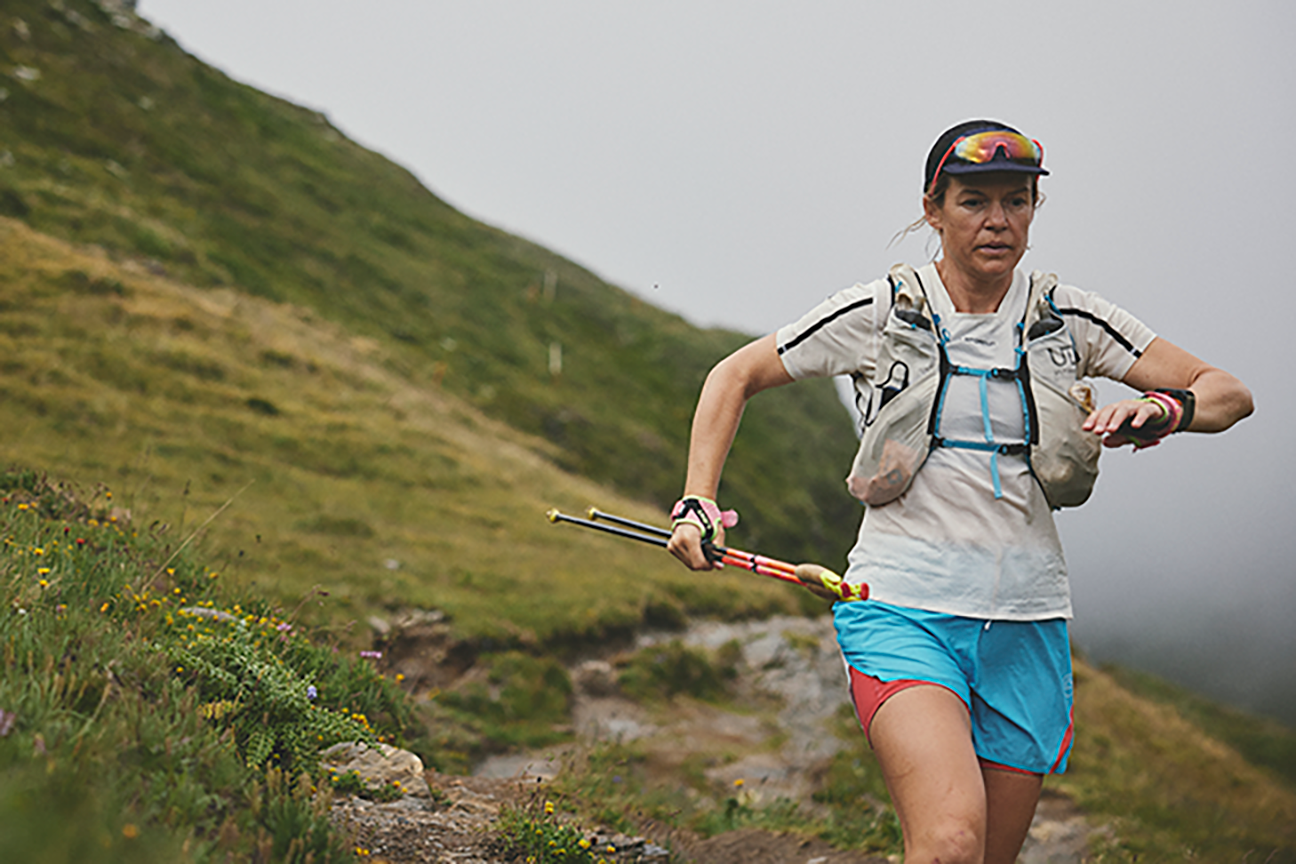
The first time Andrea Moore ran a half marathon on trails, she sat in her car, looked at her watch and began to cry.
She was dirty, kind of gross and, worst of all, slow. The time was 2:40, an hour longer than her usual time on the roads, where she seemed to float down a red carpet to the finish. Here, the trails were rocky and full of roots and bugs, obstacles that seemed to conspire against her. She just wanted to kick them out of the way. When she tried, all she did was trip.
COVID-19 had closed all her favorite roads to run, leaving her little choice but to run in the evil forest, which teased her for her $350 haircut and outfit that would make other women at Lululemon squeal in envy.
The trails were tough and hard and muddy. They were the antithesis of her life as a corporate banker living in a downtown Dallas high rise and driving a Lexus. She would, eventually, become one of the most successful 200-mile finishers, man or woman, in the world. She’s finished 20 of them, a number that, certainly, no other female masters runner can match.
It would not come easy.
It would take her a long time for the trails to feel like home. But as she began to run more on mud and less on asphalt, the ultramarathons and the grungy people who ran them felt more and more like who she wanted to be.
The trails reminded her of her mom, who had passed away, inspiring Moore’s move to Dallas to grieve. They reminded her of her childhood: She grew up in the Texas country, where she played sports and climbed trees.
It wasn’t until she eventually got married and started a family and became a corporate executive—because that was the Texas way—that she began to lose herself. She worked and raised kids and, after a divorce and in another relationship with another man, she watched herself smoke and drink and tried to ignore the thoughts that nagged at her that this was not what she wanted in her life. One day, she stopped ignoring them and ran around the block: Every runner knows this story: She ran a mile, eventually, and started changing her life.
She kept at it and eventually made herself a pretty good runner. She qualified for Boston. Road running was an important step forward. It was fun. It was also clean and, in many ways, corporate. She ran in big cities.
That first half marathon on the trails was not clean, at all, and she cried not only because she felt slow but because she felt scared. Trail running would change everything about her. She wasn’t just crying because she knew she would have to let go of her speed. A part of her probably already knew that she would have to let go of everything.
“Long distances require a lot of patience,” Moore said. “That’s going to put a mirror in front of yourself and make you see a lot of things you are literally running from. I did a lot of hiding behind my desk as a banker.”
Just a few months after essentially dipping a toe in the dirty trails in that 100K, she embraced the mud. She ran her first 100-miler at the Indiana Trail 100 in 2021, bawled at the end and went viral for showing the world her feet, which looked like they belonged to a peasant in Medieval times who farmed in a swamp. It was something corporate Andrea would never do.
As proof, she quit banking that same year. She became a rural postal carrier, a job that would both test and polish her endurance. She agreed to homemade haircuts, which didn’t matter because she stuffed her locks under ballcaps with outrageous bills or trucker caps.
She moved to a one-bedroom condo in Flagstaff, Arizona, and found a 25-year-old car to drive. All the while, her first huge race, the Cocodona 250, stripped her down and forced her to look deep within herself, and she found herself paced by the person she wanted to be.
“I was going longer and longer, and I was running toward her,” Moore said. “That her was the real me.”
RELATED: Find Your Next Race with UltraSignup’s Event Finder
Winds of Change
Early on in their Instagram friendship, Jackie Cox asked Moore how she was feeling. The question surprised Moore. She was the eldest of five sisters, and she was a mother and had been an East Texas wife.
“I was like, ‘Wow,’” Moore said. “I’ve never had anyone ask how I am. She was the first to see me.”
The two met after Moore commented on her Instagram post. They were, at the time, just friends with a common interest. Moore was running marathons, and Cox was an elite triathlete who began racing Ironman distances after age 50.
Cox was the first to suggest Moore could qualify for Boston. When she did, Cox asked her to join her in Boston to run the marathon together. By that point, Moore wasn’t wearing a ring any longer.
Woo-hoo, Cox thought, but she didn’t try to “turn” Moore. She didn’t have to. Moore’s friendship with Cox turned into something more because of the way Cox cared about her.
“She helped me change only in the way of seeing a partnership,” Moore said. “It had nothing to do with… um… intimacy, I guess? I didn’t even see her as feminine or masculine or anything. She was just a beautiful spirit and had this incredible energy. I was attracted to that energy.”
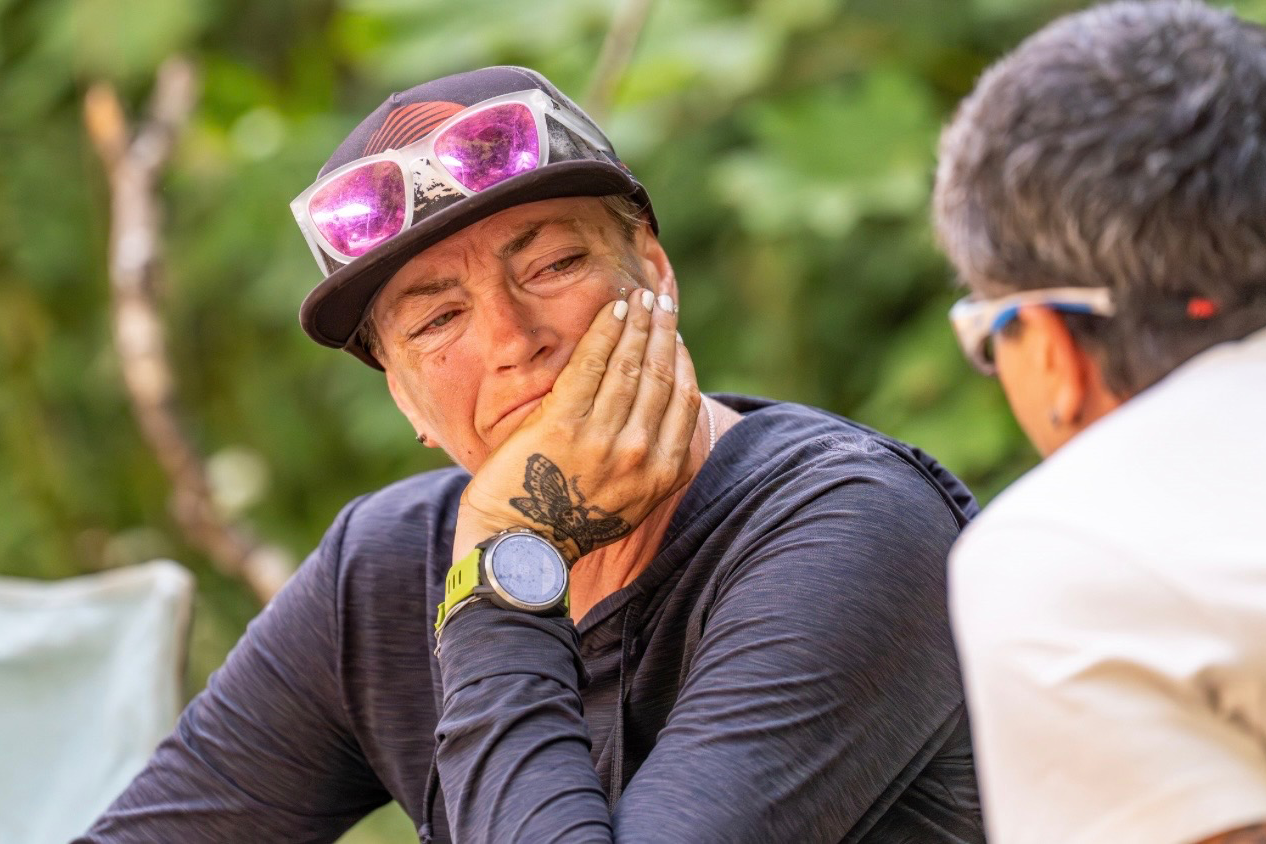
They were together by the time they ran trails together for the first time. Cox ran well, even won her age groups on those trails, but she didn’t like them. Her role from athlete to crew chief shifted almost immediately.
“I don’t like dust on me,” Cox said. “I’m a girly girl. I don’t like any of that. But Andrea said she loved it, and I said, ‘Let’s get you going.’”
Cox retired from racing at age 60, leaving her more time to crew Moore’s races. She retired because her body needed it, she said, not because she wanted to be there for Moore, but the timing was serendipitous.
When Moore decided to try Cocodona, Cox came up with a plan. Moore didn’t have a coach, so Cox leaned on her own Ironman experience (an Ironman is similar to an ultramarathon, as most age-groupers take between 12 and 17 hours to finish one) and asked her own coach for help. She also formed an army of pacers. Then she began to worry about Moore’s diet. This was especially a concern once Moore went deep into training.
“She was vegan,” Cox said, “and I was thinking, ‘Oh, shit.’”
Moore began not only to finish 100-milers but also to stack them. She’d learned how to run tired through her 100-milers. Now she had to learn how to run that way for five days. She also learned how to, as she put it, “tell her ego to shut the fuck up,” plod along and go have fun.
“I’d already proved to myself as a runner that I could run fast,” Moore said. “I wanted to be a student again. The Boston Marathon is really high school, and on the trails, you’re a freshman in college.”
Moore was like a little kid at Cocodona, barely sleeping because she was too excited, so Cox made her nap 10 minutes at every aid station. When Moore hired a coach, he and Cox eased more protein into Moore’s diet, starting with steak and goat milk and bringing in fish and chicken burritos. Cox made Moore go to bed early.
Moore has since surrendered most of her life to Cox.
“She’s a general,” Moore said. “I require navigating. I was finally able to let go of control. I could be vulnerable for her. I can trust that someone genuinely cares about my well-being.
“Jackie is the foundation. I have a hard time putting it into words. I don’t post a lot about her. She’s not someone I want to share, just like I don’t share my kids.”
Immersing in Ultra
Moore ran a dozen ultras after her first 100 and did Indiana again in 2022. She did the Javelina Jundred in the same month and finished under 24 hours. She did 10 races after November, including three 100-milers and a 94-miler, a 50-miler and a 20K at Three Days of Syllamo near the small, rural town of Fifty-Six, Arkansas.
This would seem insane to most of us, even those who spend a lot of time on this site. But the races were Moore’s training plan to prepare for Cocodona in May 2023. Along the way, she fell in love with what the longest, hardest races could do to her.
“There’s a place in an ultrarunner’s journey when they get it,” Moore said, “and it changes your life and your perspective. Running is so cool because it gives us that portal to get to that place.”
Moore doesn’t glorify the suffering. She describes bloody noses, peeling lips, hallucinating and, of course, trench foot, along with her “delusional positivity” and “dumbass dreams” of another buckle. She climbs Everests and guts through the scary moments the mountainous courses throw at her. She worries if a piece of that course takes too much out of her.
“The game is chess,” Moore said. “Where to spend your effort and energy. When you sleep. How to eat. Managing the weather and the terrain and beating aggressive cutoff times that don’t care. It’s a battlefield very few understand.”
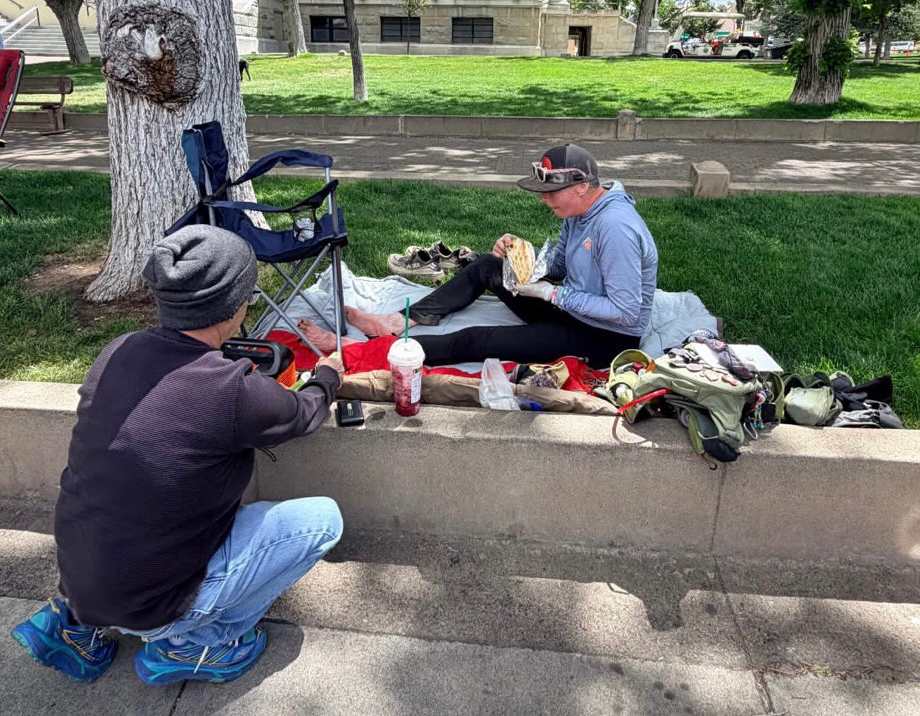
Cocodona, even more than those 100s, stripped her down to a rawness that she’d never experienced before, a chafing of her soul that helped her, she said, find the Andrea that she’d been chasing.
“I think I’d filled my life with so much stuff, now I just want to get rid of it all,” Moore said. “All the bullshit. All the noise. Everything weighing down in our heads.”
After she finished Cocodona, they left Dallas and a lot of that stuff behind and moved to the one bedroom in Flagstaff, where people used duct tape to piece things together and Patagonia was a brand people showed off, not Lexus. It was scary. It was just like a race. She could do it because she had Cox with her.
“She can say, ‘It’s going to be OK,’” Moore said. “Sometimes I just need to hear that in her voice.”
Twenty 200-Mile Finishes
When I spoke to Moore, she had just finished the Bigfoot 200. It was her 20th 200. It sounds simple, but Moore attributes her success to doing many 200-milers, as her body has adjusted to them.
She also has a strict recovery plan: When I spoke to her, she had just enjoyed a run for the first time in a few weeks. She walks the dogs, does mobility exercises, red light therapy, compression boots and eats a protein-packed diet, but not running is a big part of the plan. It’s also the hardest part: She loves nothing more than going out for a run without any mileage in mind. But she’s accepted it. Since 2016, she’s had one running injury.
“The body is really freaking rad,” Moore said. “The more you do, the stronger you get.”
She’s currently the only woman to do the Arizona 300 and the Cocodona 250 in the same year twice.
Moore would like to see more women do 200s, but she understands that not many would be willing to make the sacrifices Moore does to get there. She works as a rural postal carrier because it allows her to work part-time. She would otherwise use all her vacation time on races: Running a 200, she said, is “not a weekend; it’s a week.” They also cost a lot of money: Cocodona costs about $2,000, for example, and that’s not including travel. It’s also not digging your toes in the sand.
“I think we have to realize that not everyone likes to do what we do,” Moore said.
Even today, women still have more traditional roles, Moore said. They’re the ones picking up the kids from school.
“If we could get away from those roles,” Moore said. “But I have sisters who love that traditional role. So there’s a lot of moving parts.”
There also aren’t many partners such as Cox, who relish being crew chief both in races and in life. Moore is flaky on her diet, Cox said. She needs to be reminded to wear the cushy boots to recover and soak her feet and eat well. Crewing, Cox said, is harder than those Ironman races she used to do. Now she plays pickleball. She will turn 65 soon and retire after 31 years with Starbucks.
“I love my life,” Cox said.
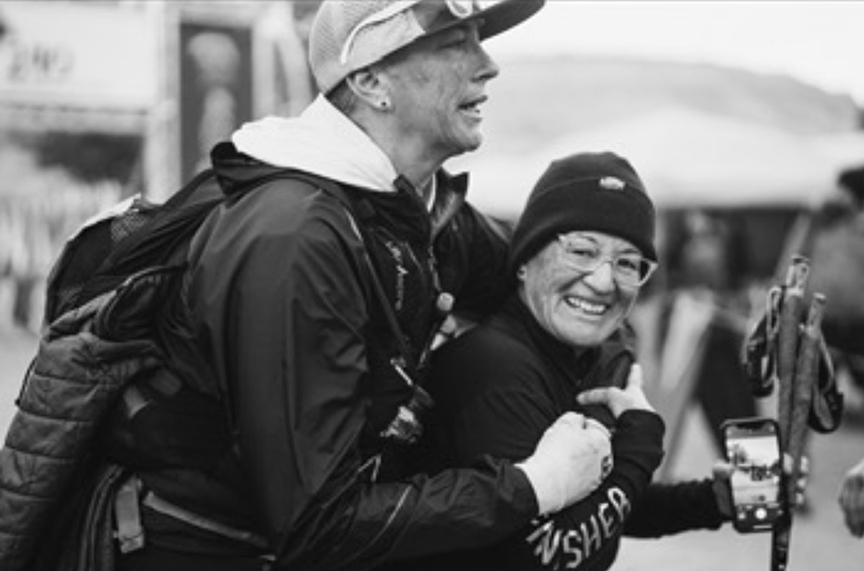
The two will do six 200s this year and already have five planned next year. It’s just what they do now.
Moore remembers feeling out of place at her first Cocodona 250 despite all those 100-milers in her back pocket. Three years later, she wants to help others feel comfortable at the starting line. The 200s are growing, and there will be more newbies: Cocodona did its first lottery this year.
“The only thing I knew then was I wanted to see what happens after mile 100,” Moore said. “I wanted to know what I would do when the wheels fell off. What version of me who I haven’t met will show up?”
Every 200, she gets closer to the version she wants to be.
RELATED: The Wit and Wisdom of Mike Smith, One of the World’s Most Prolific 100-Mile Runners
- How Andrea Moore Became a Prolific 200-Miler
- How to Keep Running Ultras as You Age
- 6 Smart Tips to Successfully Navigate Aid Stations
- Train for Unfamiliar Terrain: How to Get Through a Challenging Race Even if You Train for It Remotely
- Waiting Game: Entering Hardrock and Western States
- The Wit and Wisdom of Mike Smith, One of the World’s Most Prolific 100-Mile Runners