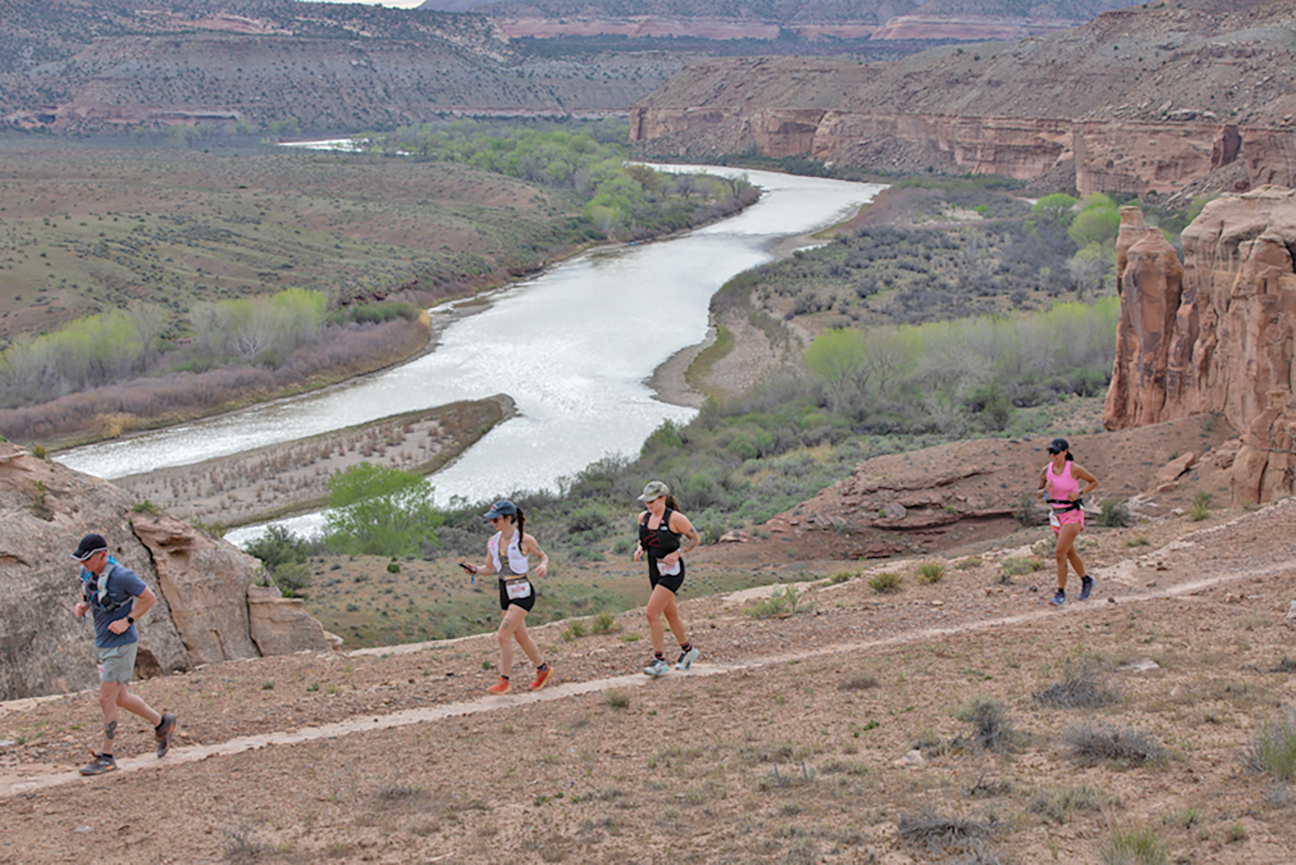
We face plenty of fueling dilemmas out on the trails, but here’s how to approach the ones that crop up in everyday life.
Let’s be honest—most runs don’t happen under ideal conditions. More often than not, we’re squeezing in runs before the day starts, on a lunch break, or after a long day at work. Instead of planning the entire day around our training, most of the time we’re fitting runs in wherever we can in our busy schedules.
This is when nutrition can become confusing, as most sports nutrition recommendations don’t necessarily apply as well when we have super busy schedules. As a sports dietitian, some of the most common questions I get are how to fuel around busy schedules when time is limited. Let’s go through some everyday scenarios where appropriate fueling may be a bit confusing.
Fueling Dilemma 1
I have to run early before work. I don’t have time to eat, I’m not even hungry, and I don’t want my stomach to hurt.
This is probably the most common scenario I encounter on a weekly basis, and chances are you’ve probably experienced it too. For many of us, running before work is the easiest way to fit training into a busy day, but it doesn’t leave much time to eat breakfast beforehand. Chances are you’re not even hungry, and you also might be afraid that eating will cause a stomach ache. Should you eat something, drink something, or just head straight out the door?
Regardless of the time of day, starting a run fueled is usually the best option. Your liver glycogen stores decrease overnight, so you have less readily available energy when you wake up in the morning. Even after dinner the night before, you are still partially running on empty.
This doesn’t mean you need to eat a full breakfast, but you should have something small. Prioritize simple, easily digestible carbs, and even just a small amount can make a big difference. Try a half a banana, an applesauce pouch, a couple graham crackers, a couple dates, or some energy chews. If you truly can’t fathom chewing anything, liquid carbohydrates are another great option, like some Gatorade or a carb drink mix from Skratch, Precision or Tailwind.
Your pre-run fuel doesn’t have to be a traditional breakfast, and you don’t need to make time to eat a full bowl of oatmeal or a plate of eggs and pancakes before you head out the door. You wouldn’t have enough time to digest a large meal anyway. The goal is simply to give your body some readily available energy before you start so your body feels safe and can perform better.
Fueling Dilemma 2
I had a busy day at work and didn’t have time to eat lunch, but I have to run after work. Should I eat something or just go running?
Another incredibly common scenario, but on the opposite end of the day. Ideally, we implement tools to avoid this situation from happening, but sometimes it still happens.
Nicole Mericle, a professional obstacle course racer and trail runner who works full-time hours as a medical assistant, deals with this experience often.
“Some days I work right through my lunch break and realize it’s 4:30 and I haven’t eaten since breakfast,” she says. “I have to run after work most days and feel pretty hungry, but don’t want to feel overly full or get a stomach ache during my run. I usually just go for my run because I don’t know what to eat, but then I drag myself through it.”
Let’s start with the more important topic, which is how to avoid this from happening in the first place. We usually can’t change our busy schedules and sometimes have to work through our lunch break, but as runners, it really is important to prioritize regular eating and adequate nutrition throughout the day. The hard truth is that if we aren’t eating enough or eating consistently, we really shouldn’t expect our bodies to perform well. And sometimes, the right answer is to skip or shorten your run.
Instead of letting your busy day get away from you, keep easy, ready to eat snacks available so you can prevent those long gaps without food. This will help you avoid being completely depleted by the time you have to run. Let’s be honest though, even if you weren’t running after work, you should still be finding time to eat during the day.
Keep the food choices simple so that you don’t have GI upset on your run, and remember that it is absolutely OK to include convenient food items that come in a package. Some ideas include a simple sandwich, a granola bar, applesauce, dried fruit, or a banana. If you need to set some alarms throughout the day to remind yourself to have a snack, do that!
The more time you have before you run, the more substantial your food can be. I am not saying snacks replace meals, because they don’t, and ideally you are able to have a complete lunch earlier in your day. If you are truly short on time, easy carb based snacks are the way to go. But yes, you should eat something before you go running.
Fueling Dilemma 3
I have to run after work, but I don’t know what to eat during the day so my stomach doesn’t hurt during the run.
Piggybacking off the last scenario, if you have the time to eat during the day but don’t know what to eat, let’s talk about it. This is something important to think about because the foods you eat throughout the day can affect how you feel when you run later. If you don’t pay attention to what and when you’re eating throughout the day, stomach issues can become very real. “Even on the days I do have time to eat, I don’t always want to because I’m worried it will ruin my run”, says Mericle, and she is not alone with this experience.
The more time you have before your run, the more flexibility you have with your food choices. In general, your meals throughout the day should still include carbohydrates, protein, fat, and fiber. However, as your run gets closer, it makes sense to shift toward foods that are lower in fat and fiber and easier to digest. Carbohydrates are still, and always will be, our body’s primary fuel source for endurance activity and they also digest more quickly. Fat, fiber, and larger amounts of protein can slow digestion and may leave you feeling full and uncomfortable if eaten too close to your run.
Let’s look at an example. If you’re running at 5 p.m., you can have a mostly normal balanced lunch at noon because you have several hours to digest it. This could be a rice bowl with some chicken or tofu, some cooked veggies, and a piece of fruit. As you get closer to your run, have a carb focused snack 1-2 hours beforehand, like a banana, some applesauce, or a peanut butter and jelly sandwich.
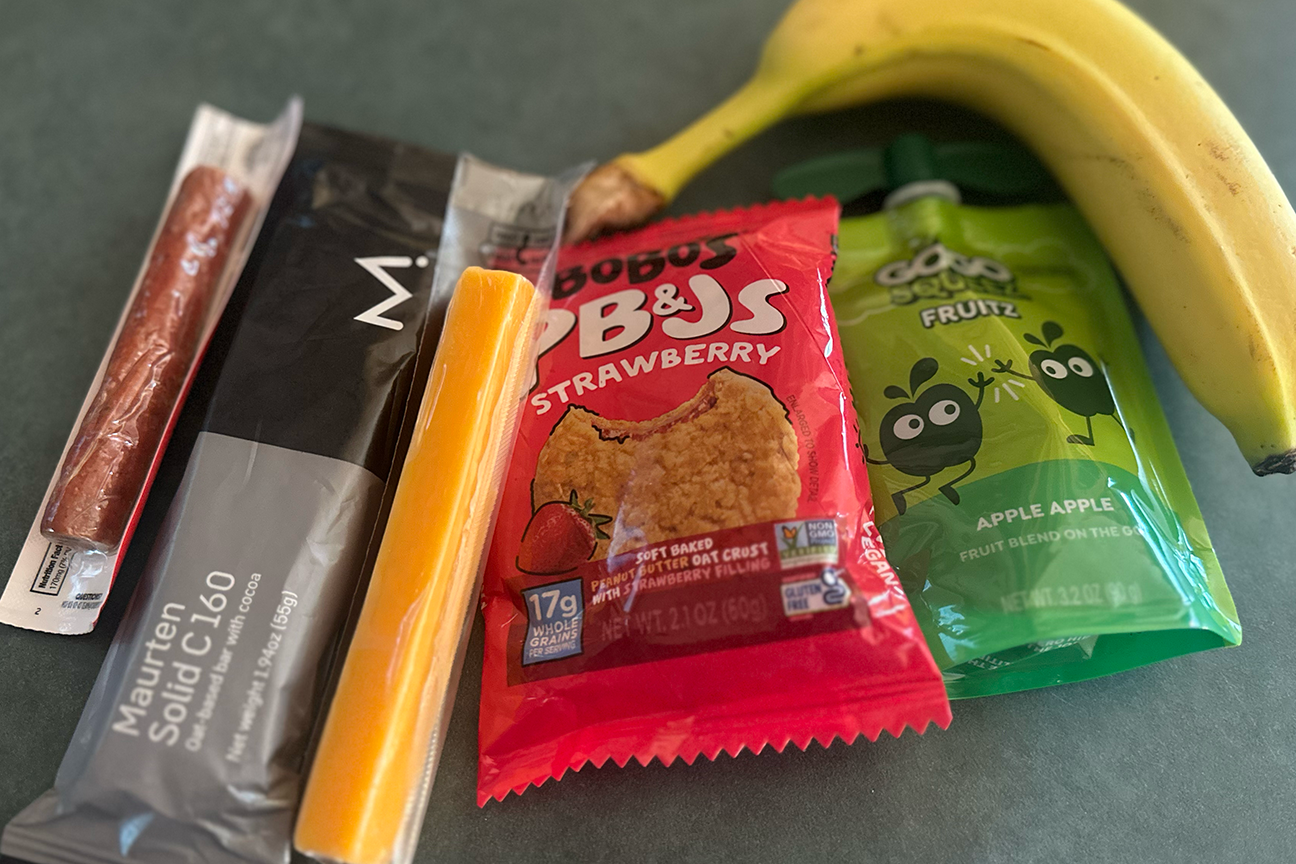
If you are going to eat lunch closer to your run, say around 2 p.m., prioritize making the meal a bit simpler. You can absolutely still have a complete meal, but reduce some of the foods that are higher in fat and fiber. Instead of a salad with beans and avocado, choose a bagel sandwich with some turkey and cheese, along with some pretzels and a banana. Then still have a carb focused snack in the hour before your run.
An important thing to remember is that there is no perfect pre-run meal that works for everyone. In general, the more time you have before your run, the more flexibility you have with your food. The closer your run gets, shift toward more carb based foods that digest easier. Experiment with meals and snacks that fit these guidelines and figure out what digests best for you.
Fueling Dilemma 4
I finished my run but I’m not hungry. Should I still eat?
Yes, hard stop. This is a challenging one because endurance exercise can actually suppress appetite, and sometimes you genuinely don’t feel hungry after your run. But your body is primed to accept nutrients after exercise to start the recovery process, and this is basically a free opportunity to replenish the energy you used and to repair your muscles. Adequate nutrition after exercise is also an important piece of making sure you meet your overall energy needs during the day.
The post-exercise recovery window is not as short as we once thought, so you don’t have to force food down immediately after your run, unless you want to, of course. But the sooner you can get in some recovery nutrition after your run the better, ideally within 1-2 hours of finishing. Thinking ahead as well, if you have another run that day or the next morning, getting in nutrition sooner becomes more important because your time window between runs becomes smaller.
For optimal recovery nutrition, the focus is on both carbohydrates and protein. Ideally you are able to eat 20-30 grams of protein and 60-80 grams of carbs shortly after your run. You can wait a bit to see if your appetite comes around, but try not to let this turn into hours without eating something. This is where a recovery snack, drink, or smoothie can play an important role.
Liquid nutrition is usually easier to consume when appetite is low, and you can still get in the appropriate nutrients with this. A smoothie made with fruit and greek yogurt, a ready to drink protein shake with a banana, or some chocolate milk with a granola bar are all practical options that go down easily with low appetite. Something is better than nothing, so if you don’t want to eat a big meal or chew a bunch of food, try to find those things that digest easily and build that recovery nutrition into your routine.
Candidly speaking, most of the time our nutrition isn’t perfect. One of the most important roles in my job as a sports dietitian is teaching athletes how to fuel in a way that works with their unpredictable schedules and the dilemmas that pop up on the daily. If we choose to run, we have to make time for appropriate fueling. The best nutrition isn’t about following a perfect plan, and it also doesn’t have to be complicated. But it does have to be there, and implementing strategies and building routines around it will make your running feel better and be more sustainable.
RELATED: Avoid These 5 Common Fueling and Hydration Mistakes
RELATED: A Practical Guide to Hydration for Trail Runners
RELATED: 5 Ways to Fuel Your Trail Running Workouts From Your Kitchen Cupboards
RELATED: When A Race Crumbles: What’s Solvable and What Isn’t?
- Trail Tested: Teva TrailPeak

- Sonoma Fall Classic: The Ultimate Trail Festival

- Behind the Bib: Leavenworth Trail Fest

- How to Keep Running Ultras as You Age

- 20 Great Fall Trail Running Races You Will Love

- 6 Things That Make the Mammoth Trailfest Great