
A brief memoir on how running shoes have helped sew together the fabric of my life.
I love a running shoe. I’m not much of a gearhead otherwise, but I can name the stack height, offset, and foam composition of nearly everything in my closet. I’ve been at this long enough to have been a minimalist, then a maximalist, then an apostle of the carbon plate revolution, and to have ended up somewhere in the neighborhood of moderation. Mostly.
But beyond the specs, the mono-mesh uppers, the propulsive rockers, what I love about shoes is what they say about us. Who we were trying to be at the moment we bought them, and the moment itself, preserved in amber.
They carry dust from the trail and grime from the road, sure. They also carry who we were, and who we thought we might become.
Here are the shoes that have shaped my running life over the past 15 years.
The North Face Back-to-Berkeley Boots (2011)
The day after I graduated high school in Arkansas, I threw almost everything I owned (roughly a million dog-eared, water-stained paperbacks, my dad’s old Kelty backpack, and a French press missing most of its plunger) into my Volvo S60 and drove west to New Mexico to become a backpacking guide. I was extremely Abbey-pilled at the time. Deeply committed to not being suckered into anything resembling gainful employment or a marketable trade, set instead on a summer of sleeping in the dirt, living deliberately, and sucking out all the marrow of life, Thoreau-style, minus the part where his mom did his laundry. (I did my own laundry. Rarely. In a sink.)
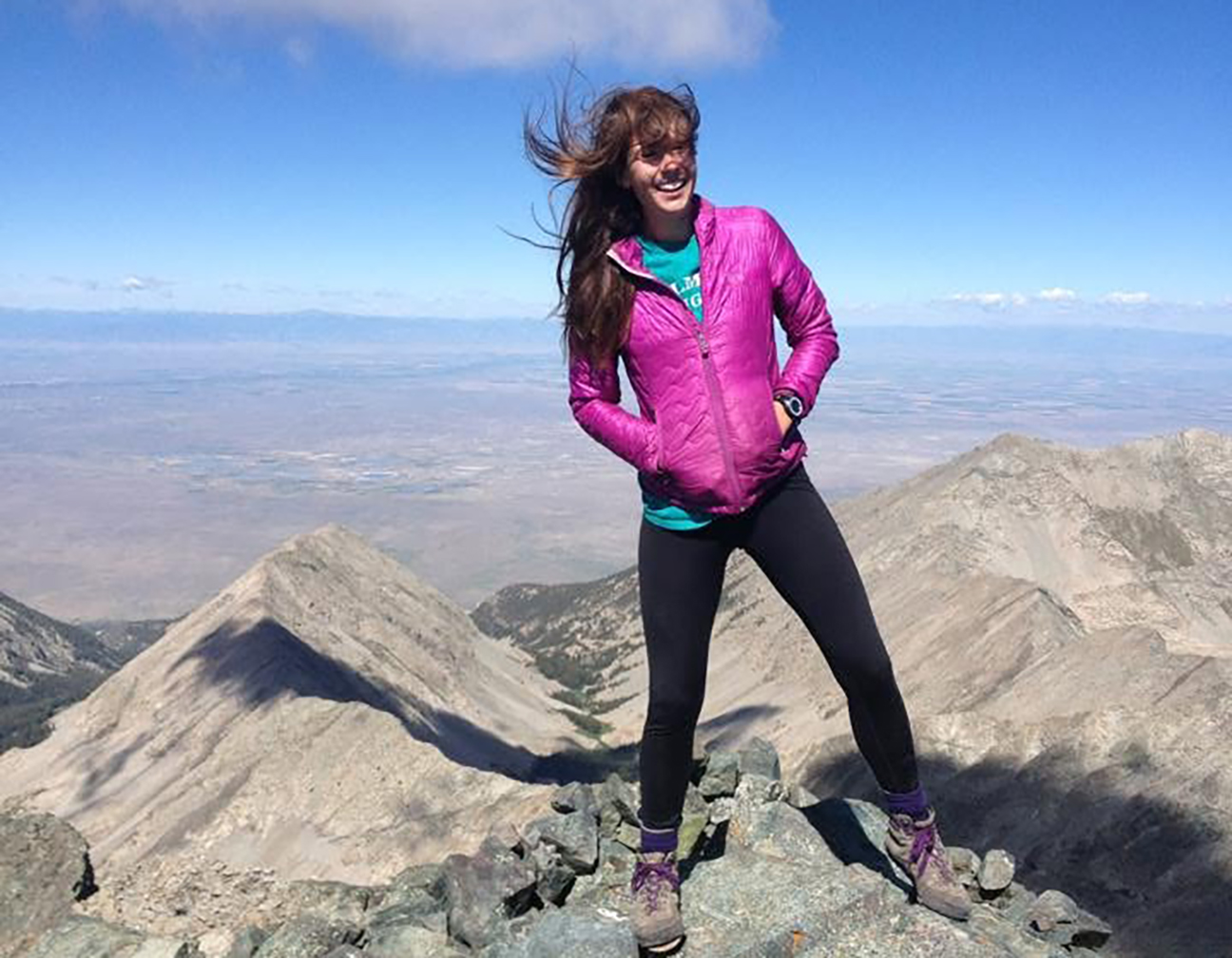
This version of me had gear sensibilities much closer to “what would Jack Kerouac wear?” than “what will survive several hundred miles in the Sangre de Cristos?” Hence: The North Face Back-to-Berkeley, a retro remake of a heritage hiking boot, engineered less for terrain than for being seen drinking the aforementioned French press coffee beside a dying campfire with a copy of Desolation Angels open on my knee.
Backpacking is what brought me to trail running in the first place. I loved the hours out there with nothing but my own thoughts and the sagebrush for company. I started running as a way to train for guiding, then got curious about how much more fun I might have if I dropped the pack, ditched the boots, and went a little faster. The rest, they say, is history.
I’ll always be grateful to these boots for so perfectly encapsulating the romantic delusions of my youth, back when looking the part mattered considerably more than being able to walk in it.
Salomon XR Mission (2012)
My first pair of actual trail running shoes. And few things in this life compare to the elation and moral validation of receiving your first-ever pro deal while earning something south of minimum wage at 18. I cashed one of my first real paychecks (first, that is, outside my family’s farm) on a brand new pair of Salomon XR Missions.
Stepping into them gave me some insight into why the Victorians were so unnerved by the female ankle. Gone was the Gore-Tex scaffolding that had been coddling my delicate joints all summer, replaced by the low, frankly indecent collar of a trail runner. Backpacking in trail runners felt like the ultimate guiding flex, a small, silent announcement that I had opinions about weight savings. I had also sawed the handle off my toothbrush.
My affinity for footwear would soon start testing my Thoreauvian ideals. Though I suspect that if HDT had had access to the ultralight backpacking forums, he’d have been on there nightly under u/WaldenBeanBoy1854, posting shakedowns and arguing with strangers about base weight.
I began racking up non-guiding miles in my off-hours, moving through the New Mexico backcountry at a brisk shuffle, in the first pair of shoes I’d ever bought that were designed to go fast.
Brooks Ravenna 4 (2013)
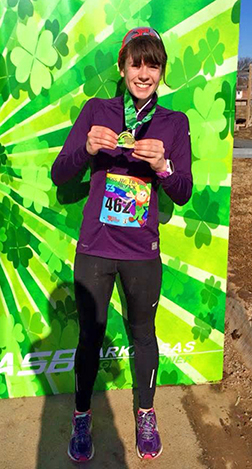
After a summer of guiding, I went back to Arkansas for my first semester at the University of Arkansas.
To fund my rapidly expanding one-woman library and an upgrade from the tattered French press, I took a job at a local run shop, whose primary perk was being permitted to pocket any women’s 9.5 that came back as a return and didn’t qualify for warranty. That’s when I fell into a pair of Brooks Ravenna 4, a shoe I wound up running a lot of miles in.
I don’t know what it is about a free pair of shoes that short-circuits the human reward system (no substance I’ve encountered since, licit or otherwise, lights up my circuitry quite like a 13×8-inch cardboard box with my name on the shipping label), but PR reps have it thoroughly figured out.
I started training in earnest for the first time in my life, running specific distances at specific paces, on purpose, which was novel. I ran a 5K. Then a 10K. I trained for and ran my first half marathon in these shoes, dragging them several hundred miles past their intended lifespan and falling completely in love with running along the way.
The Ravennas were, much like my college boyfriend, a sensible and unglamorous upgrade. No particular flair, but they held up, and they got me where I needed to go.
Hoka Clifton 1 (2014)
I talk about the Hoka Clifton the way my parents talk about the moon landing. I know exactly where I was when the world changed forever, the moment running culture abandoned the punitive minimalism of the Born to Run years and gave itself over fully to squish.
When the first pairs landed at the store where I worked, they were objects of open ridicule. Who among us would publicly admit to requiring nearly 30 millimeters of foam beneath our delicate little feetsies? It seemed roughly equivalent to showing up at the start line in a helmet and full pads for a 5K, or announcing to the field that your feet needed emotional support foam.
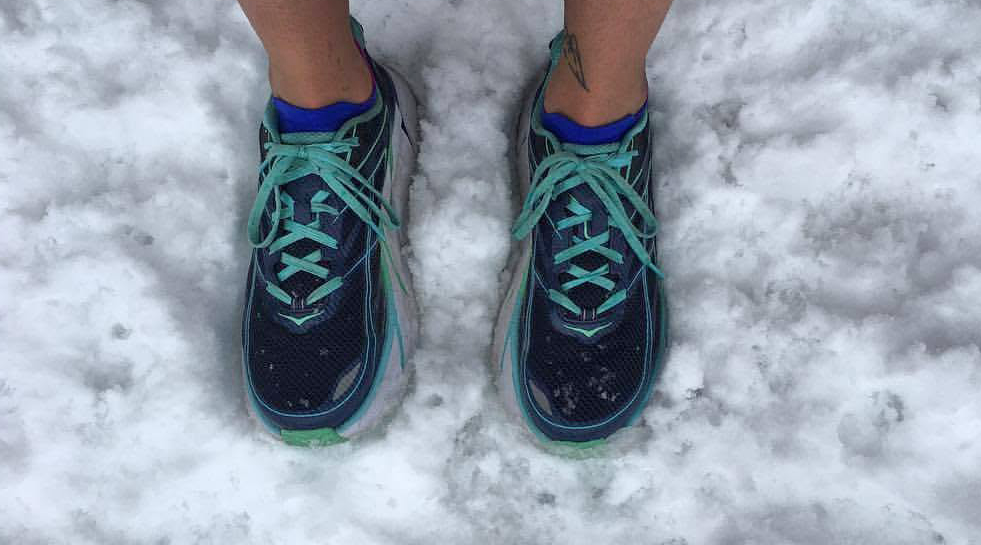
And then, one by one, we defected. From the austere minimalist camp to the plush and forgiving world of never having to feel the ground again, where the terrain is a rumor and the ground is somebody else’s problem. As a not-especially-proud graduate of the “no pain, no gain” school, the Cliftons happened to arrive right alongside the most important thing I’ve ever learned about running: that it can, and probably should, feel good.
Brooks Cascadia 10 (2015)
It is a truth universally acknowledged that a twenty-something in possession of a large number of warrantied trail shoes must eventually be in want of an ultramarathon. After roughly a year of road racing, I arrived at the point most runners don’t reach until their early forties or their first divorce: I started running ultras.
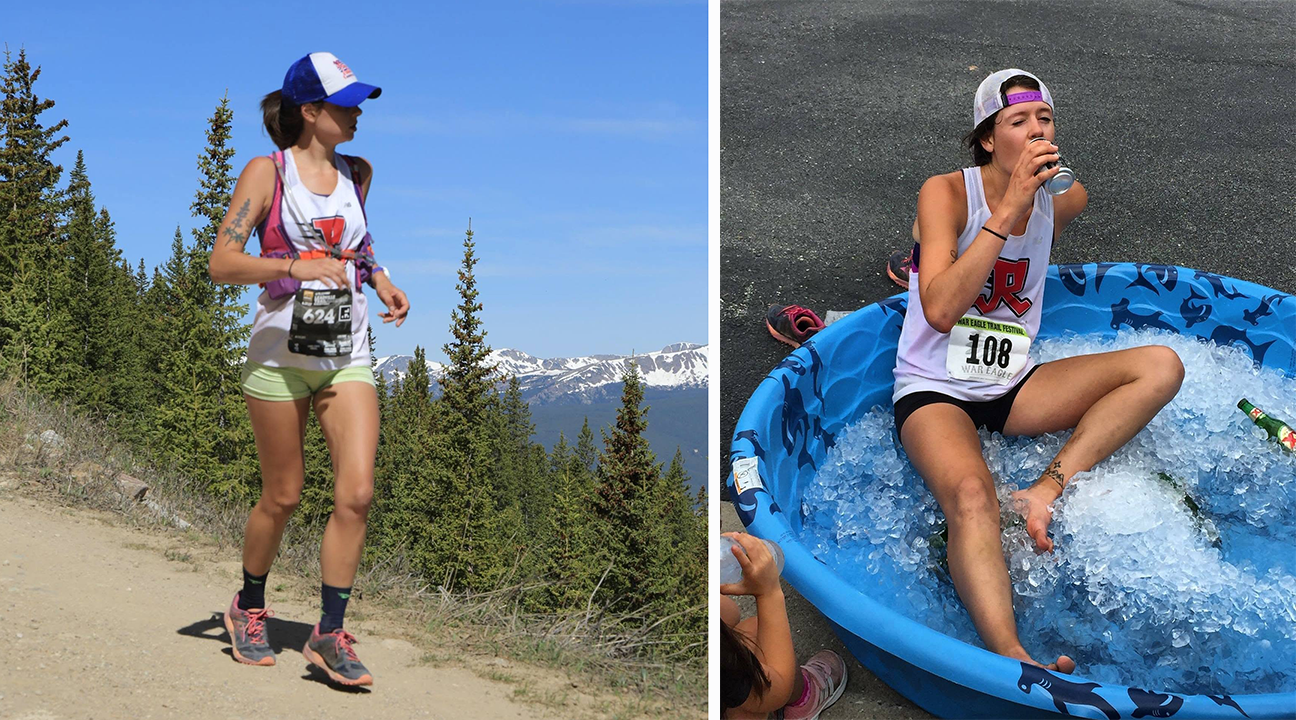
My first was the War Eagle 50K, a muddy, muggy affair in rural northwest Arkansas. You simply haven’t lived until you’ve spent five-plus hours in the bug-infested forests of the Ozarks, in humidity best described as biblical, before arriving at a finish line where the only available carbohydrates come from an establishment called Catfish Hole. I won. It was the first time I’d ever felt remotely good at anything that wasn’t Zoë-splaining Beat poetry to a visibly trapped man at a party.
The Cascadias were the perfect shoe for aiding and abetting this kind of decision-making, the footwear equivalent of a used Subaru with 190,000 miles on it. She gets the job done.
Much like going bankrupt or falling in love, it happened gradually and then all at once. I was smitten. Maybe it was the low glycogen, or the post-race catfish glow, but I knew I’d found the thing.
Salomon Sense 7 (2018)
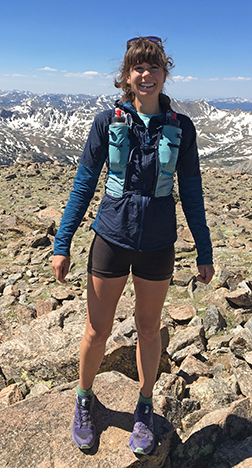
Four years and one quixotic poetry degree later, I pointed my now-decrepit Volvo west a final time, moving to Boulder for a master’s in environmental journalism, with the secondary and unstated aim of embedding myself in trail running’s mecca.
I made the extremely poor decision to join a group run on my first morning in town, which turned out to involve Green Mountain, something that, to my lowland sensibilities, seemed less like a run than an expedition up Meru. Jimmy Chin never called, which I’ve chosen not to take personally.
It is steep and rugged, and at one point the trail gives way to an actual ladder. After being promptly and cheerfully dropped by a peloton of superhumans who appeared to be simply everyone in Boulder, I slogged upward alone, wondering in an ambient sort of way whether my obituary would at least be able to note that I’d made it to the summit.
I survived that group run, barely, and many others after it. Moving to Boulder after falling in love with trail running is like a Deadhead moving to San Francisco in 1972: you have relocated to the source, and the source does not care that you’re there.
I spent a genuinely irresponsible portion of my TA stipend on a pair of Salomons, the shoe every fast person in town (and everyone in town was fast) was wearing, narrow and precise and designed for racing. I was not racing. I was surviving. But I wore them anyway, exhausted them over hundreds of miles of Front Range dirt, and in doing so discovered that you do start to become like the people you surround yourself with, albeit slightly slower.
Which is how these shoes became enablers. Group runs turned into 50-milers, and 50-milers turned into the Leadville 100, where I fell hopelessly in love with a distance that does not love anyone back.
Hoka One One Speedgoat Evo (2019)
Firmly in the Rocky montage phase of my life, I started taking running seriously in a way I had spent years carefully avoiding. Building volume on purpose. Following a plan. Not just signing up for things and YOLO-ing my way to the start line, but actually letting myself want to be good at it, which required admitting, out loud and to other people, that I wanted to be good at it. This turns out to be the hardest part.
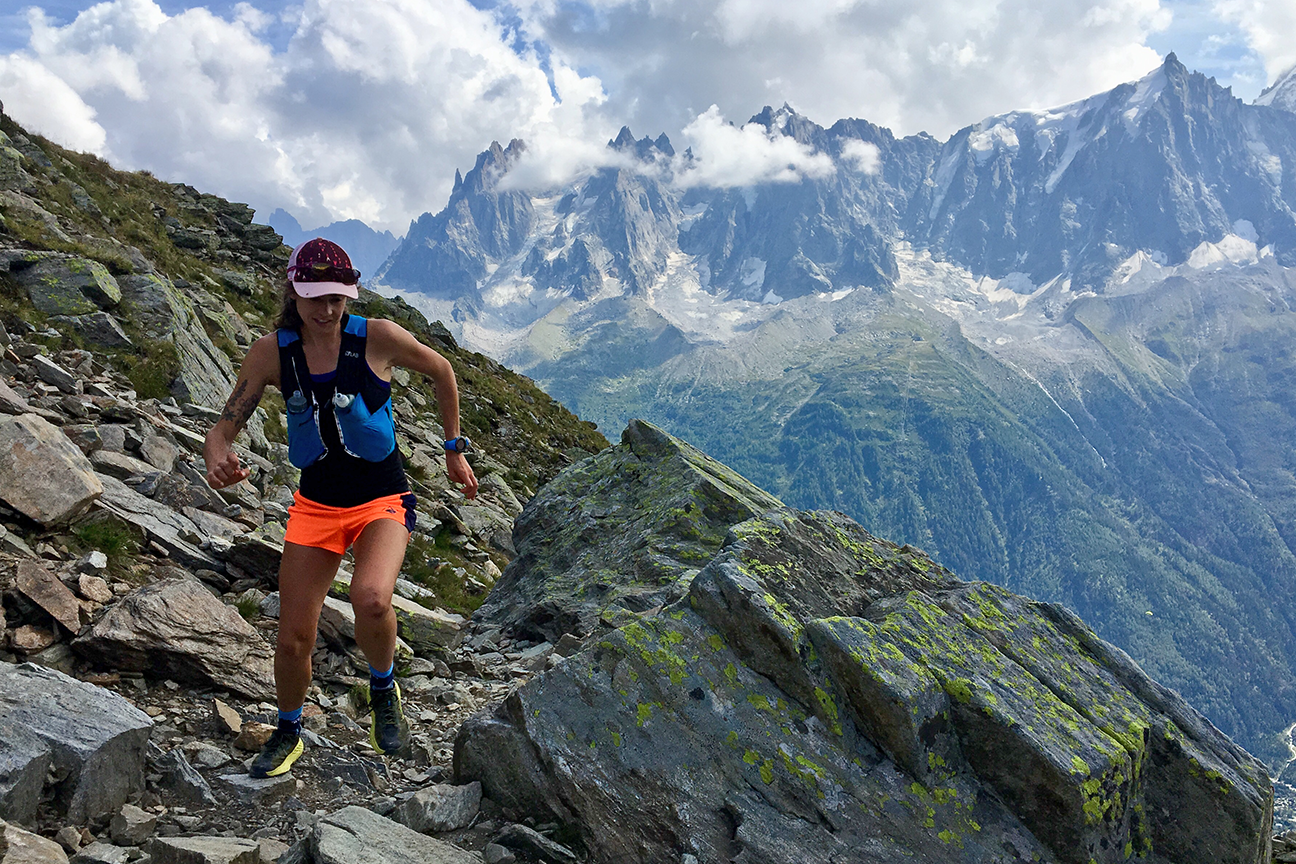
Enter the Speedgoat Evo. I ordered three pairs. Then I heard the rumor that they were made in a single factory in China that had since closed, and I ordered another. You can still find them on eBay, priced somewhere between a vintage guitar pedal and a first pressing of Pet Sounds. They were irresponsibly good. Recklessly good. I still have a pair in my closet, stored behind my wedding dress and a pair of overalls I swear I’ll wear as soon as an occasion presents itself.
I finished my first hundred in them, at Rio del Lago. Then I got into Western States, which is the thing you’re supposed to want, and I did want it, badly enough to reorganize the better part of a year around it.
I did not finish. I sat down at Green Gate at mile 80 and explained to a ham radio operator, a man who informed me that he had not survived Vietnam and two bouts of colon cancer in order to watch me quit a race, that my day was done. He cut my bracelet and radioed my DNF in.
Nike UltraFly (2023)
A girl never forgets her first trail supershoe. The Ultrafly was the first one I could reasonably wear for a long race without the omnipresent fear that my ankle would snap in a screefield, or on a mild descent, or while standing still.
After some reasonable successes, a podium at Rio del Lago, seventh at Run Rabbit Run, and still quietly nursing the Western States DNF, I found myself in the nothing-left-to-prove phase of my running. Which is a phase you enter only after a series of false starts, a pandemic, and three consecutive years of the Leadville 100 lottery declining to acknowledge my existence. (Did I anger a lottery witch in a previous life?) Eventually my name came up, and I got to go back to a race that had been sitting near the top of my redemption list for the better part of a decade.
So in 2024, I returned to the Race Across the Sky. Every runner has a story about one of those days, where you find the groove early, the gels go down smoothly, the Taylor Swift hits at the correct moment on the correct climb, and everything simply works. The Ultraflys were on my feet for one of those days, and I finished second.
False modesty aside, what made it special wasn’t the result. It was that I knew I could do it. I finished thirty seconds faster than the time I’d written in my split chart. I had pictured myself charging up the grindy Sixth Street climb so many times that when it finally happened, it felt less like an achievement than like rendering something into existence, something that, until that moment, had only ever existed in my head.
I don’t know how many more days like that I’ll get. The kudos and the high-fives are nice. But the better thing, the thing I’d take over any of it, is doing something I always knew I could do. Making real a dream I’d been privately carrying around for years.
I have plenty more of those. And considerably more pairs of shoes to work my way through.
La Sportiva Prodigio Pro (2025)
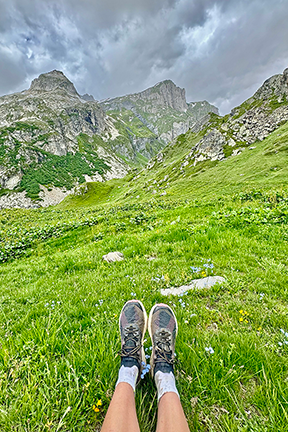
I feel about these shoes the way The Notebook wants you to feel about Noah and Allie, minus the rain scene and most of the crying. We’re going to grow old together, and I’ve decided not to think too hard about how that movie ends.
Having, at one point, been a professional gear tester and editor, guilty of having a quiver of shoes, these have become my one and only. For short days and long, easy days and hard.
There’s a joke that couples start to look like each other after long enough. I feel that way about footwear. Ten pairs of shoes, one simple arc of a hopeless trail romantic: a kid who bought boots to look like she’d read Kerouac, a college student who took whatever came back to the shop unwarrantied, a Boulder transplant buying the shoes of people who dropped her, a woman crying into a pair of Hokas at mile 80, and whoever I am now.
Which is the thing about gear, and the reason I’ve spent two thousand words on a few pairs of shoes. Nobody buys a shoe. You buy a version of yourself, the ultralight ascetic, the serious student of the distance, the person who belongs here. Then you go put miles on the idea and find out how much of it was true.
Nine pairs, nine arguments I was having with myself about who I was going to be, and how many blisters I earned along the way.
Maybe these are simply who I’d like to be at this point: unfussy, durable, vaguely Italian. La vita è breve.
Life is short. You might as well run long.

- Closing the Gap Between Ability and Ambition

- What Causes a UTMB DNF? Here’s What The Data Says
- Nine Lives: My Life in 9 Transcendent Pairs of Shoes
- Race Through the Night: Stay Awake, Alert + Mostly Sane
- New Ways to Think About Data for Runners
- You Might Be Running Your Easy Miles Too Fast
- Go Touch Some Grass
- How to Train for Western States, According to Data and Coaches
- Yep, You Are a Runner. Even When You’re Not Running.

3 comments
Jen
This was so fun to read! I love the lines at the end:
Nobody buys a shoe. You buy a version of yourself… and find out how much of it was true.
Mark Lindeman
This is fabulously written. So specific yet so relatable — and my ultra goals are far from yours. (I’m an older walker/hiker who has successfully walked two 50Ks and less successfully started several others.) Or maybe all our ultra goals are very much alike?
Brent Runzel
I love the way you write! Keep it going!!