
Hitchhiking is hard. Hitchhiking to the start line of your 123K ultramarathon is harder.
Last year, somewhere in the Italian countryside around 3:30 a.m., the electric vehicle I’d rented in Rome sat in the driveway of my Airbnb, refusing to start. The key turned over soundlessly in the ignition, not so much as a sputter. After a panicked spiral of Googling solutions (without acknowledging that I was in no way, shape, or form going to perform complex auto mechanics in the driveway of a remote Italian cottage at in the pre-dawn darkness), my partner and I, who was also running the race, arrived at the obvious conclusion: if we were making the start line, it wasn’t going to be in this hunk of metal.
So we stripped off our warm-ups, threw on our race vests, and started running toward the nearest highway, hoping to either jog or hitch the final 5K to the start. To the credit of every Italian driver who passed us: two soaking wet, extremely frantic-looking Americans sprinting along a highway in the dark and rain is not a reassuring sight. Dan from Serbia, however, had no such reservations. He scooped us up in his Fiat 500 and deposited us at the start line with 90 seconds to spare.
As I tried to shimmy into the corral, my entire training block strobed through my brain, the hours on trail, the early alarms, the happy hours skipped, the foam rolling. So much foam rolling. I was attempting to get my heart rate somewhere between “that time I met Orlando Bloom in person” and “life-threatening cardiac event” when I realized that I was standing within three feet of Kilian Jornet and Jim Walmsley. Cool. Very normal. Completely fine.
By the time the gun went off and I surfed out of the corral on a wave of extremely fast, extremely confident Europeans, I was just grateful to be there at all. I barely noticed that the conditions were what I’d describe as biblical in their wetness, so wet that I will never forget the Italian word for mud (fango), and sometimes, in that hazy moment just before sleep, I can still feel my feet sinking into the calf-deep Chianti clay.
I finished that race. Shivering in the warming hut near the finish line, still sopping wet and covered in fango, I immediately knew I wanted to go back.
Not for revenge. Not to prove anything to the mud, or the Fiat 500, or Dan from Serbia, who I’m sure has long forgotten us. I wanted to go back because I’d just had a distinctly ultrarunning-inflected type of fun, the kind that is, legally, only barely describable as “fun,” but that you’d sign up for again immediately. And I knew, standing there dripping in that warming hut, nursing a ginger ale and my own personal 50-inch pizza, that the day I’d had was only one of approximately 1 million potential days that course could serve up. Not a better day, necessarily. Not a faster one. Just a different one, and I wanted to collect as many distinct versions of it as my life partner’s patience for Italian travel logistics would allow.
Here’s the thing about doing an event for the first time: you’re operating almost entirely in a state of disorientation. Every climb is a surprise. Every aid station is a small salvation. You’re so focused on the question of whether you’ll finish that you never get to ask the better question, what does this actually feel like? First-time race brain is triage brain.
Which is why I’ve come to think that repeating a race is less like running it again and more like actually running it for the first time.
Maybe it’s the Chianti talking, but bear with me. You can drink a glass of red wine and register: this is wine, it is red, it is good. Or, if you slow down, if you already know a little about what you’re tasting, you can start to notice the specific things that make this wine this wine. The way the finish lingers. The particular earthiness, or brightness, or whatever it is that makes it taste unmistakably like the place it came from. (I’ll be honest: I don’t actually know that much about wine. But I do know that the Chianti we drank at dinner the night after the race tasted like Tuscany in a way that the $14 Costco bottle in my pantry simply does not, and I think that counts.) First-time race brain drinks the wine. The second time, you finally get to taste it.
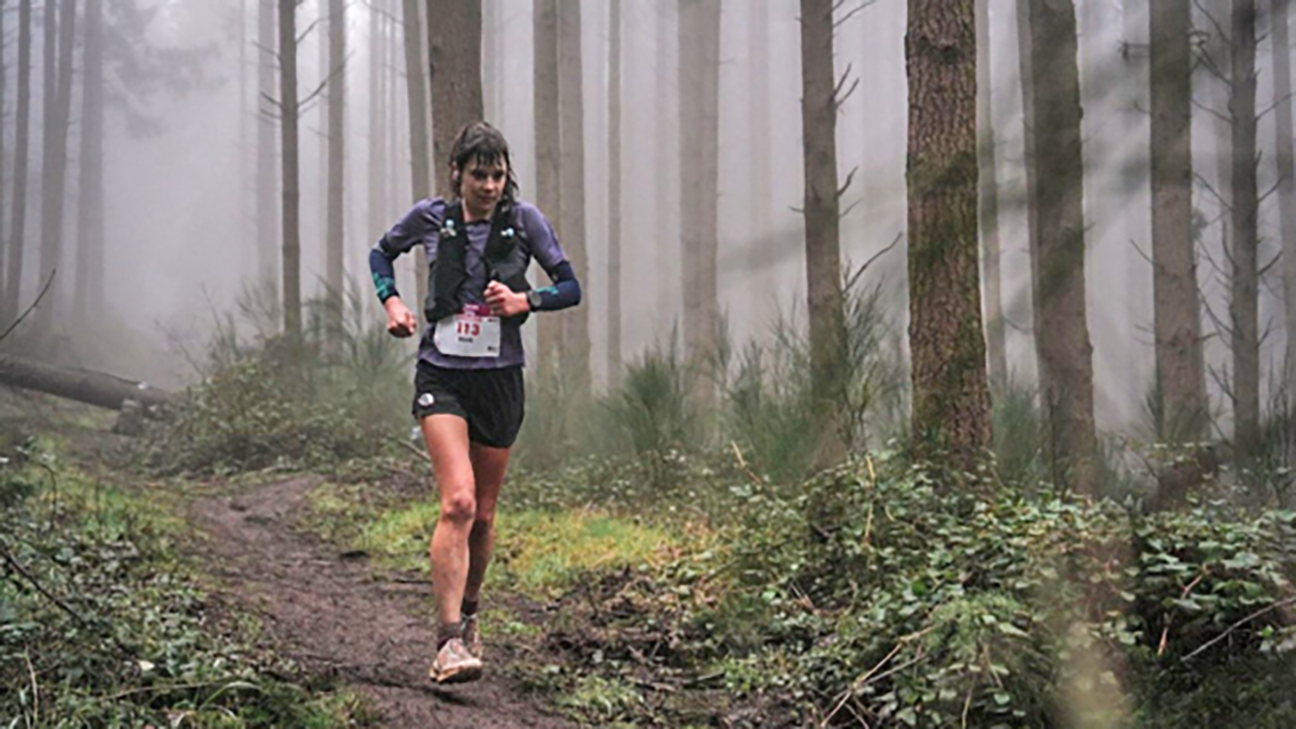
In ultrarunning, this is especially true, and especially ridiculous, because the sport essentially guarantees that no two editions of the same race will ever be the same race. The trails shift. The weather turns biblical or stays inexplicably perfect. Your body is a different instrument than it was a year ago, more capable in some ways, more honest about its limits in others. The field changes, the conversations at mile 40 are different ones, and you are, quietly, a different person than the one who toed that line before.
Heraclitus said you can’t step into the same river twice. The river has changed, and so have you. An ultramarathon, it turns out, is an exceptionally good river. The course is different. The conditions are different. Your legs, your fitness, your fears, your reasons for being there, all different. Once you really accept that, something useful happens: the comparison trap loses its grip. You’re not racing your previous self. You can’t. That person and that race don’t exist anymore. All you have is this version, on this day, which is a liberation if you let it be one.
When you already know the climb that breaks people at kilometer 60, you can run the first 40 differently, with strategy instead of survival instinct. When you know the aid station where your stomach historically revolts, you can make a plan. When you know the section of trail where, last time, you stood in the rain and genuinely considered lying down in the fango and staying there forever, you can run toward it with something closer to curiosity than dread. Course knowledge, used well, isn’t pressure, it’s a map for going deeper.
The goal doesn’t have to be a PR. It can be staying present at the aid station you blew through last time. It can actually be seeing the ridge at hour six instead of just surviving it. It can be noticed what your body does differently when it recognizes the terrain. This is the bouquet, what keeps us coming back for more.
Finishing is not the same thing as mastery. Finishing is just the proof of concept. Mastery is the slow accumulation of specific knowledge about a specific place, in a specific body, on a specific day, and the willingness to keep showing up and being surprised by what you find.
I’ll be back in Chianti this year. And every other race on my calendar this season is a repeat, too, San Juan Solstice and Run Rabbit Run 100, both events I love enough to want to actually know, not just complete. No novelty on the menu. I couldn’t be more excited about it.
The car is booked. Gas-powered, this time, out of an abundance of caution. Dan from Serbia will probably not be there.
But the fango will be waiting.

More From Zoë Rom
-

Is that the experiment you tried actually working?
From supplements to training, athletes are doing their own experiments. Here’s how to think critically about what works and what might be an expensive placebo. -
What Happens When Ultra Goes Mainstream
Ultrarunning’s mainstream surge means the sport is being translated, and translation can get things wrong, or fail to capture its authentic nuance. -
The Importance of Celebrating Microwins
It’s good to set big, ambitious goals. Just make sure you celebrate the little wins along the way. -
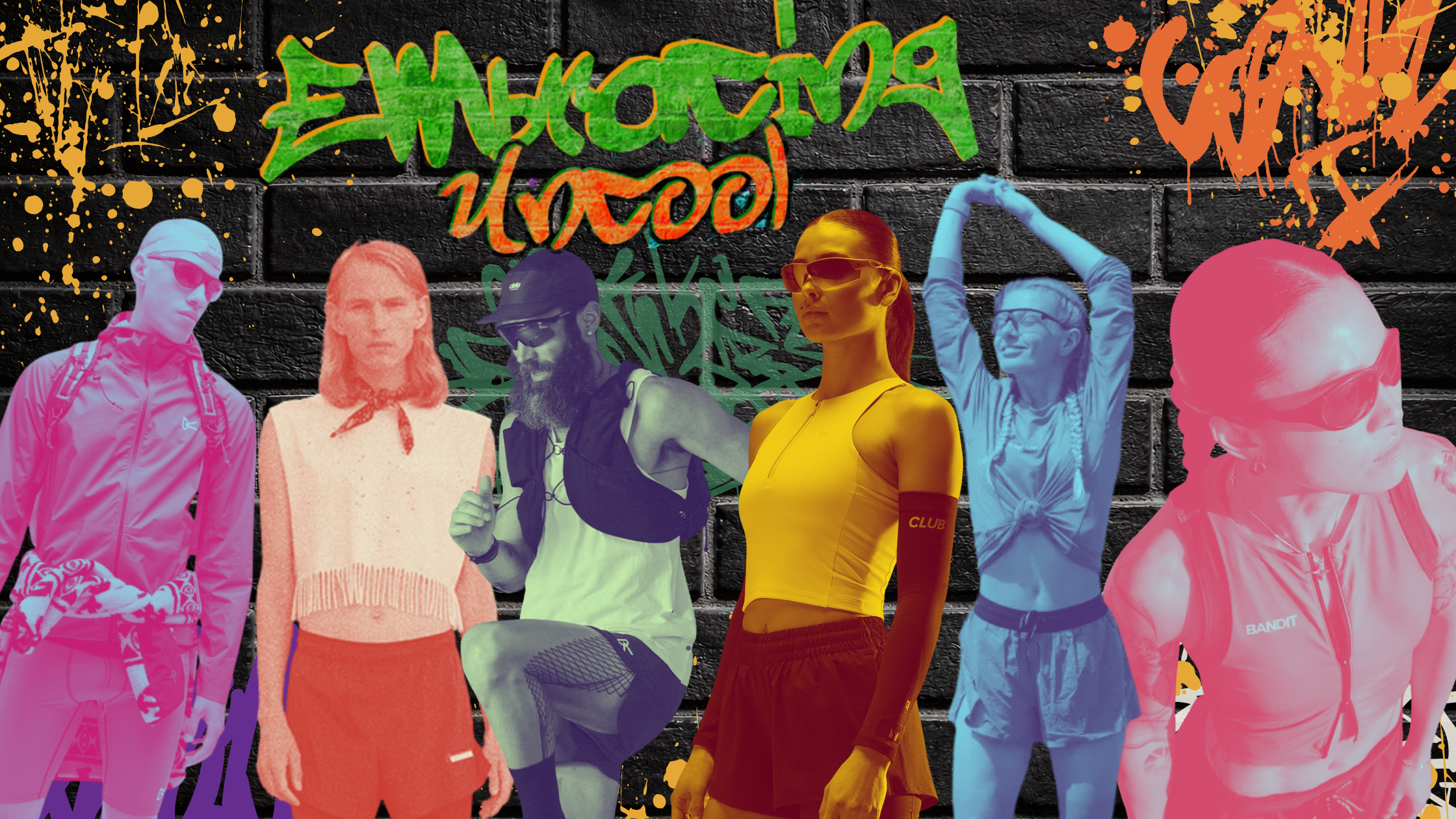
Embracing the Uncool as Trail Running Evolves
Trail running is suddenly cool, but you don’t have to be. You just need to keep showing up however you are. -
Running an Ultra Through the Night: Staying Awake, Alert, and Mostly Sane
Running through the night can be strange, but it’s navigable, physiologically, psychologically, and logistically, once you understand what’s going on. -
Women Are Getting Faster in Ultras. Here’s Why.
Women are getting faster in ultras. Here are some of the reasons behind the faster finishes in recent years.
RELATED: The Importance of Celebrating Microwins
RELATED: Embracing the Uncool as Trail Running Evolves
RELATED: The Case for Not Starting Over
6 comments
Alexandra
I love your writing!
Wendi
I absolutely love this. I have many events that I like to re-run, but love the adventure of new as well. This concept of “First-time race brain is triage brain.” is so perfect, and I feel like I have definitely felt it but couldn’t name it. Thank you for sharing this story and your thoughts.
Everette Jbob Webber
Very well said! I enjoy new running new courses for the shear adventure aspect, but there is something very enjoyable about repeating a course. I find that some of my favorite courses I run each year became my favorite after a few repeats. Thank you for such a great insight into your trail running experience!
Marcy Kiar
I enjoy your writing. You really put words into a lot of the same thoughts and feelings I’ve had out there!
pimaCanyon
Brilliant. I love your writing! And your running and your insights on running. I wish you a deep experience of the run in Chianti this year, with a little less fango.
Tom
I actually read this, every word, and that’s not normal for me. Very well written!
I agree some races are worth repeating. Others are either boring or difficult (in some other way than just the run – like too crowded) enough that they’re not worth a repeat.