[UPDATE: On June 9, Senator Mike Lee (R-Utah) suggested an amendment to S.140, the Wildfire Prevention Act, which would nullify the 2001 Roadless Rule. The Senate Energy and Natural Resources Committee will be voting on June 10. With only a tiny comment period, Runners for Public Lands and the larger conservation community urge immediate calls to Congress in opposition to such a move.]
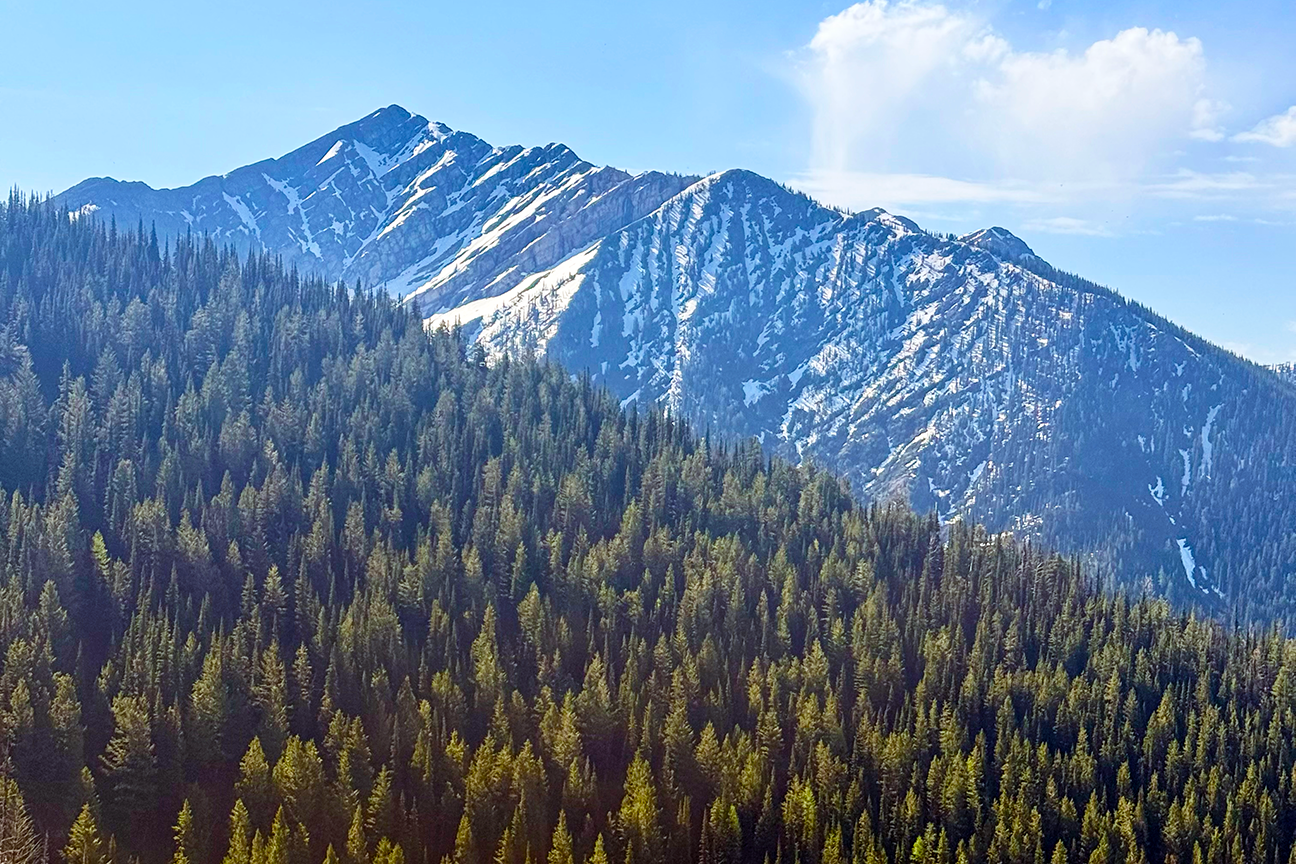
There’s a moment in a good trail run, where the road disappears. From sight and then sound. And you’re surrounded by the exhilarating sights and soothing sounds of place, of wild. It’s the moment you feel your shoulders relax, your mind become present. It feels remote and you feel unplugged.
It’s a big reason we all love this sport.
But getting the chance to run in a place like this doesn’t come by way of accident, it’s the result of a federal policy most runners have probably never heard of or thought much about: The Roadless Rule.
Officially known as the Roadless Area Conservation Rule, it was adopted in 2001 to limit new road construction and timber harvesting across nearly 60 million acres of inventoried roadless areas within the U.S. Forest Service system. Today, the rule applies to nearly 45 million acres of national forests and grasslands, including the Tongass National Forest in Alaska.
However, the Trump administration is proposing to rescind and repeal the rule in its entirety and remove protections from nearly all 45 million of those acres of public land, (Idaho and Colorado have separate state-specific roadless rules.) The process is still underway, and another public comment period is expected when the Forest Service releases a proposed rule and draft environmental impact statement.
For Kathleen Baker, executive director of Runners for Public Lands, this is not an abstract policy fight. It is a direct threat to the landscapes that make trail running possible.
“For runners, these are areas that feel remote,” Baker says. “They feel like wilderness, even if they’re not wilderness designated. And what is really special for runners is that these are the remote areas that still allow recreation events to happen.”
That’s an important distinction.
Designated wilderness has the strongest protections, but organized races are generally not allowed there. And for good reason (but more on that another time). Roadless areas, on the other hand, offer a similarly remote experience while still allowing permitted recreation events. That makes them especially important for trail running and ultrarunning, where races often depend on long, uninterrupted routes through national forest land.
Baker says Runners for Public Lands is mapping how race courses overlap with roadless areas to show the running community what’s actually at stake.
“This is not a one-off thing here and there,” Baker says. “It could affect hundreds of races across the country.”
In fact, according to RPL’s maps and analysis, about 21 percent of the Western States 100 course falls within an inventoried roadless area. The Wasatch 100 has nearly 31 percent. At the Bighorn 100, that number climbs to 73 percent. And, Oregon’s Waldo 100K has a course made up of 86 percent of roadless areas. And that’s just a handful of races. You can view the regularly expanding map of events on their site here.
As public lands scholar John Leshy said on The Wild Idea, a podcast about connecting human nature to wild nature, “To say you’re repealing the Roadless Rule, it’s just too abstract.” The real-world effect, he explained, is much more specific: “You are opening my backyard.” For runners, RPL’s race map makes that backyard visible.
You’re already running in roadless areas
But races aside, many roadless areas are quite simply the places where we enjoy running. One of the biggest misconceptions about roadless areas is that they’re off limits. They’re not.
Roadless acres often have trails and often allow grazing, hunting, fishing, hiking, mountain biking and other recreation. So the rule doesn’t ban people, it just limits most new road building and certain types of resource extraction in the least developed parts of our national forest system. In short: roadless areas are critical for protecting clean water, clean air and integral wildlife habitat. They are among the most intact and connected ecosystems we have left.
Why? Well, because new roads fragment habitat, bring in more vehicle traffic, increase erosion and sediment in streams, introduce invasive species and make previously remote areas really easy to develop. It’s a slippery slope. Which has far more consequences than our need to enjoy the backcountry while we run. But putting in roads does prevent us from experiencing a wild place in all its glory.
And I don’t know about you, but that is one of the main reasons I trail run.
And here’s the thing: once this rule gets rescinded and roads start being built, it can’t be undone.
“Once you develop, you can’t un-develop,” Baker says. “You can’t go back.”
Race directors are getting involved
Runners for Public Lands is organizing around the Roadless Rule in three ways:
- First, the organization will submit its own comment.
- Second, it created an action tool so that individual runners can submit comments when the upcoming comment period opens.
- And, third, it’s organizing race directors to submit a collective comment in support of the Roadless Rule, too.
Race directors have a clear stake in this issue: trail races depend on public lands, permits, agency relationships, healthy forests, sustainable trails and the ability to offer runners a meaningful backcountry experience.
If roadless protections disappear, some of the places that make those races possible could change.
RPL has already worked with hundreds of race directors on public lands advocacy, including previous joint letters to Congress. Baker says the organization has more than 200 race directors engaged already, and is seeing growing interest from races who understand that access and protection are connected.
And that connection is central to RPL’s work. Because they’re asking trail runners to step up and become advocates for the places they run through.
“We’re trying to take protection of public lands and ensure access,” Baker says, “and roll that into what it means to be a trail runner.”
RELATED: Climate Advocacy For Runners
Trail runners have a real responsibility
Trail running has grown quickly in recent years. More people are entering the sport. From 2022 to 2023 trail running experienced a 12.3 percent increase in participation in the U.S. to 14.8 million. And therefore more runners are also training on public lands.
So while growth brings opportunity, it also brings responsibility.
And, let’s be honest, trail runners are notorious for not doing enough to speak up for and protect public lands. And we have to change that.
Baker says runners have not been as organized as other outdoor recreation groups when it comes to land protection. RPL is trying to change that through policy work, trail work and education, partly through an ambassador network.
They’ve already organized more than 1,000 hours of trail work this year, with more planned. But Baker stresses this is only a fraction of what it takes to be a good partner to public lands.
“We have a responsibility to make sure that people understand what it means to be a trail runner,” Baker says. “Not just running, but giving back to the events, supporting the landscapes, and being good stewards and partners.”
And if you ever needed a time to dive headfirst into becoming a public lands advocate and steward, folks, now. Is. Your. Time.
Here’s the deal: The Roadless Rule rescission is not yet final. The first public comment period closed in September 2025, and the Forest Service is expected to release a proposed rule and draft environmental impact statement. That should open another public comment period.
And Baker says RPL is preparing for that now because the next window could be short. So, what can you do? Be ready before the window opens.
RELATED: What is Eco-Friendly Running Gear?
What can runners do now?
If you’re a trail runner concerned about what could happen, join the Runners for Public Lands action network. When the next comment period opens, you’ll be able to submit comments directly through RPL’s system with an option to customize the message you send.
Customizing a message goes a long way.
A strong comment does not need to be complicated, but it should explain who you are, how you use roadless areas, what they mean to you and why you believe protections should remain in place.
Race directors can also get involved through RPL’s collective comment effort. And, if you work for a running brand, or run with a club or other group? Share this story, educate your communities and be sure to submit your own comment.
If you take anything away from this story, take this: as trail runners, we rely on public lands. And roadless acres are integral to this sport. They make up all of our favorite places to run and race. And future generations need them. So, if you want those places to stay intact, you need to be a part of the process now.
Running on public lands is not separate from protecting public lands. The places we race through, train on and return to year after year do not stay intact by accident.
[Editor’s Note: For a deeper dive into the history, science and policy behind the Roadless Rule, The Wild Idea produced a Roadless Rule podcast that breaks down what the rule does, why it matters and what rescission could mean on the ground.]
- Why Runners Should Care About the Roadless Rule
- 10 to 100: A Program To Guide More Women into 100-Milers
- Fueling for Ultras Can Be Complicated: Here’s How I Finally Made it Work for Me
- How to Train for Trail Races Without Access to Trails
- Running Through Motherhood: 10 Tips for Managing Trail Running as a Mom
- Life is an Ultra: Amanda Basham has Learned How to Juggle a Busy Life