How the versatile Mount to Coast H1 became such a buzzworthy shoe on the trails.
For a shoe that’s not even billed as a trail running shoe, the Mount to Coast H1 is making big waves in the trail running world.
The fact that the well-cushioned and dynamic crossover trail/gravel shoe from the recent Hong Kong-based start-up brand was one of the most popular shoes at this year’s Cocodona 250—including being worn at times by six of the top-10 overall finishers—speaks volumes. It’s also part of a trend in which smaller and lesser known brands (like Norda, Kiprun, and Fuga) are making or about to make a splash in the U.S. trail running shoe market.
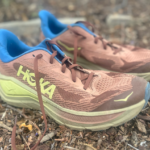
As a running shoe geek, I suspect the recent launch of the H1’s new burnt orange Sedona colorway (Women’s / Men’s) will only make the shoe’s aura burn brighter. But, if I’m honest, my Jekyll and Hyde shoe geek brain has been split between wanting to take them out and wreck them on the trails and keeping them under glass on a shelf.
How It Started
So what is the H1 all about and how did we get here? The Hong Kong-based startup quietly debuted at The Running Event trade show in December of 2024 with a compact lineup of road shoes built around premium materials, a sustainability mission that felt genuine rather than performative, and a unique dual-lacing system that made you wonder why nobody had thought of it sooner. By early 2025, the brand ventured off-road with another new shoe, though not with a rugged mountain shoe, but with something more nuanced and difficult to categorize: the H1 gravel running shoe.
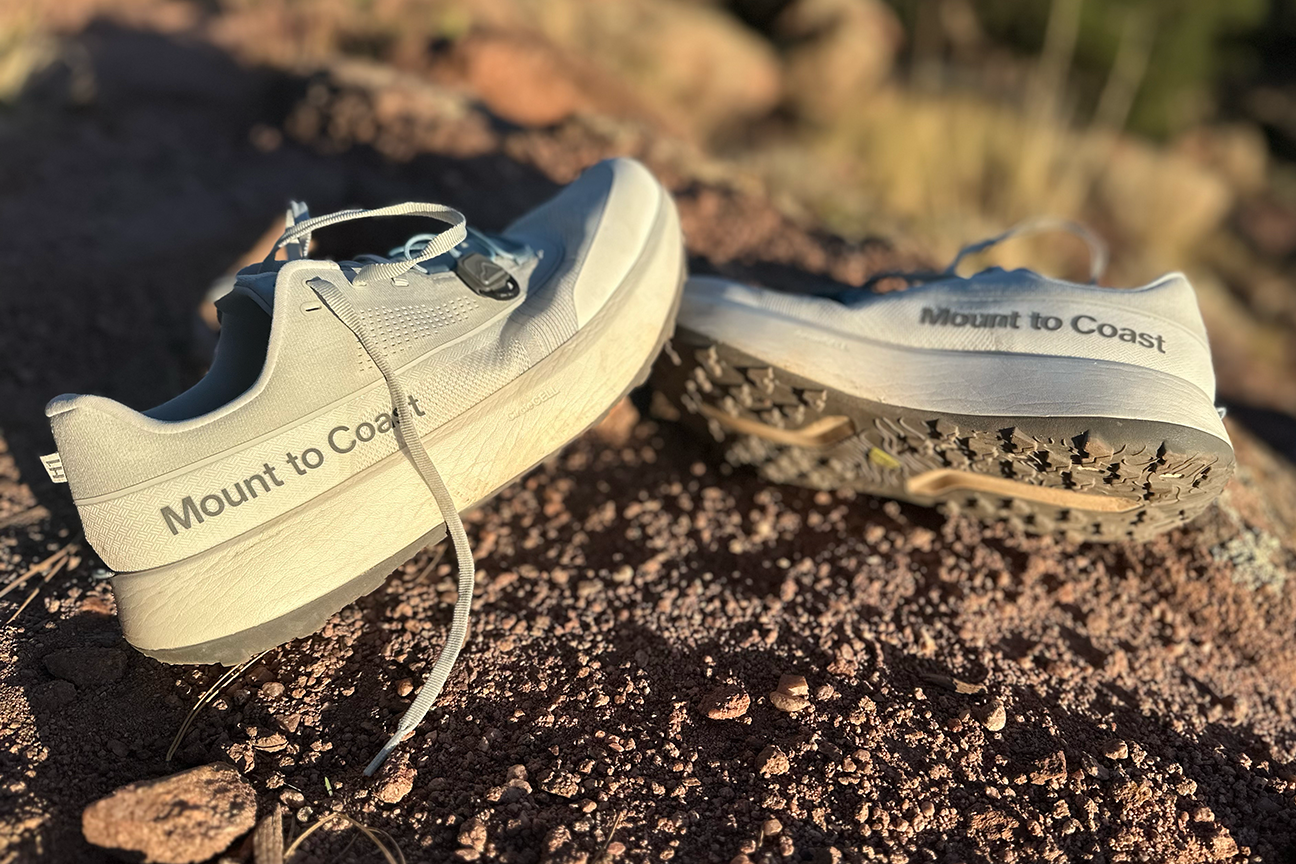
While it’s easy to debate whether or not “gravel running” is really a thing like gravel cycling, if you’re a runner who typically runs on a mix of mild trails, dirt paths, gravel roads and even pavement or concrete, this could be an ideal shoe for you. (You know, those mixed-surface routes that weave from neighborhood streets onto trail systems and back again. That’s where the H1 shines.)
How It’s Going
After logging more than 600 miles in an original pair of H1’s last summer, fall and winter—including long runs from 18 to 20 miles—I relegated that pair to casual use, but I have to admit I’m still wearing them a lot because they still feel fresh and responsive, and I love the look of the off-white aesthetics. I bought another pair in March and was grateful to have a pair of the Sedona version arrive on my doorstep recently.
I’ve taken the H1 on all kinds of trails without any major detractions: on Mount Sanitas and Green Mountain in Boulder, Colorado, along sections of the Western States Trail near Auburn, California, on the VK route and other trails on the Balcon Sud in Chamonix, France, and, even up and down 14,440-foot Mt. Elbert in Colorado. Most importantly, I’ve also run countless, less notable easy runs on a mix of dirt, gravel, rock and pavement. It’s more at home on mild trails and gravel than technical terrain or solid surfaces, but the point is that it’s very versatile.
RELATED: Find Your Next Trail Running or Ultra Race
Mount to Coast H1 Tech Specs
Price: $160 (Women’s / Men’s)
Weight: 7.8 oz. (women’s size 8), 8.5 oz. (men’s size 9)
Heel-to-Toe Drop: 6mm; 35mm (heel), 29mm (forefoot)
Key Features: The secret sauce of the H1 is the CircleCELL midsole foam, a material developed with German chemical company BASF that’s made entirely from renewable feedstock and residual biomass. It’s one of the first high-performance running shoe foam sourced from 100 percent bio-based materials while still delivering energy return comparable to PEBA. That’s a bold approach, considering PEBA remains the benchmark for premium midsoles.
Even more impressive, CircleCELL is said to offer nearly twice the lifespan. Of course, none of that matters if the ride falls flat—but it doesn’t. The foam feels soft and smooth on hard-packed surfaces, stable and confident on gravel and dirt, and lively enough for uptempo efforts without feeling overly aggressive. From easy aerobic miles to gravel road fartlek sessions, the midsole has consistently delivered.
The H1 shares some DNA with Mount to Coast’s T1 trail shoe (women’s / men’s) but is built around a distinct mission. Along with the CircleCELL foam, the upper features a two-part construction: a woven jacquard fabric through the upper for comfort and adaptability, paired with a high-performance woven lower reinforced with Kevlar aramid fibers for added durability and protection. It’s the kind of subtle design detail you may not notice immediately, but one that becomes increasingly appreciated as the miles accumulate.
The TunedFit dual-lacing system returns from the brand’s road lineup. Independent forefoot and midfoot adjustment zones allow runners to fine-tune fit across different parts of the foot. It may sound overly complicated on paper, but it becomes surprisingly useful once your feet swell late in a long run or when you want a more secure hold on steep descents without over-tightening the forefoot.
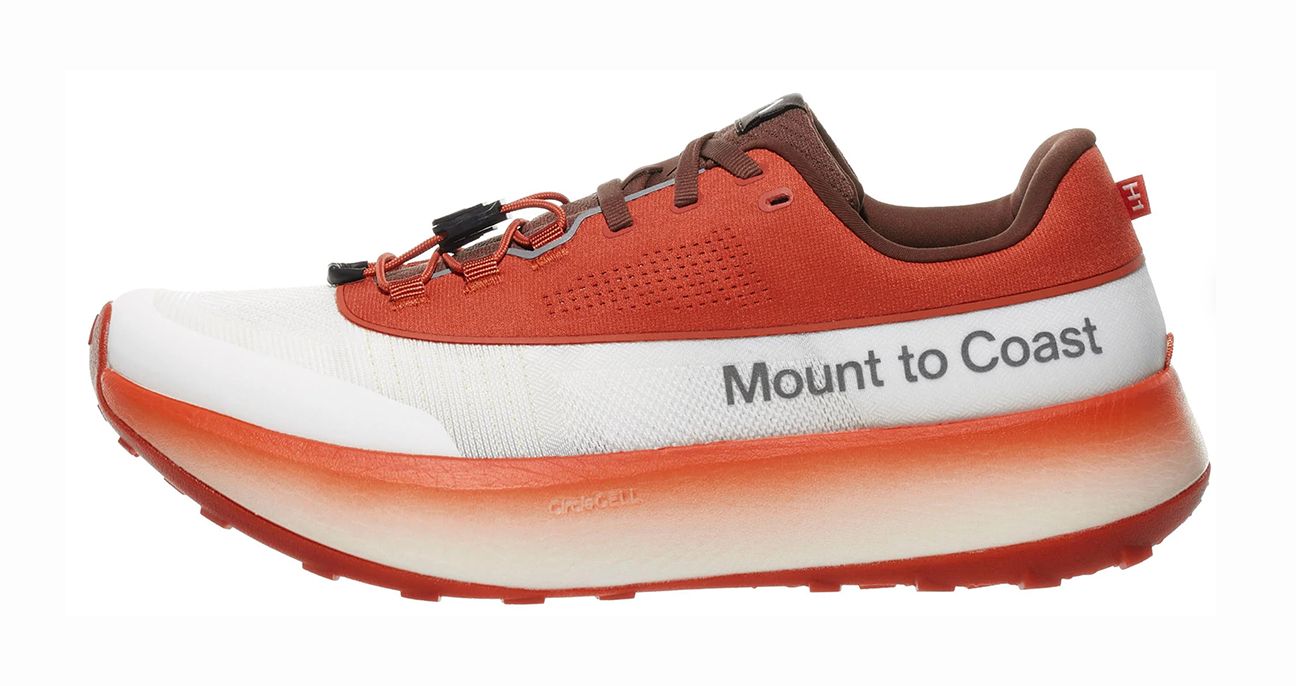
Fit/Feel/Ride: The H1 fits true to size with a medium-volume interior and a generously shaped toe box that allows natural toe splay on uneven terrain. Step-in feeling is plush and accommodating—similar to modern road-shoe comfort and roominess—and the padded gusseted tongue and heel collar provide a secure wrap once both lace zones are dialed in. Runners with narrow feet may find the fit slightly spacious and could benefit from an aftermarket insole for a more locked-down feel.
On the run, the ride is the star of the show. The midsole delivers a smooth, soft, lightly energetic feel that leans more toward road-shoe responsiveness than traditional trail-shoe firmness, which is exactly what this category demands. On pavement and hard-packed gravel, the H1 feels nimble, relatively light and efficient. On dirt roads and loose gravel, it remains vibrant and stable without becoming sluggish or slippery.
The proprietary rubber outsole uses shallow 2mm lugs that feel nearly invisible on asphalt yet provide enough traction on gravel and packed trails to inspire confidence. It’s a more balanced approach than many hybrid shoes manage, largely because the outsole never punishes you for spending time on roads.
Why It’s Great: The H1’s greatest strength is its ability to expand what a normal training week can look like. It won’t replace a dedicated road trainer for long-run days or a specialized trail shoe for technical terrain, but it thrives on the routes that connect those worlds. Whether you’re running from your front door to the trailhead, linking gravel roads between singletrack sections, or tackling a mixed-surface workout, the H1 feels purpose-built for the task.
The shoe’s versatility is reflected in its real-world use. Arizona ultrarunner Jamil Coury logged more than 730 miles in a single month wearing the H1 while traversing city streets and sidewalks as part of a burrito-fueled challenge. FKT specialist Jeff Garmire alternated between the H1 and T1 during his self-supported Appalachian Trail record attempt, covering 2,190 miles in 45 days, 12 hours, and 15 minutes. And of course, the Cocodona 250 success of Kilian Korst (2nd), Cody Poskin (3rd), DJ Fox (4th) and Megan Eckert (8th).
Why You Might Not Like It: The H1’s biggest limitation is the same one shared by every hybrid or gravel shoe: versatility comes at the expense of specialization. On truly technical terrain—rocky, rooty, craggy off-camber sections of trails—the shoe can feel too soft and pliable or malleable. The 2mm lugs don’t provide the bite of a dedicated trail shoe, and the midsole, which feels perfectly tuned on gravel and dirt roads, can feel somewhat high off the ground and vague when the terrain becomes highly unpredictable.
On road runs, the H1 performs well enough, but it never feels quite as quick or refined as a dedicated road trainer. During a recent 75-minute road-only effort, I repeatedly found myself running in the dirt shoulder and wishing I were in a faster road shoe. That’s not a flaw so much as a reflection of the H1’s intended role.
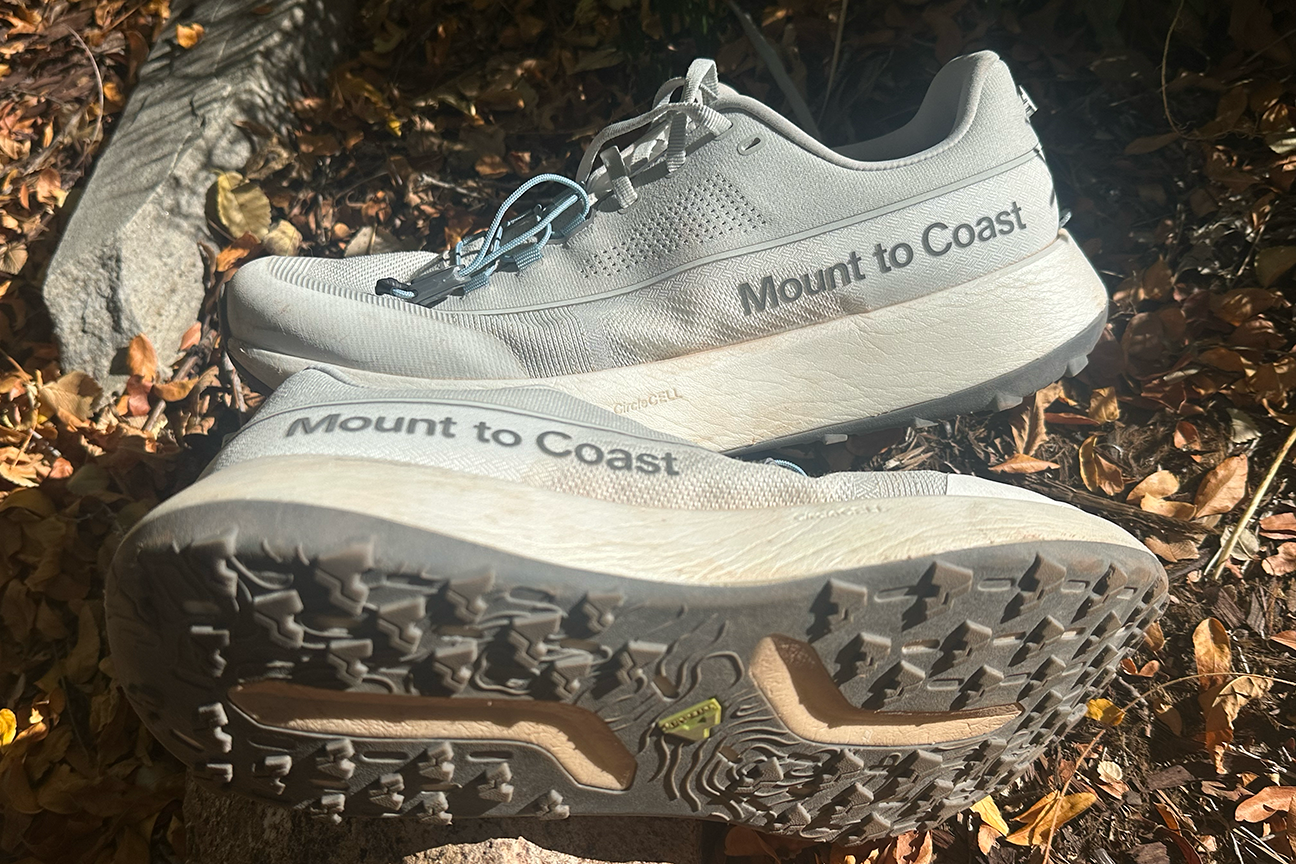
Pros: The CircleCELL midsole is genuinely impressive—soft, responsive, durable, and showing almost no signs of compression after more than 150 miles. The dual-adjustability of the races comes in handy when you just want a different level of snugness when you lace them up and especially on long runs and hot runs when you feet swell.
Con: The H1 isn’t the ideal choice for highly technical trails or runners seeking the sharp responsiveness of a dedicated road shoe.
Summary: At $160, the Mount to Coast H1 sits squarely within the hybrid-trail and gravel category. For that price, you’re getting a versatile platform, an innovative and sustainable midsole technology, and a fit system that solves a real-world problem many brands continue to overlook. More importantly, you’re getting another reminder that Mount to Coast isn’t simply following industry trends—it’s carving out its own lane.
Check it out at Running Warehouse → Mount To Coast H1 (Women’s / Men’s)
- Trail Tested: Brooks Cascadia 20
- Trail Tested: Black Diamond x Norda 000
- Trail Tested: The North Face Offtrail Ultra

- Breathable Trail Shoes for Hot Weather Running
- Trail Tested: Mount to Coast M1
- Trail Tested: Salomon S/Lab Genesis 2