
At Mandy Hansel’s first 50-miler, a course sweeper told her to, basically, hurry the (f-bomb) up as she fought to beat a time cutoff.
“That’s not nice,” says Hansel, a runner from Goodview, Minnesota.
Hansel, now 52, is pretty darn proud of the times she fought to a finish, including that Zumbro Endurance 50-miler in 2017. She’s been DFL—or Dead (F-bomb) Last, in ultrarunning lingo—many times. She didn’t mind being at the back of the pack: She just didn’t like the way others made her feel about it.
Impatient (and potty-mouthed) sweepers, depleted aid stations and stressful cutoffs haunted her: At Zumbro, she finished with 6 minutes before the final cutoff, or the duration of time some runners might wait at an aid station for a hot quesadilla.
So when Hansel became a race director, she used her own experiences to organize an ultra she would want to run. The mid-July Storm the Farm, a 43K race in Winona, Minnesota (a 27-mile race, which still counts as an ultra!), not only doesn’t have any cutoffs, Hansel gives an award for DFL, the exact same award for first place, except, of course, the engraving.
“They’re a little bit taken aback sometimes, like ‘Why are you giving me an award?’” Hansel says. “But they show a tenacity that our sport is all about.”
RELATED: Find Your Next Trail Running or Ultra Race
Honoring the Back of the Pack
Trail running celebrates frontrunning legends like Courtney Dauwalter, Ann Trason, Scott Jurek, Kilian Jornet and Jim Walmsley, and it should. But for most participants, especially for those toward the back of the pack, ultra-distance races require a gritty kind of gumption, even if they make some volunteers look at their watch as they stumble out of the last aid station just before the cutoff.
Running at the back of the pack is no easy task. Time cutoffs are always looming on the horizon, and, well, in most cases, back of the pack runners are out on a course twice as long as the fastest runners and reach the finish line 12 to 24 hours later. But no one is guaranteed a finish line, and the runners who have the courage and the commitment to keep moving, amid the fatigue, the pain, the myriad challenges, and the unknown make this sport special.
The perseverance of back of the pack runners and final finishers—and the persistence of those who try and don’t make it—is woven into the soul of the sport, which is why many races, just like Hansel, do something special to honor those runners. Broken Arrow Skyrace has given comp entries for the following year to its final finishers. Rim Runner Trail Races has a special DFL award. At the Canyon de Chelly, the father of race director Shaun Martin has performed a Navajo healing ceremony for the final finisher, representing a blessing for all of the runners.
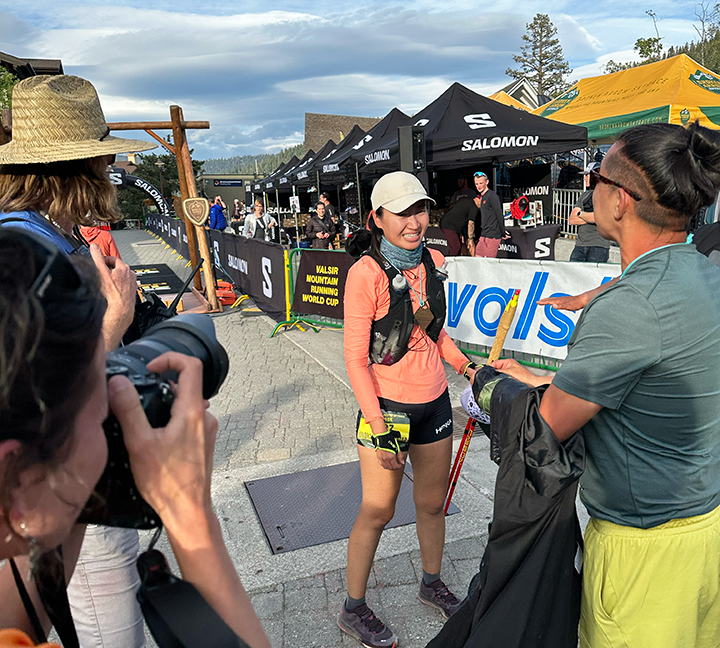
And, of course, golden hour happens organically every year as runners, pacers, support crews, families, and friends gather to honor those who make it just under 30-hour cut at the Western States 100 and many other 100-milers.
Hansel’s first year of Storm the Farm, a part of her Storm Trail Racing series in southeast Minnesota, took more than 15 hours to finish because of a runner who struggled to the end. Hansel even recruited someone from her staff to run the last loop with the runner to make sure she was with someone in the dark on the remote course. But Hansel was willing to make the sacrifice to give people like her a chance to finish.
“It was a long day,” Hansel said, “but it’s so cool to watch people finish things like that that they would never ever be able to do.”
That runner agreed, apparently. She came back the next year.
Accepting Limitations of Age or Injury
Sometimes there comes a point in our ultrarunning careers where we have to accept our limitations if we want to keep doing hard shit. Mike Smith, 68, once won a 100-mile race more than 10 years ago. It was a field of less than a dozen runners, but a win is a win. He also once ran a 19-hour 100-miler, though that, he said, was at Tunnel Hill, a course built for PRs.
Fast times, and first-places, are behind him now. He also doesn’t care: Smith, who lives in Santa Fe, New Mexico, has learned to appreciate the time he spends near the back of the pack. It’s worked: He’s completed more than 250 100-milers, and he appreciates all of them because he’s also DNFd many times.
“I don’t care where you are in the pack,” Smith said. “You get to spend some quality time with people, and this was always more about the people for me, along with the experience and the challenge. I look at any finish as a success.”
Any chance to run, for some, still fills them with gratitude. K Jacobson, 46, (pronounced “Kay”) was competitive in her age group until she “destroyed” her right ankle in a snowboarding crash in 2018 that “completely reshaped” her foot. Yet she’s completed more than 50 ultramarathons, many of them after the crash.
“Someone has to be last,” said Jacobson, who lives in Cambridge, Canada, and races mostly in southern Ontario.
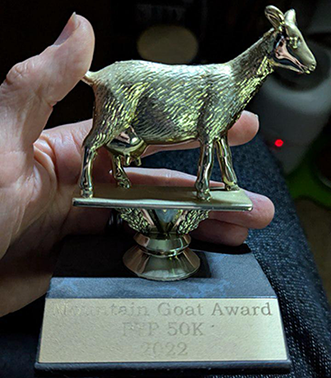
Jacobson, too, doesn’t love stressing about cutoffs, but she does love her small trophy she got for DFL in Ontario’s Pick Your Poison 50K, a four-lap 50K up a ski hill with three huge climbs per lap. The trophy is a small mountain goat.
Naturally Slow and Steady
Others are saddled with being steady and slow regardless of how they train. Tim Borden, 36, of Gallup, New Mexico, has learned a lot about hydration, fueling and training but hasn’t moved up in the ranks: He’s finished in the golden hour of all five of his 100-miler finishes.
“I wish that were not the case,” Borden said. “I’ve tried really hard for it to not be the case.”
Borden, though, acknowledges a few factors that may make him resigned to his fate. He’s a bigger guy, he says simply, meaning “I’m not built for speed.” He got into ultras because he was a strong hiker, especially uphill, and doesn’t have the running background that other ultramarathoners possess. He also prefers big mountain races, and all that climbing chips away at him, even if it is his specialty.
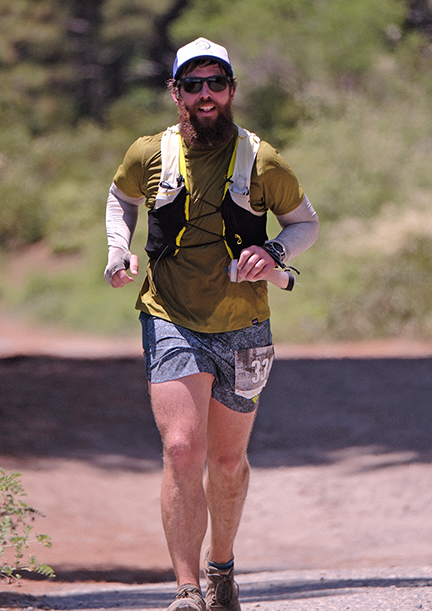
He believes he can be faster. He was on a 24-hour pace for much of last October’s Javelina Jundred before knee pain forced him to stop, a result, he said, of his body crying “Uncle!”, the effects of another 100-miler he’d completed two months earlier.
“I came out swinging,” Borden said of Javelina.
Borden doesn’t have a problem with being slow, but chasing cutoffs isn’t fun, he said.
“It’s stressful,” he said. “I sure would love to be in a spot in a race where I can finish comfortably.”
Fighting for Their Lives
The angst over finishing a race before time runs out can indeed be draining. Jacobson, for instance, spent 15 hours worrying about being cut off at the Stone Cairn 82K. At the start, she knew it would be tight because of the hot, sunny day and the technical trail—she admits to being “clumsy and timid” on the downhills—and as the day wore on, the climbing seemed unrelenting.
“I had to do one of the biggest, steepest, most technical climbs in the dark, nearly hands and knees at one point,” Jacobson said.
She had only minutes left when she came across two spectators near the end. She asked them which trail to take—Canada forbids flags being put in the ground on park land, so markings were scarce—and it was too dark to see the path. They told her to follow the trail past the bathroom to the end. She followed the path after a bit of searching, passed the bathroom and….didn’t see the finish. She saw the race director and asked him, nicely, “WHERE IS THE (F-BOMBING) FINISH?!” He pointed out where she missed the turn after the bathroom. She sprinted and made it in with less than two minutes to go.
Carleen Coulter has been there and knows the feeling. She’s a 59-year-old runner from Illinois who prefers hard races in cool places, so she knows they will always be difficult, even if she tries to pick races with generous cutoffs. She took advantage of an early start at Run Rabbit Run in 2024, a difficult 100-miler in Steamboat Springs, Colorado, with much of the race above 10,000 feet and 18,000 elevation gain.
She lives in Illinois so getting meaningful vert is hard to come by. But she got ready for the race’s 22,000 feet of vert after training for hours on “Mount Trashmore,” an old landfill she ran hundreds of times in Evanston, Illinois, about an hour from where she lives. But after some GI issues, she had to fight for the finish in the race.
“I was running hard down the last hill along with the 50-milers,” Coulter said. “I was the last 100-miler with all of them.”
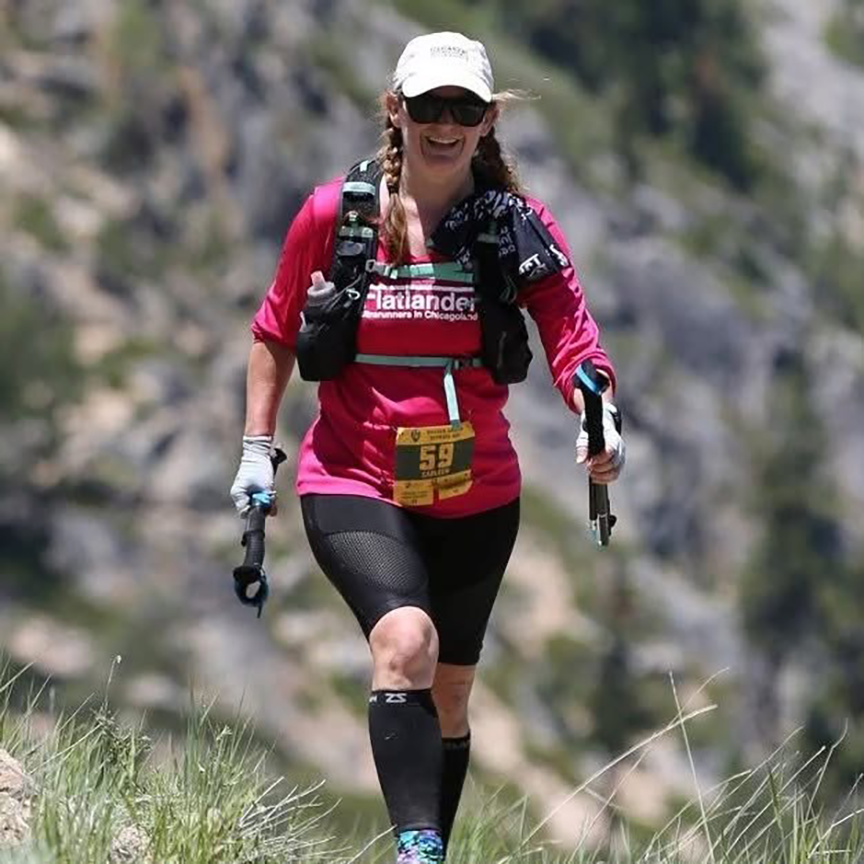
Coulter crossed the finish with less than 10 minutes to spare. She was thrilled with the finish, as she has DNFd many times in 100K to 200-mile races, a fair price, she said, to pay for enjoying the harder races. Has she considered an easier race?
“I’m not sure there is an easy 100,” she says with a laugh. “I found that a flat course can hurt just as much. Certainly at the time it’s stressful, but since then, I’ve thought, ‘Hey, I pulled that off.’”
RELATED: What to Expect For Your First Ultra
Sometimes It’s About Pure Grit
Those who finish just before cutoffs all seem to have one advantage over those who blaze their way through races: They have the guts to keep going.
Andy Steele, 48, of Walla Walla, Washington, considered dropping many times in his first ultramarathon, the Chuckanut 50K, last year. His longest race was a half marathon, but he trained hard for six months and was rewarded with a rainy day in 35 degrees. He took an early start because he knew it would be a muddy slog.
As the day went on, elite runners who flew by him in tank tops at the beginning of the race dropped because they were getting hypothermia. Steele was cold but kept moving and finished the race 20 spots from last in 13 hours.
“It was really hard,” Steele said. “I was really proud of it.”
Steele plans to do his first 50-miler this summer.
Jacobson finished DFL in a 100-miler with eight minutes left on a miserable day. She gave up on changing socks after sloshing through ankle-deep puddles most of the race and still has scars from the mud getting under her gaiters and sandpapering away her ankles.
“I needed heavy-duty antibiotics afterward to fight infection from a blister that burst with like eight hours to go that almost immediately filled with mud,” Jacobson said, “which then squished its way into another blister.”
Hansel finished her second Zumbro Endurance 50-miler in 2018 in a blizzard that eliminated many of the 150 who started the race.
“There were drifts that if you put your foot down in one,” Hansel said, “you were going up into your thigh.”
But she remembered the course enough from the year before to make her way to the finish. She finished last in that race, too, but she’s most proud of it. Many faster runners dropped hours ago.
Those who fight to the finish earn the respect of even those who finish first. Gunhild Swanson became the oldest woman, at 70, ever to finish Western States in 2015. Overall winner Rob Krar paced her the last two miles in sandals to push her to the end with 6 seconds to spare.
Borden wishes he could finish faster, but he, like many others, is proud of all of them.
“I’ve cried near the end of every one,” he said. “You absolutely think about whether or not you should drop, and you doubt yourself, and to push through all that and do it, it’s a major accomplishment.”
4 Key Takeaways from Back of the Pack Runners
1. Don’t give up — Keep plugging away even on your worst day, and you just might finish, even if it’s just minutes before the cutoff.
2. Grit, not speed, is the most important trait of finishing an ultramarathon.
3. DFL is an honor, not an albatross.
4. Don’t swear at slower ultrarunners even if you are sweeping the course.
RELATED: Find Your Next Trail Running or Ultra Race
About the Author
Dan England is a Colorado-based freelance writer, the co-author of “Reborn on the Run” with Catra Corbett and a sarcastic but helpful ultrarunning coach. He’s also completed more than 30 ultras himself and climbed more than 200 mountains.
-
The Importance of Identifying and Lowering Barriers for Women in Trail Running
-

-
-

-
10 Great Vermont Trail Races You Should Put on Your Must-Do List
-
The Wit and Wisdom of Mike Smith, One of the World’s Most Prolific 100-Mile Runners
RELATED: 10 to 100: A Program To Guide More Women into 100-Milers
RELATED: After Running 100 milers in every state, Rich Tenaglia is Inspired to Run for a Good Cause
RELATED: Grounded, Calm and Consistent, Lauren Jones Has Found Success on Hospital Floors and Mountain Trails
2 comments
William Ramsey
Finishing first or last, is still a finish. At 73, my pace on trail has become pathetically slow. As a younger runner in my 30s, 40s, and 50s, I could cruise, but today, not so much. With sub-24 silver belt buckles from 100 milers including WSER (4), Angeles Crest, San Diego, Rocky Raccoon, Old Dominion, Vermont, and Nanny Goat (21:38 at age 57), and a trail PR of 18:34 for 100 miles, I could cruise fairly well. Now, my mantra today is, “I can only do what my body allows me to do, nothing more!” As we get older, we need to embrace the reality that we may become very slow, but we still get to enjoy our time on the trail getting to know other runners and experiencing the beauty of trail running.
Ashley
The back of the pack is where the party’s at! I’ve been DFL in 4 ultras I’ve done so far and close to it in a few others, as well as a couple DNFs including one where I missed a time cutoff I knew would be tight but I still wanted to go out and give it a try and I’m glad I did. I’ve never been upset about finishing DFL or in the back because I know I train hard and my focus is on finishing and having fun! Luckily I’ve had mostly good experiences with sweepers being at the back of the pack, as well as at the finish line where I’ve felt just as supported as the podium finishers. All of us are out there giving it our best shot and deserve to be celebrated!