
The new Mount to Coast M1 serves up a solid blend of traction, shock-absorption, durability, protection and energy return on rugged mountain trails.
Like a lot of trail runners, I’ve spent most of my summer running in sweltering heat and choking wildfire smoke. It’s been rough, but I’m not complaining because any day running trails can make for a spectacular day.
But what happens when it rains in the middle of a July day? And not just rain, but sideways freezing rain with high winds, slippery rocks, and low visibility.
Usually that’s all fine, too, and a refreshing break from the heat. A few weeks ago, I found myself in the rugged White Mountains of New Hampshire with a group of hearty trail runners and shoe geeks on a mission to test Mount to Coast’s forthcoming M1 trail running shoe (women’s / men’s), and we ran into a wild, impenetrable summer squall. Or perhaps more accurately, it ran into us.
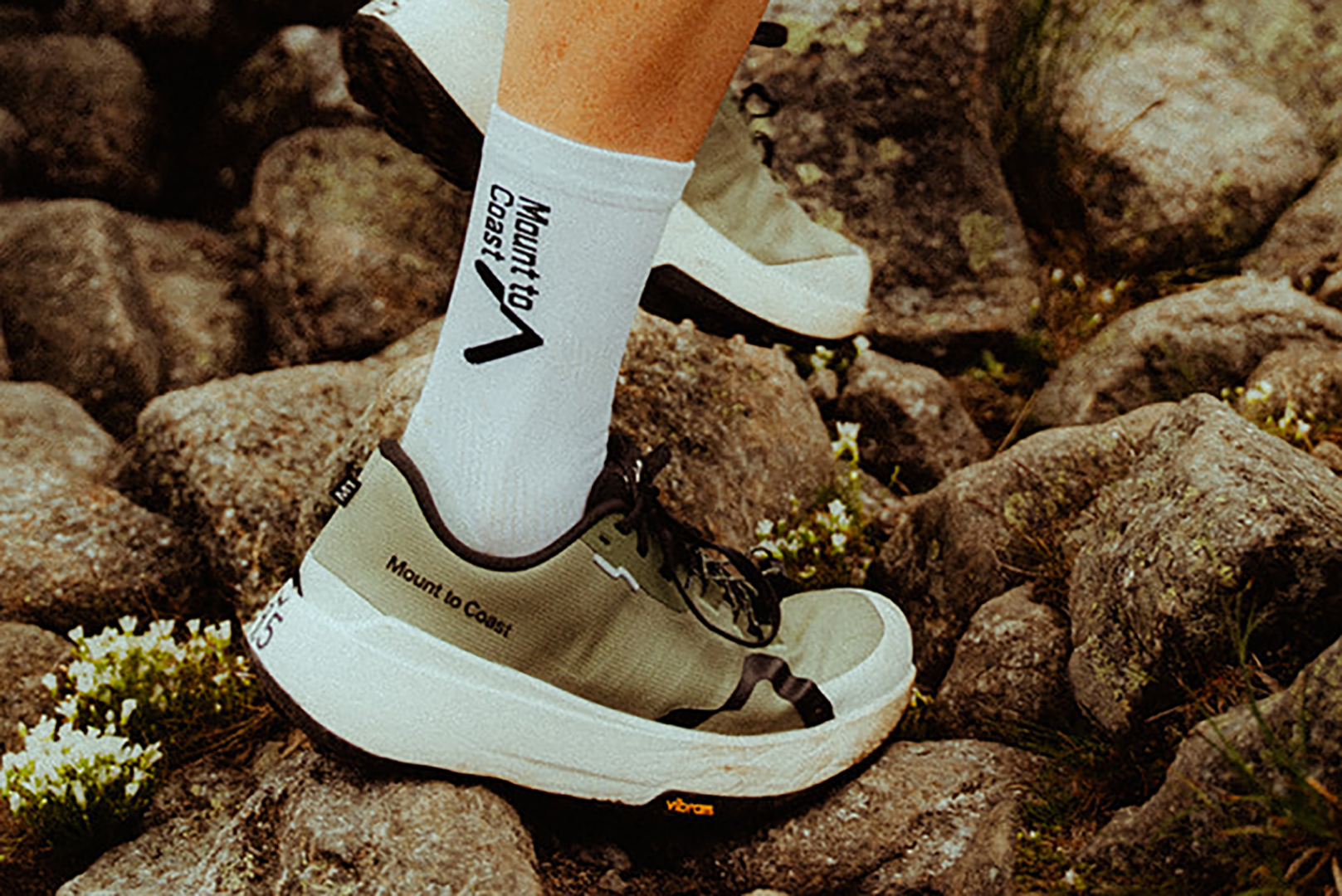
Our goal was to tackle the Presidential Traverse, the classic 18-mile New England test piece that crosses over several high peaks named after U.S. presidents—including Mount Madison, Mount Adams, Mount Jefferson, Mount Washington, Mount Monroe, Mount Eisenhower, and Mount Pierce.
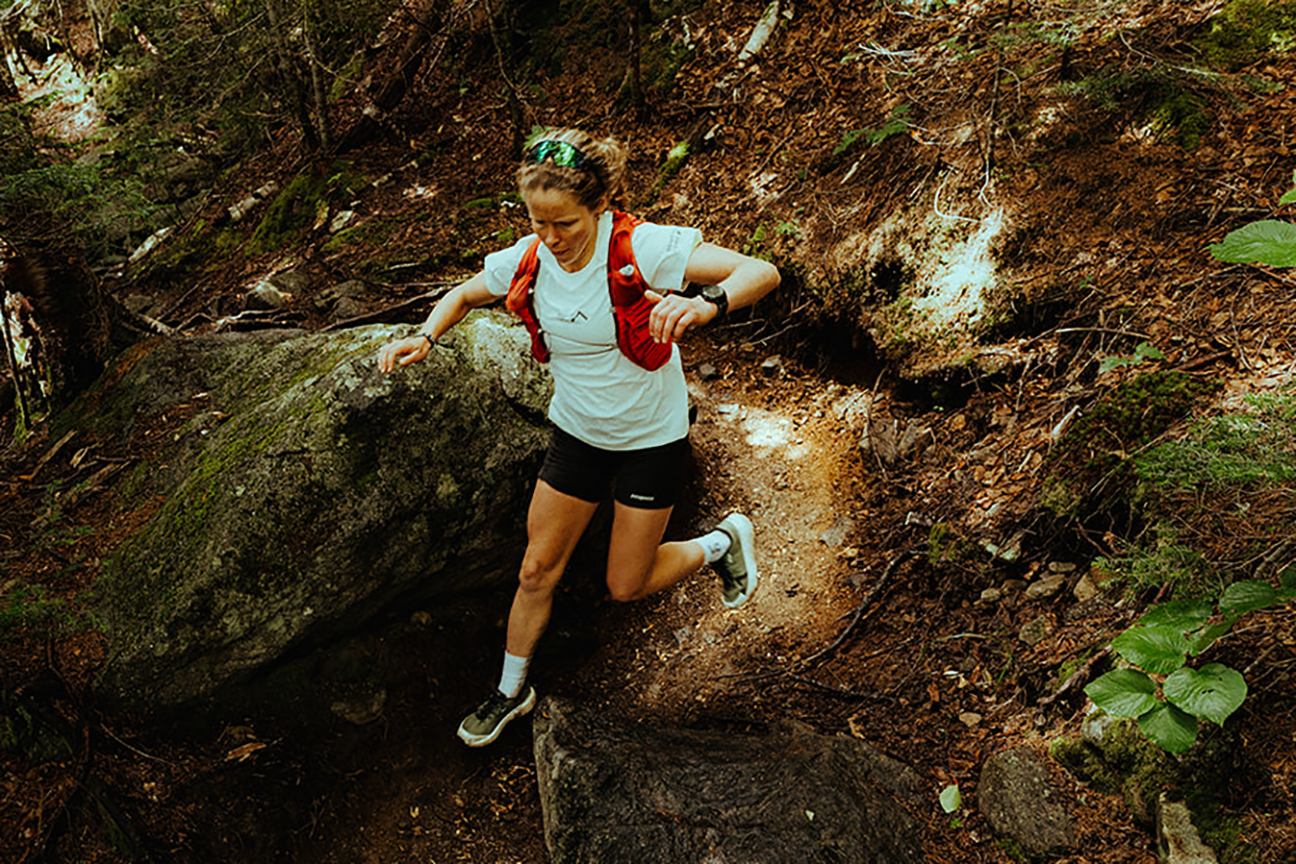
Every New England trail runner worth their salt has run a portion or all of the Presidential Traverse, including our rock star guide Britta Clark, a Vermont trail runner who formerly held the women’s unsupported fastest known time (FKT) on a variation of the route.
With an elevation of 6,288 feet, Mount Washington is the highest peaks in the Northeast. And yes, I spend a lot of time and do a lot of trail running above 10,000 feet in Leadville, Colorado, but let me be the first to admit that the legendary East Coast/Beast Coast terrain is very real. Huge rocks, big steps, barely even a trail in a lot of places. It was like taking a Stairmaster above treeline.
But let me cut to the chase here. We started early in the morning with a huge, 4,500-foot climb that led us to the 5,367-foot summit of Mount Madison, but that’s when the wind picked up and before long the freezing moisture started hitting us in the eyeballs. We were on our way up Mount Adams when it started to get really sketchy, and there was no choice but to retreat to Madison Spring Hut and eventually back down to where we started.
But that 12-mile, 5,600-foot up-and-down excursion turned out to be the perfect outing to start wear-testing the M1, which was about the only bit of my gear that held its own that day. That’s another story for another day, but for now I’ll get into what makes the M1 a superior shoe for running on technical terrain in the mountains, based on my continued extensive testing in Colorado.
Mount to Coast M1 Specs
Price: $195 (women / men)
Weight: 8.4 oz. (women’s size 8.0), 9.7 oz. (men’s size 9.0)
Drop: 4mm; 38mm (heel), 34mm (forefoot)
Lug Depth: 4mm
What’s New: The M1 is a new mountain running shoe from Mount to Coast, a Hong Kong-based brand that burst onto the scene less than two years ago and has made waves with its H1 gravel shoe and T1 trail racing shoe. Those shoes feature the brand’s CircleCell foam (made from organic feedstock waste) and LightCell foam (a PEBA-based, nitrogen-infused foam), but the M1 features an entirely new JetCell midsole material, which Mount to Coast says is derived from the protective film used in the automotive industry to shield high-end paint from rock strikes. A durable upper, Vibram Megagrip outsole with Litebase and Traction Lug technology, and Mount to Coast’s TunedFit dual-adjustment lacing system round out the components and materials.
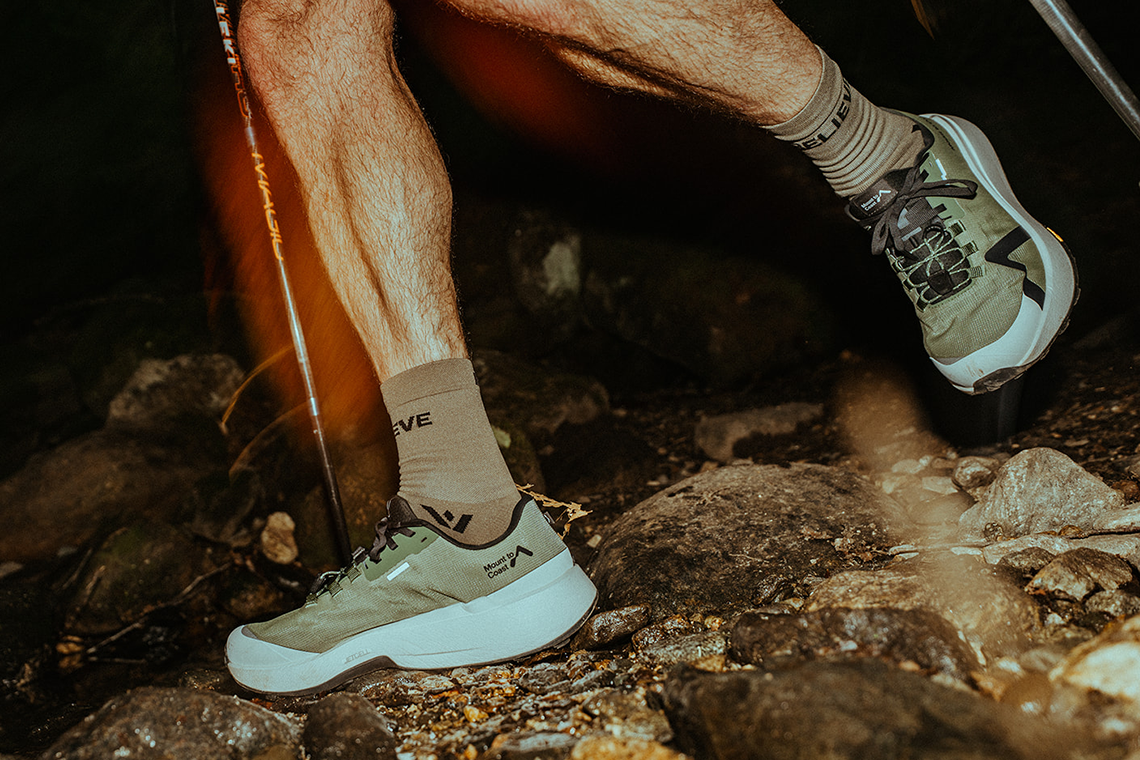
Fit/Feel/Ride: The M1 fits true to size, but it has a medium interior volume that can be cinched up to any foot size and shape thanks to the combination of traditional laces and elastic shock-cord laces. The step-in feel is cozy and secure, thanks to the wrap-like fit that the padded, gusseted tongue and modestly padded, reinforced heel collar provide at the midfoot/saddle. The upper feels sturdy but pliable, allowing it to conform to your feet and remain appropriately snug with the dynamic movements that come with each stride.
The ride of the M1 serves up both a soft-ish and springy sensation and an inherent sense of stability that comes from the significant shock absorption, its wide profile and the mechanical damping it provides. When your foot crashes to the ground, your foot sinks into the cushiness of the midsole, but the structure of the M1 chassis doesn’t give way, instead providing a reliable foothold—especially on off-camber terrain. On smooth dirt terrain, where strides are more consistent, the M1 feels softer and livlier, though not as lively as many leaner, lower-to-the-ground shoes. There is no plate embedded in the midsole, but I never felt any sharp, angular rocks poking at the bottom of my feet.
Why It’s Great: Not all trail shoes with high-stack midsoles are ideal for running on technical terrain, but that’s typically because midsole foams that are excessively soft tend to be unstable and mute the feel for the ground. But the JetCell foam shines because it stradles the line between being semi-soft and semi-structured. Mount to Coast says the M1 midsole features twice the material and structural strength of standard PEBA foams, and you can feel that out on the trails. The shoe’s midsole/outsole makeup softens the impact of each stride while also providing a semi-firm foundation that provides consistency, precision and control on variable terrain, where every stride usually typically brings some degree of unpredictability.
Why You’ll Love It: It tackles all sorts of technical terrain with ease, offering exceptional traction, protection, durability, and energy return. It’s not necessarily a nimble shoe with which you can dance through technical terrain, but instead it’s more adept at bulldozing over rocks, roots, gravel, and scree. And while it’s sufficient going uphill, it’s a crazy good shoe for bombing downhill over rocky surfaces. Its wide footprint, reliable outsole, and shock-absorbing midsole foam give it an inherently stable platform that induces confidence in every stride, while its reinforced engineered mesh upper and reinforced toe box keep sidewall abrasions and “toe bang” at bay.
Why You Might Not Like It: It’s not nearly as light and nimble as some other trail shoes, including the T1. If you’re expecting a lightweight, low-to-the-ground vibe that allows you to pick and poke your way through a craggy ridgeline, you might be mildly disappointed. The M1 will still get you through those highly technical sections of terrain, but more from its ability to power through them.
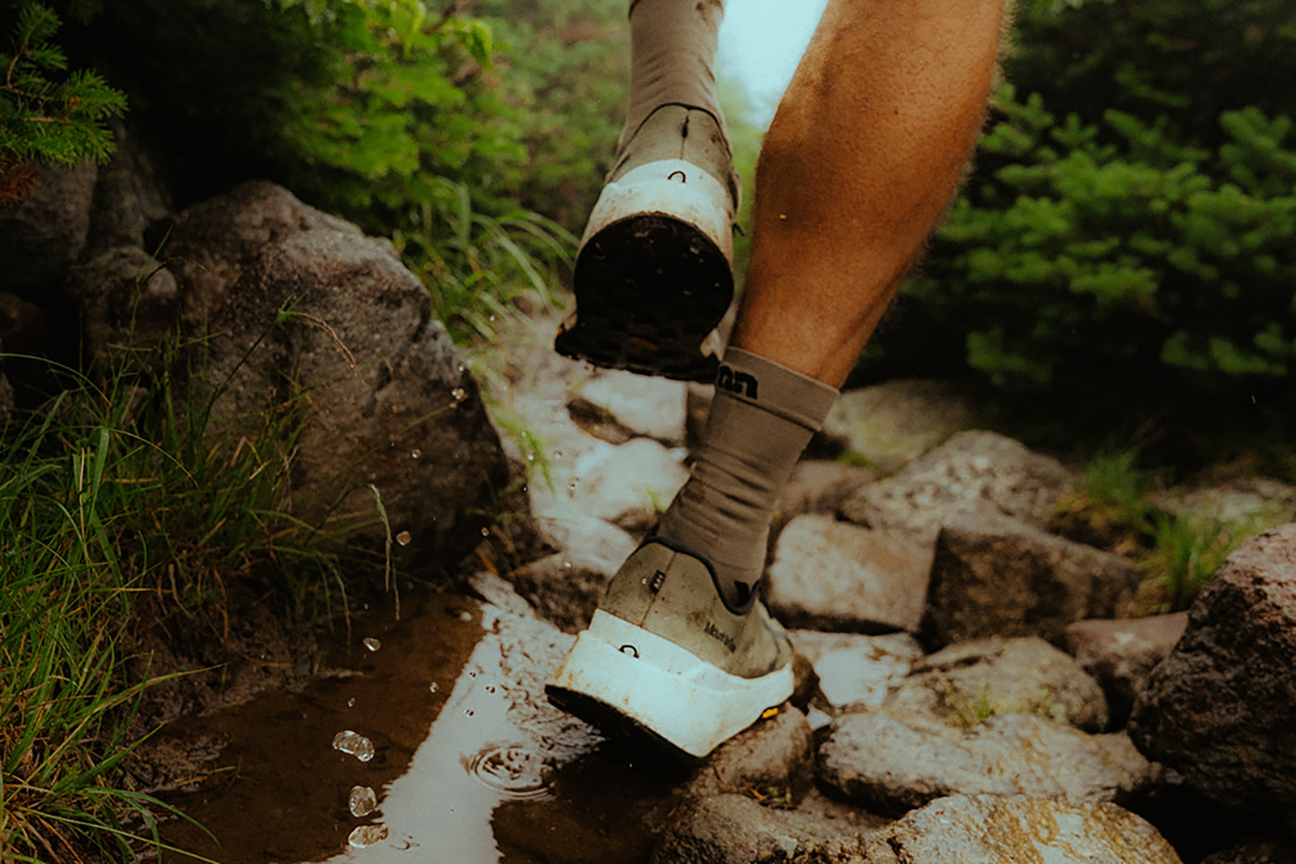
Pros: The 4mm directional lugs on the Vibram outsole provide exceptional hold on dry, wet, and loose surfaces without getting in the way.
Cons: It’s hard to find flaws with this shoe, but it feels a bit more stodgy on smooth dirt trails and gravel roads, if only because it’s a shoe that’s eager to chew up gnarly terrain.
More Running Shoe Content
RELATED: 12 Great Trail Running Shoes To Consider Adding To Your Quiver This Summer
RELATED: Dirty Dozen: 12 of the Best Trail Shoes for Running in the Mud
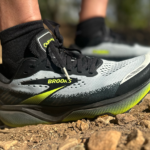
- Trail Tested: Brooks Cascadia 20
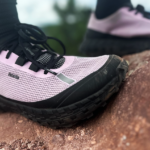
- Trail Tested: Black Diamond x Norda 000
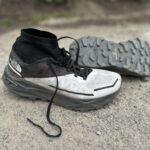
- Trail Tested: The North Face Offtrail Ultra
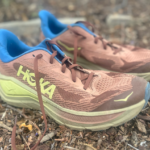
- Breathable Trail Shoes for Hot Weather Running
- Trail Tested: Mount to Coast M1
- Trail Tested: Salomon S/Lab Genesis 2


3 comments
Jon
How does the M1 compare to the NF Altamesa 500 V2?
Brian Metzler
Altamesa is softer and more flexible, M1 is more firm (but still cushioned) and less pliable.
Dirk
While there is a lot to like about this shoe, I tested it for about 250 miles heading into Hardrock this year and found I couldn’t dial in the lockdown. Either too tight and my midfoot went painfully numb or too loose and my toes impacted on the front when going down steep terrain. I have heard similar complaints from others. I had another HR friend say they shoe was simply too bouncy for her and she didn’t feel in control and was worried about sprains. I didn’t have that experience. I like the shoe for all but the steepest terrain.
They are super light, super durable, after 250 miles they look hardly used, but as to the super technical cruiser shoe, for me that holds as long as it wasn’t too steep.