

Here is a practical guide to hydration for several common trail racing scenarios along with input to adapt your hydration strategy to the conditions.
Hydration is one of the most important components of trail running, but it’s also one of the most misunderstood. Fluid and sodium needs vary greatly from one runner to the next, and they can shift dramatically depending on the conditions of a race, depending on the temperature, humidity, altitude, intensity, and even time of day. Understanding your own baseline hydration needs during both training and racing is an essential component of succeeding on race day, and being able to adapt your strategy given the conditions of your race is key.
A cold, rainy marathon may require less fluid and sodium than you’re used to, while a hot desert ultra will require more. The starting point for every runner is to know their baseline sweat and sodium losses, which becomes more important as the races get longer. To estimate your sweat losses, you can use weigh-ins before and after your runs or use a wearable device. The H Drop and the Nix Biosensor are two popular options. But to get the most accurate understanding of your hydration needs, getting a sweat test is highly advised.
Once you understand your baseline needs, the next step is adjusting it given your race conditions. Let’s take a look at some possible trail racing scenarios along with input to adapt your hydration strategy to the conditions.
Thirsty? Claim your free LMNT gift here with any purchase, and get your salt on!
My race is expected to be HOT! How does that change my hydration and salt intake?
Racing in the heat means your sweat rate is going to increase—you will be losing more fluid and sodium than you are used to. This increases your hydration needs, meaning you need to drink more fluid and take in more sodium. The goal with hydration is generally to keep body weight losses less than 2 percent. When you know your sweat rate, replacing the majority of fluid and sodium is sufficient for most athletes.
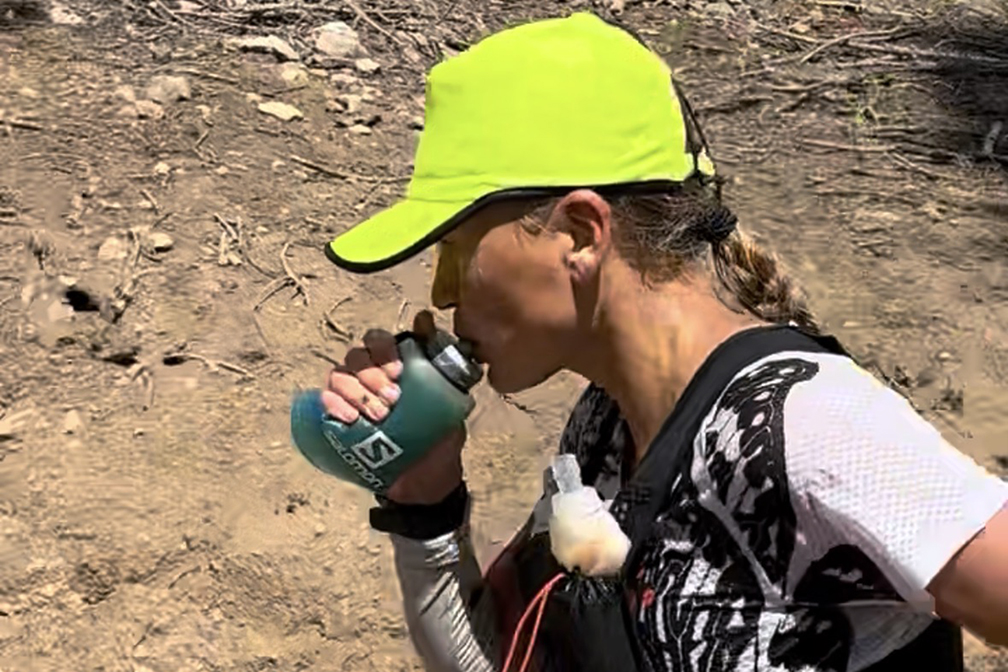
A good starting point is to replace roughly 80 percent of fluid losses and 50-60 percent of sodium losses. Only drinking to thirst in a hot race often leads to dehydration, so having hydration goals becomes more important. A lot of athletes I work with end up drinking 25 to 32 ounces every hour, and sometimes even more.
A common mistake I see is athletes increasing their sodium intake when it gets hot, but not increasing their fluid intake, and vice versa. This can quickly lead to complications that are not always possible to come back from. Once you know your approximate fluid and sodium losses, the ratio between them generally stays relatively consistent, even as race conditions change.
A good rule of thumb is that when you drink more, you need more sodium; as you drink less, you need less sodium. The goal is to keep fluid and sodium intake balanced rather than dramatically increasing just one. Avoid chugging a bunch of plain water all at once, but aim to consistently sip fluids every 10 to 15 minutes. Consistency is key—don’t wait until you’re thirsty to start drinking in a hot race.
The best way to know your hydration needs for a hot race is to practice, practice, practice. It’s extremely helpful to mimic your race environment in training as much as possible. If you’re using weigh-in testing or a wearable device, doing this in hot conditions similar to your race will help you better estimate your hydration needs. Keep in mind, digesting carbs becomes harder in the heat, so practicing your fueling plan in training is also important, and you may need to bump down your carb goals for a hot race.
RELATED: Why and How You Should Hydrate Before, During, and After a Run
My race is going to be rainy and cold. How do I make sure I don’t overhydrate?
A cold, rainy race poses a different set of challenges than a hot race, but that doesn’t mean hydration is any less important. In cooler conditions, you will likely be sweating less which means your fluid and sodium needs will decrease; you’ll probably feel less thirsty too. However, you’re still sweating and losing fluid through breathing. Although not as common as overhydrating in cooler conditions, dehydration is still possible.

For many runners, the bigger risk is often overhydrating. Because thirst is lower, it can be easy to keep drinking out of habit or try to force fluids to hit an hourly target that you had for a different race. Don’t get me wrong, targets are still important here to make sure you are staying hydrated and getting in enough sodium, but drinking too much fluid can lead to undesirable symptoms and can potentially become dangerous.
Drinking to thirst can be a much more reliable guide in a cooler race environment. Instead of forcing fluids, the goal is to drink consistently and drink to thirst. Because your fluid and sodium needs are lower in this race, it’s important to continually check in with how you are feeling. Monitor for excess peeing, sloshy stomach, or bloating, which can all be signs you are overhydrating.
But just like in hot conditions, knowing your baseline hydration needs is still a great starting point. When we have a general idea of our sweat rate, the same principles apply and the goal is to keep fluid and sodium intake relatively balanced. Remember, when you drink more, you need more sodium; as you drink less, you need less sodium. So drink to thirst, and make sure you are still drinking consistently, but also make sure you are taking in enough sodium for the amount of fluid you are drinking.
RELATED: Your Hydration Training Plan
My race goes from very hot during the day to cold at night (like the Javelina Jundred or Western States). How do I know how much to drink throughout the event?
When your race has significant temperature changes throughout, your hydration strategy should change along with that. Using the general principles from before, your hydration and sodium needs will increase during the hotter portions of the race, and they will decrease during the cooler night.
With races like Javelina, one of the most common mistakes is using the same hydration targets throughout the entire race. Instead of relying on exact numbers, it’s often more helpful to use flexible ranges and regularly assess how you feel throughout the race. During the heat of the day, it’s more important to stay slightly ahead of your thirst and try to hit your fluid and sodium goals every hour to keep your body weight losses at a minimum.
During the night, your hydration needs will decrease—but remember, the sodium concentration of your fluid intake will stay relatively the same. Having some warm, salty foods throughout the night can help add in a little extra sodium to cover your bases which can be helpful. Dehydration becomes the main concern during the heat, and overhydrating becomes the concern as it cools down, but keeping fluid and sodium intake in relative balance is key.
Going into any race prepared and with a fueling and hydration plan that you have practiced in training is always important, but is more important with a race like this where conditions change. A helpful strategy is to break the race into sections based on the conditions. During the hotter portions, increase baseline fluid and sodium intake and aim to consistently drink every 10-15 minutes. During the cooler portions, decrease fluid and sodium intake together and rely more on thirst as an indicator.
Starting your race well hydrated is always important, but even more so in a hot race like Javelina. A lot of athletes I work with use a preloading hydration strategy the night before and morning of the race—increase fluid and sodium intake the evening before and the morning of your race. This ensures you start hydrated and can also delay dehydration in a hot race. Practice this strategy in your long runs so you know what works best for your body on race day.
What are the signs that I have consumed too much/too little salt and how do I fix that?
Hopefully by race day, you have a solid fueling and hydration plan that you have practiced in training to minimize the risk of things going wrong. But let’s be honest, these are trail races and ultras, so things can still go wildly wrong. Being able to recognize the signs and adapt to the situation can help turn things around and even keep you safe.
Both too little or too much sodium can be problematic in longer races. Let’s start with too little sodium. The situation here is that you are either not consuming enough sodium, or you’re drinking too much fluid relative to your sodium intake. This typically happens from drinking a lot of plain water or not taking in enough sodium relative to the amount of fluid you are drinking, which can actually become quite dangerous if ignored.
Some early signs to look for include bloating, puffy hands, nausea, headache, or sloshy stomach. If you start to notice any of these, temporarily reduce fluid intake and eat some salty foods or take in electrolytes. Pickle juice is a good option here too, but drinking more plain water will make things worse. Once things start to improve, slowly resume drinking fluids but make sure to include electrolytes as well.
Although not quite as common as too little sodium, taking in too much sodium can also cause issues. This typically happens from consuming excessive amounts of sodium or not drinking enough fluid for the amount of sodium you are taking. Signs to look for here include extreme thirst, dry mouth, increased heart rate, dizziness, or nausea. If you suspect this is happening, increase intake of plain water over the next hour and decrease sodium intake.
Keep in mind that dehydration, low sodium, and overheating can share many of the same symptoms, which can make troubleshooting a challenge. We can do our best to adapt to the situation, but practicing your fueling and hydration plan in training and going into your race as prepared as possible is still your best bet.
Because hydration is so individual, there isn’t a single strategy that works for every runner or every race. The key is understanding your baseline needs and learning how to adjust them as the conditions of the race change—and practicing this as much as possible in your training. With most things in trail and ultra running, we get better with more experience and build up our tool box to handle the crazy things this sport throws at us.
RELATED: Life is an Ultra: Amanda Basham has Learned How to Juggle a Busy Life
RELATED: Smart Tips to Recover From a Mid-Race Bonk
RELATED: 6 Smart Tips to Successfully Navigate Aid Stations
3 comments
Charles
Thank you for these tips. I just completed the Cayuga Trails 50k yesterday and thought I had a good game plan, but ran into several of these issues, so now I will know better in the future. The race started out very cool, low to mid 40s, so I probably could have gone a little longer before taking in electrolytes and gels. My game plan called for 100-200 cal every 45 minutes to an hour, and using tailwind in one chest bladder and water in the other an top off in each aid station. As it started warming up with the presense of the sun, that is when I noticed my sweat increasing and this is where this knowledge would have benefited me. I had the sloshy stomach and puffy hands. Then by the end I was thirsty all the time and could have salted the roads with what was on my face. Knowing this, I can change my tactics a bit in training, so thank you. Just to note, last year was my 1st Ultra, so learning this as a new runner is great.
Patrick Bivona
Great article, very formative!
Patrick Bivona
Great helpful article! Easy to follow!