
Mike Smith’s first marathon, in 1995, wasn’t exactly a red carpet to becoming one of the world’s most prolific long-distance runners.
A co-worker wanted to lose weight and signed up to run the Walt Disney World Marathon to help him trim down. Smith, who was living in Orlando, Florida, at the time, well into his lifelong career managing retail stores such as Montgomery Ward, told his co-worker he’d run the marathon, too.
It was a bold statement: Smith hadn’t run anything longer than a 10K at the time. He even shied away from half marathons because he couldn’t imagine ever running that far. Smith finished that Disney race, but it wasn’t pretty: His longest training run was only about 13 miles.
“It was a lot more painful than it should have been,” Smith said. “I did everything wrong you could. But it was such a fun experience.”
That last statement is generally relatable to anyone who got hooked after their first marathon: It hurt, it was miserable, and yet he couldn’t wait to do it again the next year next year. He did run it again, and he enjoyed it a lot more.
He’s since run more than 230 marathons, including one in every state and on every continent. Since he shifted his focus to ultramarathons in the early 2000s, he only runs one marathon a year—the Flying Pig Marathon in Cincinnati, mainly because he’s done all 28 of them since its inception in 1999.
“Never start a streak,” Smith joked.
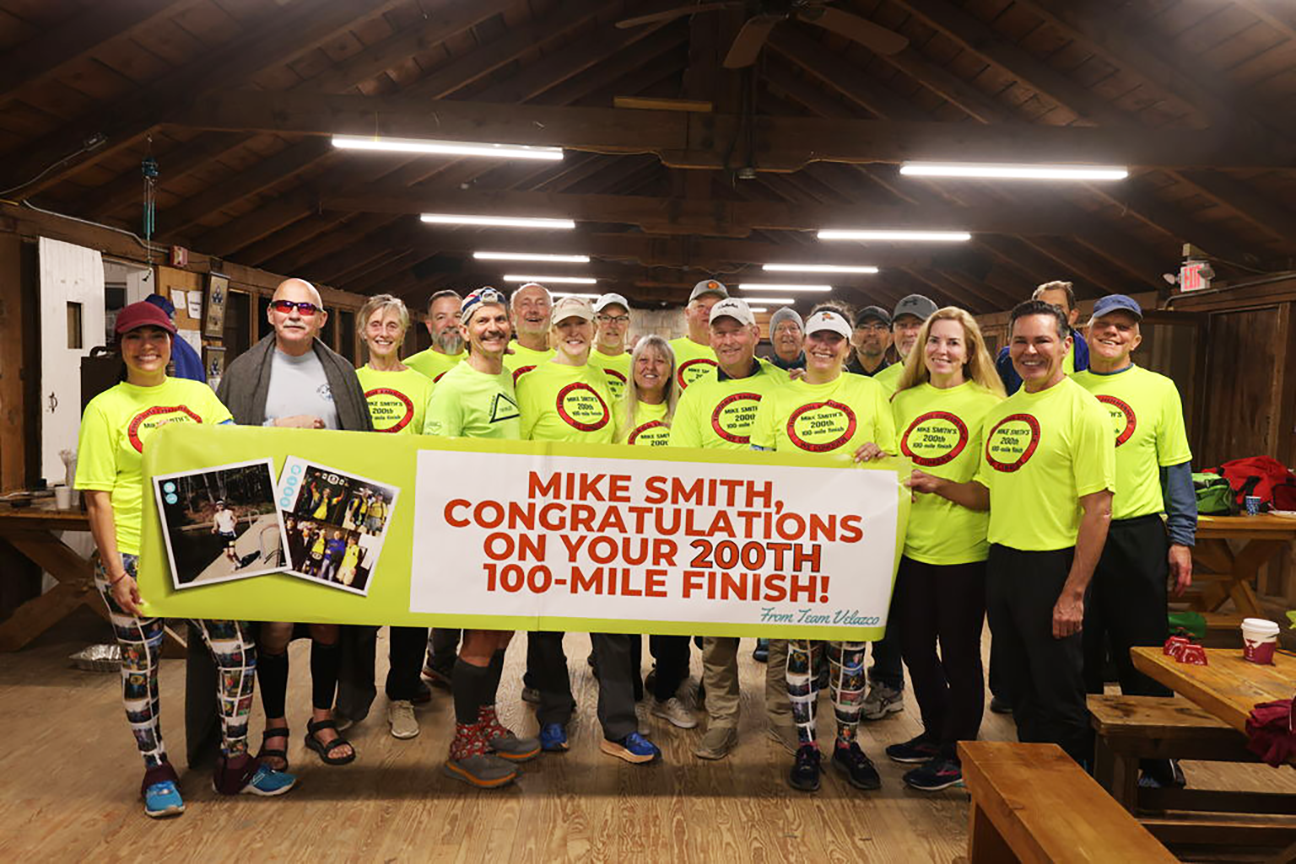
The 68-year-old runner from Santa Fe, New Mexico, is now one of the most prolific 100-mile runners in the world: He recently finished his 252nd 100-miler—the Cruel Jewel 100 in Blue Ridge, Georgia. (That’s the second highest total in ultrarunning history, trailing only Ed “The Jester” Ettinghausen, a 63-year-old runner from Murrietta, California, who has more than 300 to his credit.)
Smith said the goal of the 50 States Marathon Club and traveling a lot for his job motivated him to keep running (his company paid for the travel expenses, after all, so he’d look for a marathon to do when he was in a new state before he flew home). He finished that goal in 2002, but what’s kept him going, and continues to keep him moving, are the people. He made a lot of friends in the 50 States Club, and as he continued, he’d make friends running alongside them in ultramarathons.
“It was nice to do a race and do well, but I loved the community,” Smith said. “More times than not, I’m running with people in a race. I would slow to their pace and run with them, just to be with them. I’m as driven as anyone, but at the same time, I want to enjoy the experience.”
RELATED: Looking for your next race? Visit UltraSignup’s Event Finder.
Takeaways From Running 250 100-Milers
Smith’s experiences offer many tips on being an ultrarunner, a human being and someone who simply enjoys life. Here are a few.
• Don’t be afraid to try new experiences: Smith’s only experiences with running growing up were when his dad dragged him out to a track to run a couple miles together. Smith swam and wrestled in high school. He started running because of a corporate challenge and was enjoying 5Ks and 10Ks when his co-worker inspired him to try to run the Walt Disney World Marathon.
When his friends suggested a 50-miler, Smith agreed to try that, too. He never looked back.
• Don’t be afraid to try new experiences, even if they seem weird: When Smith entered his first 100-miler in 2000—the Umstead 100-mile Endurance Run in Raleigh, North Carolina—there were, maybe, 20 100-milers in the U.S.. “You could show up on race weekend and get in a race,” said Smith, who finished Umstead in under 24 hours that first year and has since gone back and run it 23 more times.
Back then, you mailed in a paper entry application with a check. Aid stations were chaotic and race directors hadn’t really figured out drop bags. A lot of runners were running technical terrain in road shoes and carrying water disposable bottles they bought at a grocery store.
Back then, before the mainstream acceptance of ultras, Smith says the public viewed them as strange races run by strange people. Smith didn’t mind at all.
• Involve your spouse or partner, and support them, too: Sandra Smith may be more well-known for her work as a crew chief than her husband as a runner. She wrote the only real book on the subject when they were both stranded in their homes during the Covid-19 pandemic. They met in 1979 working forMontgomery Ward, long before Mike began running, but Sandra adjusted well when he took up the “hobby.” She enjoyed traveling all over the U.S., and later the world, to go to his races, and once he began running ultras, she saw an opportunity to help him through those lean early years. Her first time crewing was in Leadville, Colorado.
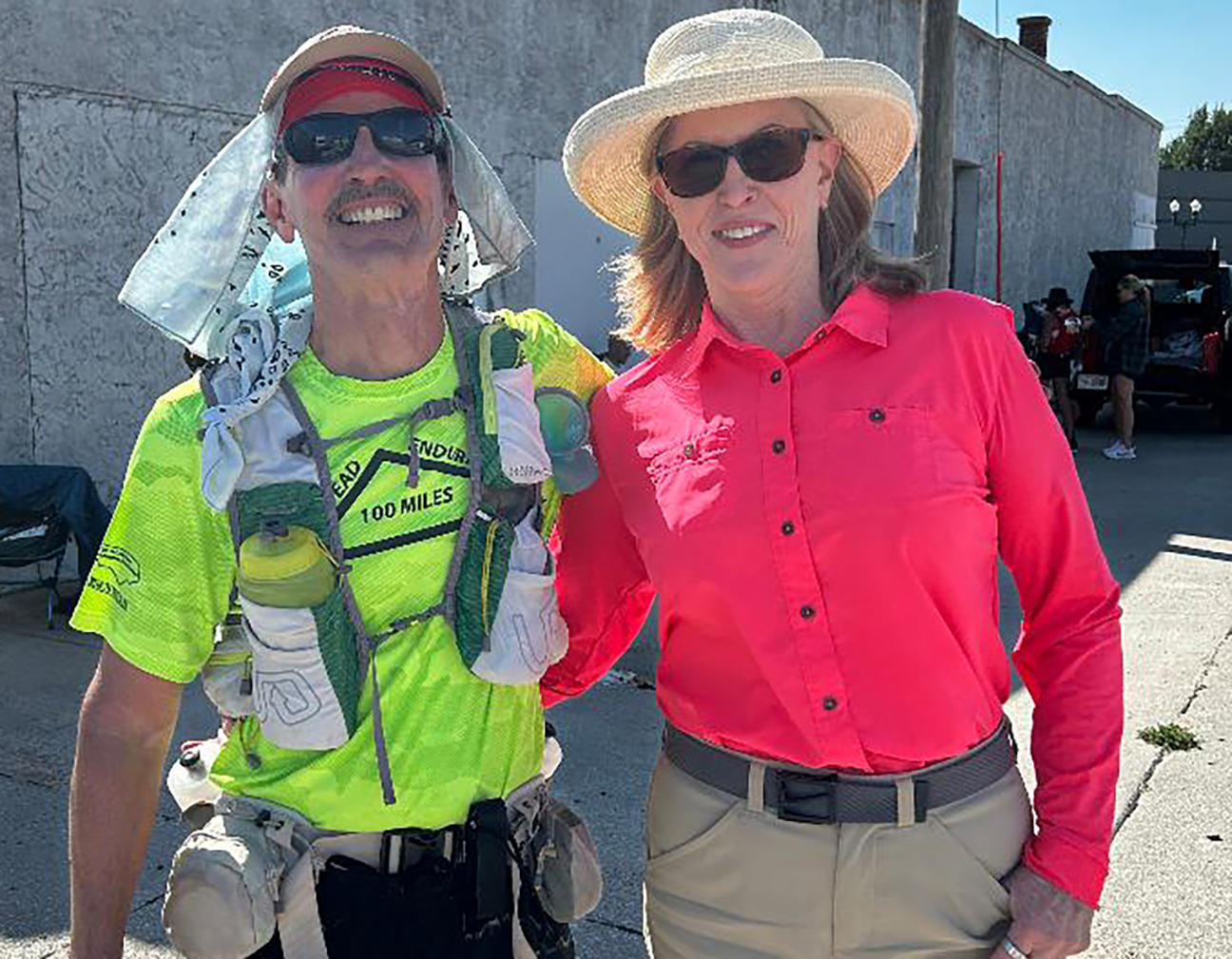
“All you had to say was Colorado. I love Colorado,” Sandra said. “I thought, ‘How hard can it be to hand off a water bottle for someone? I learned very quickly that wasn’t the case.’”
Mike credits Sandra for being able to finish as often as he does. Sandra especially enjoys the remote races: It’s much harder to crew at Western States, she said, because of the many hoops she has to jump through, and the crowds don’t make it as fun. This works out perfectly for Mike, who needs her more at the smaller races.
“It’s a game-changer for her to get me mashed potatoes or a burger at the local fast-food places,” Mike said, “or have her show up with new shoes.”
The two don’t have a lot of common interests otherwise, so it’s nice that they found a common interest in Mike’s races, Sandra said.
Most of the time, anyway.
“There are times he gets pissy during a race, and I’ll tell him, ’Straighten up or I’m going home,’” Sandra said.
• Use races to train for races: Smith’s training plan is not as rigorous as you might think. He relies on his 100-milers to get him ready for 100-milers. This works out well, as he will typically do at least one a month. His record is 22 in a single year.
“I have a terrible training program,” Smith said and laughed. “I might do 40 miles a week. But if you run a 100 every few weeks, it’s a way to survive them.”
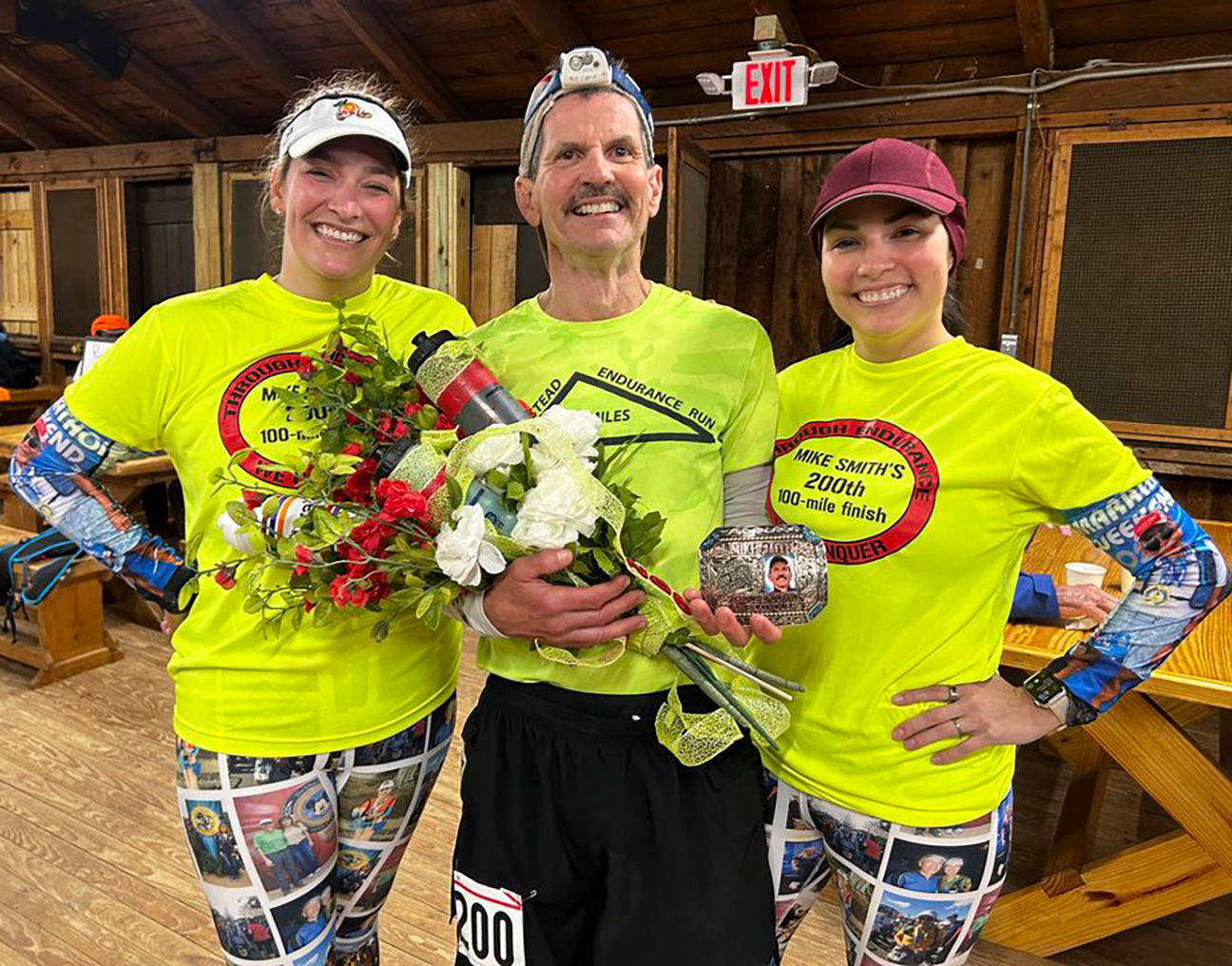
• Guts over glamor: Smith is the first to admit he’s not a super fast or talented runner. Yet, she still has an impressive collection of belt buckles.
In 2014, he completed the Grand Slam of Ultrarunning, meaning he finished four of the five oldest and most prestigious races in one year, including Leadville, Western States, the Wasatch Front, the Old Dominion and the Vermont 100. He’s finished the Hardrock 100 twice, once in each direction. He finished the Ultra-Trail du Mont-Blanc (UTMB) in Chamonix, France.
He once ran a 100 in 19 hours, though he likes to point out that was at Tunnel Hill, probably the fastest course in the world. It’s his determination, and not his speed, that gets him to the finish. “He’s never been fast,” Sandra said, “but boy, he’s consistent. He’s just relentless.”
• Don’t let DNFs stop you: Smith has started many more 100-milers than he’s finished. He’s entered the famously difficult HURT 100 in Hawaii 20 times and finished it only six, including a DNF in this year’s race (the race’s tagline is “We wouldn’t want it to be easy”). He doesn’t care. “I enjoyed being out there,” Smith said.
He’s had a few heartbreaking moments. He had a pacer at Hardrock go hypothermic on him at mile 85. The pacer was safe at an aid station, but Smith didn’t feel right leaving him there and voluntarily dropped from the race.
• Learn from your DNFs: Smith, in fact, welcomes DNFs and remembers them more than his finishes. “I always think about what I need to do better next time,” Smith said.
Sometimes he gets lost, or sometimes he’s not fast enough, but he loves to figure out ways to improve.
“I never have any regrets,” Smith said. “I see it as a challenge to go back.”
• Lend a hand: Ultramarathons are special partly because of their camaraderie, Smith said, and he nurtures that whenever he can.
“I’m usually the one stopping for a newer runner when they’re struggling with hydration or cramping or bonking,” Smith said. “Sandra has helped other crew members countless times. And how many friendships have we formed as a result? It’s in the hundreds. I’m never going to run by someone who is struggling when I think I could help them.”
• Figure out your goals and pace accordingly: Smith decided, early on, that he wanted to run a lot of 100-milers, and he has always set his pace with that goal in mind.
“I’m not beating myself up too badly out there,” Smith said. “I rarely hear about someone who got hurt running at my pace. My whole goal is to do a decent first 50 and hope I’ve got enough to take the second 50 to the end. I accept the fact that a finish is great.”
• Don’t stop ‘till you get enough: Mike and Sandra both enjoy volunteering at races, and that’s something they believe they will continue to do even when he doesn’t want to run races any longer. Whenever that may be.
Smith has six more 100-milers on the calendar in 2026, including his third crack at the Western States 100 on June 28. (He finished it in 2005 and 2014.)
“I will stop when it stops being fun for me,” Smith said. “Sometimes I do wonder what I’m doing out there. But those are the rare occasions. The rest of the time, I’m glad I’m there.”
About the Author
Dan England is a Colorado-based freelance writer, the co-author of “Reborn on the Run” with Catra Corbett and a sarcastic but helpful ultrarunning coach. He’s also completed more than 30 ultras himself and climbed more than 200 mountains.
-
The Importance of Identifying and Lowering Barriers for Women in Trail Running
-

-

-

-

10 Great Vermont Trail Races You Should Put on Your Must-Do List
-
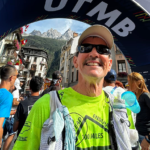
The Wit and Wisdom of Mike Smith, One of the World’s Most Prolific 100-Mile Runners
RELATED: Back of the Pack Runners are the Backbone of Ultrarunning
RELATED: The Importance of Identifying and Lowering Barriers for Women in Trail Running
RELATED: Jamil Coury’s New Obsession

2 comments
Jack
Well written Dan. Mike is quite an inspiration. I’ll be 55 years old when I run my first 100 this coming November – The Pinhoti 100. I will certainly think of Mike at some point in that challenge on that trail.
Ken Michal
Mike is an absolute gem in our community!! We’re all lucky to have him! Can’t wait for 300!
All Day!
~Ken