Continuing its upward trajectory of excitement, competitiveness, and leading-edge innovation, the Black Canyon Ultras 100K and 50K went off in stunning fashion over the weekend.
Past champions mixed it up with rising stars and random ballers in compelling races that included nearly 2,000 total runners. (A huge shout-out to everyone toed the starting line, including the 767 who finished the 100K on Saturday and 849 who finished the 50K on Sunday!) A smart, high-quality livestream, an innovative new prize purse system, and some especially high-profile runners combined to create loads of positive buzz as the first big trail race in the U.S. this year, especially given that the Barkley Marathons also started on the morning of February 14.
Here are five hot takes about the 2026 Black Canyon 100K and 50K races.
1. The up-leveling of American ultrarunning is unreal
The continued rising level of competition in the Black Canyon races—particularly in the 100K—was amazing to watch unfold in real-time this past weekend. The race has been around since 2014 and always drawn top runners, but for the past five years or so it’s been one of the world’s top early season races. (It’s also drawing more international runners, although it remains to be seen if that’s because of its affiliation with the World Trail Majors or just because it’s a very good event.) The record-breaking performances in the 100K—Hans Troyer winning the men’s race in 7:20:00 (and shattering Seth Ruhling’s 2025 course record of 7:24:55), and Jenn Lichter taking the women’s race in 7:57:05 (and obliterating Riley Brady’s 8:16:18 course record from last year with a time that would have won the men’s race as recently as 2022) were astounding efforts, but those are just part of the story.
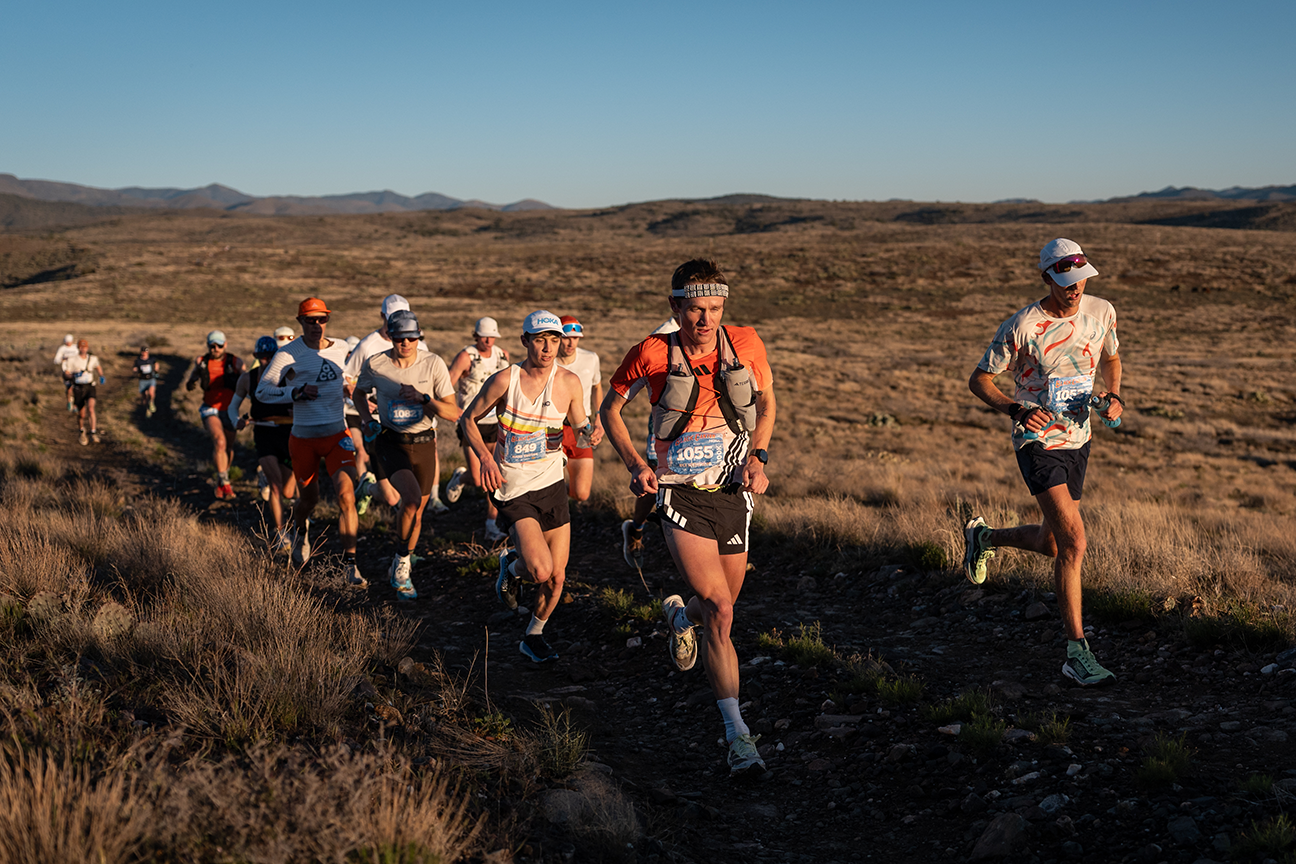
The Black Canyon 50K was never a low-key event, but it went bigger than ever this year. Ruhling’s course-record win (3:16:29) on Sunday over Adam Peterman and Cade Michael in the men’s race was fun to watch, especially considering Peterman led the men’s lead pack through a 5:11 opening mile and they were still flying through the first 8 miles before Ruhling and Michael surged together through the middle of the race. In the women’s 50K, Jane Maus’ solid second-half effort helped her outrun midway leader Liz O’Connor for the victory (3:47:04) to lead an impressive women’s podium.
2. New stars of the sport are emerging
Black Canyon was Lichter’s debut 100K race, but despite being pushed from behind by Anne Flower the entire second half of the race she never wavered and instead looked and executed like a long-ultra veteran all day long. Lichter, 29, was fourth in the world championships at 50K in 2023, and has since won the JFK 50-mile, Broken Arrow 46K, Transgrancanaria 50K, and Speedgoat 50K, and now will be ramping up for her first 100-miler with a very strong 100K under her belt. Similarly, the 36-year-old Flower, who had a breakthrough season in 2025 with a new Leadville 100 course record and a 50-mile world record at Tunnel Hill, showed she can be a player on more technical terrain and is going to be a force in the sport.
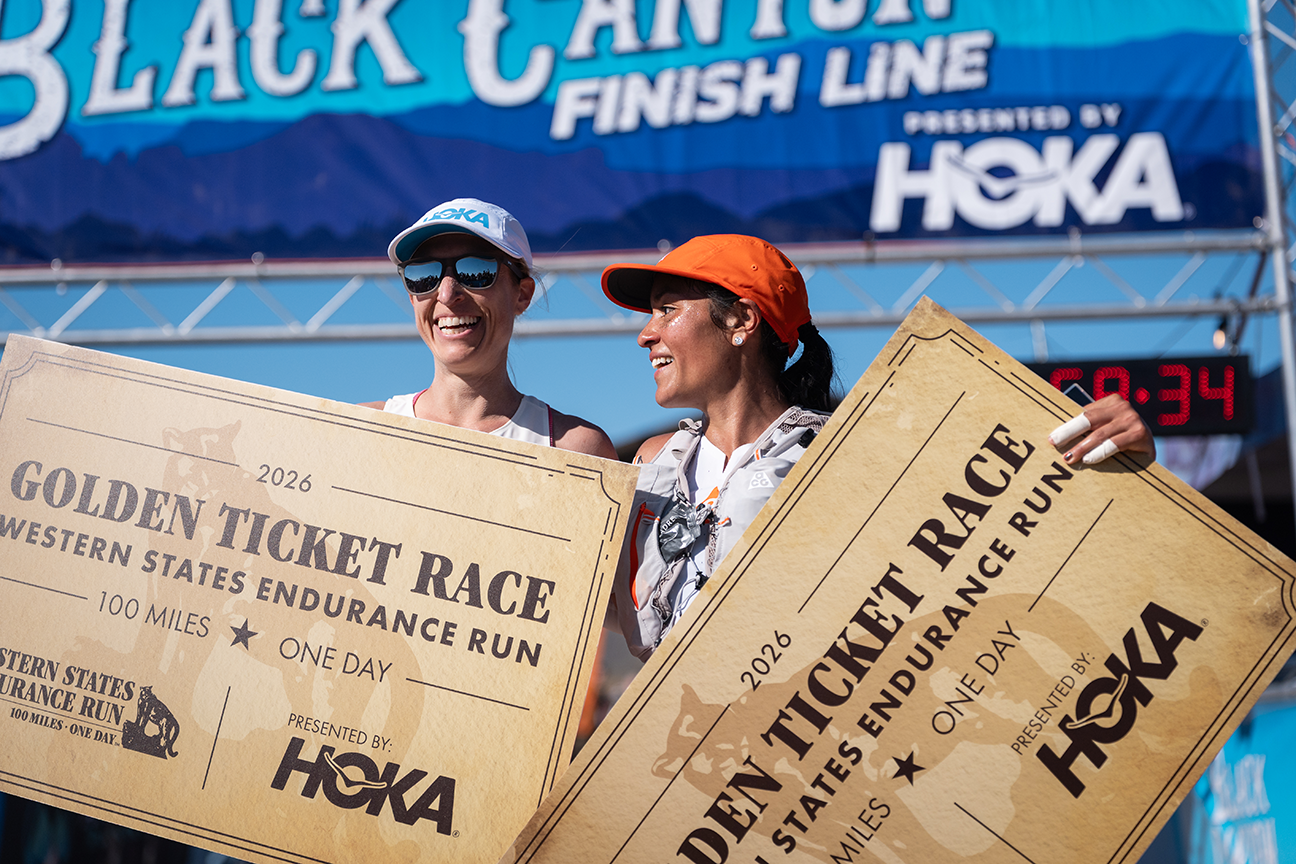
Meanwhile, third-place finisher Tara Dower continued her mastery of the 100K course with an amazing four-year progression that has seen her run 9:56 (12th), 9:19 (7th), 8:25 (2nd), and 8:11 (3rd). Lichter, Flower and fourth-place finisher Molly Seidel (more on her in a moment) all became first-time Golden Ticket winners, while Dower and Abby Hall (fifth) had already earned entry to Western States. But with each of those runners in the women’s field, States is going to be a burner this year.
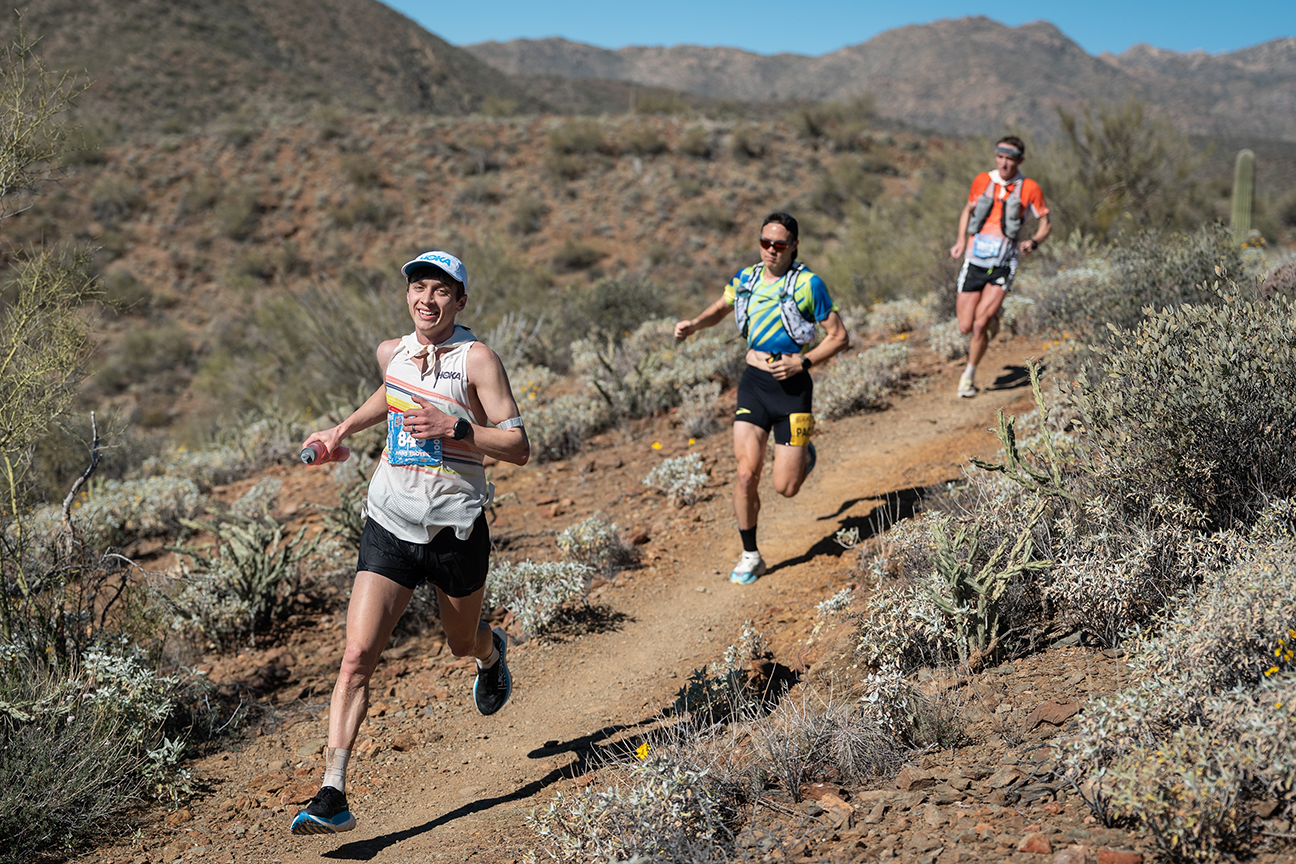
On the men’s side, watching the ever-smiling Troyer storm the course with such light-hearted joy— after famously going for it and blowing up two years ago before fading to 10th—was richly satisfying, especially knowing he’s only 25. Behind him, Anthony Costales, who won the race three years ago in 7:32, finished second this year in 7:24, closing the gap significantly over the final 20 miles of the race while in hot pursuit of Troyer. With Troyer, Costales, and Tracen Knopp (third, 7:26) earning Golden Tickets and Canyon Woodward (fourth, 7:37) already having one, there will be some speedy depth at States this year.
There were many runners who had stunning days, but a special call-out needs to be made to Sage Canaday, who, at age 40, and five years after suffering from a life-threatening pulmonary embolism, placed sixth in 7:52, just a few seconds off his time from his 2016 victory in the event. Also, 12-year-old Marta Bontognali of Switzerland finished the 50K in 5:39:09 on Sunday.
3. Where would we be without livestreams?
Watching the Black Canyon races (and men’s and women’s pre-race panels) on Mountain Outpost’s YouTube livestreams was spectacular. Arvaipa’s Jamil Coury was an early pioneer of trail race livestreams and the Mountain Outpost crew has since helped revolutionized spectator engagement and brought compelling racing action to anyone interested in tuning in from their laptop or phone from anywhere in the world.
While it’s crazy to think that Mountain Outpost pulled off the first Black Canyon livestream in 2021 with just a single camera, this year’s edition (for both the 100K and 50K) had multiple cameras at numerous points on the course, stunning cinematic drone footage, and on-point commentary that was lively, informed, and fun—especially from Hilary Yang, Leah Yingling, and Schuyler Hall during the apex of the elite races. Still, the best aspects were that Mountain Outpost did its best to cover both the men’s and women’s races equally (showing key moments and finish line excitement for both), and that it kept streaming through the 17-hour Western States qualifier cutoff at midnight.
If you missed the livestreams, you can go back and watch the 100K and 50K, and you can also check out this stunning 21-minute video about the 100K from Derrick Lytle.
4. Crowd-Funded Prize Purses Are an Interesting New Wrinkle
Prior to the Black Canyon Ultras, Aravaipa Running launched something called RacePurse, an online system to raise prize money purses via crowd-funding through the livestream of a race. It appears to be a concept similar to Run.Fund, which Seth LaReau wrote about in a TrailWaves Substack column in early January. Essentially, it’s a way to allow fans and livestream viewers to contribute to prize purses for specific races. For the Black Canyon 100K, Aravaipa announced it would match the first $5,000 of whatever was raised—which turned out to be $11,726—ultimately resulting in a grand total of a total purse of $16,726.
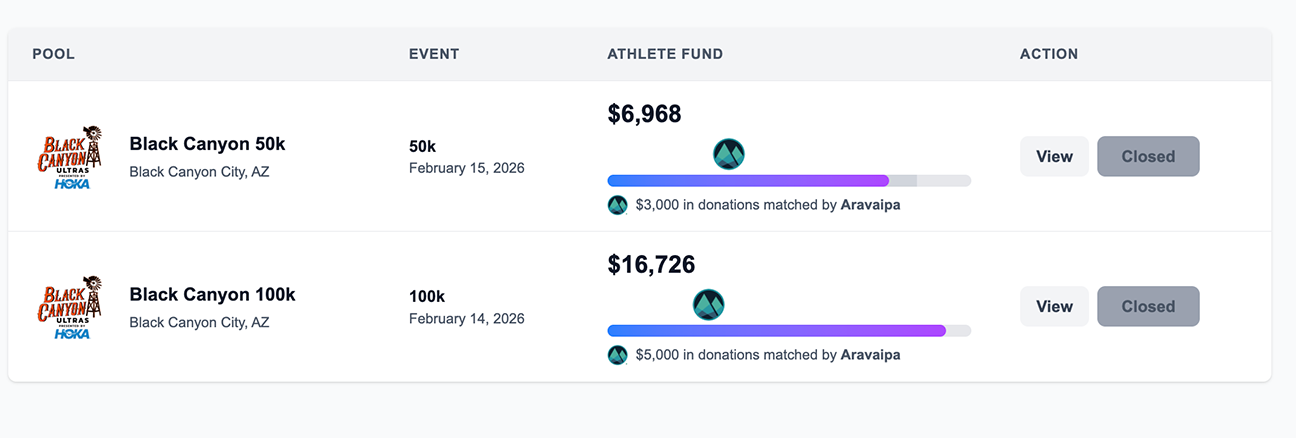
That meant $8,363 was divided among the top three finishers in both the men’s and women’s races, resulting in payouts of $5,018 for first, $2,091 for second, and $1,254 for third. For the 50K race, Aravaipa matched the first $3,000 in crowd-funded money, which resulted in a total purse of $6,968 and disbursements of $2,090 for first, $871 for second, and $523 for third. (An additional $1,325 appears to have been raised for the Black Canyon 100K via Run.Fund, too, but it’s not known how that will be dispersed.)
While some commenters in the online chat section of the livestream questioned why Hoka and Aravaipa didn’t fund a cash prize purse from the start, many seemed to embrace the RacePurse concept and were eager to donate. Given the other large prize purses at the Broken Arrow Skyrace, Gorge Waterfalls, Run Rabbit Run, and UTMB, prize money has entered the chat for U.S. races, and crowd-funding is at least a way to get the ball rolling for events that haven’t traditionally had any. And we’re clearly at a point in the sport’s evolution where there is an expectation that big, sponsored trail running races should have some sort of prize money.
5. Molly Seidel and Des Linden Are Going to Be Great
Much of the pre-race excitement about the Black Canyon Ultras this year was about Olympic marathoners Molly Seidel racing the 100K and Des Linden racing the 50K. Seidel, 31, a bronze medalist at the Tokyo Olympics in 2021, was coming off an outright victory in the Bandera 50K on January 11, while the 42-year-old Linden, an Olympian in 2012 and 2016, as well as the 2018 Boston Marathon champion, had recently announced she’ll be running the April 3-13 Marathon des Sables in Morocco with Magda Boulet, a 2008 Olympic marathoner and 2015 Western States 100 champion.
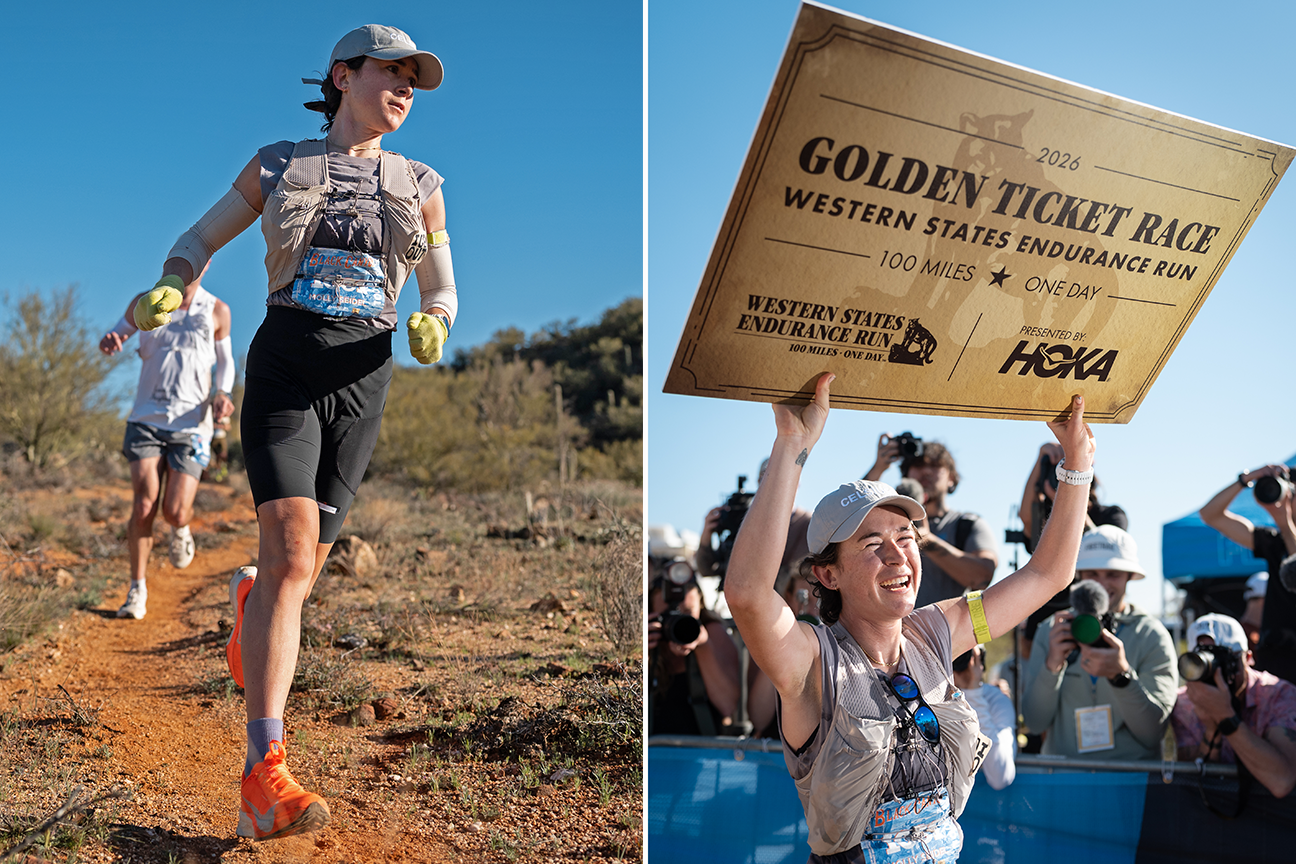
In the 100K on Saturday morning, Seidel was at the front with Lichter and Hall at the 12.8-mile Hidden Treasure aid station. She surged into the lead before the 18.7-mile Bumble Bee aid station and led for several miles, recording the fastest ever women’s 23.8-mile split to Gloriana Mine (2:45:13) by more than 6 minutes. But Seidel suffered a bit from the rising heat and Lichter and Flower eventually passed her before the 31.6-mile Deep Canyon Ranch aid station. But Seidel didn’t fade when Tara Dower caught her somewhere near mile 40; instead she ran strong to the finish and finished fourth (18th overall) in 8:25. Because Dower already had a Golden Ticket into Western States, the third and final women’s ticket rolled down to Seidel, and when Western States race director Craig Thornley presented her with a ticket at the finish line, she accepted with a big smile.
On Sunday morning in the 50K, Linden started conservatively as Erin Moyer and later Liz O’Connor pushed the pace off the front. But Linden kept moving up throughout the first half of the race and was sitting in seventh place among women by the time she reached the 19.2-mile Bumble Bee aid station. She slowed quite a bit over the final 8 miles and finished in 4:30, 13th among women, but still finished her first trail race in good spirits.
Both Seidel and Linden are earnestly engaged in pursuing trail-ultra goals this year, and, although they had slightly different outcomes at Black Canyon, both learned a lot racing through the desert and will put that knowledge to good use going forward. It will be interesting and exciting to watch Linden race in Marathon des Sables and Seidel race Western States, knowing their popularity from the mainstream road running population is creating a lot of interest in the trail running world. The more they are able to dial in their training, fueling, hydration, and experience running on technical trails, the better they’re going to be. It’s an exciting time for trail running, to be sure, both because established stars and talented newcomers are pushing the sport forward.
Read More from Brian Metzler
-
25 Great Trail Running Races in Utah This Summer and Fall
The following is a rundown of some of the best trail races in Utah you should consider this summer and fall. -
5 Key Takeaways from the 2026 Cocodona 250 and How it Could Shape the Future of the Sport
The 2026 Cocodona 250 seamlessly wove together a stellar and grueling race with core elements of culture, community and mainstream appeal. The impact of this year’s event could be long-reaching. -
Are 200s the New 100s? The Fast-Growing Category of 200-mile+ Ultra-Distance Races in the U.S.
Far from being an anomaly, 200-mile+ races now represent one of the sport’s fastest-growing arenas, attracting runners eager to explore deeper, more demanding challenges. -
After Running 100 milers in every state, Rich Tenaglia is Inspired to Run for a Good Cause
Rich Tenaglia became the first person to complete a 100-mile run in all 50 states, but this spring he’s focused on running for something bigger. -
The 2026 Cocodona 250: Who’s Running, How to Watch It, Next Year’s Lottery, and more
The 2026 Cocodona 250 returns on May 4 as one of the longest, most ambitious and most popular ultrarunning events in North America. -
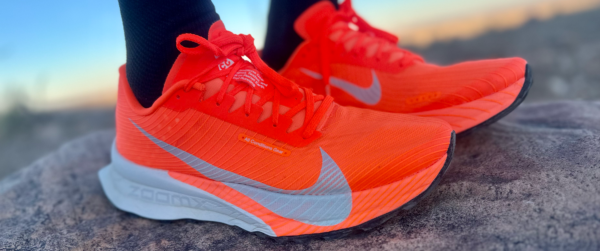
Trail Tested: Nike ACG Ultrafly
The Nike ACG Ultrafly is a cushy, responsive, and stable shoe design for long-distance running and ultra-distance racing on a variety of surfaces.
RELATED: The 2026 Cocodona 250: Who’s Running, How to Watch It, Next Year’s Lottery, and more
RELATED: Des Linden is Targeting Big Trail and Ultrarunning Races in 2026
RELATED: 5 Key Takeaways from the 2026 Cocodona 250 and How it Could Shape the Future of the Sport