Why mental toughness has less to do with pushing through and more to do with knowing what to do when things go wrong.
Twenty minutes ago, you were having the race of your life. Now, you’re taking a gel flavor personally.
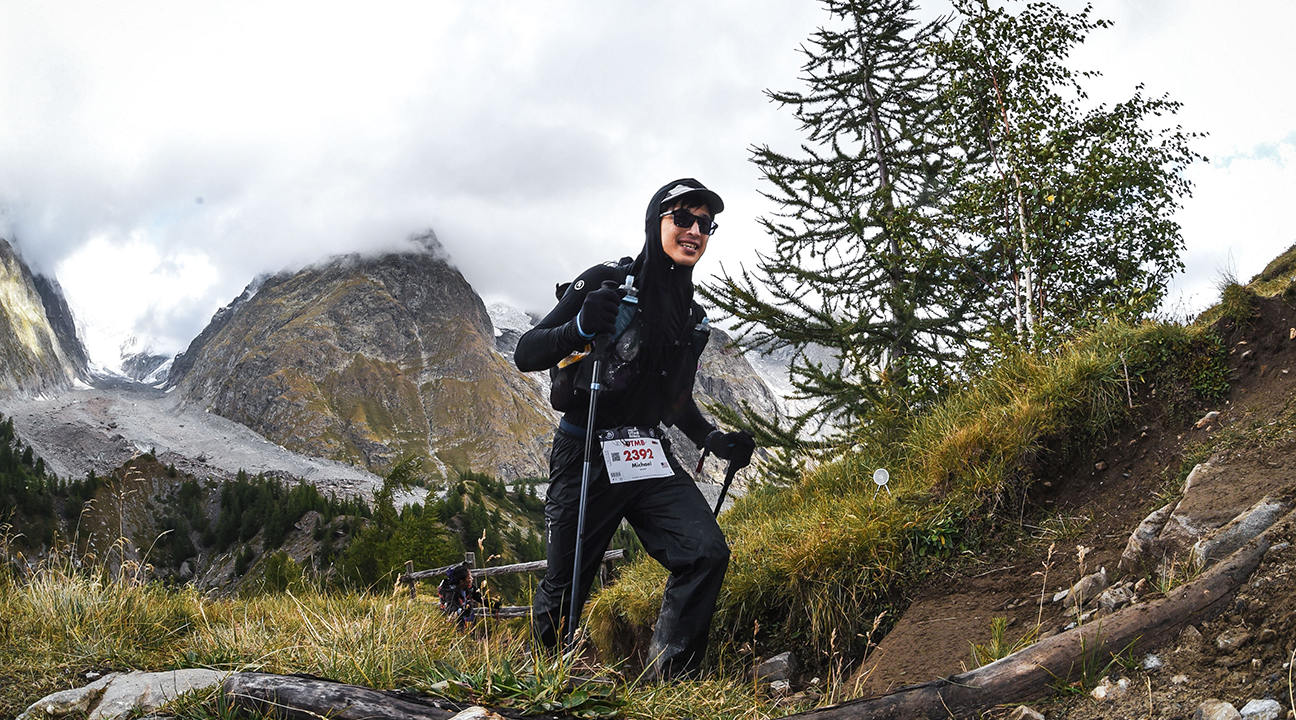
The climb is longer than it looked on the elevation profile, which was considerably more manageable on a laptop. The runner you were following has already left the aid station. You have done the mental math three times and gotten three different answers. None of them are good.
By the next switchback, a difficult mile has become a prediction: The rest of the race will feel like this. Then the prediction becomes a judgment: I didn’t train enough. I’m terrible at this. Why do I keep signing up for these things?
This is usually where someone tells you to stay positive. But positivity is not a plan when you’re on a mountain with sticky hands and a stomach that has filed a formal complaint against carbohydrates. What you need is a way to understand what is happening without letting one bad stretch explain the entire day—or your entire identity as an athlete.
That is the mental work I help athletes practice: noticing what’s true, catching the story building around it, and responding to what the moment requires. You can do it while annoyed, scared, or deeply uninterested in personal growth. You don’t have to enjoy the climb to make a good decision while power-hiking up it.
When a hard mile becomes a verdict on your mental toughness
“This climb is harder than I expected” describes an experience. “The rest of the day will go this way” predicts the future. Once you believe the prediction, evidence is easy to find. The next climb confirms it. So does getting passed. When your legs come back, you dismiss those 10 decent minutes as a fluke. That’s confirmation bias: The hard moments count toward your conclusion, and the better ones don’t get much of a vote. On a long day, tired brains are sloppy editors.
The first fix is to get specific. “I’m falling apart” names distress. “I’m nauseated, my effort is too high, and I’m worried about losing time” describes a situation you can respond to.
The next step is to run the story through a three-question filter:
Is it true? The climb is harder than you wanted. Sure. But “the rest of the day will feel like this” is a forecast, not something you know.
Is it helpful? Does the thought support a useful decision now, and for the miles ahead? “I’m terrible at this” won’t help you adjust your effort, choose something to eat, or ask for assistance.
Is it kind? This is the part many athletes skip because it sounds soft. It isn’t. It’s the conscious decision not to spend the next hour prosecuting yourself for being tired on a mountain you chose. Self-compassion means responding to difficulty with support rather than harsh judgment, and research challenges the assumption that it undermines motivation (Neff, 2023). On the trail, it can sound as plain as: This is a bad stretch. I don’t need to make it worse.
You don’t need three yesses or a cheerful replacement for every unpleasant thought. The point is to examine the thought before you act on it.
RELATED: When A Race Crumbles: What’s Solvable and What Isn’t?
Check your body before your character
A darkening mood is not proof that you’re bonking. It’s also not proof that you lack toughness. Before you conduct a review of your entire athletic career, check the obvious: When did you last eat or drink? Has your effort drifted? Are you too hot? Too cold? In pain?
For an ordinary rough patch, the adjustment is usually simple: Hike. Eat something you can tolerate. Stop chasing. Simple doesn’t mean you’ll like it. Slowing down can be the right call and still feel incredibly disappointing.
Know, too, what a mantra can’t fix. Confusion, collapse, or a new loss of coordination calls for help. Heat illness, hypothermia, and exercise-associated hyponatremia can all affect thinking and movement, and you can’t safely sort them out with self-talk (Bennett et al., 2020; Dow et al., 2019; Eifling et al., 2024).
The same goes off the course. Feeling wrecked at mile 38 doesn’t diagnose your mental health, and a podium doesn’t prove everything is fine. Mental performance skills and mental health affect each other, but they aren’t the same thing (Association for Applied Sport Psychology, n.d.), and racing skills don’t replace clinical care when it’s needed (Reardon et al., 2026).
Your thoughts are not your orders
There is a difference between telling yourself you can’t finish and telling yourself you’re having the thought that you can’t finish. The second doesn’t promise you a buckle. It creates space between having a thought and obeying it. Psychologists call this cognitive defusion, part of a broader skill called psychological flexibility: responding to the situation and what matters to you, even with uncomfortable thoughts and feelings present (Association for Contextual Behavioral Science, n.d.).

In practice, “This sucks” is allowed to be true. You don’t need to upgrade it to “I am grateful for this exquisite opportunity to grow.” You can admit the climb is brutal and still give yourself an instruction—self-talk with a job. “Toes up” on a technical downhill. “Let them go” when someone surges. “Ask for what you need” at an aid station, instead of nodding and leaving with the wrong bottle—or no bottle. Use language you believe. If a mantra doesn’t sound like something you’d actually say, find another one.
Just don’t expect magic. In a study of 29 runners preparing for a 60-mile overnight ultra, motivational self-talk didn’t improve race performance, though most participants were still using it six months later to cope with exertion, blisters, and bad conditions (McCormick et al., 2018). A broader review of psychological interventions found that their promising performance effects faded once weaker studies were excluded (Reinebo et al., 2024). A cue isn’t a shortcut to a faster finish. It’s a manageable instruction when your attention is scattered.
Keep it small. Process goals tend to produce larger performance benefits than outcome goals (Williamson et al., 2024), so pair the next landmark with an action—Hike steadily to the saddle—instead of reminding yourself there are 30 miles to go. Keep the big goal; just stop asking your brain to carry all of it at once.
If you have a crew or pacer, decide before race day what helps: quiet instructions, an inside joke, a minute to complain without a pep talk. “Tell me what changed” works better than “Don’t be negative.”
Feeling good needs judgment, too
Feeling good can produce a bad decision just as quickly as feeling bad, and it feels far more reasonable. You follow someone you didn’t plan to follow. You skip the gel. You run the climb you meant to hike. You can do more.
And maybe you can. But “I can do more” deserves the same scrutiny as “I can’t do this.” Has something actually changed, or are you just excited to finally feel good? Can you sustain it? Are you still eating and drinking?
Enjoy the stretch. Take the gel. Let someone else make their move without treating it as an instruction.
Race the conditions you have
Your race plan was built on assumptions about weather, terrain, fueling, and your body—made after a good night’s sleep. Some of them won’t survive race day.
Heat. The pace that felt manageable at 7 a.m. can demand too much at 3 p.m. on an exposed ridgeline. The thought that shows up may be If I slow down, I failed, but your estimated finish time doesn’t get to ignore the temperature. Reducing exertion and using available cooling are practical responses, even when they cost time (Eifling et al., 2024). Use shade. Take time to cool down at aid stations.
Cold and rain. You know the jacket should go on, but stopping feels like losing time, so the $400 shell stays in your pack warming your spare socks. Put it on before your hands stop cooperating. Cold, wet conditions raise hypothermia risk, and impaired coordination or alertness warrants help, not another round of bargaining (Dow et al., 2019).
Your stomach. The gel flavor you liked in training is suddenly hard to get down, and the fear underneath is simple: If I can’t eat, how do I keep going? You have plenty of company. Among 272 Western States runners who completed a post-race survey, 96 percent reported at least one gastrointestinal symptom, and nausea was the most common problem among finishers whose performance suffered (Stuempfle & Hoffman, 2015). Common doesn’t mean harmless, but nausea at mile 62 isn’t evidence of a personal defect.
For mild symptoms, reassess your effort, heat exposure, and intake. Fueling should match how you’re actually responding, not a number you feel obligated to hit (Costa et al., 2025), and trying to make up every missed gram at once can leave you worse off. Swap “I’m behind on the plan” for “The job now is to find what works.” Tell your crew or medical team what you’ve taken and when symptoms started; persistent vomiting, inability to keep fluids down, severe abdominal pain, or blood calls for medical assessment (Costa et al., 2025).
Everything else. A delayed start, a missing drop bag, or a course change calls for a smaller version of the same move: Get reliable information. Name what changed. Change what that affects. Leave the rest alone.
When the original goal is gone
Sometimes the loss is bigger. The time goal is gone. The group is gone. The race you trained for isn’t available anymore.
You spent months wanting something specific; of course you care that it isn’t happening. Making a sensible adjustment doesn’t require you to be at peace with it. You don’t have to call it a gift or decide, somewhere between aid stations, what it will teach you.
Ask instead: What is worth doing now? The answer might be to run the next descent well. It might be to finish with a different goal. It might be to stop and get help.
That distinction matters in a sport that has made a virtue out of suffering. We admire the athlete who refuses to quit, and sometimes that admiration is deserved. But keeping going isn’t inherently better than changing course. What matters is whether you’re deciding with a clear view of what’s happening, rather than out of fear of what stopping or falling short might say about you.
Mental toughness isn’t the absence of doubt, discomfort, or disappointment. It’s the capacity to experience them without automatically handing them the authority to decide what happens next.
Back on the climb, you let the runner ahead disappear around the switchback. You ease your effort. At the next aid station, you tell someone what’s happening instead of saying you’re fine.
Maybe your stomach settles. Maybe your legs come back. Maybe the finish line looks nothing like the one you’ve spent six months imagining. You don’t know yet.
You can rehearse the climbs, practice the fueling, and plan for almost every problem, and eventually the race will still ask a question you didn’t prepare for. The work isn’t to have every answer. It’s to stay curious enough to find the next one.
For now, there’s a climb in front of you. You still have a say in how you meet it.
Check out Kristen Schindler’s new mental performance workbook for endurance athletes: “Ready, Set, Go!”
RELATED: Hit Me Where It Hurts: How Ultrarunners Manage Pain
RELATED: When A Race Crumbles: What’s Solvable and What Isn’t?
RELATED: “Stay Soft”: A Complementary Mindset to “Stay Hard”
RELATED: In Praise of Doing it The Hard Way
References:
- Association for Applied Sport Psychology. (n.d.). How to identify the right provider: The mental
- health and mental performance services continuum
- Bennett, B. L., Hew-Butler, T., Rosner, M. H., Myers, T., & Lipman, G. S. (2020). Wilderness
- Medical Society clinical practice guidelines for the management of exercise-associated hyponatremia: 2019 update. Wilderness & Environmental Medicine, 31(1), 50–62. https://journals.sagepub.com/doi/10.1016/j.wem.2019.11.003
- Costa, R. J. S., Gaskell, S. K., Henningsen, K., Jeacocke, N. A., Martinez, I. G., Mika, A.,
- Scheer, V., Scrivin, R., Snipe, R. M. J., Wallett, A. M., & Young, P. (2025). Sports Dietitians Australia and Ultra Sports Science Foundation joint position statement: A practitioner guide to the prevention and management of exercise-associated gastrointestinal perturbations and symptoms. Sports Medicine, 55(5), 1097–1134. https://link.springer.com/article/10.1007/s40279-025-02186-6
- Dow, J., Giesbrecht, G. G., Danzl, D. F., Brugger, H., Sagalyn, E. B., Walpoth, B., Auerbach, P.
- S., McIntosh, S. E., Némethy, M., McDevitt, M., Schoene, R. B., Rodway, G. W., Hackett, P. H., Zafren, K., Bennett, B. L., & Grissom, C. K. (2019). Wilderness Medical Society clinical practice guidelines for the out-of-hospital evaluation and treatment of accidental hypothermia: 2019 update. Wilderness & Environmental Medicine, 30(4, Suppl.), S47–S69. https://journals.sagepub.com/doi/10.1016/j.wem.2019.10.002
- Eifling, K. P., Gaudio, F. G., Dumke, C., Lipman, G. S., Otten, E. M., Martin, A. D., & Grissom,
- C. K. (2024). Wilderness Medical Society clinical practice guidelines for the prevention and treatment of heat illness: 2024 update. Wilderness & Environmental Medicine, 35(1, Suppl.), 112S–127S. https://journals.sagepub.com/doi/10.1177/10806032241227924
- McCormick, A., Meijen, C., & Marcora, S. (2018). Effects of a motivational self-talk
- intervention for endurance athletes completing an ultramarathon. The Sport Psychologist, 32(1), 42–50. https://journals.humankinetics.com/view/journals/tsp/32/1/article-p42.xml
- Neff, K. D. (2023). Self-compassion: Theory, method, research, and intervention. Annual Review
- of Psychology, 74(1), 193–218. https://www.annualreviews.org/content/journals/10.1146/annurev-psych-032420-031047
- Reardon, C. L., Gouttebarge, V., Kroshus-Havril, E., Aron, C. M., Bahr, R., Blauwet, C.,
- Castaldelli-Maia, J. M., Cheng, C., Currie, A., Derevensky, J. L., Edwards, C., Fussek, S., Gorczynski, P., Grandner, M., Han, D. H., Hitchcock, M. E., Lu, F., Massey, A., McDuff, D., . . . Hainline, B. (2026). Mental health in elite athletes: International Olympic Committee consensus statement (2026). British Journal of Sports Medicine, 60(15), 1083–1130. https://bjsm.bmj.com/content/60/15/1083
- Reinebo, G., Alfonsson, S., Jansson-Fröjmark, M., Rozental, A., & Lundgren, T. (2024). Effects
- of psychological interventions to enhance athletic performance: A systematic review and meta-analysis. Sports Medicine, 54(2), 347–373. https://link.springer.com/article/10.1007/s40279-023-01931-z
- Stuempfle, K. J., & Hoffman, M. D. (2015). Gastrointestinal distress is common during a
- 161-km ultramarathon. Journal of Sports Sciences, 33(17), 1814–1821. https://www.tandfonline.com/doi/full/10.1080/02640414.2015.1012104
- Williamson, O., Swann, C., Bennett, K. J. M., Bird, M. D., Goddard, S. G., Schweickle, M. J., &
- Jackman, P. C. (2024). The performance and psychological effects of goal setting in sport: A systematic review and meta-analysis. International Review of Sport and Exercise Psychology, 17(2), 1050–1078. https://www.tandfonline.com/doi/full/10.1080/1750984X.2022.2116723