Here are 10 factors contributing to how and why backyard ultras are going gangbusters in 2026 and why this quirky racing discipline will be bigger next year.
Ten loops into Big’s Backyard Ultra in October, Mark Dowdle wanted to quit. He wanted to quit again at 30, and again at 40. Under-recovered after a long season and barely holding together, the 29-year-old from St. Paul, Minnesota, kept answering the bell anyway.
He struggled after crossing the 100-lap plateau for the first time but he rebounded again. He kept going for 107 straight hours and about 446 miles, until he was the last American standing (after Wisconsin’s Jon Noll succumbed to fatigue) and Team USA had won the Backyard Ultra World Team Championship.
Five years ago, Dowdle wasn’t even a runner. He played football and lacrosse at the University of St. Thomas then took up running after college, and he learned the sport largely by racing backyards. And for the past several years, he’s seemed to have mastered the peculiar physical/mental balance necessary to succeed in backyard-style ultra races, he’s been nearly unbeatable, having won eight straight backyard events in the past two and a half years.
Dowdle’s 2026 season would be a breakout in any sport. In January he won the frozen Arrowhead 135. In April he ran 73 yards (306 miles) to win BPN’s Go One More backyard on Nick Bare’s ranch in Texas. In August he ran 94 yards to win the Last Soul Ultra in Germany, a race he nearly missed because he had to fit the trip around his day job.
Then came Bell Buckle and the U.S. title. Now he’s a fully sponsored professional runner with a calendar full of podcast invitations as he gears up for the Last Soul Ultra U.S. qualifying event set for February 19 in Spencer, Tennessee.
The format has gone from a quirky oddity to a global movement and ultrarunning’s breakout stars are no longer coming only from the mountains.
But here’s the thing: Dowdle’s path is open to anyone.
A backyard doesn’t care about your running résumé, your pace or your age group. You need to be able to run a 4.167-mile loop, have a clock and the willingness to start the next lap when the bell rings. So why has this beautifully simple, slightly sadistic format caught on so fast? And where does it go from here?
1. Why Are Backyard Ultras So Appealing?
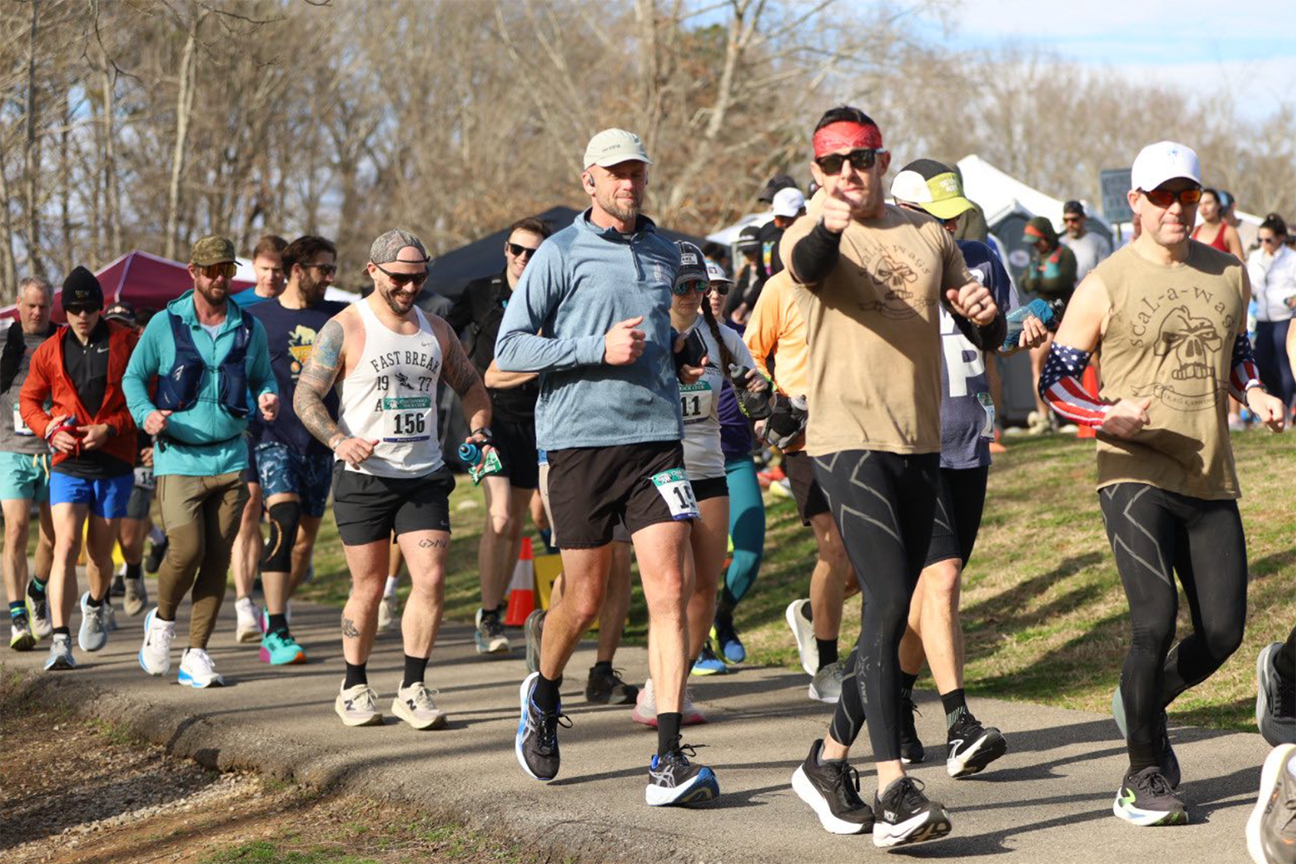
You can explain the rules of backyard ultras in one breath, and that’s a big part of the appeal.
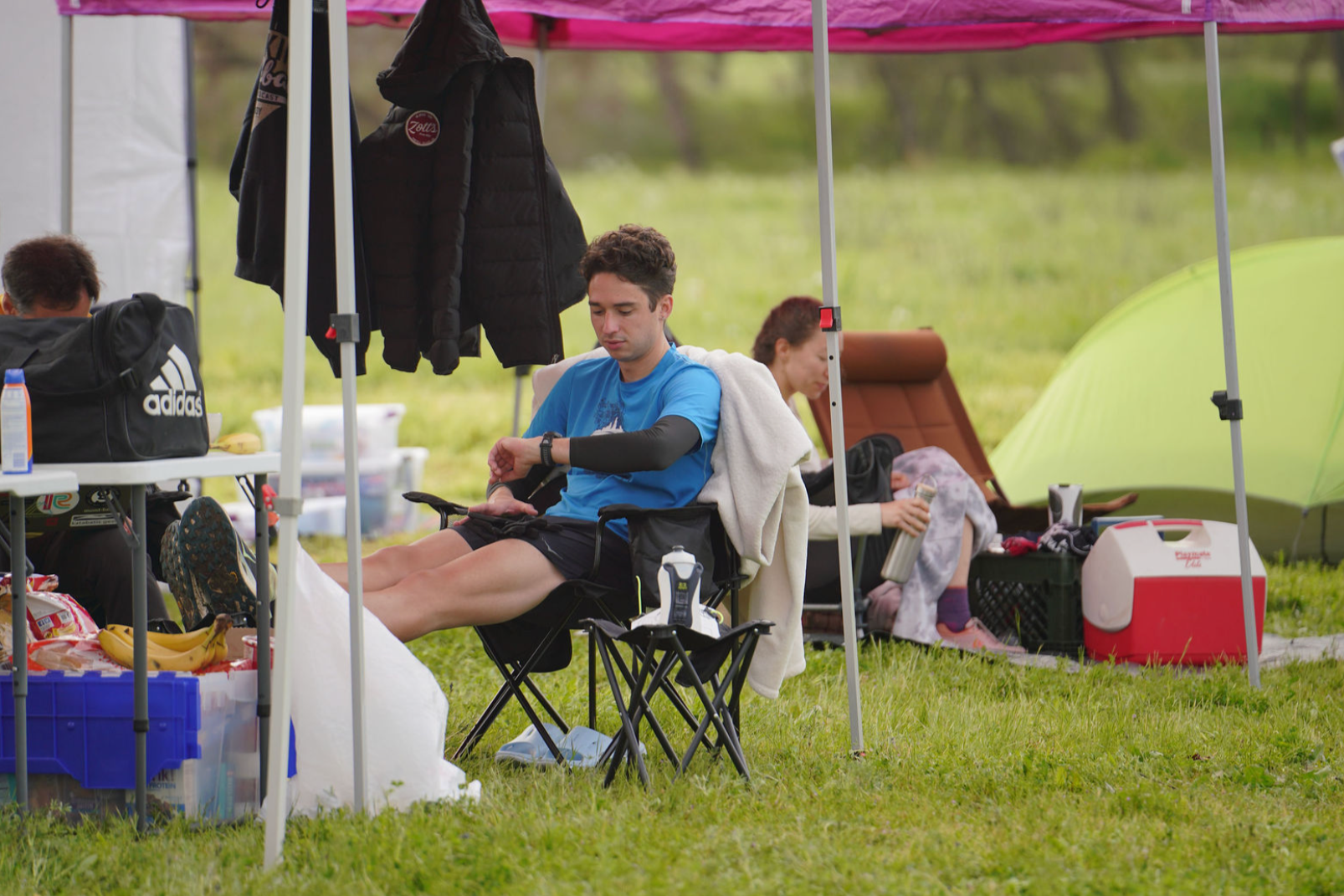
Each loop, or “yard,” measures 4.167 miles, and a new one starts at the top of every hour, so 24 yards adds up to exactly 100 miles. Run a loop fast and you bank a few extra minutes to eat, change shoes or close your eyes in the corral. Miss the bell and you’re done.
There’s no set distance and no finish line. The last runner to complete a solo loop wins. Everyone else, including the runner-up known as the “assist,” goes down as a DNF. It’s the only race where being first back from a loop earns you nothing but a little more time in a camp chair.
Big’s is now an invitational, and runners earn a spot by winning backyard races around the world. Those qualifiers have multiplied fast. There will be roughly 125 to 130 backyard-style races in the U.S. and Canada in 2026, a staggering number for a format that barely existed a decade ago.
As of 2026, there are races in more than 80 countries, national teams, livestreams that draw tens of thousands of viewers, and records that now top 500 miles. Brands and content creators now stage their own backyard events. Bare Performance Nutrition puts on Go One More, and German YouTuber Kim Gottwald runs Last Soul Ultra, which is expanding to a world series format that funnels in the Last Soul Ultra World Series Final next August 15 in Germany.
RELATED: Find More Backyard Ultra / Last Runner Standing Races on UltraSignup
2. Almost Any Runner Can Do It
Why the boom? Part of it is accessibility. Just about any runner can give it a try. You don’t need to be a seasoned ultrarunner. You don’t have to have started with a 50K and moved up to 50 miles. Anyone who can cover 4.167 miles in an hour can show up and play.
The loop structure means no runner is ever more than a few miles from food, a chair and a cheering crew. Part of it is the drama. A backyard race is a head-to-head battle of attrition that can stretch for days, and it’s built for livestreams and group texts. And part of it is the way the format strips away the variables. There’s no pace to chase, no course to study, no finish line to fixate on. There’s just the next loop.
“I think the format is really cool to just take away a few other variables and simplify it,” says Katie Bumatay, a 28-year-old Seattle runner who won her first backyard ultra at the Lastest Not the Fastest on October 3 in North Bonneville, Washington. “You get into a rhythm and know what to expect every hour.”
The 28-year-old Seattle runner had never entered an ultramarathon, although her longest run ever was a 40-mile solo test she had done a few weeks earlier, looping around a lake by herself with her car as an aid station. Two days and 43 loops after the start, she was the last runner standing, having covered 177.59 miles to win her first backyard-style race, and the first ultra of any kind she had ever entered.
3. The Laz factor
The Barkley Marathons creator gave the format instant mystique, and he still runs its flagship.
Big’s (short for Big Dog’s) Backyard Ultra started on Cantrell’s land in Bell Buckle, Tennessee, and is named for his dog. Today it serves as the Individual World Championship. When he started it, Outside reported in 2024, Cantrell hoped only for enough interest to hold a single event, and the growth since has surprised him. He told RUN247 that other backyard races just started popping up everywhere, and that he began keeping a list without quite knowing why.
There’s a certain irony in that. The guy who built the Barkley Marathons around near-certain failure created a race where everyone gets to fail on their own terms.
“All you have to do is beat yourself,” Cantrell told RUN247. “Anyone can ring that bell.”
4. Everyone gets a PR
The backyard is the rare ultra where a mid-packer’s day can feel as big as a champion’s.
The short loop makes long distances feel doable, and with aid coming around every hour, there’s no daunting cutoff looming at mile 60. Pace doesn’t matter, so the usual age-group hierarchy largely disappears. As Cantrell told Outside, other races’ age groups are won by the same people year after year, but in this one, “everyone has their day.”
At the Banana Slug Backyard Ultra in Oregon, the race director posts runners’ best distances on a TV and has them ring a bell whenever they set a personal best.
5. Easy to put on, easy to love
All a race director needs is a loop, a clock and a cowbell, and that’s why the format spread so quickly.
There are no point-to-point logistics, no remote aid stations to staff and minimal permits to pull. That simplicity helped the format take off during the pandemic, when small, contained fields and socially distanced loops were exactly what race directors needed. Banana Slug organizer Carl Worth told Outside the format is a genuinely rewarding one to direct.
It’s happening in Colorado, too. Jess’ Backyard Ultra has run on a farm near Greeley since 2021, complete with a “Plank of Doom” over a drainage ditch. Mandy Mullen turned Run.Windsor’s 50K into the Weld Your Mettle backyard race to build community, and she told Outside that the usual urge to beat the runner next to you simply isn’t part of it. The average North American backyard field is just small (about 60-70 runners), local and easy to repeat.
6. A race where competitors become teammates
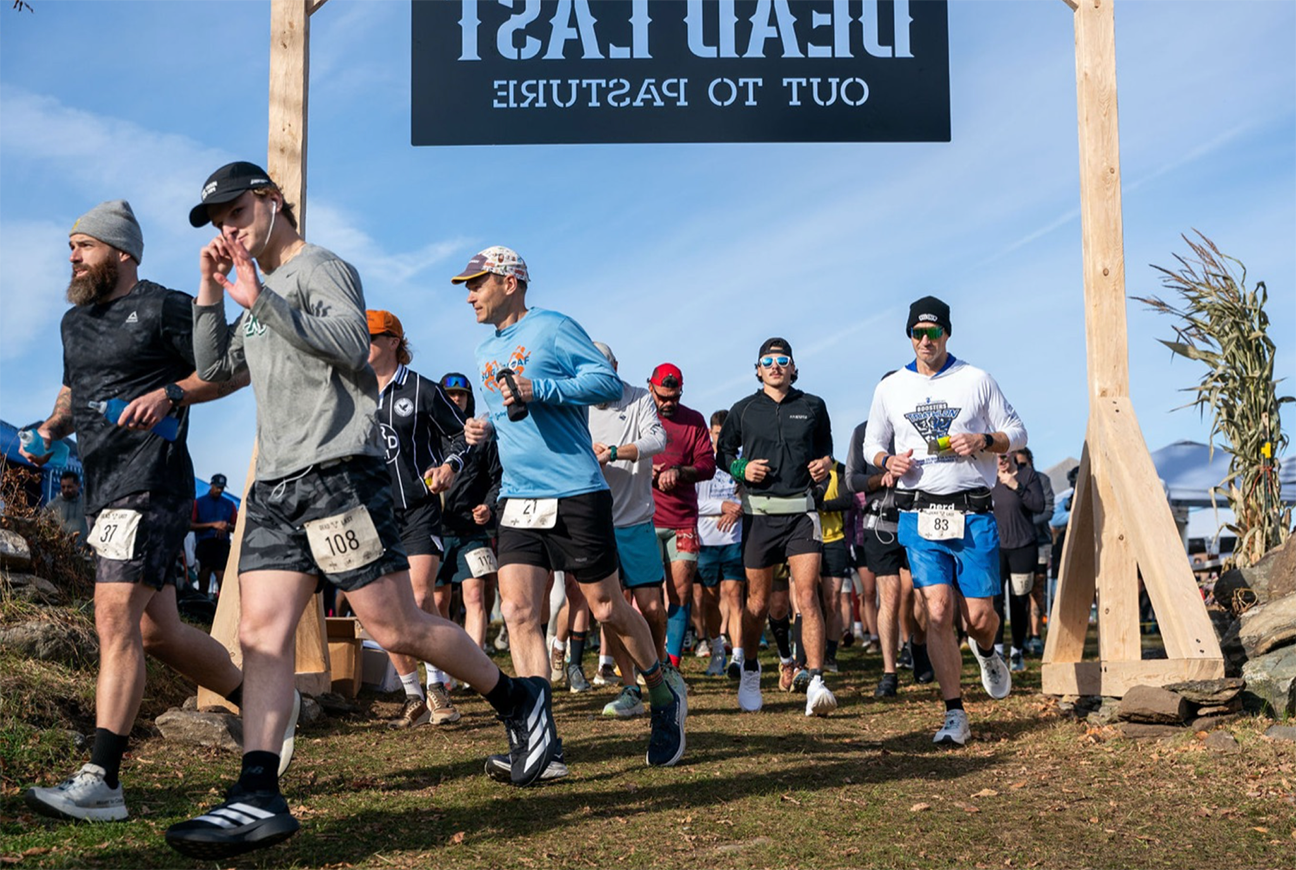
Runners spend days lapping together, and the vibe is more support group than shootout.
Because everyone starts every loop together, the race resets socially every hour. Runners share the corral, swap food and talk each other through the low points. Cantrell made the same point to RUN247: until the field is down to the last two or three, he said, it’s very much a team event, and only then do the mind games start.
The draw extends well beyond hardcore ultrarunners. The 2026 Coffs Backyard Ultra in Australia drew 492 starters, the second-largest backyard field ever, and 209 of them were women, 43 percent of the field and a record for female participation. And the Geerts-Steyaert finish might be the ultimate example of the format’s spirit: two rivals who chose to end it together.
7. It’s a spectator sport
Few ultras are this watchable: the same loop, a countdown every hour and a field that shrinks in real time.
Big’s livestream draws tens of thousands of viewers during its peak hours. The World Team Championship ups the ante by running simultaneously in dozens of countries, turning it into a global scoreboard. This year, 989 runners on 67 national courses combined for 32,827 yards, or more than 136,000 miles, according to UltraSignup.
In October 2026, Team USA won with 1,120 total yards, ahead of Australia’s 1,069 and Belgium’s 1,058, out of 67 nations. Mark Dowdle won the U.S. race at Bell Buckle with 107 yards (about 446 miles), a 13-yard personal best, after teammate Jon Noll timed out on yard 107 and earned the assist with 106. But the real story was depth: eight of the 15 U.S. runners reached at least 80 yards.
8. The records keep exploding
In six years the women’s record has gone from 68 yards to 95, and the overall record now stands at 124.
On the women’s side, Courtney Dauwalter’s 68 yards in 2020 was surpassed by Jennifer Russo at the Capital Backyard Ultra in Virginia, then by Megan Eckert’s 87 in 2024, then by Sarah Perry’s 95 at Big’s in 2025. Perry, a math teacher and mountain rescue volunteer from Cumbria, England, stopped with a sore back—and she wasn’t done chasing.
“Once I’d broken the record, I was really focused on making it to 100 yards,” Perry said.
On the men’s side, Phil Gore ran 119 at Dead Cow Gully in June 2025, then won Big’s later that year with 114 yards, the most ever run at Bell Buckle. In late October, the Belgian duo of Merijn Geerts and Ivo Steyaert pushed the mark to 124 at the World Team Championship. Is there a ceiling? Maybe, but it might be set by sleep, not legs.
9. The Dowdle effect
Dowdle has also become the format’s lightning rod. His rise has come almost as much from his social media savvy as from his results. He has responded to livestream chat as he ran past the cameras at Last Soul. Before the team championship, he publicly called out the Australians for choosing a flat course. And he has gone on mainstream podcasts far from the ultra bubble.
He has also taken aim at trail and ultra media for treating backyards as a sideshow. He’s especially critical of the suggestion that the best mountain and 100-mile runners would dominate if they ever bothered to show up. That has touched a nerve. Comment sections and social feeds have filled with “traditional” ultrarunners dismissing backyards as a made-for-Instagram gimmick and their stars as content creators chasing clicks. There’s one thing that’s certain: he’s a one of a kind and he’s at the forefont of backyard ultras because he’s good but also because he’s got moxie. Trail Runner even titled its profile of him “Whatever You Think of Him, Mark Dowdle Is Built for the Backyard Ultra.”
(If you’re interested in learning more about Dowdle and the current state of backyard ultras, you should listen to his interview with Finn Melanson on the Singletrack Podcast or watch it on YouTube.)
But here’s the thing: the results don’t care about the noise. Running 4.167 miles every hour for four or five days, on fragmented minutes of rest, is a different test from a mountain 100-miler, not a lesser one. Some of the sport’s most versatile athletes have proved it. Harvey Lewis, a Badwater 135 champion, has won Big’s. Dauwalter, the UTMB and Western States champion, won the U.S. race at Big’s in 2020.
Sarah Perry, a British fell runner and mountain rescue volunteer, holds the women’s record. Dowdle himself won the Arrowhead 135, a frozen 135-mile race across northern Minnesota, before his backyard run in 2026. And rather than wait for legacy trail media’s approval, the backyard scene is building its own culture, with its own livestreams, podcasts and stars. It’s a new and different way to approach ultrarunning, sure. But anyone who doubts it’s an authentic challenge should try answering the bell at hour 90.
10. What’s Next?
With no indepedent sanctioning body, the backyard ultra discipline can be a bit of wild, wild west when it comes to structure and rules. As bigger stakes come, so do rules fights, ratification questions and even some hard questions about a lack of drug testing.
In July, Cantrell refused to recognize results from Russia’s Biotropika race, including Dmitry Klimov’s 123 yards and Vera Chekalina’s 96. Video showed non-competitors accompanying runners on the course, which counts as outside assistance. Even the Belgian record was still awaiting official confirmation when it was first reported.
Bigger questions are surfacing, too. Is the backyard drifting from a quirky everyman event toward a specialized discipline with full-time pros? What do five days of running on hourly naps do to the body? And can the world championship system keep up as qualifying races keep multiplying?
Despite all of the unknowns, the backyard ultra scene is booming. If 2026 was the year the backyard ultra broke out, 2027 looks like the year it cashes in.
On October 16, Big’s returns to Bell Buckle as the Individual World Championship, with a 75-runner field: 50 national champions from this fall’s team race plus 25 at-large picks. That sets up a rematch nearly everyone in the sport wants to see, including Dowdle and fellow Americans Jon Noll and Harvey Lewis, Australian Phil Gore, and, of course, Belgians Geerts and Steyaert.
The calendar around it keeps filling, too, with qualifiers popping up from Virginia to Nevada to British Columbia. Meanwhile, the made-for-streaming events are building audiences between races. Last Soul plans to roll out its athlete announcements gradually and launch a weekly podcast to keep fans invested in the runners’ stories. Dowdle says he’ll race less, focusing on Last Soul, BPN’s Go One More and a season-ending final in Germany, with Big’s as a possible fourth.
Where fans go, sponsors follow, and backyard runners are already wearing more logos than they did a couple of years ago. Shoe companies, nutrition companies and watch brands that once barely noticed the format are now signing its stars, and if the audiences keep growing, bigger prize purses seem likely to follow.
Still, the format’s real engine won’t be on a livestream. It’ll be at a few hundred small races on farms, in city parks and on state-park loops, where somebody with a day job decides to see how many yards they have in them. That’s the beauty of the thing: The bell rings for Dowdle exactly the same way it rings for a first-timer. And as long as it keeps ringing, there will always be someone willing to start one more loop.
Upcoming Backyard Ultra Events
Here are some of the upcoming backyard ultra races on the horizon over the next six months or so.
2026
Nov. 28: Bloomfield Backyard Ultra, Bloomfield, KY – Sold out, with a waitlis
Dec. 5: Longhorn Last Standing, Dripping Springs, TX – Sold out, with a waitlist
Dec. 5: Montco Backyard Ultra, Conshohocken, PA – Sold out, with a waitlist
Dec 19: Ultra Sport Backyard Ultra, Hemet, CA
2027
Jan. 16: MAD Backyard Ultra, East Ridge, TN
Jan 23: Saguaro Showdown, Mesa, AZ
Feb. 6: The Wolf Within Winter Backyard Ultra, St. Isle, MN
Feb. 6: Death at DuPuis, Canal Point, FL
Feb. 13: Soil Mates Backyard Ultra, Thomaston, GA
Feb. 20: Endure Better Backyard Ultra, Lakeland, FL
March 5: Queeny Backyard Ultra, St. Louis, MO
March 6: Dead Last Ultra Oklahoma, McAlester, OK
March 13: Two Rivers Backyard Ultra, Echuca, Australia
March 13: Fat Dog Backyard Ultra, Abbotsford, BC, Canada – Sold out
March 13: Little Backyard Adventure, Olympia, WA
March 13: Where Da Gold Aa Backyard Ultra, Saraland, AL
March 20: Dimple Dell Blitz Backyard, Sandy, UT
March 20: Capital Backyard Ultra, Lorton, VA – Sold out, with a waitlist
March 20: Ohio’s Backyard Ultra, Lucasville, OH – Sold out, with a waitlist
March 20: Spring Awakening Backyard Ultra and Relay, Vashon, VA
March 27: Bad Ass Backyard Ultra, Rio Linda, CA
April 3: The Bullshit Backyard Ultra, Lenoxville, PA – Sold out, with a waitlist
April 3: Popeye’s Backyard Ultra, Larkspur, CO
April 17: Grind on the Grid Backyard Ultra, Wingate, IN
Apr. 23: BC Backyard Ultra, Sicamous, BC. – Sold Out
April 23: Elm Creek Backyard Ultra, Maple Grove, MN – Sold Out
April 24: The Eternal Damnation Backyard Ultra, Sylvan Grove, KS
April 24: Bonneville Backyard Ultra, Provo, UT
May 1: Harvest & Howitzer Backyard Ultra, Placerville, CA
May 1: The Oldman Backyard Ultra, Lethbridge, AB, Canada
May 15: Die to Run Backyard Ultra, Muskogee, OK
May 15: Butterfield Blitz Backyard Ultra, Herriman, UT
May 15: Royal Gorge Backyard Ultra, Canon City, UT
May 22: Backyard Ultra of Northern UT, Manuta, UT
May 22: Sparks Backyard Ultra, Sparks, NV
May 22: Perfect PR Backyard By The Ode, Clarkston, MI
May 28: Paradise Backyard Ultra, Paradise, NL, Canada – Sold out, with a waitlist
May 28: Coalfields Backyard Ultra, Williamson, WV
May 29: Blacks Grove Backyard Ultra, Wadena, MN
May 29: Durango Trails Backyard Ultra, Durango, CO
June 4: Momentus Backyard Ultra, Monroe, NC
June 4: Tsalteshi Backyard Ultra, Soldotna, AK
June 5: Coz’s Backyard Ultra, Holland Patent, NY
June 5: Elsa Chicken Plucker Backyard Ultra, Charletson, IL
June 5: Freedom Backyard Ultra Marathon, Bourbon, MO
Oct 9: Lion King Backyard Ultra, Rolla, MO
Mid-Oct. 2027 (approx.): Big Dog’s Backyard Ultra, Individual World Championship, Bell Buckle, TN
RELATED: Find More Backyard Ultra / Last Runner Standing Races on UltraSignup
RELATED: 9 Takeaways from the Mind-Blowing 2026 Backyard Ultra World Team Championship
- Last One Standing: Backyard Ultras Are Booming
- Watch: “Raise The Bar” Celebrates Women in WS100
- Runners for Public Lands Launches “Runners for the Future” Campaign

- The Best Cold-Weather Running Gear
- Hit the Trails for Your Thanksgiving Turkey Trot
- Are You Underfueling? 5 Signs Your Nutrition Isn’t Keeping Up With Your Training