
Traveling to Hong Kong and running on the trails through its legendary country parks was a long-term quest for this American trail runner.
Some travel dreams linger for decades before they finally materialize. For me, Hong Kong was one of those destinations—a place I had wanted to visit since childhood, drawn to it by something I can no longer fully remember. Perhaps it was something I read in a book or a movie, or simply the mystique of a place that seemed to exist at the intersection of everything: East and West, ancient and ultra-modern, dense urban skyline and wild mountain ridgeline.
After launching Trail Runner magazine in the early 2000s, I became intrigued about trail running in Hong Kong after I wrote about a team of American runners who ran the famous Trailwalker 100K event.
The unique event for teams of four runners was established in 1981 as a training exercise by the Queen’s Gurkha Signals, part of the Brigade of Gurkhas of the British Army, which was at the time based in the British colony. It was designed to test the endurance and teamwork of elite soldiers on the MacLehose Trail, a 100K hiking trail established in 1979 across what is known as the New Territories from Pak Tam Chung to Tuen Mun.
The trail itself is named for Sir Murray MacLehose, Hong Kong’s longest-serving colonial governor and an avid hiker who founded the territory’s country park system; it’s since been named one of the world’s 20 “Dream Trails” by National Geographic, and it remains the backbone of nearly every major trail race in Hong Kong, including the one I’d come to run. Trailwalker, meanwhile, outgrew its military roots long ago—it’s now organized by Oxfam as an annual charity fundraiser that draws thousands of civilian participants each year.
In 2001 and again in 2002, the Montrail Protrek Team—captained both years by rising American legend Scott Jurek—made the trans-Pacific flight to compete against several hundred international teams and came away victorious, one of the first indications that the same style of ultra-distance trail running that had started to boom in the U.S. was catching on overseas.
However, for the past 15 years, I found myself often traveling overseas to run trail races in Europe—in Iceland, Germany, Italy, the United Kingdom, and, of course, Chamonix, France. But the interest in traveling to Hong Kong never waned. Whatever planted that seed, it took until January 2026—and a trail race on parts of that same MacLehose Trail—to finally get me there.
I live and train in Colorado, where rugged mountain trails are my natural habitat. Altitude, technical terrain, and long climbs are the textures of my running life. So when I registered for the 33K race at the Hong Kong 100 trail running event, I told myself the training would translate. What I didn’t fully appreciate was just how different—and humbling—those trails on the other side of the world would be.
A City That Exceeds Every Expectation
Landing in Hong Kong after a 14-hour flight from San Francisco, I was struck immediately by how completely the city delivered on its reputation. Known as the “Pearl of the Orient,” Hong Kong is genuinely world-class in a way that few cities are—relentlessly modern, immaculately organized, electric with international energy.
It’s also one of the most densely populated places on Earth, home to more than 7.4 million people packed into just over 425 square miles. And yet, just north of that gleaming skyline, the foothills and mountains rise sharply, almost as if the city is pressing against them, daring them to give way.
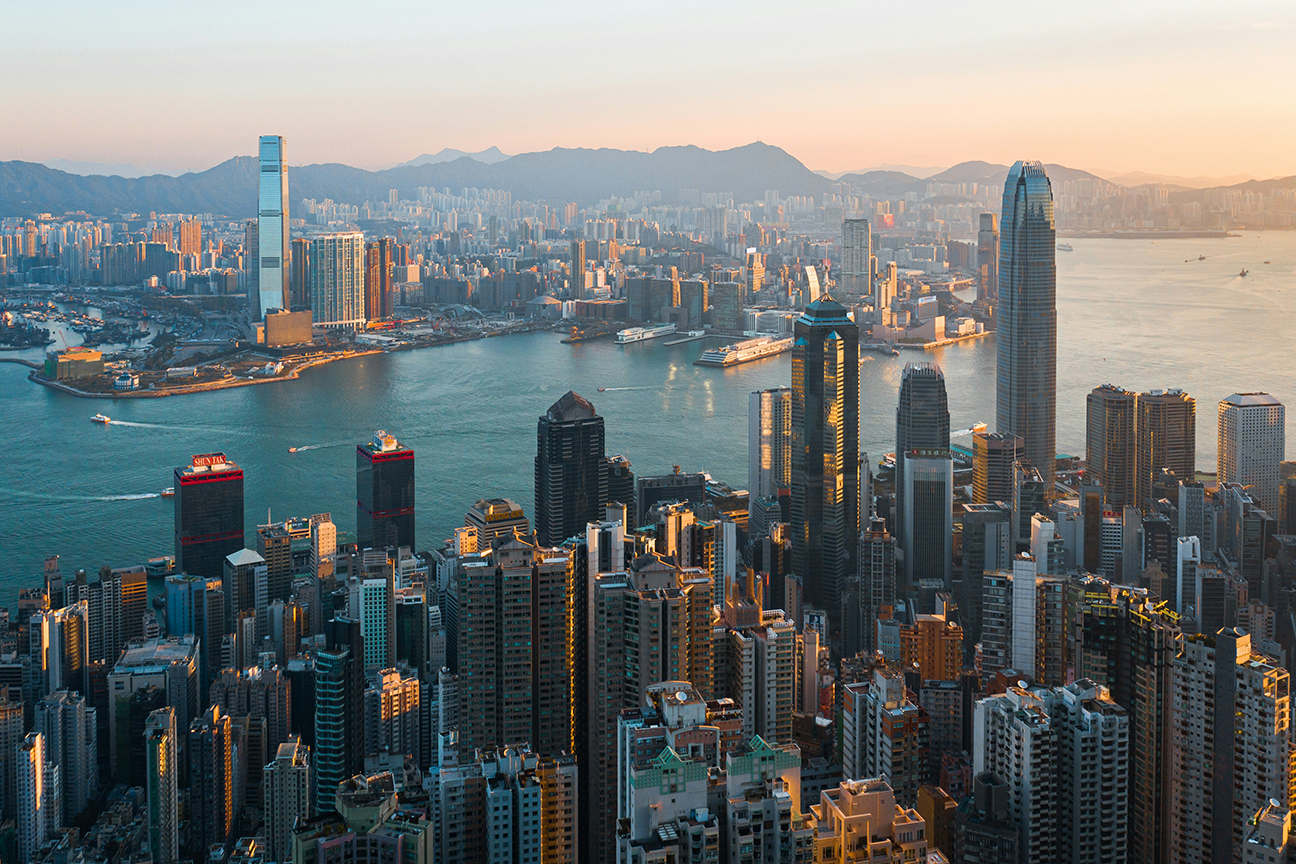
That contrast isn’t an accident: nearly 40 percent of Hong Kong’s land area is protected country park, a green ring that has kept the mountains wild even as the city below has grown into one of the densest on the planet. That tension between the urban and the wild is part of what makes Hong Kong so compelling, and it’s precisely what makes it such a remarkable place to race.
I stayed at the WM Hotel, situated north of the city adjacent to the Sai Kung Waterfront—a quieter, more residential pocket north of the city that gave me a genuine feel for local life away from the tourist bustle. To get into the city for the race expo, I took one of the small green minibuses, a commuter service that felt authentically Hong Kong in the best possible way. Packed with locals going about their day, those short rides were a reminder that I wasn’t just a spectator here. I was navigating a living city on its own terms.
The expo itself was more substantive than I expected. Alongside the race registration and gear vendors, it hosted an Asian trail running conference that covered hot topics remarkably familiar to anyone embedded in the North American or European trail running community—course stewardship, race sustainability, athlete safety, and concern about the impact of the sport’s growing global footprint. It was all a vivid reminder that trail running has become a genuinely international language, spoken fluently across continents.
Find Your Next Race: UltraSignup’s New Event Finder
How it Started
I was excited but nervous when I arrived for the start of the race at Pak Tam Chung, a nature area at the gateway to the Sai Kung Country Park on the eastern edge of the New Territories. It’s the traditional starting point for the entire MacLehose Trail, so it made perfect sense that the races started here.
In the minutes before the 33K race began, I mingled with runners who were finishing warm-up runs, cinching down the gear and nutrition in their trail running vests and taking pre-race selfies with running buddies. While I wasn’t surprised to be able to engage with so many English-speaking runners, I was fascinated by how many European and American expats I encountered before the race.
As we lined up for the start, the typical pre-race butterflies—and perhaps any lingering bit of jetlag—suddenly subsided and I was excited and ready to run. After a brief countdown, we were off, running through the hilly roads of the
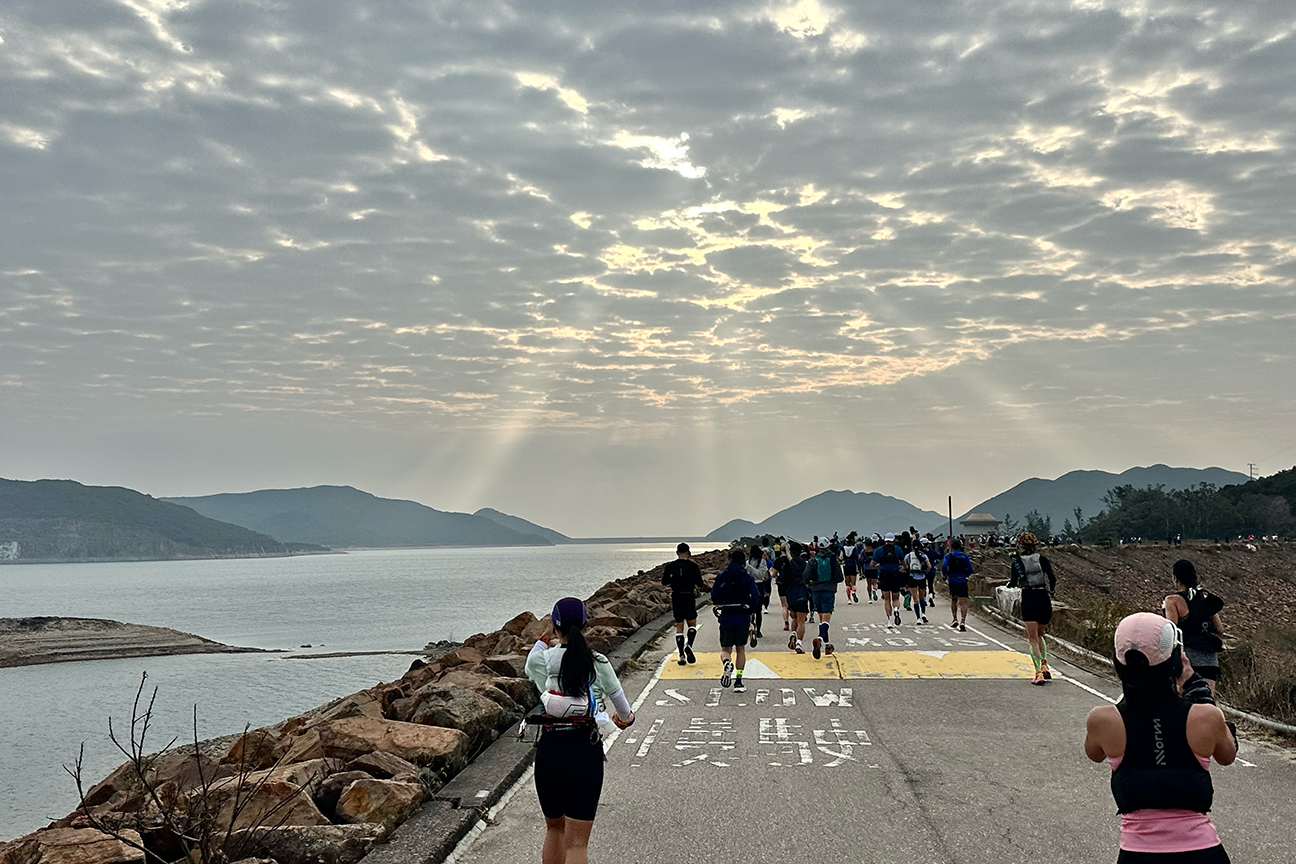
The first 10 kilometers wound around the High Island Reservoir on a rolling road—scenic, manageable, a chance to settle into a rhythm and take in the glittering reservoir views before the real work began. I enjoyed that early stretch more than I probably should have, because what followed was a different race entirely.
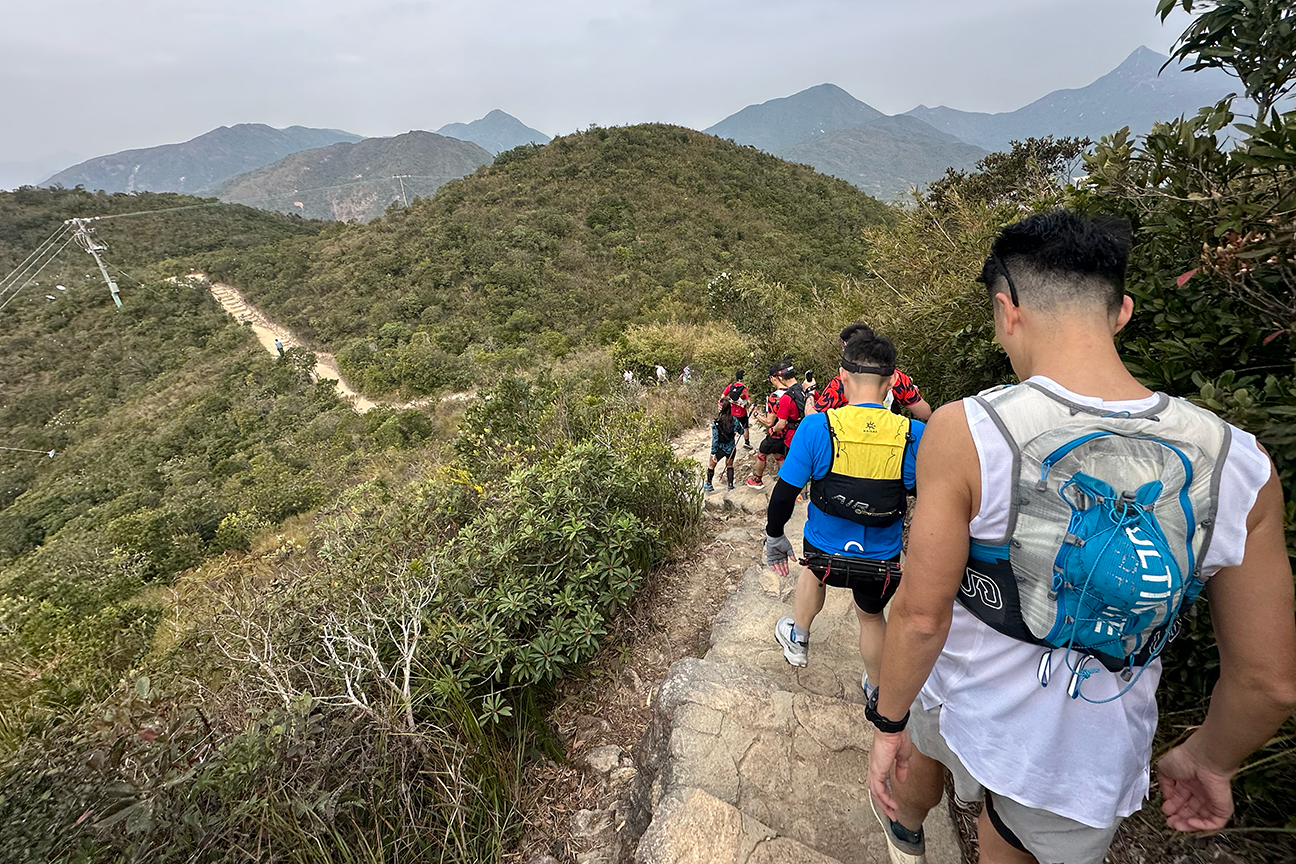
The next 23 kilometers sent the field onto the MacLehose Trail, and the MacLehose Trail does not negotiate. It climbs dramatically, then it drops dramatically. Then it climbs again, and drops again. Along the way were endless steps—slick concrete near the reservoirs and smooth and worn stone steps in the many sections—that were built into the hillsides decades ago to keep the steep slopes from eroding under thousands of hiking boots and trail running shoes a year.
By the third or fourth flight, I had stopped counting steps and started negotiating with my burning quads, as I was not so much running the stairs as I was trying to survive them. But that suffering had a purpose, and a name: the Hong Kong 100.
The Origin of the Hong Kong 100
What elevated the Hong Kong 100 beyond a single memorable race was the event organization behind it. The event was founded by Steve Brammar and Janet Ng, who met as lawyers in London and bonded over a sense of international adventure, each eventually finding their way to Hong Kong, where they discovered trail running and built something intentional and lasting around those shared passions.
“In 2011, we had done a race in Australia and loved it and then we went to a winery afterward and got a bit too crazy and wondered, ‘You know what? Hong Kong could do this kind of race, but even better because it’s such a unique destination,'” Brammar said. “And we were at the winery and Janet says ‘All right, let’s do it.’ So we went for it. And 15 years later, here we are.”
Since its founding in 2011, the Hong Kong 100 has grown into one of the most respected independent trail running events in the world. The flagship race—the Anta Guanjun Hong Kong 100—covers roughly 60 miles with around 17,000 feet of accumulated climbing, depending on the year’s course, and finishes with a celebratory descent from Tai Mo Shan, Hong Kong’s highest peak at 3,100 feet.
The recent additions of the 50K (“The Half”) and 33K (“The Third”) distances have made the event more accessible at a time when trail running is booming in Southeast Asia, allowing it to draw a wider range of runners without diminishing the marquee status of the flagship 100K. This year, the 50K and the 33K (run on the days preceding the 100K) drew about 500 runners apiece, while the 100K had a sold-out field of 1,800 runners out of roughly 3,000 total participants from 60 countries across all distances.
Since the 33K race was added in 2023, a handful of runners attempt to finish all three races over three consecutive days, a category that has officially become known as the “Grand Sam”—named after local runner Sam Tam, who was the first to finish all three. Even before I started the 33K race, it sounded like an enormous undertaking—113 miles with about 30,000 feet of vertical gain and loss. Sure, those three events are all held on separate days, but those stats exceed the race course data of the Ultra-Trail du Mont-Blanc in France, the FatDog 120 in Canada, and the Hardrock 100 in Colorado.
The Hong Kong 100K serves as the season opener for the World Trail Majors, a series of respected independent ultra-distance races around the world that was organized in 2023 as a notable alternative to the rise of the UTMB World Series. The races of World Trail Majors mirrors the values of Brammar and Ng and reflects the reason they started the race, namely to create a culturally authentic event that is built around the community of the Hong Kong running scene and fostered by those who participate each year.
That community, it turns out, is as international as the city itself. I’ve run trail races in Chile, South Korea, Thailand, Iceland, France, and on the Great Wall of China, so I’m no stranger to international trail running scenes. But the Hong Kong 100 gathered a particularly diverse crowd—athletes from across Southeast Asia, European emigrants working in the region, and a notable contingent of American expats who have made Hong Kong home. It felt less like a regional event that had grown large and more like a genuinely global gathering that happened to be rooted in one extraordinary place.
Onto the Finish
Where mountain trails in Colorado tend to follow the natural contour of the land, switchbacking gradually upward, many sections of the MacLehose Trail were often direct and unrelenting, ascending and descending in ways that punished the legs in entirely new ways
The trail doesn’t give you a rhythm so much as it keeps taking one away—just when your legs settle into a climbing gear, the ground drops out from under you and it’s quads and knees doing the braking all over again. That constant switching between concentric climbing effort and eccentric, joint-jarring descent is what wrecks you on the MacLehose in a way flowy singletrack never does; by 20 kilometers in your legs aren’t tired so much as they’re confused about what they’re even being asked to do next. I was deeply grateful for the lightweight trail running poles I’d bought at the race expo. Without them, I’m not sure I would have made it to the finish.
But the relentless climbs came with a great tradeoff. From the ridgelines, the views opened into something breathtaking—the open South China Sea stretching to the horizon to the east, and, in a slightly southeasterly direction, even a glimpse back toward the Hong Kong skyline. Running toward those views, legs aching and lungs working hard, I felt the particular kind of vitality that only difficult, beautiful places can produce.
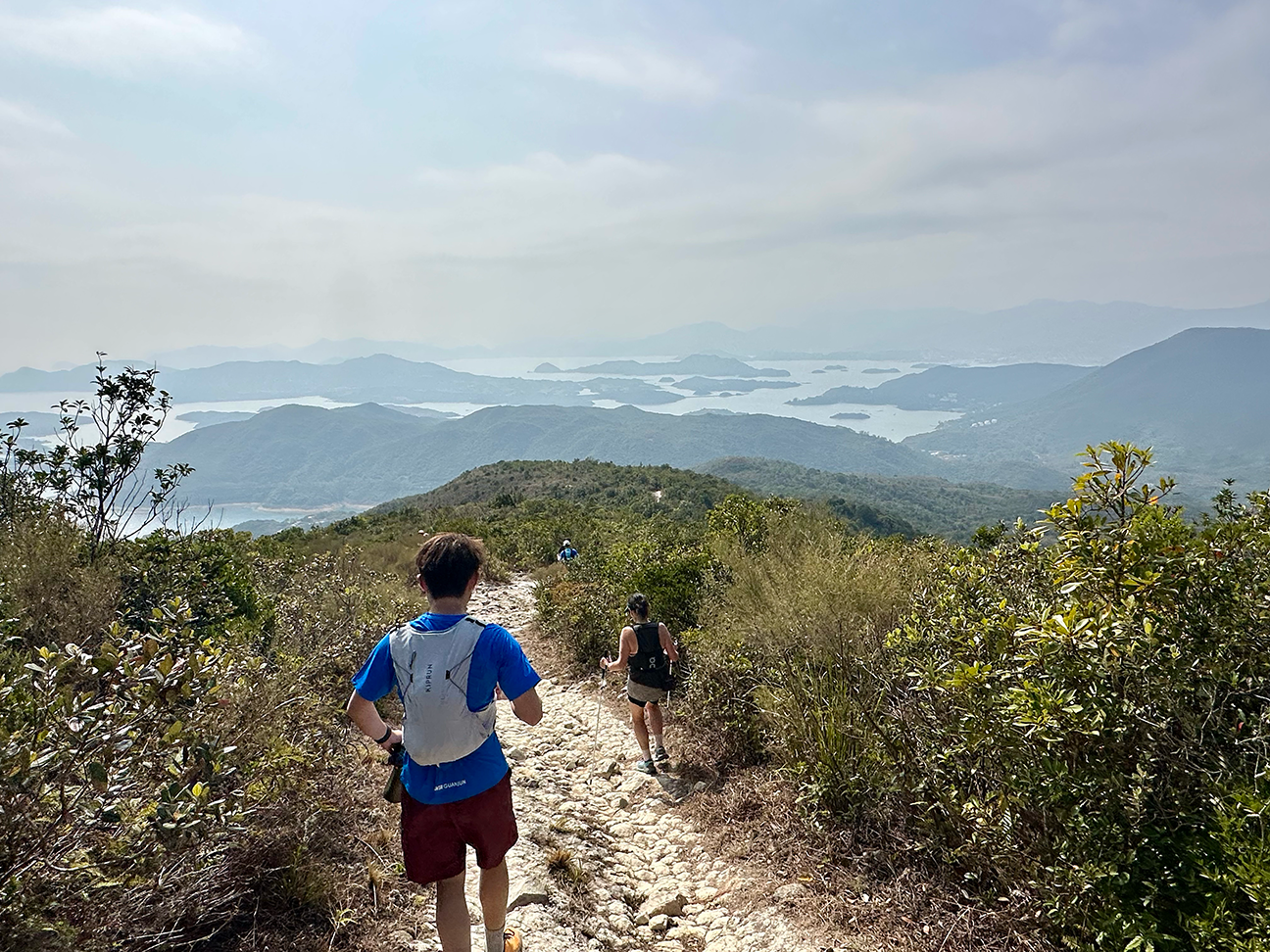
By the time I hit the last stretch of stair steps down the MacLehose Trail and back into Sai Kung Country Park, my legs had grown used to doing what I told them to, even if it took a notable disengagement from my mind to allow that to happen. The final stretches of the 33K course served up views out over the ocean that made the burning quads worth it.
I crossed the finish line physically exhausted yet deeply satisfied, inside the top 30 percent of the field. That felt good, but honestly the better payoff came from logging that vert alongside the enthusiastic and spirited community runners from China, Vietnam, Malaysia, Singapore, and the Philippines—the same welcoming, easygoing trail culture that showed up right there on the course and made a hard run feel like something closer to a shared and worthy experience than a solo grind of quad-burning agony.
Crossing that line, the fatigue in my legs was real, but it was almost beside the point—what I actually felt was clarity, the kind that only comes after you’ve asked your body a hard question and it answered.
There’s a particular mental charge that comes from finishing something in a place that took you decades to reach, on a trail that had spent 23 kilometers trying to break you and hadn’t quite managed it.
I didn’t come away from the Hong Kong 100’s 33K race thinking about my time or my place in the field; I came away recalibrated, reminded of why I keep chasing races like this in the first place. That feeling followed me off the mountain and into the rest of my time in Hong Kong and even back in Colorado, a low hum of energy that no amount of quad soreness could touch.
Postscript
Not long ago, trail running was largely a regional pursuit—a niche passion practiced by mountain-obsessed people who preferred to immerse themselves in nature over parading over the pavement of city streets.
That’s still very true, but starting with the intrigue of qualifying for the Western States 100, then proliferated by the rise of the UTMB World Series and the World Trail Majors, not to mention the never-ending ability to see stunning footage while doom scrolling social media on our phones, trail running has become a sport of international intrigue, even and especially for those runners in the middle and the back of the pack.
No matter if you’re an aspiring elite runner or a committed age-group runner interested in pursuing far away challenges, the world can be your oyster if you have a passport and the willingness to buy a transcontinental airline ticket.
For U.S. trail runners considering an international race adventure, the Hong Kong 100 deserves serious attention. The combination of world-class urban infrastructure and immediately accessible mountain terrain is genuinely rare. You can land at one of the world’s busiest and most efficiently run airports, stay in a city that is easy to navigate, eat extraordinarily well, and within a short bus or taxi ride find yourself on technically demanding trails with ocean views.
The race organization is polished. The trail running community is welcoming and deeply international. And Hong Kong itself—with its rich culture, extraordinary cuisine, and stunning sights, shopping and scenery—rewards every hour spent exploring it before or after the race.
Months removed from that January start line, I still find myself thinking about Hong Kong—the reservoir glinting in the early morning light, the sea appearing suddenly from the ridgelines I’d worked hard to reach. Some travel dreams, once they finally materialize, have a way of recurring your mind, even after they’ve materialized in real life.
Other International Races to Consider
WildMarathon: Yeti Marathon, October 20, Manag, Nepal,
WildMarathon: Cappadocia Marathon, Nov. 8, Goreme, Turkey
Manaslu Trail Race, Nov. 7-19, Kathmandu, Nepal
Pokhara, Ultra, Dec. 5-6, Pokhara, Nepal
St. Croix Scenic 50, Jan. 17, St. Croix, U.S. Virgin Islands
Ultra Marathon Caballo Blanco, March 6-7, 2027, Urique, Mexico
Ocean to Ocean, March 12-14, 2027, Salud, Panama
Ultra X Sahara, March 22-27, 2027, Chegaga, Morocco
- Last Call for Fall Trail Running in the Alps
- The Best Trail Race You Haven’t Yet Considered Is in Hong Kong, Not the Alps
- The Best Trail Running in and around U.S. National Parks
- 9 Insights About Planning a Trail Running Vacation

- A Trail Runner’s Guide to Visiting San Antonio

- 14 Trail Races Outside of the U.S.

1 comment
Smithy
Great write up of a great event. It’s not just the beautiful scenery and amazing course or the chance to visit a truly unique city. It’s the volunteers – so helpful, such great energy. That’s one of the reasons runners want to come back every year. Hopefully the quotas for The Third and The Half can be increased so that more runners can experience this amazing event in an amazing place.