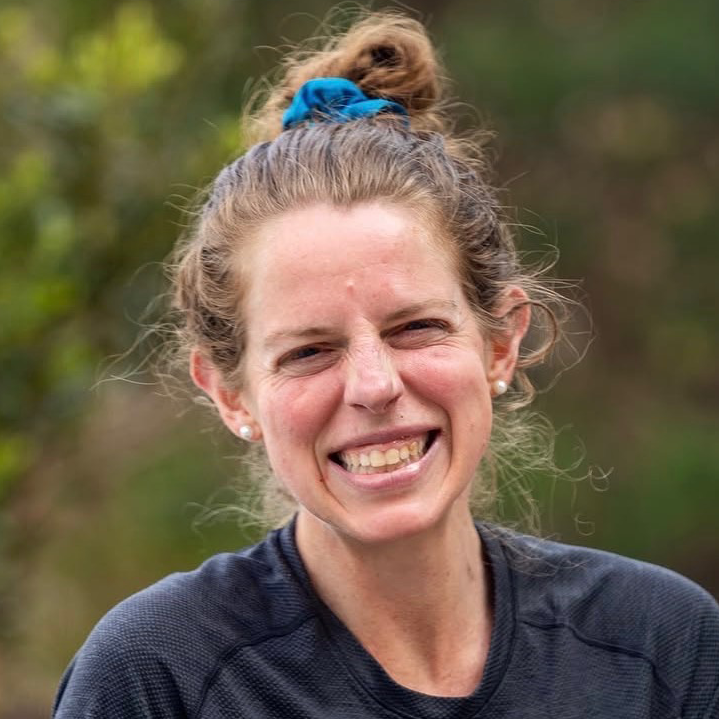
In ultrarunning, the narrative often centers on distance, elevation, and time metrics that attempt to quantify something inherently unquantifiable. But athletes like Marisa Romeo challenge that framework. For her, performance is not just a physiological output; it is a psychological process, one that unfolds moment by moment over the course of hours or days on the trail.
Romeo occupies a rare dual role within the sport: a competitive ultrarunner racing distances up to 100 miles, and a certified mental performance consultant with a doctorate in sport and performance psychology. Through her work and her racing, she is helping redefine endurance, not as an act of toughness alone, but as a dynamic interaction between mind, body, and identity.
Based in Asheville, North Carolina, the 31-year-old former college soccer player and rising ultra competitor leads Romeo Performance Consulting, where she works with athletes across disciplines and ability levels. Her research emphasis on psychological flexibility and flow states is not abstract; it is lived, tested, and refined through her own experiences in competition.
The Metrics and What They Don’t Show
On paper, Romeo’s results reflect both excellence and volatility, hallmarks of an athlete operating at the edge of her capacity.
Her performance at the Hellbender 100 in 2022 stands as a defining result: third overall, first female and, at the time, the second-fastest finish (26:15:31)on a course known for its steep climbs, technical terrain, and cumulative fatigue. It was a breakthrough not only in placement, but in demonstration of her ability to sustain effort deep into the later stages of a 100-mile race.
At shorter ultra distances, she has shown similar strength. A first female finish at the Looking Glass 100K (2023) and a win at the Roaring Gap 50K (2020) highlight her range and competitiveness. These results suggest an athlete with both speed and endurance, an increasingly necessary combination in modern ultrarunning.
But performance, in Romeo’s case, cannot be understood through results alone.
Her record also includes a series of DNFs that, at first glance, might appear as inconsistencies: the Canyons 100 Mile (2023), The Big Alta 50K (2024), Ultra-Trail Snowdonia 100K (2025), and Grindstone 100K (2025). These are not minor races; they are highly competitive events with deep fields and demanding courses.
Rather than anomalies, these outcomes represent something more significant: exposure to the limits of not just physical endurance, but psychological rigidity.
“I wasn’t failing because I wasn’t strong enough,” she reflects. “I was failing because my identity was too fragile to withstand anything less than perfection.”
This distinction, between physical limitation and psychological constraint, is central to her work.
When Fitness Isn’t the Limiter
In endurance sports, it is easy to default to physical explanations for performance outcomes: nutrition errors, pacing mistakes, inadequate training. But Romeo’s experience points to a more complex reality.
At the elite level, fitness is often sufficient. What differentiates outcomes is how athletes respond when that fitness is tested, when discomfort escalates, when expectations begin to fracture, when the race stops aligning with the plan.
For Romeo, earlier phases of her career were characterized by a performance-contingent identity. Success reinforced self-worth; anything less destabilized it. This created a narrow psychological bandwidth, one that left little room for error, adaptation, or uncertainty.
“I began to understand that the real work wasn’t happening on trails… it was happening inside me.”
This realization marked a transition from an outcome-driven approach to a process-oriented one, grounded in awareness rather than control.
Psychological Flexibility in Practice
Central to Romeo’s evolution is the concept of psychological flexibility, the ability to remain present, adapt to changing conditions, and continue pursuing meaningful action even in the presence of discomfort.
In ultrarunning, this skill is not optional. Races unfold over hours, often in unpredictable conditions. Fatigue alters perception. Small issues compound. Plans unravel.
A rigid mindset interprets these disruptions as failure. A flexible mindset integrates them.
Romeo’s professional work draws heavily from acceptance and commitment therapy (ACT), which emphasizes shifting the relationship athletes have with their thoughts rather than attempting to eliminate them. Instead of resisting discomfort, athletes learn to make space for it.
This approach has direct application in racing. The difference between continuing and dropping out is often not the absence of pain, but the ability to coexist with it.
Reconstructing Identity
One of the most profound shifts in Romeo’s journey has been the reconstruction of identity.
For years, her sense of self was tightly coupled with performance. This is common in high-achieving athletes, particularly in endurance sports where the investment of time, energy, sacrifice is substantial.
But this narrow identity comes at a cost. When performance fluctuates, so does self-worth.
“Human beings are not meant to be one thing,” she says. “We are meant to be layered.”
By expanding her identity beyond running, to include her roles as a psychologist, educator, and individual outside of sport, Romeo created a more stable foundation. This diversification did not diminish her competitiveness; it strengthened it.
“When my worth no longer hinges on outcomes, competition becomes joyful,” she admits.
This is not a rejection of ambition, but a recalibration of its source.
Returning to the Start Line Differently
The impact of this internal work is most visible not in a single result, but in the way she now approaches competition.
At races following her earlier DNFs, she describes lining up with a fundamentally different mindset one less attached to outcome and more attuned to process.
“For the first time… I lined up without an attachment to winning.”
This shift does not eliminate pressure, but it changes its structure. Instead of pressure as a threat, it becomes information—something to notice, not something that dictates behavior.
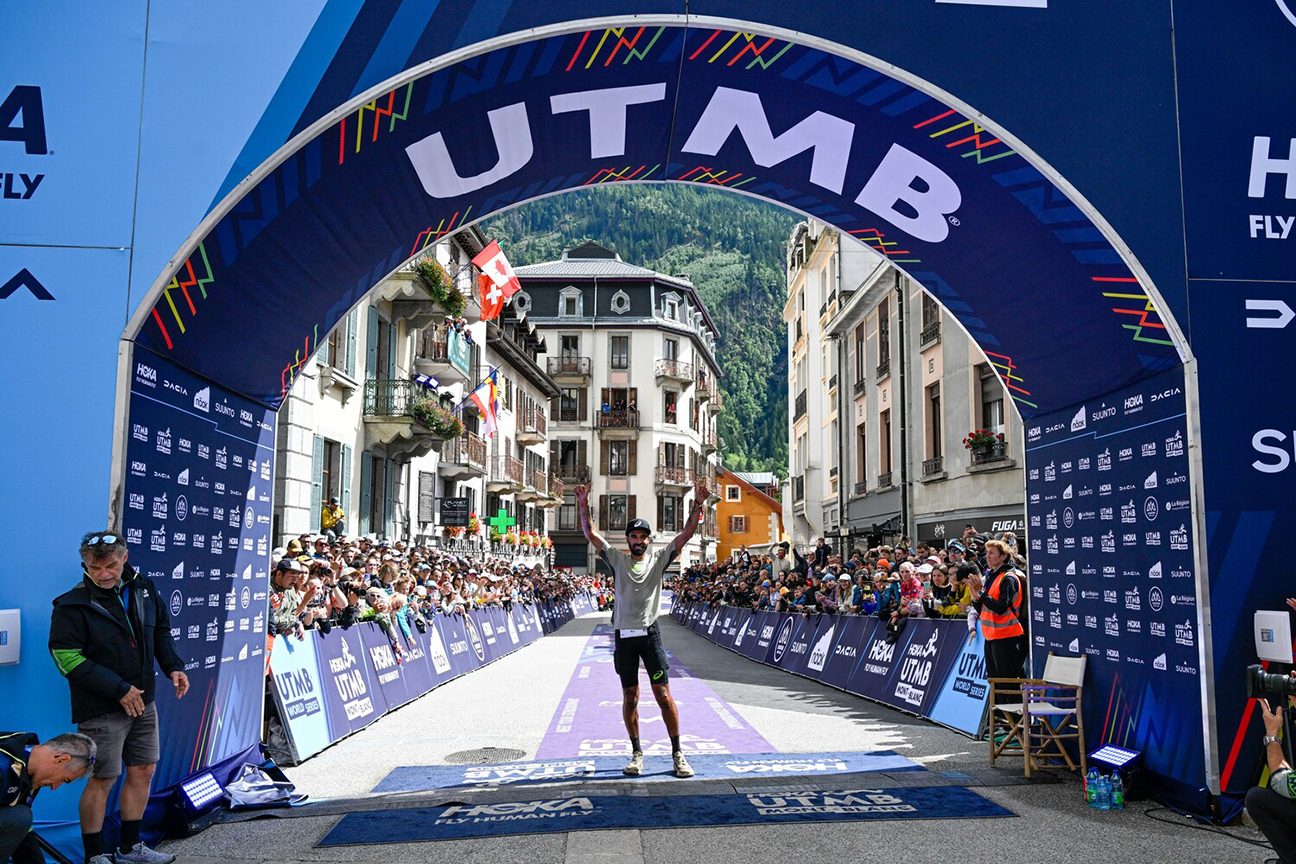
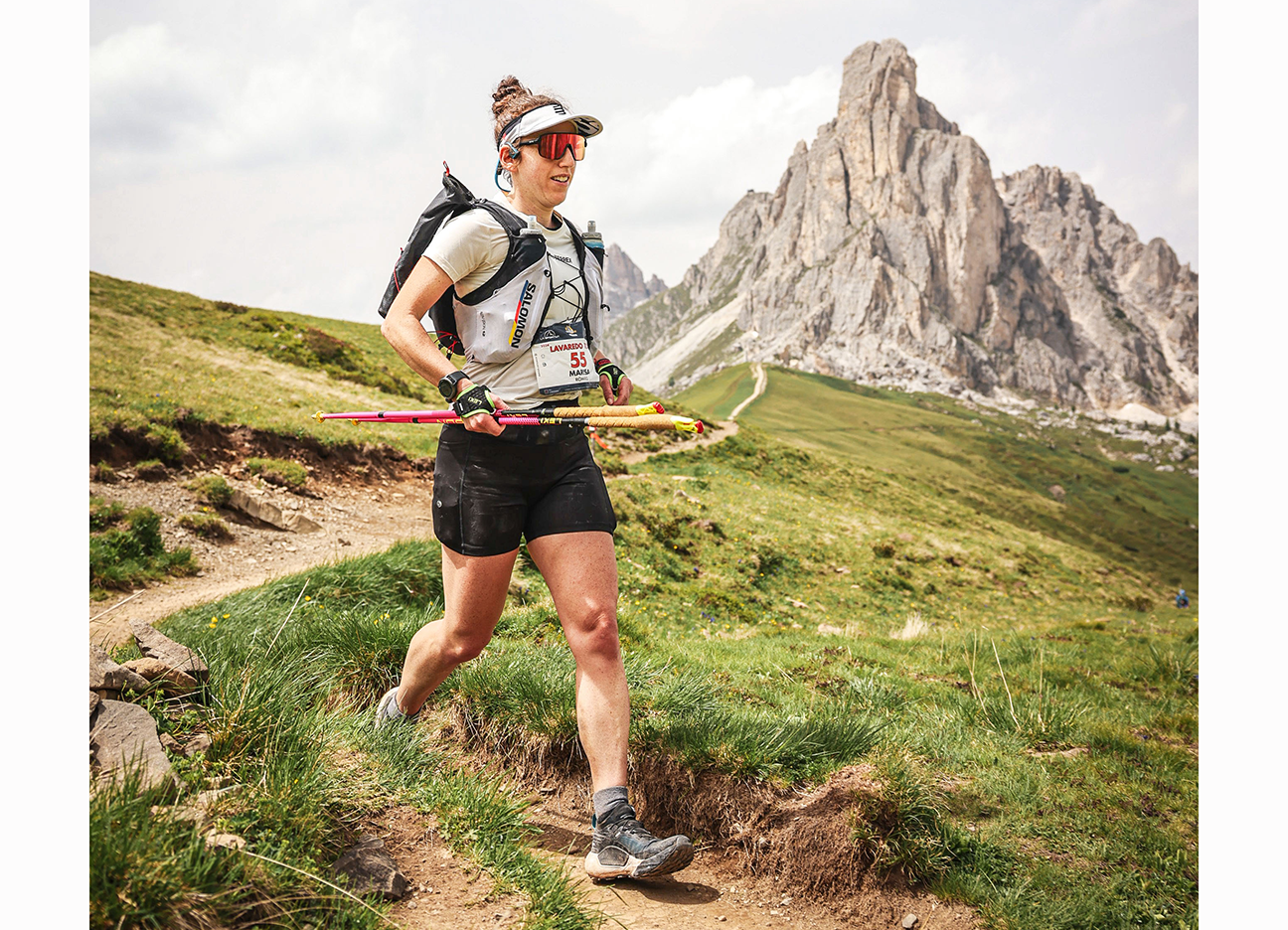
Her completion of the Ultra-Trail du Mont-Blanc 171K race (2025), placing 22nd among women in 30:18:06, reflects this evolution. In one of the deepest fields in the sport, the result is significant. But more importantly, it represents continuity: the ability to stay engaged over the full duration of the race.
Bridging Science and Lived Experience
What distinguishes Romeo within ultrarunning is not just her credentials, but her ability to integrate them with lived experience.
She does not approach athletes from a purely clinical perspective. She understands, firsthand, the internal dialogue of a race, the oscillation between confidence and doubt, the negotiation with discomfort, the subtle shifts in motivation.
Her work emphasizes that mental skills are not abstract tools to be applied occasionally, but practices to be developed consistently. Awareness, acceptance, and adaptability are not race-day strategies; they are daily ones.
A Broader Definition of Strength
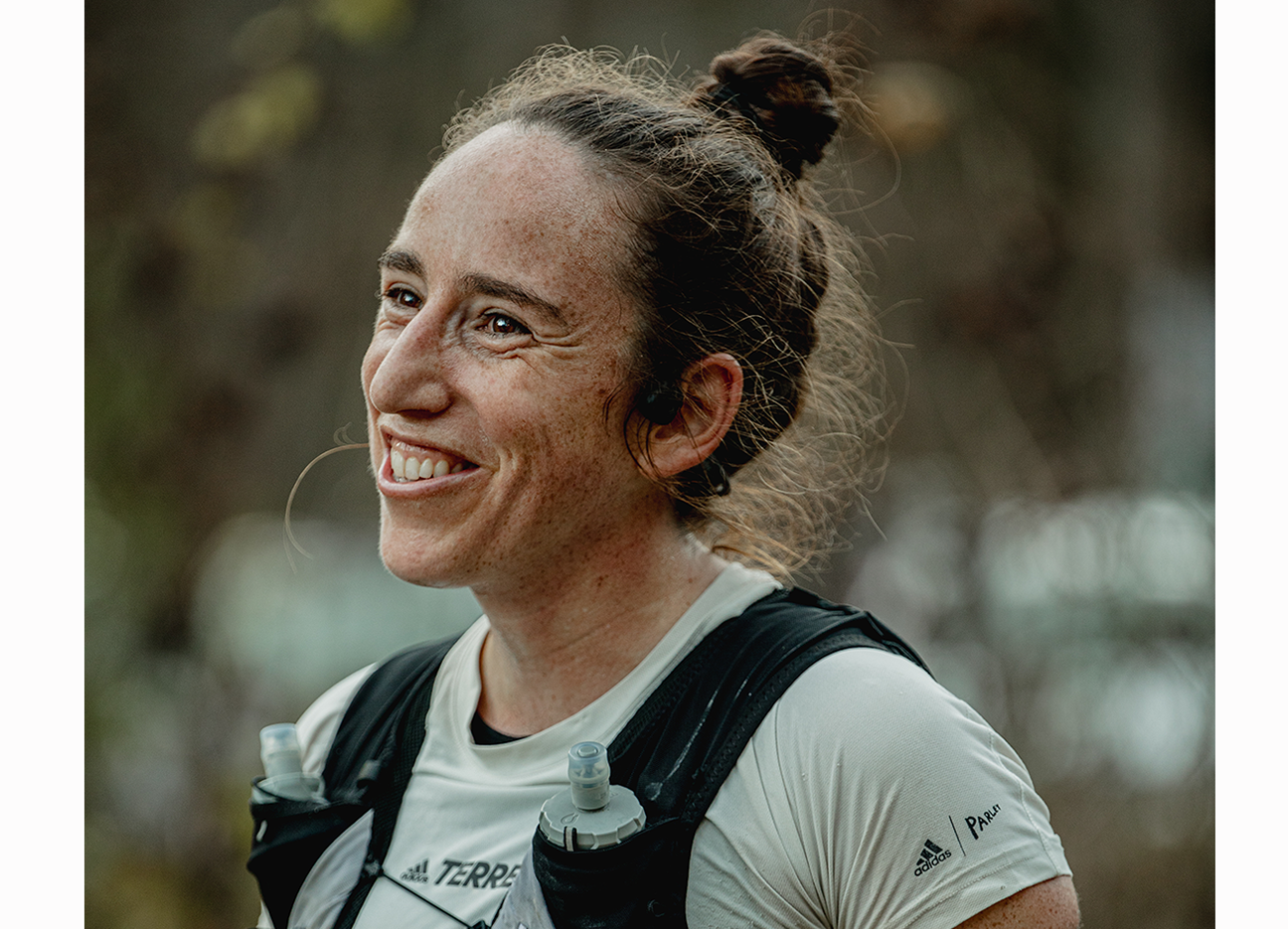
In a sport that often glorifies toughness, Romeo offers a more nuanced definition of strength.
Strength, in her framework, is not the suppression of discomfort, but the capacity to engage with it. It is the ability to continue forward without needing the experience to be different than it is.
Her career marked by both podiums and DNFs illustrates this principle. The wins demonstrate capability. The unfinished races reveal exposure. Together, they map a trajectory of growth that is neither linear nor predictable.
“I no longer run to validate myself. I run because I am myself.”
The Future of Endurance
As ultrarunning continues to evolve, the integration of psychological skill development is becoming increasingly central. Athletes are recognizing that physical preparation alone is insufficient for sustained performance.
Marisa Romeo represents a model of this integration, where science informs practice, and practice refines science.
Her journey suggests that the future of endurance sport may not be defined solely by faster times or longer distances, but by a deeper understanding of the human experience within them.
Because in the end, ultrarunning is not just about how far the body can go, it’s about how the mind chooses to meet it there.
Born and raised in Atlanta, Georgia, Allison Mercer is a dedicated endurance athlete and outdoor advocate. A member of the 2024 U.S. team for the 100K World Championships, she now serves as Head of the Fastest Known Time (FKT) website, where she helps connect and inspire a global community of runners, hikers, and adventurers pursuing iconic routes around the world.
RELATED: Life is an Ultra: Amanda Basham has Learned How to Juggle a Busy Life
RELATED: Trail and Ultra News Recap for March 23
RELATED: For Rajpaul Pannu, Actions Speak Louder Than Words
RELATED: Why You Should Repeat Races, Workouts, and Anything That Makes You Happy
RELATED: Des Linden is Targeting Big Trail and Ultrarunning Races in 2026
RELATED: For Rajpaul Pannu, Actions Speak Louder Than Words
RELATED: 5 Key Takeaways from the 2026 Cocodona 250 and How it Could Shape the Future of the Sport
RELATED: The 2026 Cocodona 250: Who’s Running, How to Watch It, Next Year’s Lottery, and more