Katie Bumatay won her first backyard ultra, highlighting how accessible the quirky discipline can be to any runner, even if you’ve never considered running ultras before.
Katie Bumatay didn’t know what she was getting into. That turned out to be her secret weapon.
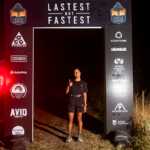
The 28-year-old Seattle runner had never run an ultramarathon when she lined up for the Lastest Not Fastest backyard ultra on Oct. 3 in North Bonneville, Washington. In fact, her longest race to that point was a half marathon. She did log a 40-mile solo training effort broken into 10 segments a few weeks earlier as part of a backyard test run, looping around a lake by herself with her car as an aid station. But she admits she was still a novice when it came to long-distance running.
Still, two days and 43 loops after the start, she was the last runner standing, having covered 177.59 miles to win her first backyard-style race, and the first ultra of any kind she had ever entered. Inspired by watching Rachel Entrekin become the outright winner at the Cocodona 250 in May, Bumatay not only set a new women’s record for the event, but also a new overall record.
“I definitely surprised myself,” Bumatay says. “I had no expectations and was trying not to predict or fill in the gaps. I just let it be unknown, which I think was helpful.”
The unknowns are a big part of backyard ultras, a format that has gone from quirky niche to one of the hottest corners of the sport in just a few years. There’s no set distance and no finish line, just a loop, a clock and the question of who blinks first. And Bumatay’s run is a pretty good example of why so many runners are lining up to find out.
RELATED: Last One Standing: Why Backyard Ultras Are Booming
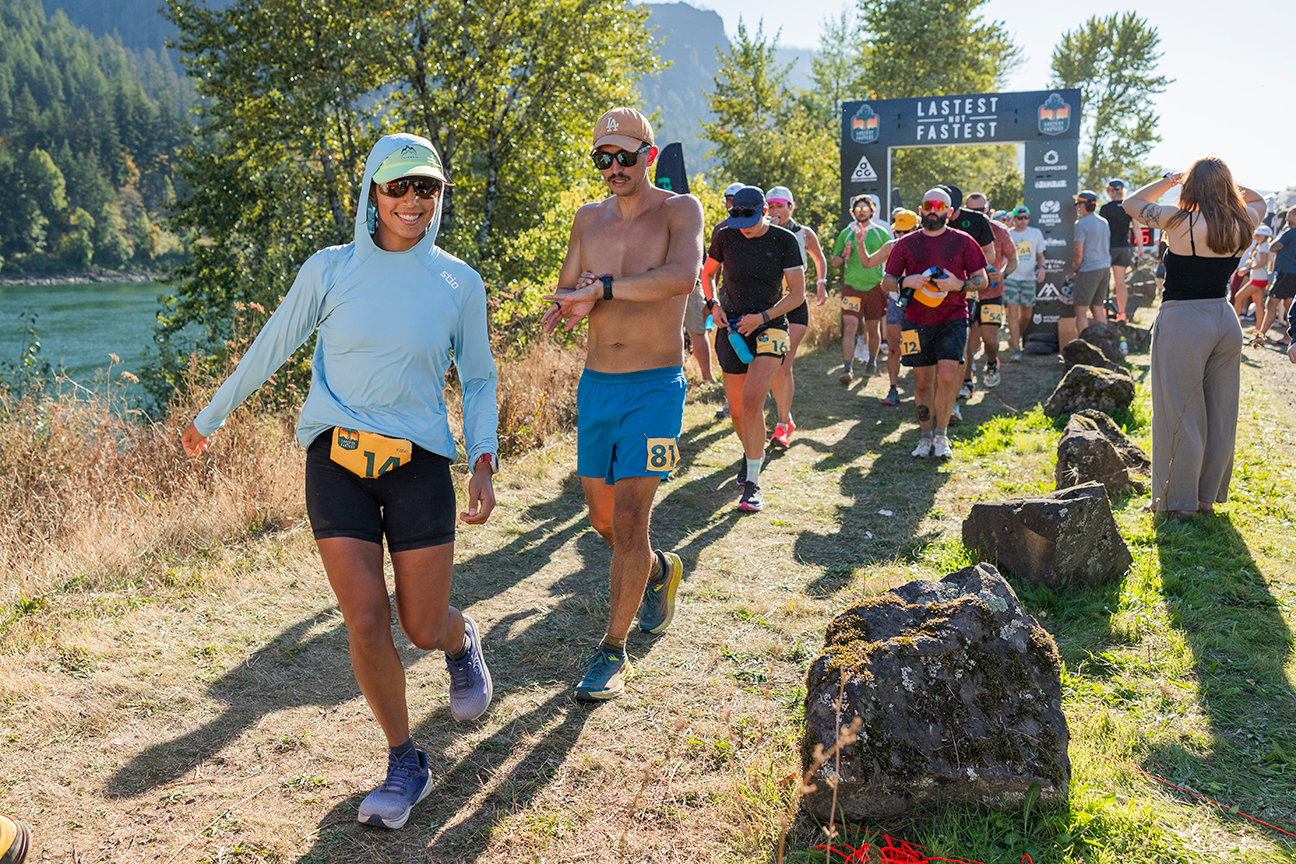
Every Hour, On the Hour
The backyard ultra format is credited to Gary “Lazarus Lake” Cantrell, the mischievous mind behind the Barkley Marathons. He held the first Big’s Backyard Ultra in 2011 on his property in Bell Buckle, Tennessee, and named it after his dog, Big. The rules are deviously simple. Every hour, on the hour, runners start a 4.167-mile loop and must finish it within the hour.
Run a fast lap and you get more time to eat, change socks or lie down before the next start. Miss the cutoff and you’re out. Twenty-four loops make 100 miles, but nobody stops there by choice. The race goes on until one runner completes a loop alone. That runner is the only official finisher. Everyone else, no matter how far they went, is recorded as a DNF.
Big’s is now an invitational, and runners earn a spot by winning backyard races around the world. Those qualifiers have multiplied fast. There will be roughly 125 to 130 backyard-style races in the U.S. and Canada in 2026, a staggering number for a format that barely existed a decade ago.
Why the boom? Part of it is accessibility. Anyone who can cover four miles in an hour can show up and play, and the loop structure means no runner is ever more than a few miles from food, a chair and a cheering crew. Part of it is the drama. A backyard race is a head-to-head battle of attrition that can stretch for days, and it’s built for livestreams and group texts. And part of it is the way the format strips away the variables. There’s no pace to chase, no course to study, no finish line to fixate on. There’s just the next loop.
“I think the format is really cool to just take away a few other variables and simplify it,” Bumatay says. “You get into a rhythm and know what to expect every hour.”
A Soccer Player Finds Her Rhythm
Bumatay grew up on the outskirts of Los Angeles and has lived in Seattle for almost six years, where she works as a UX designer. Soccer was her sport from late elementary school on, and she still plays in an adult co-ed rec league. Running was something she did to stay fit for soccer, and she did it one way: hard.
“My concept of running was to go run at 80 to 90 percent effort, and that’s a run,” she says. “I had never done an actual training block before.”
That changed this summer when she discovered the idea of an easy run, and with it the realization that she could run more often and simply enjoy being outside. Her racing résumé was thin: a half marathon and a 10K in college, neither with much specific training. But by early spring she had been introduced to ultrarunning and started thinking about a 50K or a 50-miler. Then she stumbled onto the quirky concept of backyard ultras.
“I was like, I think that actually might work really well for my brain,” she says, “just testing pure endurance instead of pushing speed.”
Before committing, she wanted to be sure. So she mapped out a loop near Green Lake in Seattle, prepped her food the night before, parked her car as a makeshift aid station and ran her own one-person backyard. She planned on six to eight loops. She ran 10, about 40 miles, by far the longest run of her life, and stopped only because she had already answered the question she came out to ask.
She found Go Beyond Racing’s Lastest Not Fastest on UltraSignup and applied to the Trail Mix Fund, a nonprofit started in 2021 by race director Renee Janssen to help increase diversity in trail running by covering entry fees for runners who might not otherwise make it to a start line. When Bomatay was accepted, the decision was made.
“This is getting me to the start line,” she remembers thinking.
Six Weeks and a Spreadsheet
Bumatay’s formal training was compressed, to say the least. She had been running consistently all summer but didn’t start following a plan until six weeks before the race. With no idea how to train for a backyard, she downloaded a 12-week, 100-mile training plan in the Coros app and jumped in at the halfway point.
“I was like, well, in theory this is preparing me to run 100 miles,” she says. “We’ll see.”
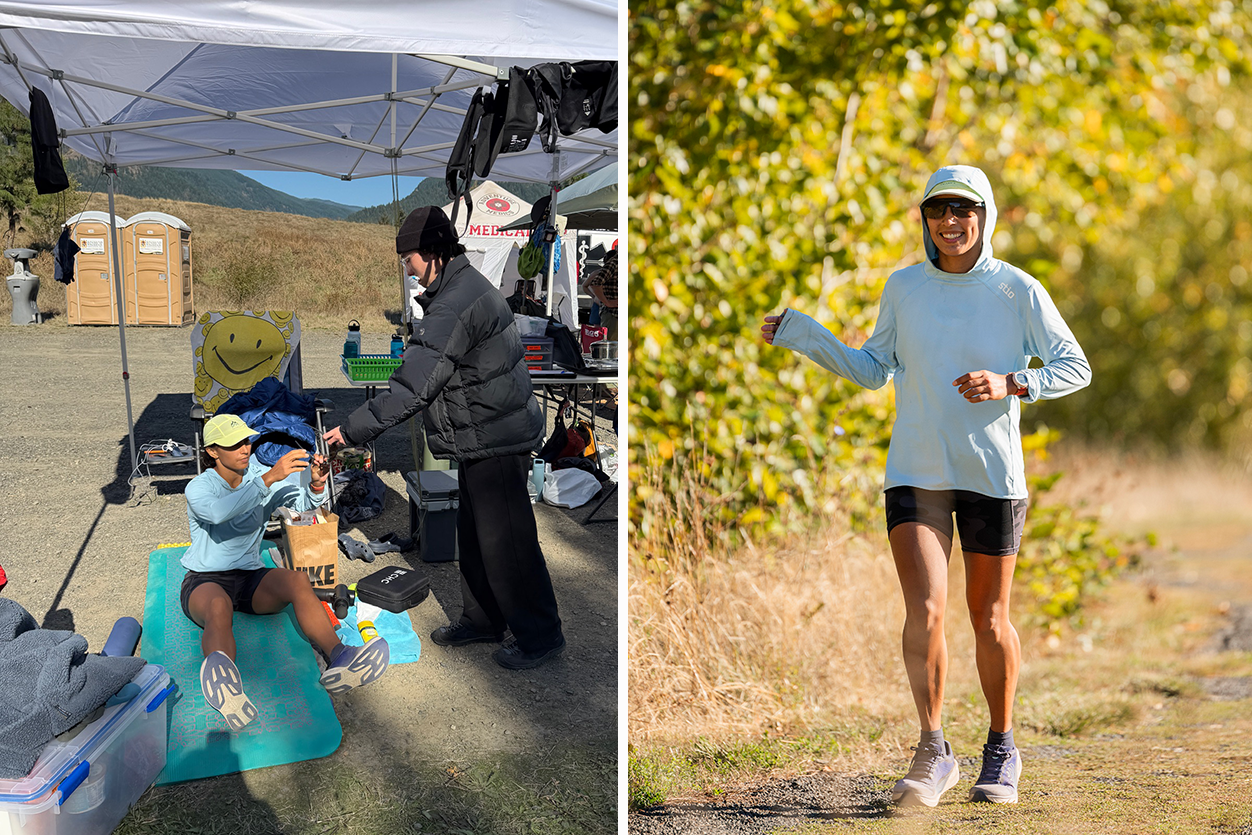
Where she lacked experience, she made up for it in research. She read everything she could about the format and built a spreadsheet of every single thing she planned to eat and drink, typically two snacks carried on each loop and another back in camp. She mapped it out for 48 hours, not because she expected to go that long, but so her crew—her mom and her boyfriend—would know exactly what she needed.
Her instructions if the race went beyond two days? Start the spreadsheet over.
“Her mom had never seen anything like this and, of course, was worried about her daughter,” Janssen said. “You know, she was thinking ‘this is not healthy, this is not good.’ At the very end, I can’t remember what the conversation was exactly, but it was something about doing one of these again and her mom said, ‘No!’ But I think her mom and her partner had fun crewing and supporting her and seeing her success.”
How she won her first backyard ultra
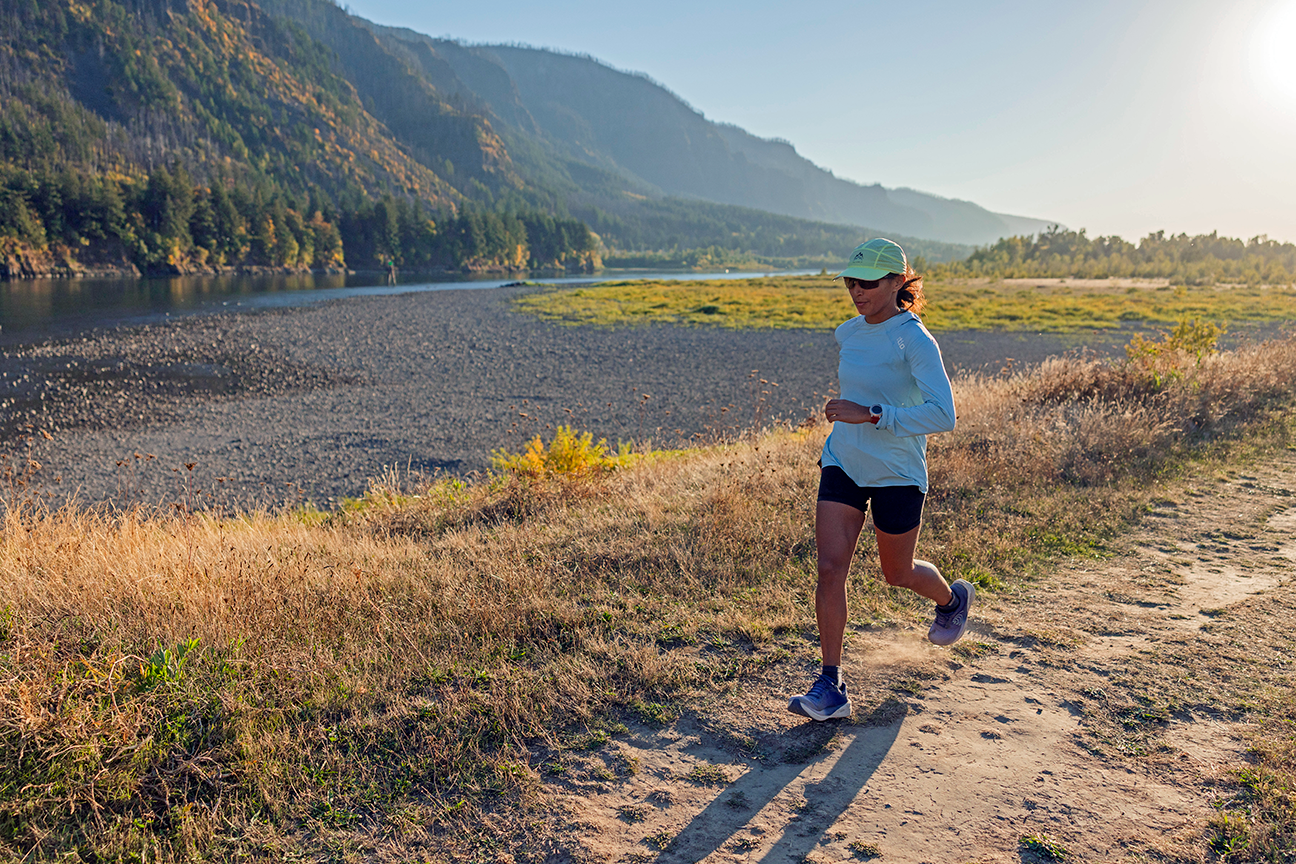
The Lastest Not Fastest course is a 4.13-mile loop on Hamilton Island, just west of the Bonneville Dam in the Columbia River Gorge. More than half of it is smooth trail along the river and through the woods, with about a mile of chunky gravel that Bumatay calls her least favorite section. She ran the whole thing in road shoes, switching between two pairs of the same Topo Athletic Phantom model so the foam wouldn’t go flat.
From the start on Saturday morning, the race was a revelation. No blisters. No chafing. No stomach problems. On the second night she felt cramps coming on during one loop and fixed them with a cup of broth back at camp.
Her only real scare came late, when she discovered that the most comfortable way to spend her breaks was flat on her back on a yoga mat. The problem was getting back up. As the one-minute warning sounded before one loop, her hip seized as she tried to stand.
“I felt like a fish flopping around on the ground,” she says with a laugh. She worked it loose, made it to the start corral in time and stretched it out on the run.
As the field thinned, it came down to Bumatay and Adrian Shipley, a 40-year-old runner from Forest Grove, Oregon, who had placed fourth in the event in 2024 with 42 laps and 132 miles. Shipley was stretching out cramps at the start of the final loops but looked strong once he got moving. Meanwhile, Bumatay felt great and was bracing to run through a third night and into the morning if that’s what it took. She had even started bargaining with herself. Maybe she’d stop at 200 miles. Maybe that would feel like enough.
She never had to decide. Shipley stopped after the 42nd yard (about 173 miles), and Bumatay finished the 43rd alone to win.
“I was probably a little bit relieved that it was done,” she says. “But I was kind of surprised. I was feeling pretty ready to keep going.”
What’s Next?
Bumatay admits she’s not entirely sure how she won her first backyard ultra and whether it was just part preparation and part luck, and it makes her a little nervous. “It’s hard to figure out exactly what made it go so smooth, to replicate it,” she says.
She’ll get a chance to find out. She has already signed up for the Banana Slug Backyard Ultra on April 23 at Champoeg State Park in St. Paul, Oregon—a race that has produced some massive distances. Last spring Scott Martin won it by running 78 loops, 325 miles. She’s also thinking about trying a fixed-distance ultra next year to mix things up, maybe a 50-miler or even a 100-miler, something she says she never would have considered so soon without her backyard experience.
In a way, she thinks starting with a backyard saved her from herself. Had her first ultra been a 50-miler, she might have learned exactly how bad her body can feel at mile 50 and carried that ceiling into every race after.
“I didn’t have that,” she says. “My main goal going into it was just to use the format to see how far I could go.”
The answer, it turns out, was a lot farther than anyone expected, including her. And that’s exactly the kind of story that keeps filling backyard start lines.
RELATED: Last One Standing: Why Backyard Ultras Are Booming
- Hit the Trails for Your Thanksgiving Turkey Trot
- How Ultra First-Timer Katie Bumatay Ran 177 Miles and Won Her First Backyard Ultra
- Watch: “Raise The Bar” Celebrates Women in WS100
- Stay in the Race: How to Sharpen Your Mental Toughness
- Last One Standing: Backyard Ultras Are Booming
- Runners for Public Lands Launches “Runners for the Future” Campaign