
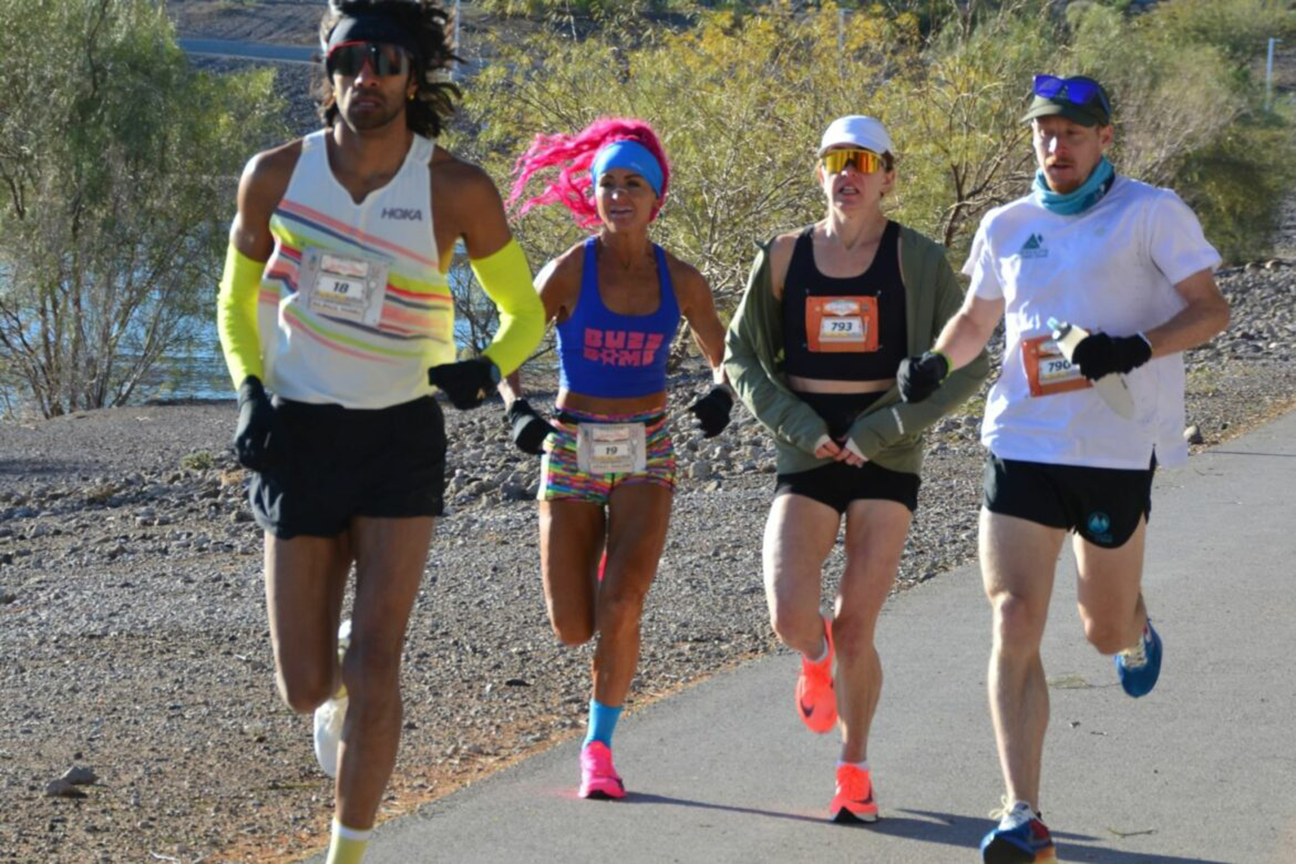
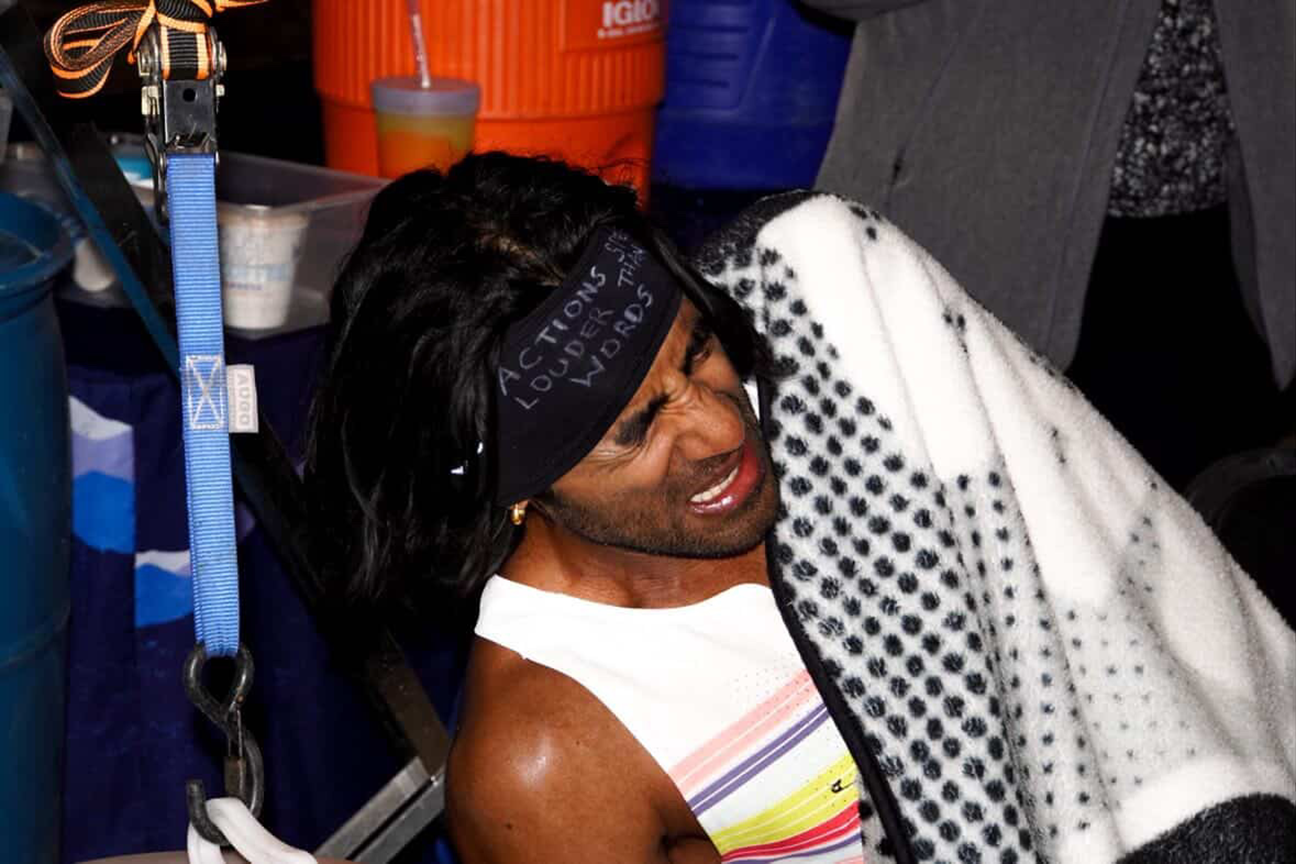
The headband was simple. Black, sweat-soaked, pulled across his forehead. Five words written across the front like a quiet declaration.
Actions Speak Louder Than Words.
By the time the 2026 USATF 100-Mile Championship reached its final hours on February 20 in Henderson, Nevada, those words had already said everything that needed to be said.
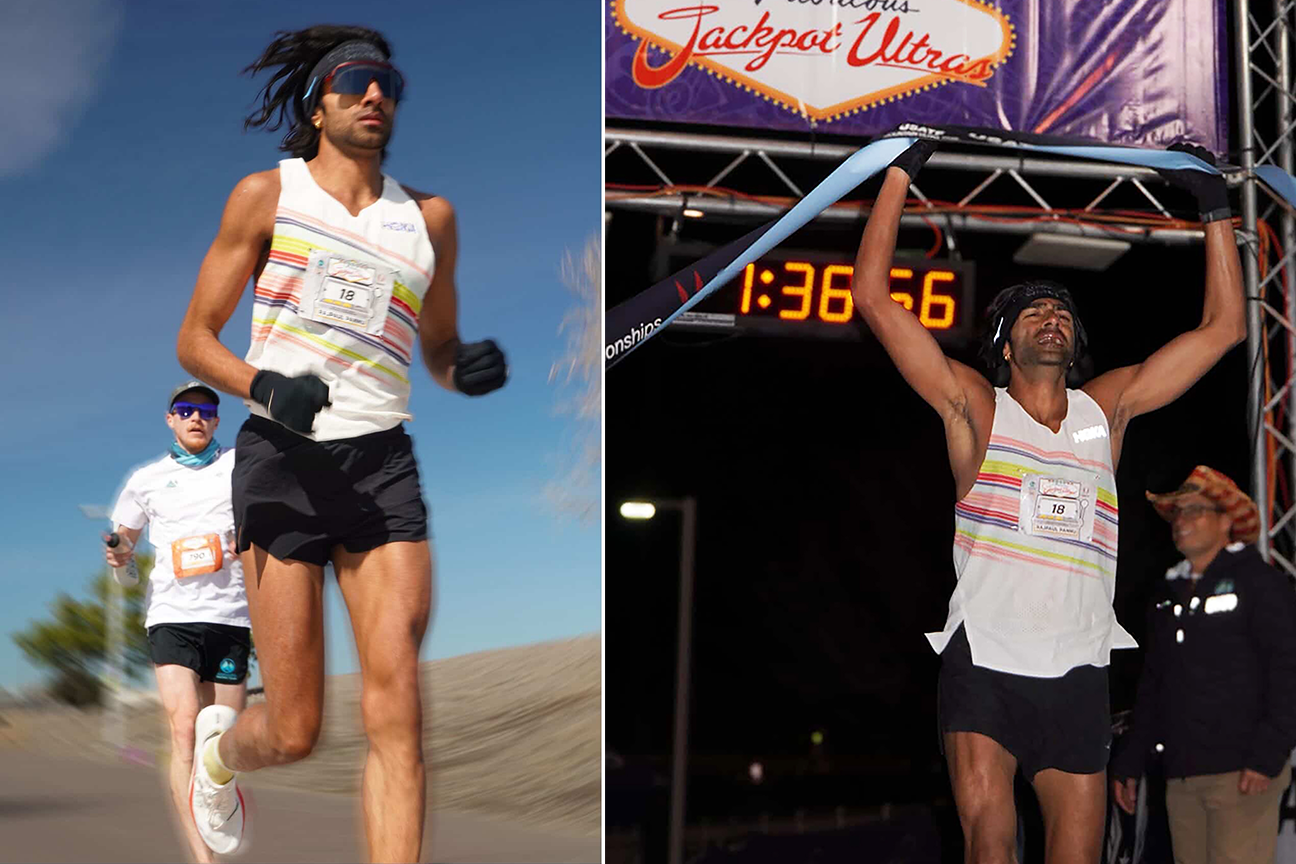
Rajpaul Pannu crossed the finish line exhausted, emptied in the way only 100 miles can empty a person. His shoulders sagged. His stride unraveled into something halfway between a shuffle and a stumble. But when he lifted his head, the clock told the story: he had run faster than the previous year’s winning time.
And this time there would be no asterisk.
No controversy.
Just a championship.
The Year Everything Fell Apart
Twelve months earlier, the ending had looked very different.
At the 2025 USATF 100-Mile Championship, Pannu had done what he always does: he ran with relentless commitment, pushing through the race with the kind of controlled aggression that has defined his career.
He crossed the finish line first in 11 hours, 52 minutes, 46 seconds, a new personal best.
Then the celebration unraveled.
A complaint had been filed. The shoes he wore the maximally stacked, carbon-plated Hoka Skyward X were ruled non-compliant with event regulations. USATF championship races follow Rule 143 Section 3(i), which limits midsole stack height to 40 millimeters.
The Skyward exceeded that limit by 8 millimeters.
The title was stripped away.
Just like that.
The irony was almost absurd. Pannu hadn’t chosen the shoe to gain an advantage. He chose it out of necessity. In previous long-distance efforts, his feet had gone numb deep into the run. The wider platform of the Skyward felt stable and forgiving.
Before the race, he had tested them in the simplest way possible: jogging through airport security and running loops near the course.
They felt right.
But an online complaint eventually reached officials, triggering a review that led to the disqualification.
Pannu never learned who filed the complaint.
What stayed with him was something else entirely.
People questioning his integrity. He states in the aftermath that “80 percent of people were supportive and sympathetic, 20 percent questioned my integrity.”
For a runner who prides himself on blue-collar honesty, that cut deeper than the disqualification itself.
A Blue-Collar Life
To understand why, you have to understand the rest of Rajpaul Pannu’s daily life.
When he’s not running, he teaches at a continuation high school in Denver. His students are teenagers who slipped through the cracks of the traditional system. Kids who dropped out, got into trouble, or simply lost their way somewhere along the road.
The school exists for one reason: to give them another shot.
A second chance.
The work is demanding. The victories are quiet. And the parallels to Pannu’s own running journey are hard to ignore.
After the 2025 disqualification, he needed his own second chance.
The Spiral
He tried to get it immediately.
The months following the disqualification were supposed to be a redemption tour. Instead, they turned into a spiral.
His knee began to fail him.
Pain crept in during workouts. Races that once felt manageable turned into slow collapses. DNFs started stacking up.
For someone who built his identity on toughness and resilience, it was a brutal stretch.
Pannu coaches himself. He writes his own training plans, manages his nutrition, studies physiology, and analyzes his own data. His preparation includes spreadsheets, research papers, and even a little strategic “Strava stalking” to see how competitors are training.
But the knee injury required something more.
That help arrived through fellow runner Rachel Entrekin, who connected him with a local physical therapist. Together they began rebuilding the joint piece by piece.
It wasn’t glamorous work.
Strength exercises. Mobility drills. Slow, patient progress.
The kind of work that rarely makes headlines but quietly determines who gets to race again.
Fuel, Not Failure
Pannu never tried to erase the story of 2025.
Instead, he reframed it.
“I feel like adversity isn’t an interruption to your story,” he said later. “You can find some of the most meaningful victories through it. You can see it as an opportunity in the long run, not something meant to crush you immediately.”
The disqualification became fuel.
What followed was a focused 12-week build leading into the 2026 championship. The goal wasn’t revenge. It was clarity.
He wanted his results to speak for themselves.
The message on his headband came from that place.
Actions Speak Louder Than Words.
The phrase wasn’t aimed at critics.
It was aimed at himself.
Range
Those who follow ultrarunning already know Pannu has range.
Before ultras, he chased a U.S. Olympic Trials Marathon qualifying time. He nearly reached the podium at the legendary Javelina Jundred. And back home in Colorado, he holds the FKT on Mount Falcon, a rugged local climb that demands both strength and speed.
His philosophy reflects that versatility.
“The biggest lesson in training that I’ve learned,” he says, “is that fast matters just as much as long.”
Ultrarunning, in his view, isn’t simply about surviving distance.
It’s about moving quickly through it.
Even the brutal toll of a hundred-mile effort reflects that mentality. As Pannu joked recently on a podcast with fellow ultramarathoner and 100-mile American record holder Zach Bitter, you arrive at the starting line “super fit … and then you’re basically useless afterward.”
That’s the cost of leaving everything out there.
And Pannu always does.
The Race
At the 2026 championship back at the Jackpot Ultras venue on the outskirts of Las Vegas, Pannu raced—legally—exactly the way people have come to expect.
Aggressive early.
Relentless late.
There was no cautious pacing designed to protect a lead. He attacked the course the same way he always has, pushing the pace until the race began to break apart.
And when the finish clock confirmed his time was almost 14 minutes faster than the disputed 2025 performance, the moment carried a quiet symmetry.
The redemption wasn’t verbal.
It was numerical.
Perspective
When the race ended, Pannu didn’t dwell on the controversy that once defined him.
Instead, he talked about growth.
The experience, he says, made him “a better person and a better athlete.” He wouldn’t erase it even if he could.
Without the disqualification, the focused rebuilding of 2026 might never have happened.
Without the rebuilding, the championship might not have happened either.
What Comes Next
Recovery is still ongoing.
Ultrarunning careers are rarely straight lines, and Pannu continues working his way back toward full strength. But his future plans show the same curiosity and versatility that have always defined him.
Next on the horizon is the brutal vertical test of the Ascent at Broken Arrow Skyrace—3 miles with more than 3,000 feet of climbing.
It’s a natural step for someone who has already proven he can climb quickly.
Another Western States Golden Ticket chase will likely follow.
Because for Rajpaul Pannu, the appeal of the sport has never been just the finish line.
It’s the process.
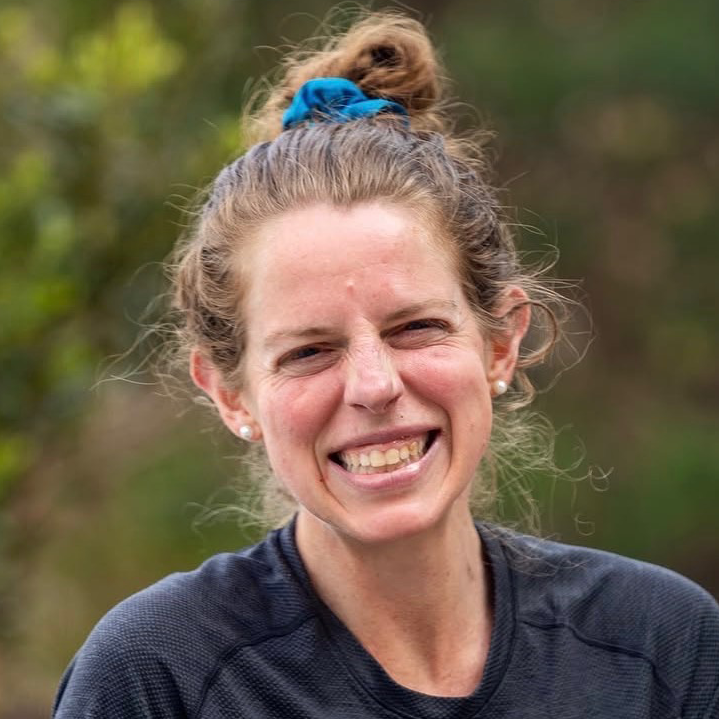
Born and raised in Atlanta, Georgia, Allison Mercer is a dedicated endurance athlete and outdoor advocate. A member of the 2024 U.S. team for the 100K World Championships, she now serves as Head of the Fastest Known Time (FKT) website, where she helps connect and inspire a global community of runners, hikers, and adventurers pursuing iconic routes around the world.
RELATED: Marisa Romeo: A Hands-On Study of The Inner Work of Endurance
RELATED: 5 Key Takeaways from the 2026 Cocodona 250 and How it Could Shape the Future of the Sport
RELATED: The 2026 Cocodona 250: Who’s Running, How to Watch It, Next Year’s Lottery, and more
1 comment
Sarah Lavender Smith
hi, I’m a Rajpaul fan & happy to see this story. Nice job producing original content for this site.