If you live in a region where snow, ice, and slush are common variables to your winter and early spring training runs, it makes sense to have shoes that will provide good grip on slippery surfaces.
If it’s just cold and snowy outside and you’re running on roads or smooth trails, a trail running shoe with knobby outsoles and a Gore-Tex membrane (or other waterproof technology), such as the Saucony Peregrine 16 GTX ($180) or Hoka Challenger 8 GTX ($165), for example, can usually suffice pretty well.
But running over icy surfaces—especially undulating trails with iced-over roots, rocks, gravel—typically requires more aggressive features.
In my experience, there are three common ways to optimize traction for running in wintry conditions:
- Using after-market traction devices like the Yaktrax Run ($54) or Kahtoola MicroSpikes ($85);
- Carefully inserting about 10 half-inch #6 hex-head sheet metal screws ($3 at most hardware stores)—or IceSpikes ($30) or LaSportiva Hobnails ($35)—around the perimeters of the outsoles of an old pair of road or trail running shoes;
- Investing in a pair of trail shoes built specifically for winterized conditions, including the four models featured below.
Each options has pros and cons. Traction devices are limited in their durability, screws can fall out, and winter-specific shoes can be expensive. Fortunately, winter doesn’t last forever and, depending on where you live, roads and trails sometimes thaw out quickly. Knowing how harsh typical conditions are can help inform your choices.
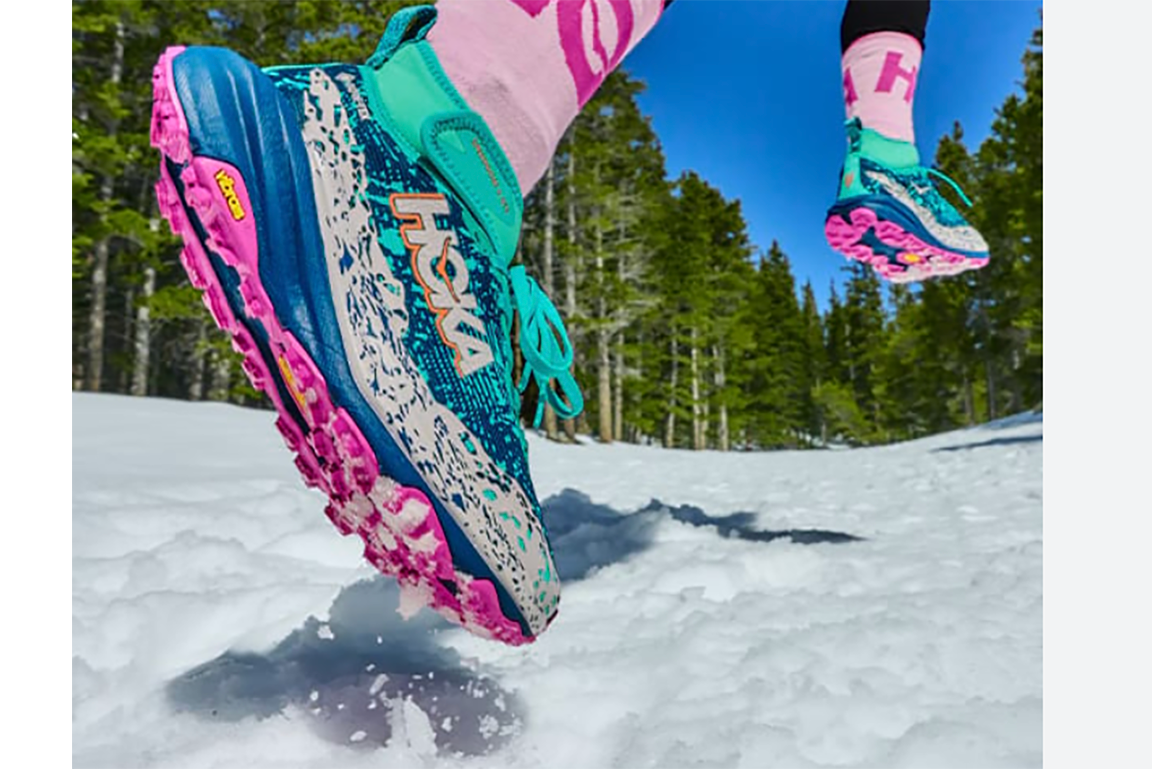
HOKA Speedgoat 6 Mid GTX, $180
Approximate Weights: 9.3 oz. (women’s size 8); 10.4 oz. (men’s size 9),
Heel-Toe Offset: 5mm; 37mm (heel); 32mm (forefoot)
This is essentially a winterized version of the popular Speedgoat 6 trail running shoe with a Gore-Tex membrane lining and a mid-height, ankle-wrapping gaiter (which eliminates the need for a tongue) that offers added additional support and protection from the elements. The compression molded blended EVA midsole foam offers a similar cushy responsiveness as its namesake cousin, while the Vibram Megagrip outsole with 5 mm lugs and micro serration excel on dirt, rocks, mud and snow. There are no built-in spikes, but last year’s version of the similar Hoka Speedgoat 5 GTX Ice ($185) is still available.
Pro: It feels very similar to a traditional Speedgoat shoe, even though the cushioning and responsiveness feel a bit muted on snowy terrain.
Con: The heel collar doesn’t secure the rear of my feet and ankle as well as I had hoped, and it leaves a semi-loose connection with small gaps. Tying the shoe tighter (through the alternate upper eyelet) can helps improve foot security, but that can lead to lace bite.
Check it out → Hoka Speedgoat 6 Mid GTX
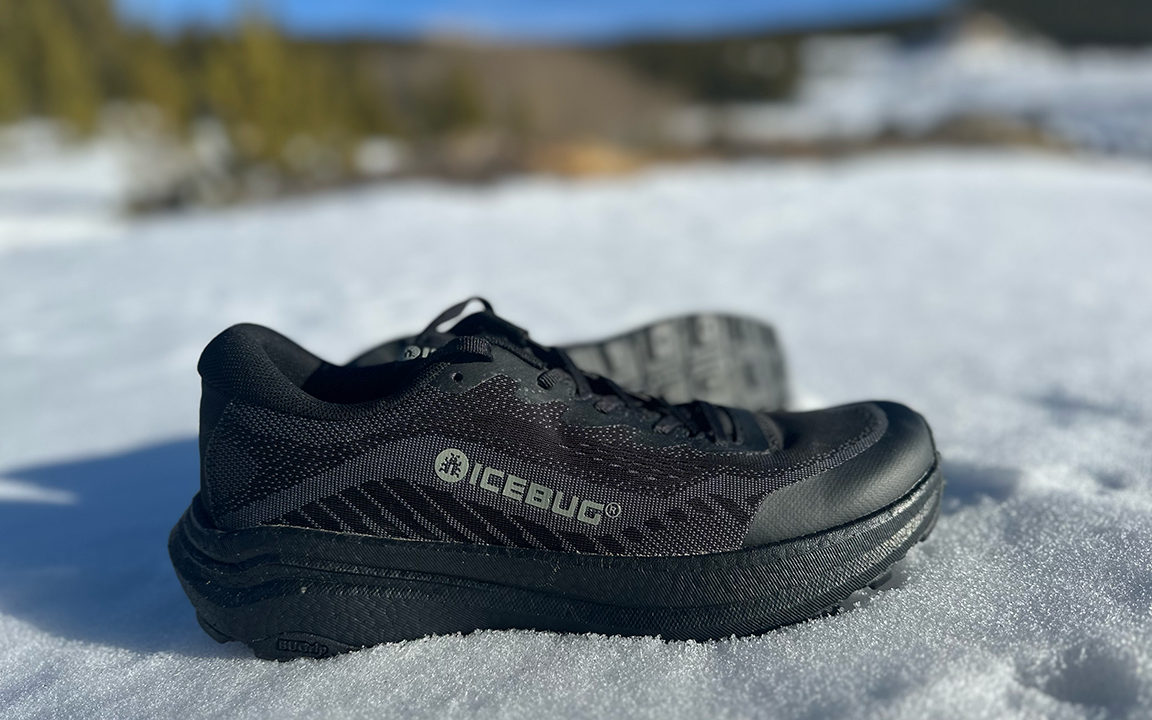
Icebug Myr BUGrip, $149
Approximate Weights: 10.1 oz. (women’s size 8); 12.4 oz. (men’s size 9),
Heel-Toe Offset: 8mm; 34mm (heel); 26mm (forefoot)
Icebug’s Myr BUGrip is a studded winter running shoe that provides reliable traction from 17 dynamic steel studs embedded in the outsole for running on icy, snowpacked roads and smooth trails. With a eTPU midsole compound, it feels like a comfortable and responsive road running shoe, ideal for running with a smooth consistent gait.
Pro: It can get the job done for most basic winter trail running endeavors. It feels and runs smoothly on flat, snow-covered surfaces—dirt trails, gravel roads, paved roads, concrete bike paths.
Con: It’s a low-cut shoe, so running through slush and puddles means your socks can get wet and make your feet cold. Plus, the outsole’s standard outsole rubber and lower profile lugs don’t make it as adept on running technical terrain as some other models.
Check it out → Icebug Myr BUGrip
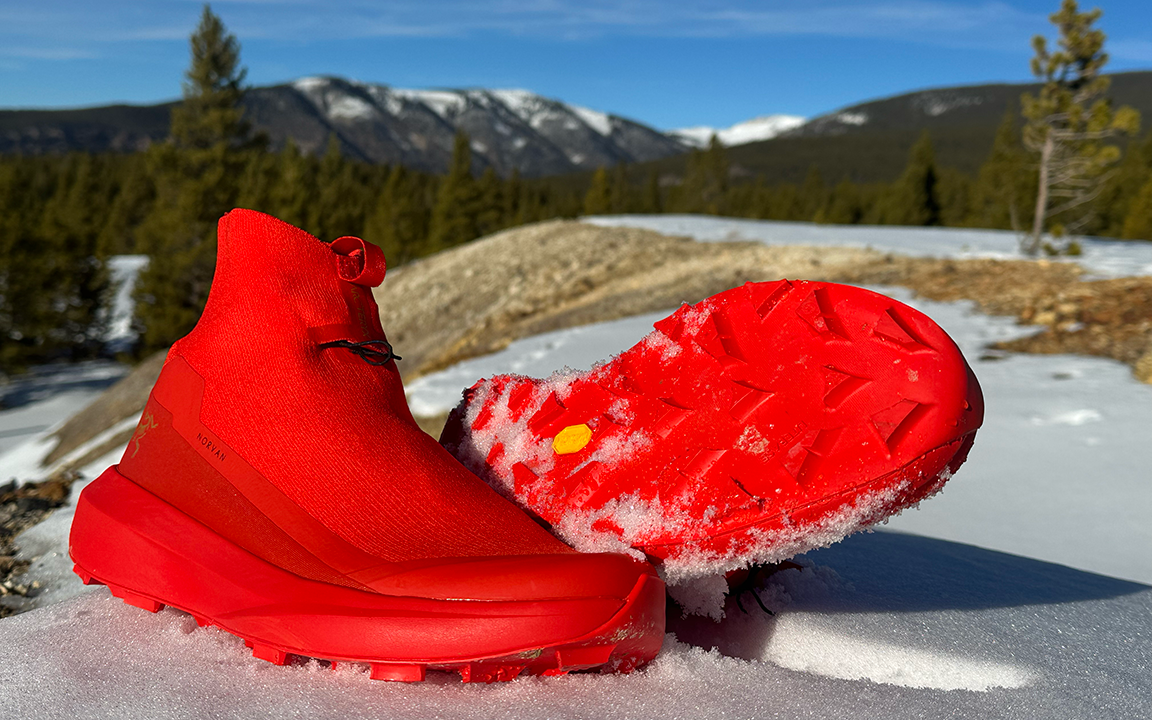
Norvan 4 Nivalis GTX, $250
Approximate Weights: 9.6 oz. (women’s size 8); 10.8 oz. (men’s size 9),
Heel-Toe Offset: 6mm; 25mm (heel); 19mm (forefoot)
This winter trail running shoe (built off the chassis of the sturdy Arc’Teryx Norvan 4 trail running shoes) is engineered for running through deep snow, cold, gooey slush, sloppy mud, and, of course, those rare segments of dry trail surfaces in between. It has an interior waterproof Gore-Tex Infinium upper and a stretchy, breathable fabric over-the-ankle gaiter to keep warmth in and keep moisture out. Its Vibram Megagrip outsole and 6mm directional lugs offers exceptional traction in varied wintry conditions, and also has suggested insertion points for after-market spikes or screws.
Pro: Once you slip your foot inside (which does take some extra effort) and the gaiter wraps around your ankle, you secure it effectively with a one-pull lacing system that snugs your foot down to the midsole of the shoe. (The ends of the laces are then tucked into a stretchy pouch at the top of the gaiter.)
Con: The shoe feels a little bit stiff and is harder to flex than a typical trail running shoe, though admittedly, that’s less of a concern when running through snow, slush, or mud. Also, it has a medium-volume interior that leans slightly toward the narrow side of the spectrum.
Check it out → Norvan 4 Nivalis GTX
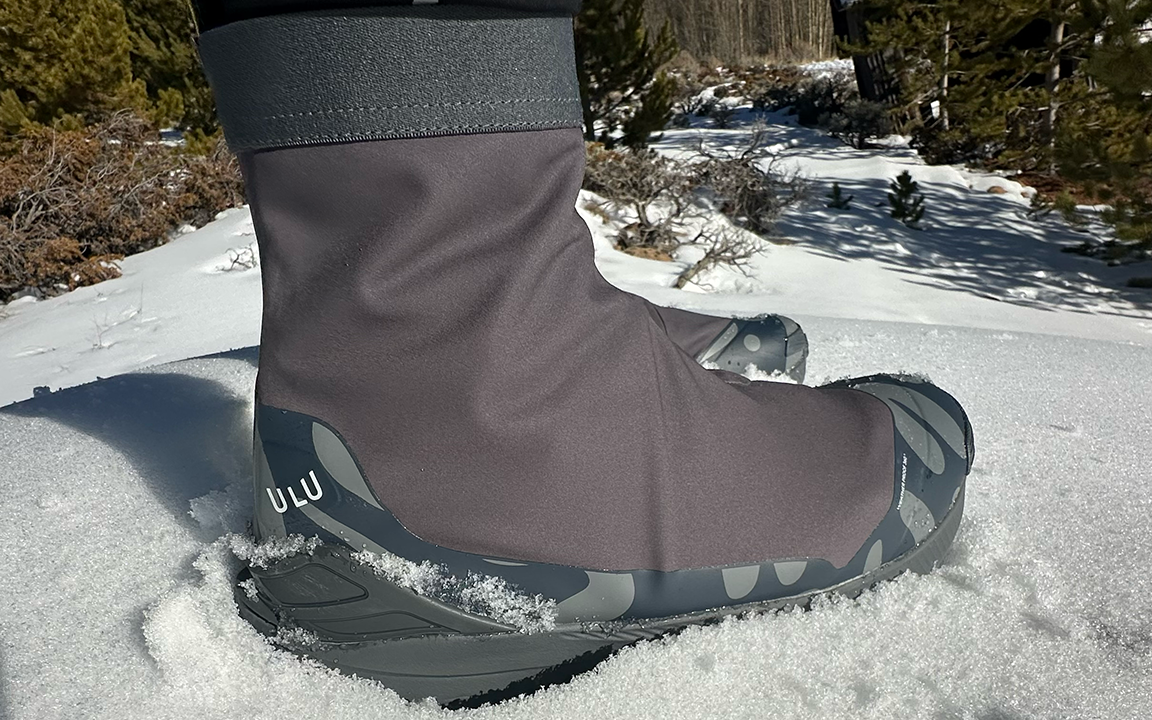
ULU Amak Arctic Stride, $325
Approximate Weights: 12.1 oz. (women’s size 8); 13.5 oz. (men’s size 9),
Heel-Toe Offset: 5.5mm; 26.5mm (heel); 21mm (forefoot)
The Amak Arctic Stride is one of the most advanced winter trail running shoes ever built. With a tall, zip-up over-the-ankle waterproof gaiter and 10 MacNeil carbide steel spikes embedded in a Vibram Traction Litebase outsole, this shoe is designed for long, multi-hour running and hiking through the toughest of winter trail running conditions. The blend of steel spikes and rubber lugs allows it to provide unflappable traction on ice, snow, rocks, and dirt, making it a great tool for ultra-inspired winter adventures. The sugarcane foam midsole features M-TPEE inserts in the forefoot and heel, which allow it to retain flexibility and responsive cushioning at temperatures as low as minus-4° Fahrenheit.
Pro: It’s ideal for running through deep and drifted snow, packed snow, gooey mud and sloppy, boggy terrain and windy, frigid conditions. (I wore this shoe for a snowy adventure up and down 14,050-foot Mt. Sherman in Colorado and loved the warmth and protection it afforded my feet.)
Con: For shorter runs in moderately cold/snowy conditions, it can feel like too much shoe and slightly heavy. Plus, the lofty price tag is the equivalent of two standard pairs of trail running shoes. Another over-the-ankle option without spikes is the Salomon S/Lab Genesis Spine ($249).
Check it out → ULU Amak Arctic Stride
About the Author
UltraSignup Director of Media Brian Metzler has wear-tested more than 2,000 running shoes and is the author of “Kicksology: The Hype, Science, Culture and Cool of Running Shoes” (2019) and “Trail Running Illustrated” (2021). He has raced just about every distance from 100 meters to 100 miles, but he’s most eager to share stories about his experiences riding trains to trail runs in Chamonix.
Related Articles
How Two Trail Runners Earned a Spot in the 2026 Winter Olympics
The Best Gear and Apparel for Winter Trail Running
Here’s a Sneak Peek of the Best Trail Running Shoes Debuting in 2026
RELATED: Dirty Dozen: 12 of the Best Trail Shoes for Running in the Mud
RELATED: 12 Trail Running Shoes To Consider Adding To Your Quiver This Spring
RELATED: The Best Trail Shoes of 2025